Aburi Salmon: Easy Flame-Seared Sushi at Home
TL;DR:
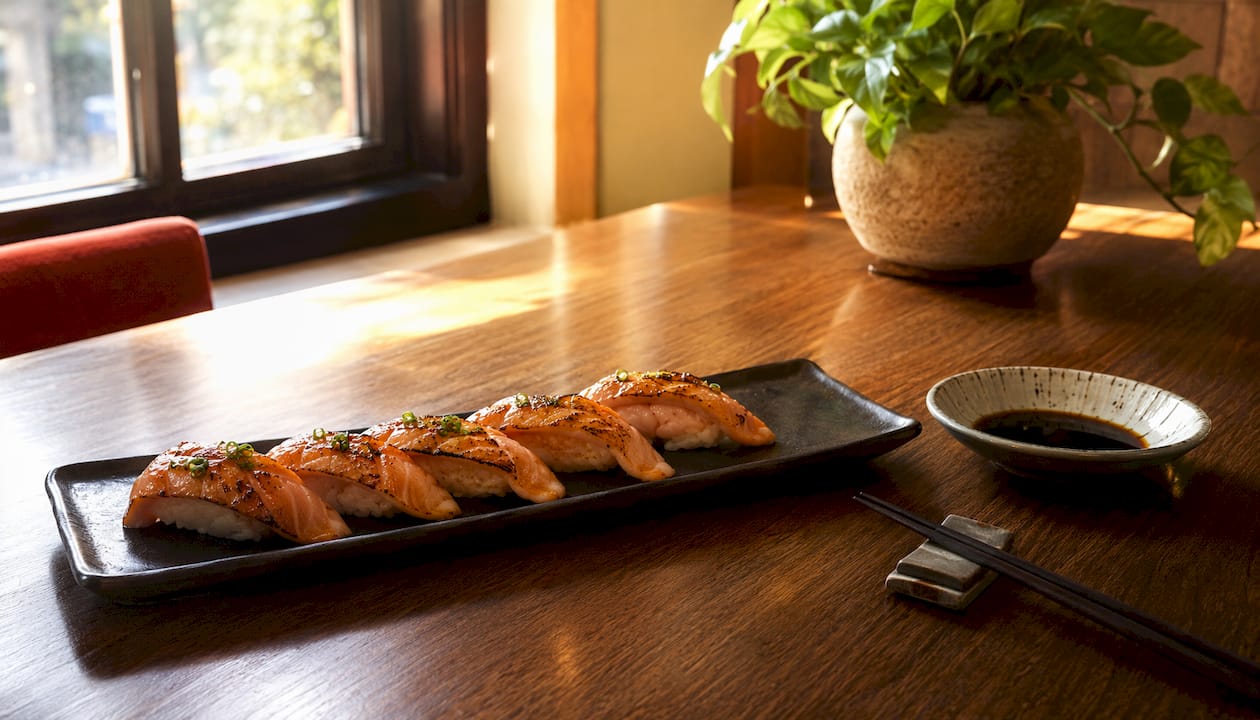
- Aburi salmon is a Japanese flame-seared sushi that creates a contrast between a charred surface and a raw interior. The torch-browning enhances flavor and aroma through caramelization and fats melting, producing a rich, glossy result. It can be made at home using sashimi-grade salmon and a culinary blowtorch, served as nigiri, donburi, or a platter for everyday dining.
What is aburi salmon, and why does it taste so good?
Aburi salmon is a Japanese flame-seared sushi technique where a blowtorch quickly chars the surface of the fish while leaving the interior completely raw. The word aburi (炙り) translates directly to “flame-seared” in Japanese. What you get is a single piece of sushi with two distinct textures: a lightly caramelized, aromatic top and a silky, cool raw center underneath.
Here’s what makes it stand apart from standard nigiri:
- Texture contrast: The charred surface cracks slightly while the fish beneath stays tender and raw.
- Fat melting: The heat melts the salmon’s surface fats, which drip into the seasoned rice and deepen the flavor of every bite.
- Glossy finish: Toppings like Japanese mayonnaise and soy glaze caramelize under the torch, creating a lacquered, restaurant-quality look.
- Common toppings: Kewpie mayo, soy-based glaze (often made with mirin and sugar), and a thin slice of jalapeño for heat and balance.
- Vancouver-style fusion: The version most Americans recognize was popularized by Miku, a Vancouver sushi restaurant. It layers a soy glaze, miso-mayo sauce, and jalapeño on top before torching.
Aburi salmon can be served as classic nigiri, spooned over a rice bowl (donburi-style), or fanned out on a platter like a crudo. All three work beautifully for a weeknight dinner or a casual dinner party spread.
Table of Contents
- How the flame-searing technique changes flavor and texture
- How to make aburi salmon at home, step by step
- Tested aburi salmon recipes from Hearthlyrecipes
- Key Takeaways
- FAQ
How the flame-searing technique changes flavor and texture
The blowtorch does more than add char. When the flame hits the salmon, it triggers a controlled version of the Maillard reaction, browning the proteins and fats at the surface while the interior stays raw and cool. The result is a richer, nuttier flavor than you’d get from raw salmon alone.
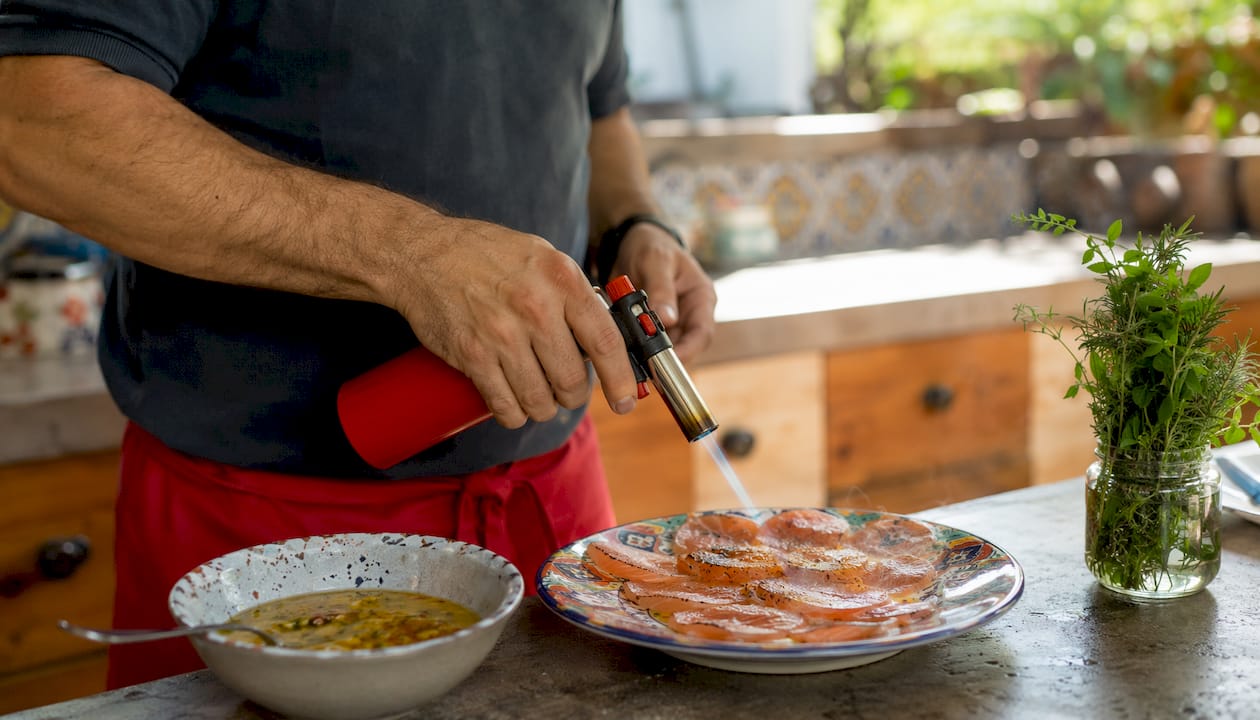
Toppings play a major role here. The sugars in takoyaki sauce and Kewpie mayo caramelize fast under direct flame, forming a thin, slightly crunchy crust over the fish. That caramelization is what gives aburi sushi its signature aroma, the kind that hits you before you even take a bite.
Pro Tip: Keep the torch moving in slow, steady passes rather than holding it in one spot. A consistent, sweeping motion gives you even browning without cooking the fish all the way through. Aim for a brief, consistent torch time per piece to achieve even browning without cooking the fish through.
Presentation varies widely. Nigiri is the classic format. A donburi bowl, where torched salmon slices are laid over hot rice with sesame seeds, avocado, and a soy-sesame dressing, is a looser, more casual take that works well for everyday meals. A crudo-style platter, with the pieces fanned out and garnished, is ideal when you’re feeding a group and want something that looks impressive with minimal effort.
How to make aburi salmon at home, step by step
Getting this right at home comes down to three things: the right salmon, a sharp knife, and a reliable torch.
What you need:
- Sashimi-grade or sushi-grade salmon (farmed Atlantic salmon from a reputable fishmonger or grocery store works well)
- A sharp slicing knife
- A butane culinary blowtorch
- Cooked and seasoned sushi rice
- Kewpie mayonnaise
- Soy glaze (soy sauce, mirin, and sugar reduced by half)
- Jalapeño, thinly sliced
- Optional: takoyaki sauce, white miso paste, alfalfa sprouts
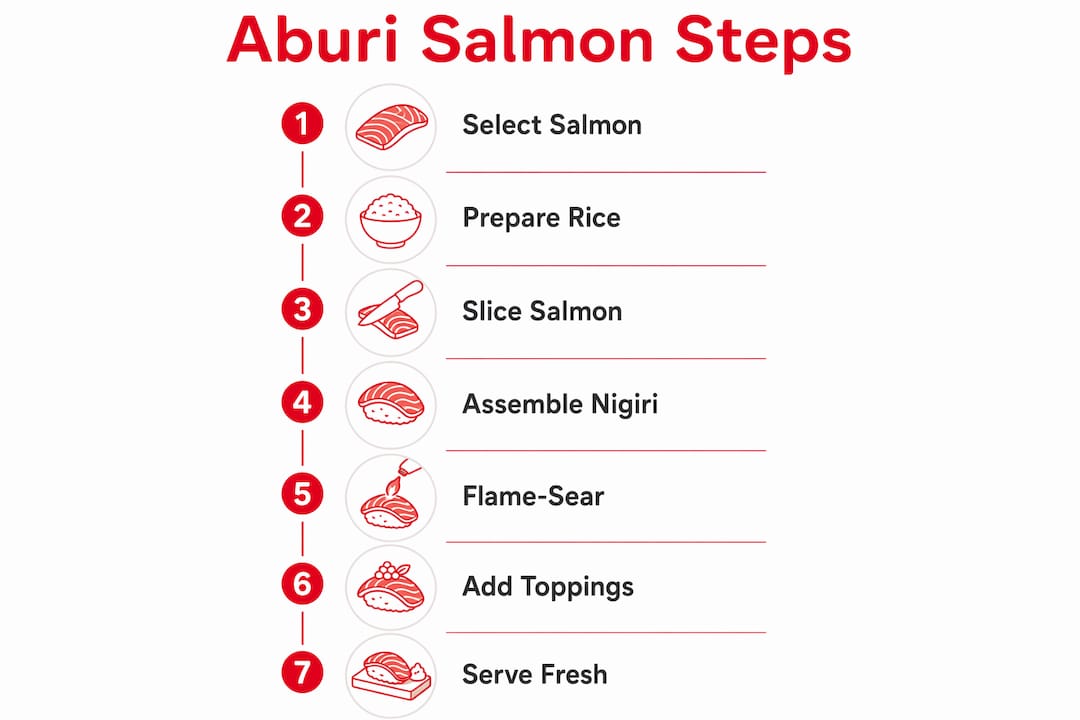
Slicing the salmon:
Sashimi-grade salmon that is properly stored is safe to use raw at home. Use the wider prime fillet from the side of the fish. Place it skin-side down on a cutting board, hold it lightly with your fingertips, and
at a 45-degree angle. You want long, thin slices, roughly ¼-inch thick, that will drape cleanly over the rice without tearing.
Shaping the rice:
- Season cooked sushi rice with rice vinegar, sugar, and salt while it’s still warm.
- Wet your hands with cold water to prevent sticking.
- Scoop an appropriate amount of rice and press it firmly into a small oval or football shape.
- Alternatively, use a takoyaki tray lined with clingfilm: press a salmon slice into a depression, add rice on top, fold the edges over, and flip it out. This method gives you uniform pieces fast, especially when making a larger quantity.
Assembling and torching:
- Place a salmon slice over each rice oval.
- Brush lightly with soy glaze.
- Pipe or spoon a thin line of Kewpie mayo over the salmon.
- Torch each piece until the mayo bubbles and browns and the salmon surface darkens slightly.
- Top with a jalapeño slice and serve immediately.
Serve aburi salmon right after torching. The aroma fades quickly, and the texture contrast is at its peak in the first few minutes. If you’re making a large batch, have one person shape and assemble while another handles the torch and garnishing. It cuts prep time significantly and keeps everything fresh.
Tested aburi salmon recipes from Hearthlyrecipes
Hearthlyrecipes has tested two versions of this dish that work reliably for home cooks, whether you’re making it for a weeknight dinner or a weekend gathering.
Recipe 1: Classic aburi salmon nigiri
This is the foundational version, clean and straightforward.
- Season cooked sushi rice with rice vinegar, sugar, and salt to taste.
- Slice sashimi-grade salmon into thin pieces at an angle suitable for sushi.
- Shape rice into small ovals by hand or with a mold.
- Drape a salmon slice over each piece.
- Brush with soy glaze, pipe on Kewpie mayo, and torch until caramelized.
- Garnish with jalapeño. Serve right away.
Recipe 2: Vancouver-style fusion aburi with miso-mayo glaze
This is the version that gets the most enthusiastic feedback from the Hearthlyrecipes community, consistently rated 5 stars.
- Miso-mayo sauce: Combine ½ cup Kewpie mayo, 1 teaspoon white miso paste, ½ teaspoon sugar, and ¼ teaspoon salt.
- Soy glaze: Simmer 2 tablespoons soy sauce, 2 tablespoons mirin, and 1 tablespoon sugar for 2–3 minutes until reduced by half.
- Assemble nigiri as above, brush with soy glaze, pipe miso-mayo over the top, torch until charred, and finish with jalapeño.
Both recipes adapt easily to a donburi rice bowl format: lay torched salmon slices over hot rice, drizzle with soy-sesame dressing, and add avocado, sesame seeds, and nori. For more seafood recipe ideas beyond aburi, Hearthlyrecipes has a full collection worth exploring.
If you want to go deeper into Japanese sushi technique, the Sushi Cook Book by Tohyama & Moriyama is a thorough reference for home cooks who want to move beyond the basics.
Explore the full tested recipe collection at Hearthlyrecipes for more comforting, weeknight-friendly dishes.

Key Takeaways
Aburi salmon delivers restaurant-quality flavor at home by combining sashimi-grade fish, seasoned sushi rice, and a butane torch to create a caramelized, texturally layered dish in under 30 minutes.
| Point | Details |
|---|---|
| Aburi means flame-seared | A blowtorch chars the salmon’s surface while the interior stays raw, creating two distinct textures. |
| Fat melting drives flavor | Surface heat melts salmon fats into the rice, producing a richer, glossier result than raw nigiri. |
| Sashimi-grade salmon is non-negotiable | Properly stored sashimi-grade fish is safe for home preparation and gives the best texture. |
| Slice at 45 degrees against the grain | This cut produces long, thin pieces that drape cleanly over rice without tearing. |
| Serve immediately after torching | Aroma and texture contrast peak in the first few minutes; prep ahead but torch just before serving. |
FAQ
What does “aburi” mean in Japanese?
Aburi (炙り) means “flame-seared.” The technique uses a blowtorch to quickly cook the surface of fish while leaving the interior raw.
Do I need sushi-grade salmon for aburi salmon at home?
Yes. Sashimi-grade or sushi-grade salmon that is properly stored is the safe and recommended choice for any raw or partially cooked fish preparation at home.
What toppings go on aburi salmon?
The most common toppings are Kewpie mayonnaise, a soy-mirin glaze, and a thin slice of jalapeño. The Vancouver-style version also adds white miso to the mayo sauce for extra depth.
Can I make aburi salmon without a blowtorch?
A broiler set to high can work as a substitute: place assembled nigiri on a foil-lined tray and broil for 30–45 seconds, watching closely. The result is less precise than a torch but still produces some caramelization.
What is the difference between aburi salmon nigiri and a donburi bowl?
Nigiri is hand-formed rice topped with a single slice of torched salmon. A donburi bowl uses the same torched salmon laid over a larger portion of rice with additional toppings like avocado, sesame seeds, and nori, making it a fuller, more casual meal.