Acqua Pazza: The Italian “Crazy Water” Fish Recipe
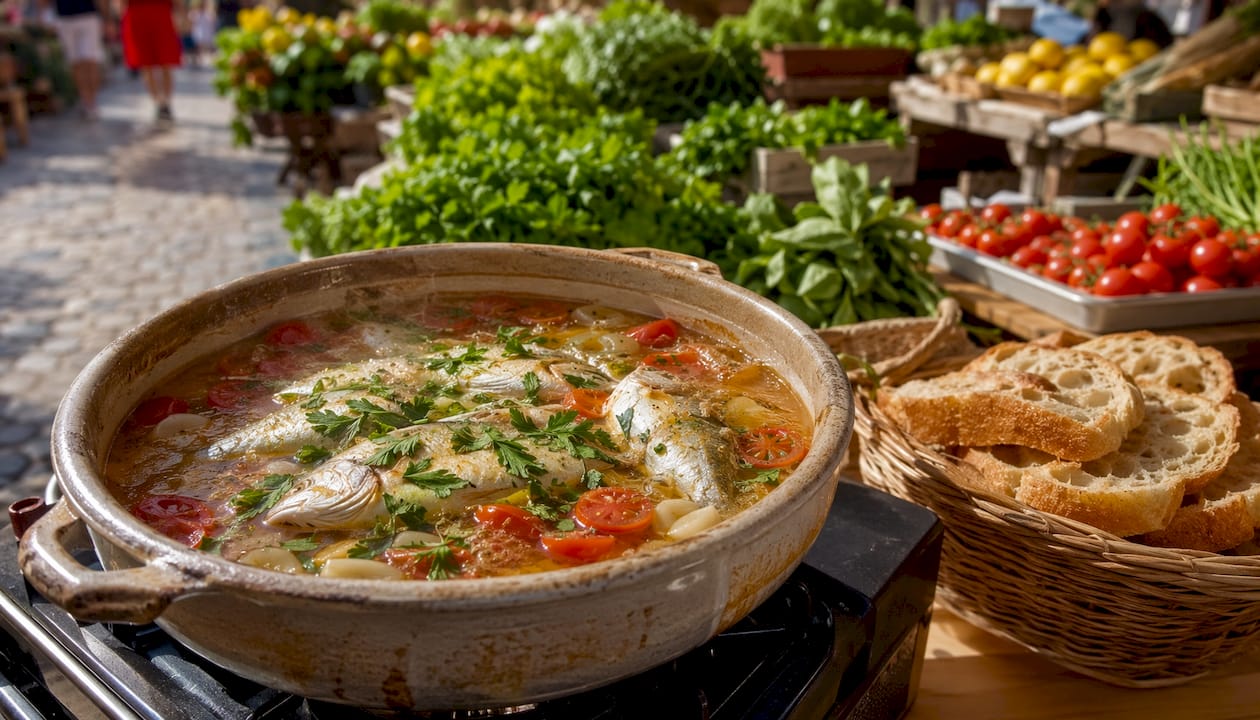
Acqua pazza translates literally to “crazy water,”) and the name tells you almost everything about the dish. It is a traditional Italian poached white fish cooked in a light, aromatic broth built from olive oil, garlic, cherry tomatoes, white wine, and water. The result is something that feels far more elegant than its humble ingredients suggest, which is exactly the point.
Here is what you are working with at a glance:
- Fish: Mild, firm white fish such as sea bass, cod, halibut, or snapper
- Broth: Water, dry white wine, extra virgin olive oil, garlic, cherry tomatoes, and parsley
- Method: Gentle poaching in a covered pan, with the broth doubling as the sauce
- Time: 6–10 minutes for fillets, 15–20 minutes for whole fish
- Tradition: Originated in coastal Campania, Italy, with roots in fishermen’s cooking
The dish is not a stew in the thick, long-simmered sense. The broth stays light and clear, just barely blushed from the tomatoes. That restraint is what makes it distinctly Italian.
Table of Contents
- What goes into a traditional acqua pazza recipe?
- How to make acqua pazza at home, step by step
- Where did acqua pazza come from?
- How to serve acqua pazza for the best experience
- Hearthlyrecipes-tested tips for perfect acqua pazza every time
- Key Takeaways
- FAQ
What goes into a traditional acqua pazza recipe?
The ingredient list is short by design. Traditional acqua pazza broth calls for water, extra virgin olive oil, garlic, cherry tomatoes, dry white wine, salt, and fresh parsley. That is the foundation, and it works beautifully without anything else.
That said, regional variations are real and well-documented. The Wikipedia entry on acqua pazza) lists a wide range of additions used across Italy: capers, black olives, bay leaves, fennel, celery, scallions, and even lemon. None of these are wrong. They reflect local pantries and personal preference.
Standard ingredients:
- Extra virgin olive oil (use the best you have — it is a flavor carrier here, not background fat)
- 4–5 garlic cloves, sliced thin
- 1 pint cherry tomatoes, halved
- ½ cup dry white wine
- ½ cup water
- Fresh flat-leaf parsley
- Salt and black pepper
- 1½–2 lbs white fish fillets or 1–2 small whole fish
Common additions and variations:
- Capers or Castelvetrano olives for briny depth
- A pinch of red pepper flakes for subtle heat
- Fresh oregano or basil alongside or instead of parsley
- Whole fish versus fillets (whole fish takes longer but delivers more flavor to the broth)
- Tinned whole tomatoes when fresh cherry tomatoes are out of season
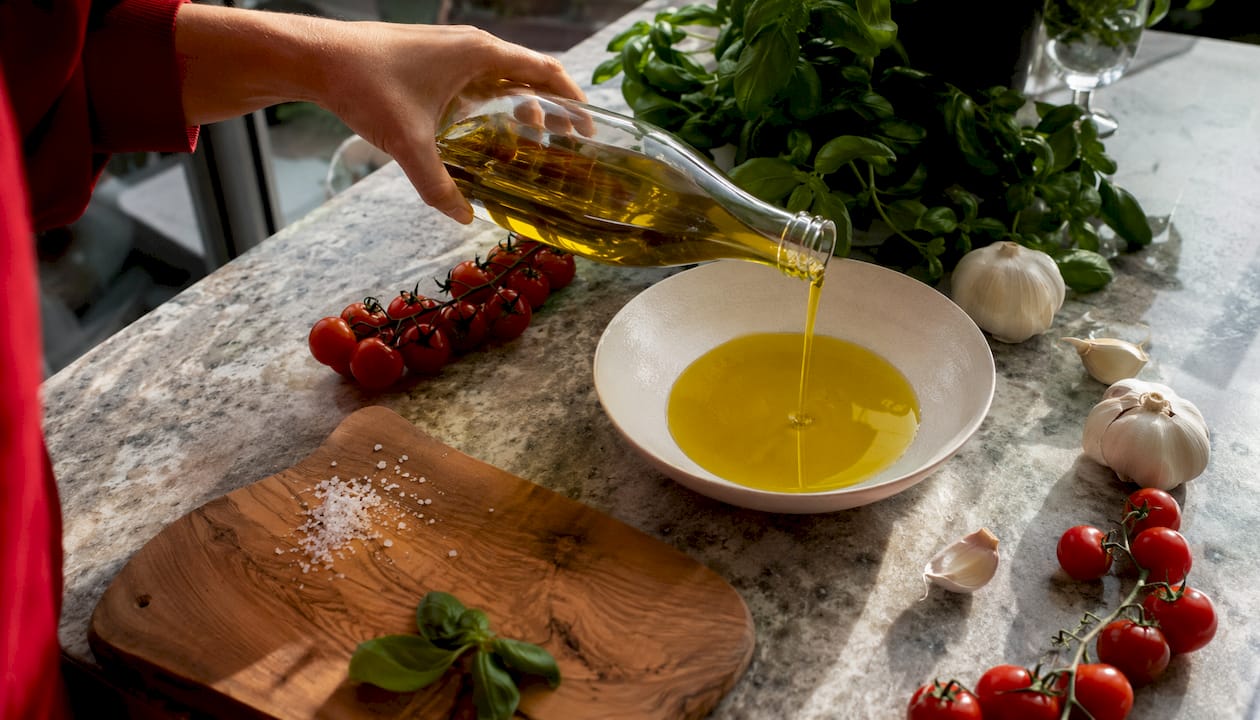
One note on olive oil: this is not the place for a neutral cooking oil. The olive oil in acqua pazza is a primary flavor, not a medium. A grassy, peppery extra virgin makes a noticeable difference in the finished broth.
How to make acqua pazza at home, step by step
The process is straightforward, but the order matters. You are building flavor in layers, and each step feeds the next.
-
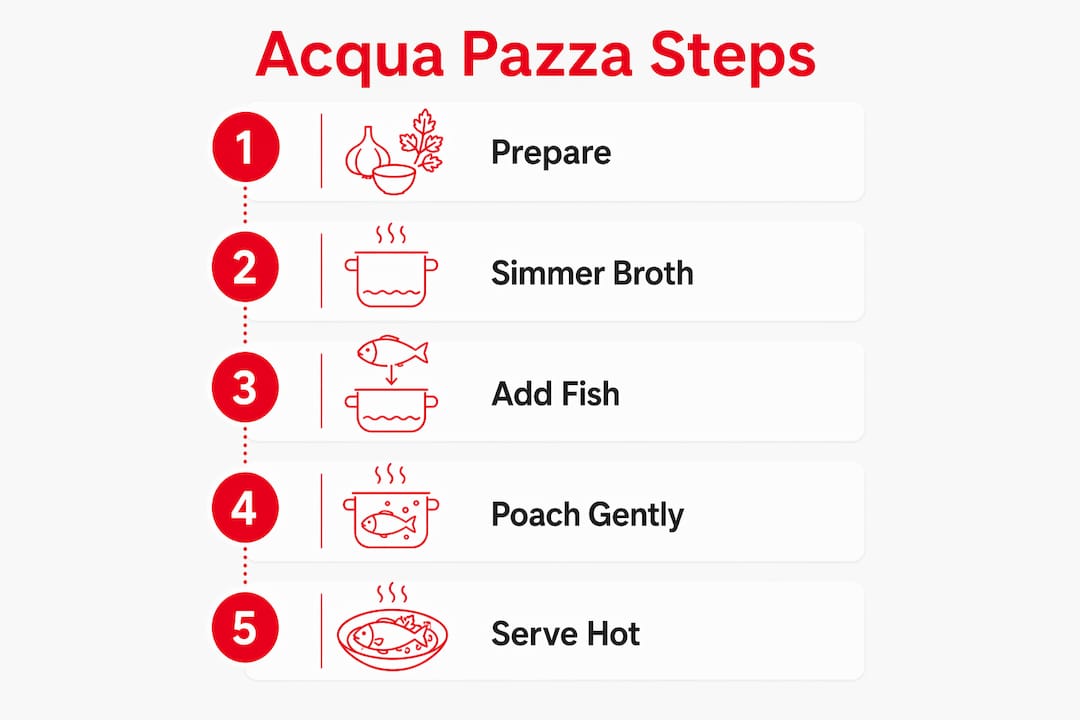
Heat the oil and bloom the garlic. Warm 3–4 tablespoons of extra virgin olive oil in a wide, lidded skillet over medium heat. Add the sliced garlic and cook for about 2 minutes, until fragrant and just beginning to turn golden. Do not let it brown.
-
Add the tomatoes. Toss in the halved cherry tomatoes and cook for 3–4 minutes, pressing them gently with a spoon to release their juices. The pan should smell like the start of something good.
-
Pour in the wine and water. Add the white wine first and let it bubble for 1 minute to cook off the alcohol. Then add the water. Season with salt and a pinch of red pepper flakes if using. Bring the broth to a gentle simmer.
-
Nestle in the fish. Lay the fillets or whole fish into the broth in a single layer. Spoon some of the liquid over the top. Cover the pan with a lid.
-
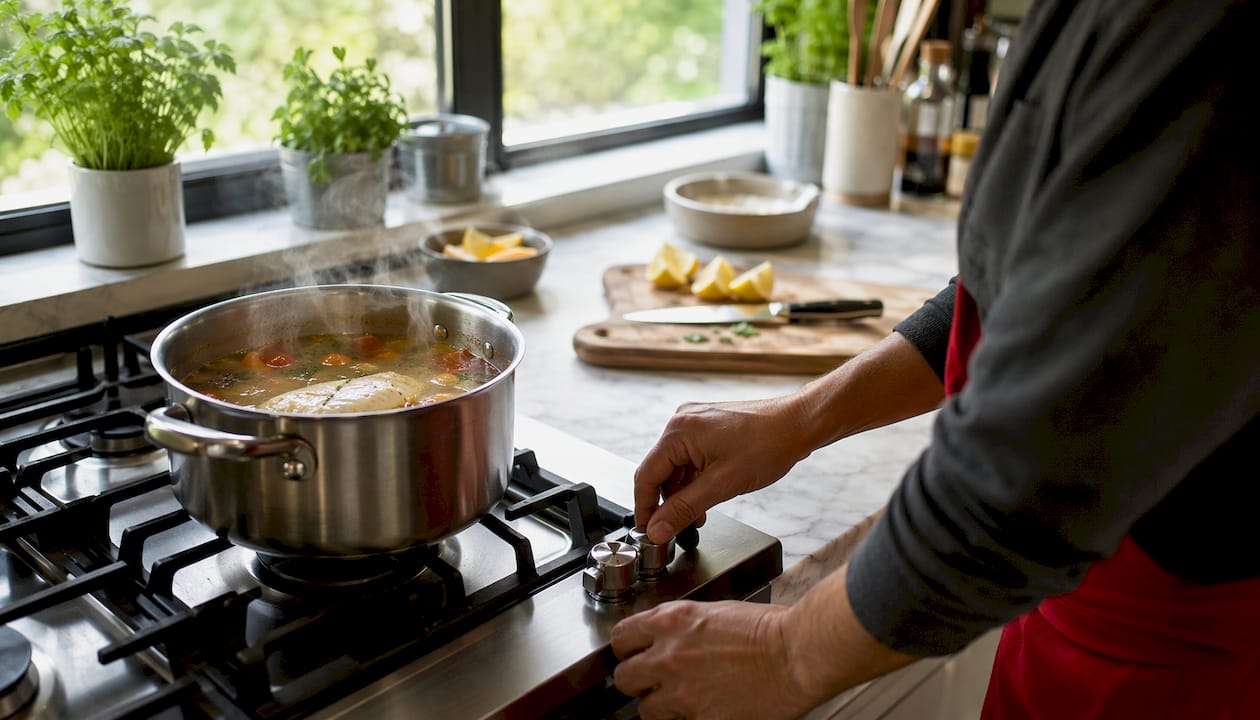
Poach gently. For fillets, cook 6–10 minutes; for small whole fish, allow 15–20 minutes. The fish is done when it flakes easily at the thickest point and the flesh has turned opaque throughout.
-
Finish and serve. Scatter fresh parsley over the top, drizzle with a little more olive oil, and bring the pan straight to the table. Serve with thick slices of crusty bread on the side.
Pro Tip: Do not rush the simmer. A rolling boil will break the fish apart and cloud the broth. Keep the heat low enough that the liquid barely trembles — that gentle heat is what keeps the fish tender and the broth clear.
Where did acqua pazza come from?
The dish traces back to the fishing communities of coastal Campania, particularly around Naples and the Amalfi Coast. Fishermen working the Tyrrhenian Sea would cook their daily catch directly on the boat, using seawater as the poaching liquid and whatever aromatics they had on hand — garlic, parsley, a splash of olive oil. The result was a meal born from practicality, not recipe books.
Food writer Arthur Schwartz, in Naples at Table, offers the most credible explanation for the name. According to Schwartz, “crazy water” was the incredulous reaction of onlookers watching fishermen cook fish in seawater. The idea that plain water could produce something so flavorful struck people as improbable, almost absurd. A second theory links “crazy” to the inclusion of chilis, but Schwartz considers this less likely, since the dish almost certainly predates the arrival of chilis and tomatoes in Italy in the early 16th century.
The earliest versions were even simpler: water, salt, garlic, parsley, and olive oil. Tomatoes came later, once they were established in the Italian kitchen, and they became central to the Campanian version that most people recognize today.
Acqua pazza gained international recognition through the island of Capri in the 1960s, when tourists discovered it at local restaurants and brought the name home with them. By the 1990s, it had become the most popular way to prepare small whole fish across Campania. That trajectory, from fisherman’s boat to tourist favorite to home kitchen staple, is a familiar one in Italian coastal cooking.
How to serve acqua pazza for the best experience
The broth is not a byproduct. It is half the dish. How you serve the meal determines whether that broth gets its due.
- Crusty bread is essential. Serving the dish with thick slices of crusty bread is a core Neapolitan tradition, as the bread soaks up the garlicky, tomato-laced liquid, completing the meal.
- Keep the sides light. A simple arugula salad dressed with lemon and olive oil, or quickly sautéed spinach with garlic, lets the fish stay at the center. Heavy sides compete with the broth’s delicacy.
- Wine pairing: A crisp, dry white wine works best alongside the dish. Vermentino from Sardinia, Falanghina from Campania, or a Pinot Grigio from Friuli all complement the broth without overpowering it. If you cooked with a wine you enjoy drinking, pour a glass of the same.
- Plating: Serve directly from the pan or in wide, shallow bowls that can hold the broth. A drizzle of raw olive oil just before serving adds a fresh, grassy finish.
- Seasonal adjustments: In summer, fresh basil and ripe cherry tomatoes make the dish feel bright and light. In cooler months, a few Castelvetrano olives and a bay leaf shift it toward something slightly richer and more warming.
The dish is casual enough for a Tuesday night and impressive enough for company. That range is part of why it has lasted.
Hearthlyrecipes-tested tips for perfect acqua pazza every time
After testing this dish multiple times, a few things consistently separate a good result from a great one.
Ingredient quality drives flavor more than technique here. The broth has nowhere to hide mediocre olive oil or mealy tomatoes. When cherry tomatoes are in season, use them fresh. Off-season, good-quality canned whole tomatoes, crushed by hand, are a better choice than pale, flavorless fresh ones.
The bread point deserves repeating. The broth functions as both cooking liquid and sauce, and skipping the bread means leaving the best part of the meal behind. This is not a garnish suggestion — it is structural to how the dish works.
Common pitfalls to avoid:
- Overcrowding the pan (the fish steams unevenly and the broth gets diluted)
- Lifting the lid repeatedly during poaching (you lose steam and the temperature drops)
- Using fish that is too thick without adjusting time (check at the thickest point with a fork)
- Skipping the wine (it adds acidity that balances the olive oil and brightens the tomatoes)
Substitutions that hold up:
- No white wine? A tablespoon of white wine vinegar plus extra water works in a pinch.
- No fresh parsley? Flat-leaf is traditional, but fresh basil or a small amount of fresh oregano can substitute.
- Dietary needs? The dish is naturally gluten-free (skip the bread or use a GF loaf) and fits well within a Mediterranean-style eating pattern.
For more Italian seafood recipes tested for the home kitchen, Hearthlyrecipes has a full collection worth exploring. The all recipes page is a good starting point if you want to branch out from fish into the broader Italian repertoire.

Key Takeaways
Acqua pazza is a traditional Italian poached fish dish built on a light tomato-and-wine broth, and its success depends on quality ingredients, gentle heat, and crusty bread served alongside.
| Point | Details |
|---|---|
| Fish selection | Use mild, firm white fish: sea bass, cod, halibut, or snapper all work well. |
| Broth simplicity | The base is water, white wine, olive oil, garlic, cherry tomatoes, and parsley — nothing more is required. |
| Cooking time | Fillets need a few minutes; whole fish take longer, always covered and at a gentle simmer. |
| Bread is essential | Serving crusty bread with acqua pazza is traditional and completes the dish, as the bread soaks up the flavorful broth and is considered a must for authenticity. |
| Origins | The dish comes from Campanian fishermen cooking their catch in seawater, and gained wide recognition through Capri in the 1960s. |
FAQ
What does “acqua pazza” mean in Italian?
Acqua pazza means “crazy water” in Italian, referring to the lightly herbed, tomato-based broth used to poach the fish. The name likely originated as an incredulous reaction to fishermen cooking their catch in seawater.
What fish works best for acqua pazza?
Mild, firm-fleshed white fish are the traditional choice: sea bass, cod, halibut, sea bream, and snapper all work well. Both fillets and small whole fish are used, with whole fish adding more flavor to the broth.
Can you make acqua pazza without white wine?
Yes. A tablespoon of white wine vinegar mixed with extra water is a workable substitute. The wine adds acidity and depth, so the vinegar swap preserves that balance without requiring an open bottle.
How long does it take to cook acqua pazza?
The total active time varies, with fillets poaching in 6–10 minutes once the broth is simmering and small whole fish taking 15–20 minutes. The key is keeping the heat low and the lid on throughout.
Is acqua pazza a healthy dish?
It fits naturally into a Mediterranean-style diet. The dish is high in lean protein, uses heart-healthy olive oil, and is naturally low in carbohydrates. It is also gluten-free when served without bread.