Aji de Gallina: Authentic Peruvian Chicken Stew Recipe
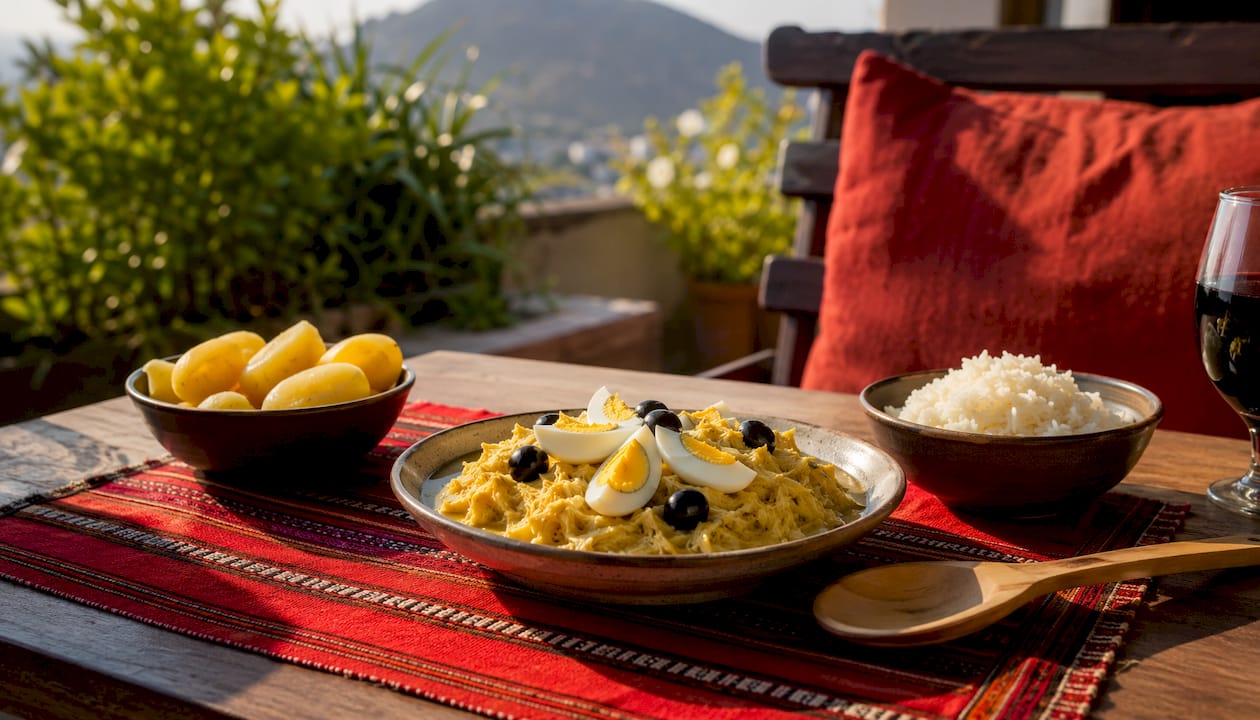
Peru’s most beloved comfort food is a creamy chicken stew built on shredded poached chicken wrapped in a golden, mildly spicy sauce. Aji de gallina gets its character from four key elements:
- Ají amarillo paste: The soul of the dish, a fruity, moderately hot yellow pepper native to South America
- Milk-soaked white bread: Blended into the sauce to create a velvety, smooth body
- Ground nuts: Pecans or walnuts add richness and subtle earthiness
- Parmesan cheese: Stirred in at the end for savory depth
Traditionally, the stew is served over white rice and boiled yellow potatoes, garnished with sliced hard-boiled eggs and black olives. The name translates to “chicken chili” or “hen’s chili” in English, though the dish reads nothing like a typical American chili. It’s richer, creamier, and far more nuanced.
What ingredients do you need for aji de gallina?
Getting the ingredients right is where authenticity starts. A few of these are non-negotiable; others have workable substitutes.
For the chicken and broth:
- 1 whole chicken, broken down, or bone-in chicken breasts
- Aromatics for poaching: carrot, celery, onion, bay leaf
For the sauce:
- A few tablespoons of ají amarillo paste (jarred or frozen preferred over fresh non-traditional peppers)
- Several slices crustless white sandwich bread, torn into pieces
- A can of evaporated milk
- A cup of roasted pecans or walnuts, coarsely chopped
- Freshly grated Parmesan cheese
- A medium red onion, finely chopped
- Garlic cloves, minced
- Dried oregano
- Ground cumin
- Olive or vegetable oil
- Reserved chicken stock, as needed
For serving:
- Cooked white rice
- Boiled yellow potatoes
- Hard-boiled eggs, quartered
- Black olives
On substitutions: Ají amarillo paste is the one ingredient worth tracking down. Latin grocery stores and many online retailers carry jarred or frozen paste, and both work beautifully. If ají amarillo is completely unavailable, Scotch bonnet or habanero peppers offer a similar fruity heat, though the flavor profile shifts noticeably. Breadcrumbs are a common shortcut, but crustless white bread soaked in milk produces a noticeably smoother, silkier sauce. Walnuts substitute freely for pecans with minimal flavor difference.
Step-by-step instructions for making aji de gallina at home
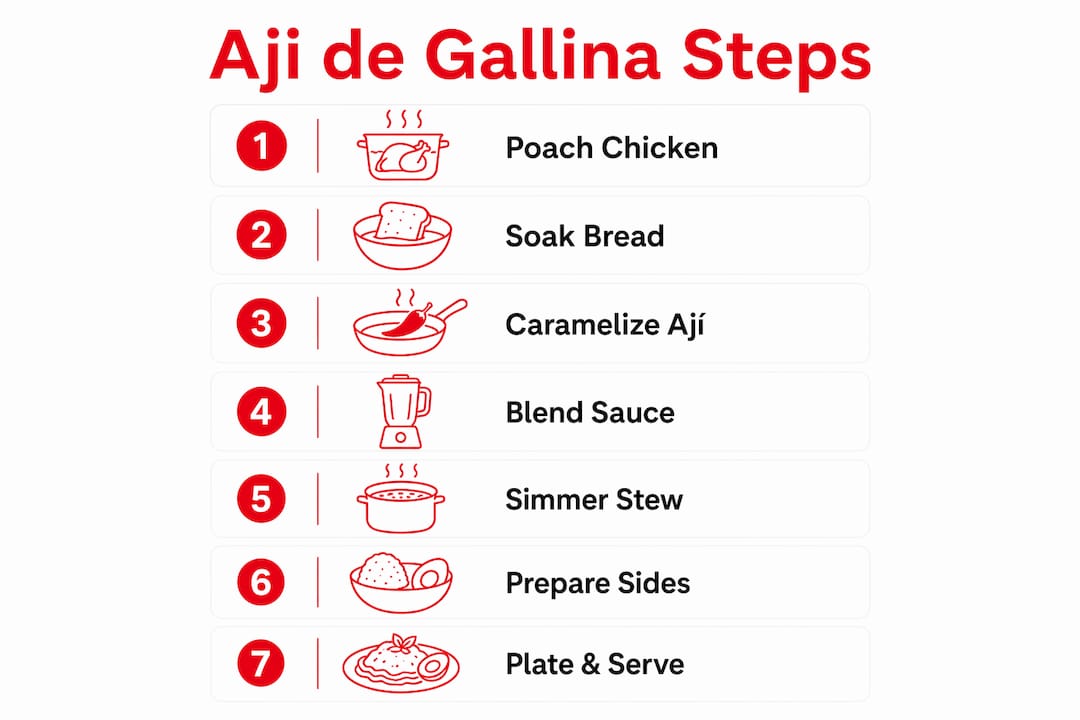
1. Poach and shred the chicken
Place the chicken pieces in a large stockpot with the carrot, celery, halved onion, and bay leaf. Cover with cold water by about an inch and bring to a boil. Reduce heat and simmer for about half an hour, skimming foam as it rises. Transfer the chicken to a plate to cool, then strain and reserve the stock. Once cool enough to handle, shred the meat into bite-sized pieces, discarding skin and bones.
2. Soak the bread
Tear the crustless bread into large pieces and place them in a blender. Pour the evaporated milk over the bread and let it soak for at least several minutes while you build the sauce base.
3. Caramelize the ají paste
Heat oil in a Dutch oven or heavy pot over medium-high heat. Add the onion and a pinch of salt, cooking until softened, about 5–6 minutes. Add the garlic, ají amarillo paste, oregano, and cumin. Cook, stirring frequently, until the paste caramelizes and deepens in color, about a few minutes. Add a splash of reserved stock and scrape up any browned bits.
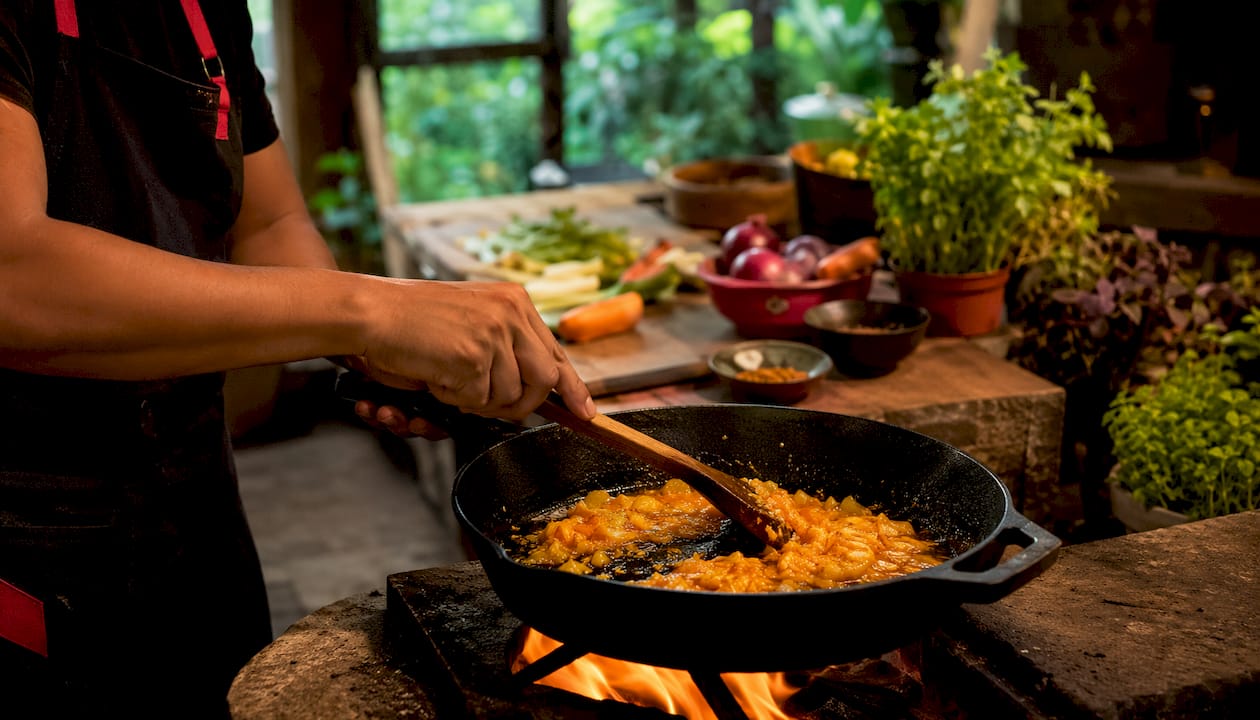
Pro Tip: Never skip the caramelization step. Stirring ají amarillo paste directly into liquid gives you raw pepper flavor. Cooking it with onion and garlic unlocks a complex, slightly sweet depth that defines the dish.
4. Blend the sauce
Scrape the onion and ají mixture into the blender with the soaked bread. Add 2 cups of reserved chicken stock and blend until completely smooth. Pour the mixture back into the pot and simmer over medium heat for 8–10 minutes until slightly reduced.
5. Finish the stew
Add the shredded chicken, Parmesan, and chopped pecans to the pot. Stir well and bring back to a gentle simmer. The sauce should coat the back of a spoon thickly. If it tightens too much, stir in additional stock, a quarter cup at a time. Taste and adjust salt.
6. Prepare the accompaniments
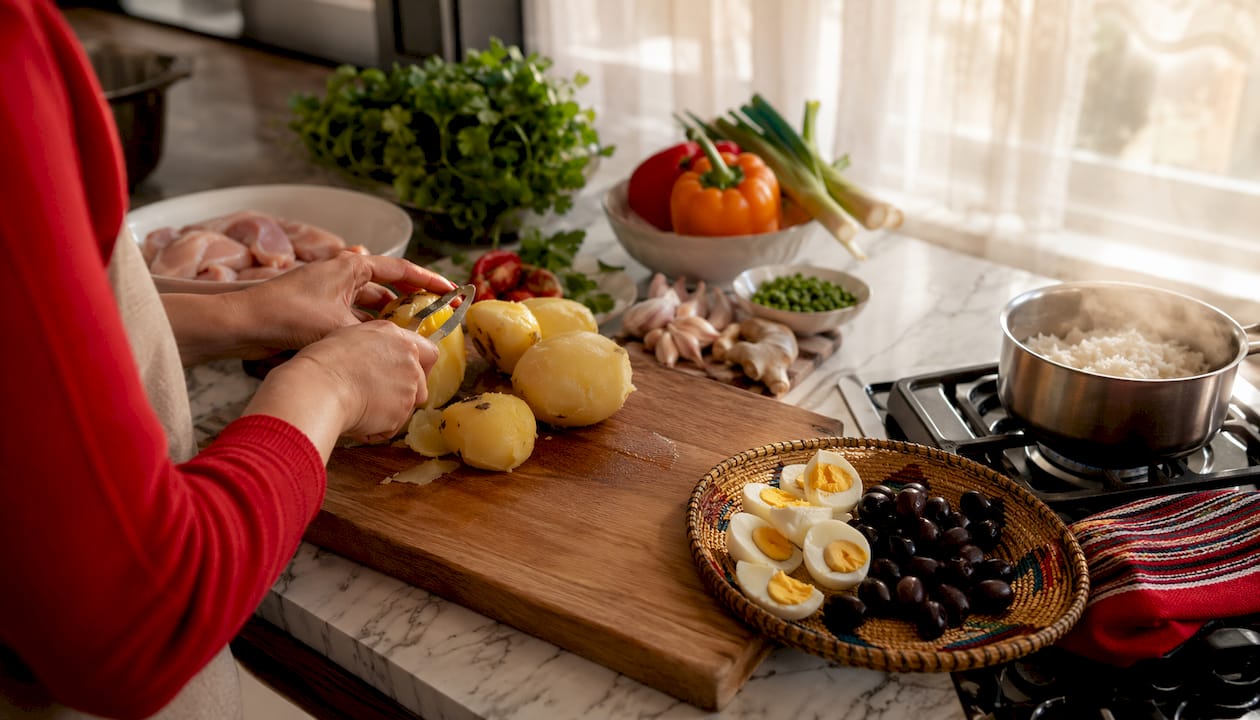
Boil yellow potatoes in salted water until tender, then cool and peel. Cook white rice separately. Quarter the hard-boiled eggs.
7. Plate and serve
Spoon the stew over white rice, arrange potato slices alongside, and garnish with egg quarters and black olives.
Tips that actually improve your results
Cooking this dish well comes down to a handful of decisions that most recipes gloss over.
- Choose bone-in chicken for the stock. A whole broken-down chicken produces a richer, more flavorful broth than boneless breasts alone. That stock is what you use to adjust sauce consistency throughout cooking.
- Use evaporated milk, not fresh. Evaporated milk adds a subtle sweetness and body that fresh milk cannot replicate in the sauce.
- Adjust thickness with stock, not dairy. Adding more milk to thin a sauce dilutes the ají amarillo’s flavor. Chicken stock preserves it.
- Add Parmesan last. Stirring it in too early can cause the sauce to break or turn grainy. Off the heat or in the final minute of simmering is ideal.
- Blend thoroughly. Any unblended bread chunks will create an uneven texture. Blend for at least 60 seconds on high.
- Rotisserie chicken works. If you want to cut cooking time, 2 lbs of shredded rotisserie chicken plus store-bought low-sodium chicken broth produces a very good result.
Pro Tip: For the most authentic flavor, source ají amarillo paste from a Latin grocery store rather than a general supermarket. The jarred paste from Peruvian brands tends to have a brighter, fruitier heat than generic versions.
For another approach to creamy, spice-forward chicken dishes, the slow cooker sweet chili chicken on Hearthlyrecipes shows how similar flavor dynamics play out with a different technique.
Where does aji de gallina come from?
The dish traces its roots to a medieval preparation called manjar blanco, a sweet stew of ground almonds, milk, sugar, and chicken or fish that Spanish conquistadors brought to Peru in the 16th century. In Europe, that preparation eventually became a dessert. In colonial Peru, it went in a completely different direction.
Local cooks replaced the sugar with ají amarillo and incorporated indigenous potatoes, transforming a sweet European dish into a savory Peruvian staple. Culinary historians point to aji de gallina as a textbook example of the fusion between colonial Spanish technique and native Andean ingredients. One oral history even credits former chefs of the French aristocracy, who fled the French Revolution and found work in the Viceroyalty of Peru, using leftover chicken and pantry scraps to create early versions of the dish.
The name itself reflects an older tradition. “Gallina” refers to a mature hen, which was traditionally used for its deeper flavor. Modern cooks use younger chicken because it’s more tender and cooks faster, without meaningfully changing the dish’s character. The stew also appears in variations using turkey or canned tuna, though the chicken version remains the standard across Peru.
If you’re curious about how international cuisine dinner experiences approach Peruvian culinary history, the fusion origins of aji de gallina offer a compelling entry point.
Why home cooks trust Hearthlyrecipes for this dish
Hearthlyrecipes approaches every recipe the way this dish deserves: with thorough testing, clear step-by-step guidance, and honest notes on what actually matters versus what’s optional.
- Tested for home kitchens: Every recipe on Hearthlyrecipes is developed and verified for standard home equipment, not professional kitchens.
- Honest substitutions: The platform flags which swaps preserve the dish’s character and which ones compromise it.
- Step-level clarity: Instructions are written so that a cook making the dish for the first time can follow along without second-guessing.
- Consistent user ratings: Many recipes on the platform carry 5-star ratings, reflecting real satisfaction from home cooks.
- Broad comfort food catalog: From creamy chicken pasta to slow-cooked stews, Hearthlyrecipes covers the full range of hearty, satisfying meals.
Ready to explore more traditional recipes? The Heritage Kitchen collection on Hearthlyrecipes brings together authentic dishes from around the world, including Peruvian favorites.

Key Takeaways
Aji de gallina’s signature flavor comes from caramelized ají amarillo paste, milk-soaked bread, ground nuts, and Parmesan stirred into rich poached-chicken broth.
| Point | Details |
|---|---|
| Ají amarillo is non-negotiable | Jarred or frozen paste preserves the dish’s fruity, mild heat better than non-traditional substitutes. |
| Caramelize the paste | Cooking ají amarillo with onion and garlic for A few minutes unlocks sweetness and flavor depth. |
| Use bread, not breadcrumbs | Crustless white bread soaked in evaporated milk creates the velvety, smooth sauce texture. |
| Adjust with stock, not dairy | Adding chicken stock to thin the sauce keeps the ají amarillo flavor intact. |
| Serve the traditional way | White rice, boiled yellow potatoes, hard-boiled eggs, and black olives complete the dish. |
What this dish taught me about comfort food
Aji de gallina is one of those recipes that rewards patience in a way most weeknight dishes don’t. The caramelization step feels like a small thing until you taste the difference. A sauce built on raw paste versus one built on properly cooked paste are genuinely different dishes.
What strikes me most about this stew is how the flavors balance without competing. The ají amarillo brings warmth and fruitiness, the bread and nuts add body, and the Parmesan ties it together with a savory edge. None of these elements overwhelm the others. That kind of balance is harder to achieve than it looks, and it’s why the dish has endured for centuries.
My honest advice for first-time cooks: don’t rush the sauce. Blend it longer than you think necessary, taste it before adding the chicken, and trust the stock to fix consistency problems. The dish is forgiving once you understand those three things.
FAQ
What is aji de gallina made of?
Aji de gallina is made from shredded poached chicken in a creamy sauce of ají amarillo paste, milk-soaked white bread, ground pecans or walnuts, Parmesan cheese, onion, garlic, cumin, and oregano, served over rice and boiled potatoes.
What does aji de gallina mean in English?
The name translates to “chicken chili” or “hen’s chili,” with “gallina” referring to a mature hen, the bird traditionally used before modern cooks switched to younger, more tender chicken.
Is aji de gallina healthy?
The dish provides a solid source of protein from chicken, nuts, and dairy, though the creamy sauce makes it a hearty, calorie-dense meal rather than a light one. It fits well as an occasional comfort food rather than an everyday low-calorie option.
What does aji de gallina taste like?
The flavor is creamy, mildly spicy, and slightly nutty, with a fruity warmth from the ají amarillo that’s more aromatic than fiery. The Parmesan adds a savory backbone, and the texture is smooth and velvety throughout.
Can you make aji de gallina ahead of time?
Yes. The chicken stock and shredded chicken can be prepared up to 2 days in advance and refrigerated separately. The finished stew also reheats well; add a splash of chicken stock when warming to restore the sauce’s consistency.