Apple and Banana Muffin Recipe: 12 Moist Muffins
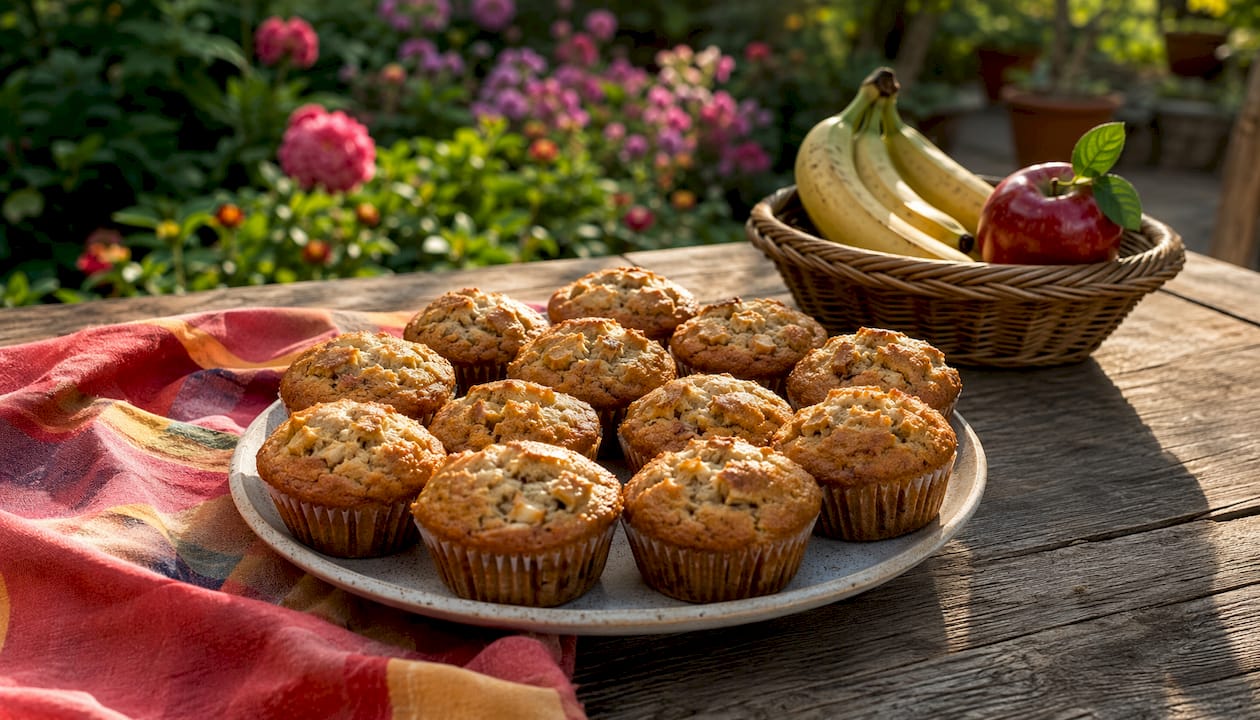
This apple and banana muffin recipe makes 12 tender, breakfast-ready muffins by pairing mashed ripe banana for moisture with small-diced baking apple for texture and brightness. The method is straightforward, the pantry list is short, and the results are reliably soft every time.
At a glance:
- Total time: approximately 45 minutes including prep and bake
- Yield: a standard dozen muffins, or 12 mini muffins for a mini version.
- Oven temp: moderate oven heat suitable for muffins (typically around 350°F)
- Key ingredients: ¾ cup mashed ripe banana, 1 cup diced firm apple, all-purpose flour, one egg, neutral oil or melted butter, baking powder
- Why it works: Mashed banana supplies natural sweetness and keeps the crumb tender. Small apple pieces add a slight bite and fruity brightness. Minimal mixing keeps gluten development low, so the crumb stays soft rather than rubbery.
Table of Contents
- Complete Apple and Banana Muffin Recipe Card
- Step-by-Step Method for Perfect Fruit Muffins
- Variations and Substitutions Worth Trying
- Why Muffins Go Wrong and How to Fix It
- Storage, Freezing, and Reheating
- Nutrition and Healthier Swaps
- Scaling, Mini Muffins, and Oven Adjustments
- Key Takeaways
- A Baker’s Perspective on Getting These Right
- More Breakfast Baking from Hearthlyrecipes
- FAQ
- Useful Sources
Complete Apple and Banana Muffin Recipe Card
Ingredients (US measurements)
| Component | Ingredient | Amount |
|---|---|---|
| Dry | All-purpose flour | about one and a half cups |
| Dry | Baking powder | a small amount (a few teaspoons) |
| Dry | Baking soda | a small pinch |
| Dry | Ground cinnamon | a teaspoon |
| Dry | Salt | a small pinch |
| Wet | Mashed ripe banana | about three quarters of a cup |
| Wet | Neutral oil or melted butter | around one third cup |
| Wet | Granulated sugar | around one third cup |
| Wet | Large egg | one egg |
| Wet | Milk (whole or 2%) | about a quarter cup |
| Wet | Vanilla extract | a teaspoon |
| Fruit | Firm apple, peeled and diced small | about one cup |
| Optional | Nutmeg | a small amount |
Yield, times, and oven notes
- Yield: a standard dozen muffins, or 12 mini muffins for a mini version.
- Prep time: about twenty minutes
- Bake time: about 22 to 25 minutes at moderate oven temperature
- Fan/convection: Reduce to 325°F or cut 5 minutes from bake time
- Gas oven: Gas Mark 4
Equipment
A standard 12-cup muffin tin, paper liners or nonstick spray, two mixing bowls, a whisk, a rubber spatula, and dry measuring cups and spoons. A kitchen scale is worth using for flour (spooned and leveled cups vary by as much as 20%), but measuring cups work fine if you fluff the flour first.
Nutrition snapshot: According to NHS data, a mini apple and banana muffin comes in at approximately 99 kcal, with 2.7 g fat and 16.2 g carbohydrates per muffin. Exact figures shift with ingredient swaps (oil vs. butter, added sugar, mix-ins), so treat this as a useful baseline rather than a precise count.
Note for production: add JSON-LD Recipe schema markup to this page for rich-result eligibility.
Step-by-Step Method for Perfect Fruit Muffins
-
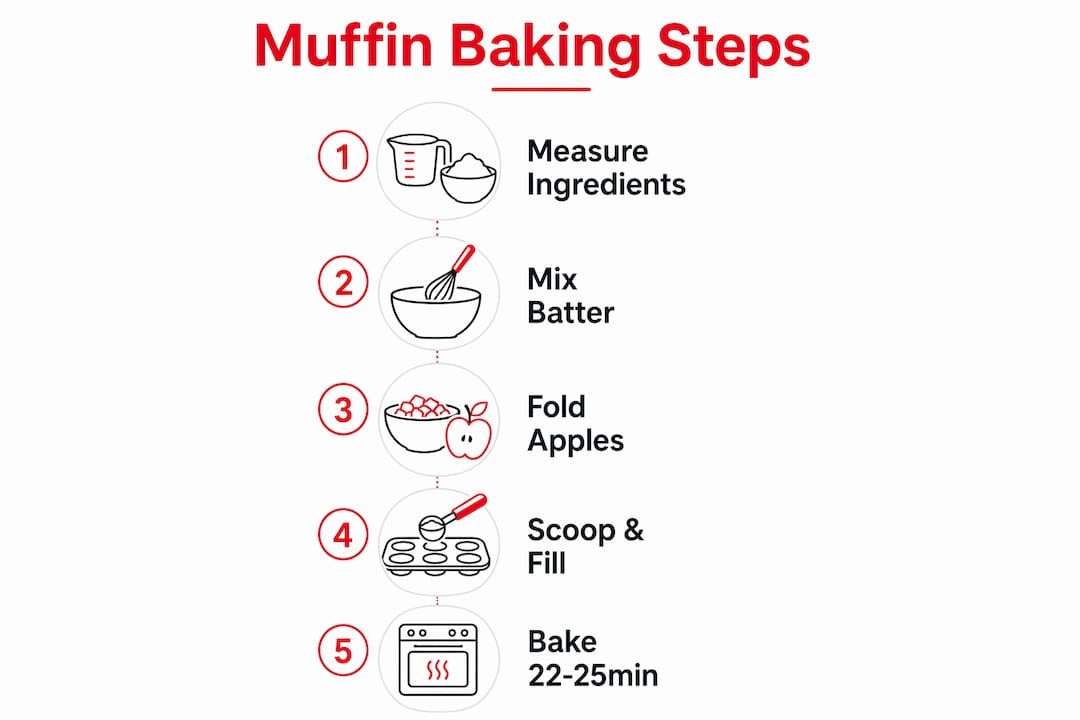
Preheat the oven (5 min before you start mixing). Set to 350°F. Line a 12-cup muffin tin with paper liners or spray lightly with nonstick spray. Getting the tin ready first means the batter goes straight in without sitting.
-
Prep the apple. Peel and dice the apple into ¼-inch pieces. Uniform, small dice matters: large chunks sink and create wet pockets. Toss the diced apple with 1 tablespoon of flour from the measured amount — this light coating absorbs surface moisture and keeps the fruit suspended in the batter rather than dropping to the bottom.
-
Mix the dry ingredients. In a medium bowl, whisk together the flour, baking powder, baking soda, cinnamon, salt, and nutmeg if using. Baking powder is the primary lift here; the small amount of baking soda reacts with the natural acidity in banana to give an extra boost of rise.
-
Measure and mash the banana. Aim for ¾ cup mashed banana — banana sizes vary enough that counting fruit alone is unreliable. Use very ripe bananas with brown spots; they mash smoother and contribute more natural sweetness. Mash until almost no lumps remain.
-
Mix the wet ingredients. In a large bowl, whisk together the mashed banana, oil (or melted butter), sugar, egg, milk, and vanilla until smooth and pale, about 30 seconds.
-
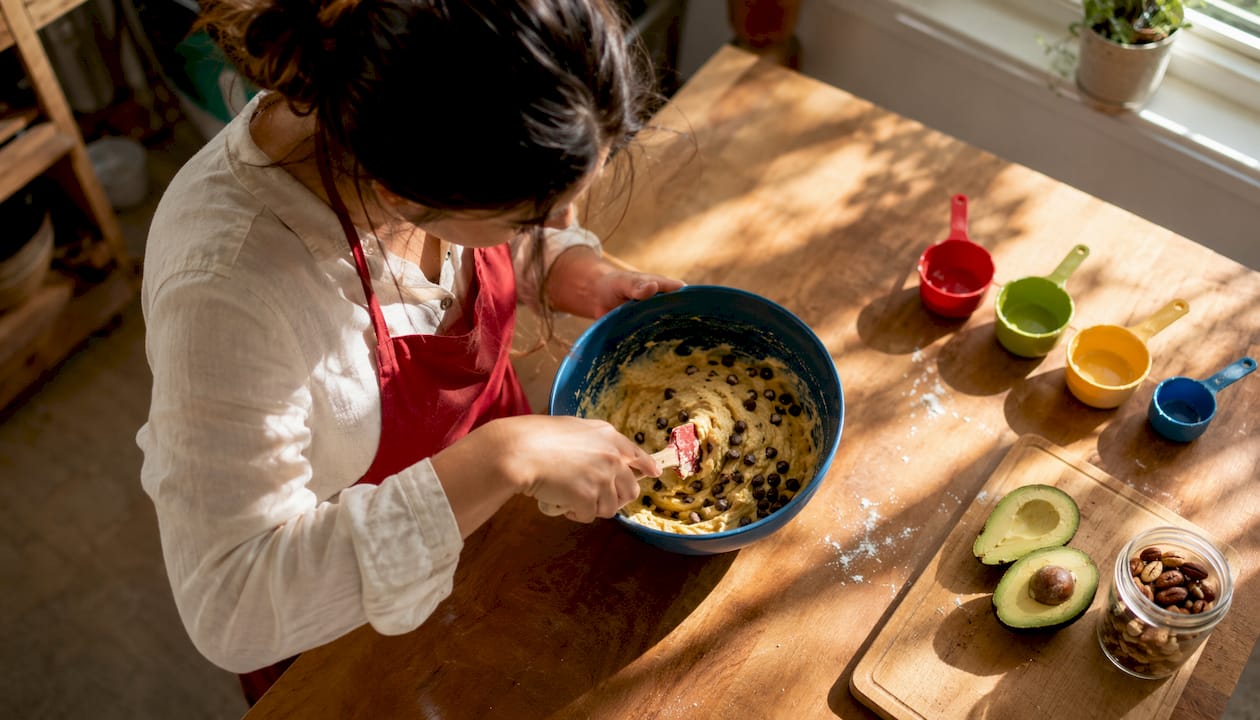
Combine wet and dry. Pour the dry ingredients into the wet bowl. Switch to a spatula and fold gently — stop as soon as the flour streaks disappear. A few small streaks are fine; they vanish during baking. Overmixing develops gluten and produces a tough, dense crumb, so resist the urge to keep stirring.
-
Fold in the floured apple pieces. Three or four gentle folds is all it takes to distribute the fruit evenly.
-
Fill the cups. Divide the batter evenly, filling each cup about ¾ full. This gives the muffins room to dome without spilling over.
-
Bake 22–25 minutes. The tops should be golden and spring back when lightly pressed. A toothpick inserted in the center should come out with just a few moist crumbs — not wet batter. Starting with a brief blast at higher heat (375°F for the first 5 minutes, then dropping to 350°F) can produce a taller dome if you want a bakery-style top.
-
Cool in the tin for 5 minutes, then transfer to a wire rack. Cutting into them too soon causes the crumb to tear.
Pro Tip: Coat the diced apple in that reserved tablespoon of flour before folding it in. It takes 10 seconds and prevents the apple from dragging moisture to the bottom of each muffin.
Variations and Substitutions Worth Trying
Swapping one or two ingredients is where these muffins get interesting.
Flour swaps:
- Replace up to half the all-purpose flour with whole wheat flour for a heartier texture and more fiber. Add 1–2 extra tablespoons of milk to compensate, since whole-grain flour absorbs more liquid.
- A 1:1 gluten-free flour blend works well as a direct swap; expect a slightly denser crumb.
- Swapping ¼ cup of flour for almond meal adds richness and a subtle nuttiness without drying the muffin.
Fat and sweetener swaps:
- Avocado oil or melted coconut oil both work in place of neutral oil. Melted butter adds flavor but slightly reduces tenderness compared to oil.
- Reduce sugar to ¼ cup when using very ripe bananas — the natural sweetness carries the muffin. Replace part of the sugar with maple syrup (use 3 tablespoons and reduce milk by 1 tablespoon).
- Grated apple and mashed banana together create a naturally sweet base that lets you cut added sugar further without sacrificing moisture.
Add-ins (keep total add-ins to ½ cup or less to avoid overloading the batter):
- Chopped walnuts or pecans for crunch
- Rolled oats stirred in or sprinkled on top
- Raisins or dried cranberries for a chewy contrast
- A cinnamon streusel on top (mix 3 tbsp flour, 4 tbsp brown sugar, ¼ tsp cinnamon, 1 tbsp melted butter; sprinkle before baking)
Egg-free and vegan options:
- Replace the egg with a flax egg (1 tablespoon ground flaxseed + 3 tablespoons water, rested 5 minutes) and add 2 tablespoons of plain dairy-free yogurt. The texture will be slightly denser and less springy, but still pleasant. Use plant-based milk and oil instead of butter to keep it fully vegan.
Why Muffins Go Wrong and How to Fix It
Dry muffins almost always trace back to one of three causes: too much flour (pack the cup and you can add 20% more than intended), overmixing, or an extra few minutes in the oven. Measure flour by spooning it into the cup and leveling off, stop mixing the moment the batter comes together, and start checking doneness at 20 minutes.
Should you cook the apples first? Usually no. Raw diced apple softens perfectly during the 22–25 minute bake and keeps a slight bite that contrasts nicely with the tender crumb. Pre-cooking makes sense only if you want a very soft, almost compote-like apple texture throughout, or if you are using a particularly watery variety like McIntosh. Firm varieties such as Gala, Fuji, Honeycrisp, or Granny Smith hold their shape and stay distinct in the finished muffin.
Apples sinking or making the batter soggy comes down to two things: piece size and surface moisture. Dice small and uniform (¼ inch), and toss in a tablespoon of flour before folding in. If you prefer grated apple, squeeze out the excess liquid in a clean towel first.
Pro Tip: If your muffins still come out drier than you like, swap 2 tablespoons of milk for plain Greek yogurt. The extra fat and acidity keep the crumb soft for an extra day or two.
Storage, Freezing, and Reheating
- Room temperature: Store in an airtight container for up to 3 days. A sheet of paper towel under the muffins absorbs excess moisture and keeps the bottoms from going soft.
- Refrigerator: Up to 5 days in an airtight container. Cold storage firms the crumb slightly, so a quick 15-second microwave warm-up restores the texture.
- Freezer: Up to 3 months. Cool the muffins completely before freezing — warm muffins create condensation that turns into ice crystals. Freeze in a single layer on a baking sheet first, then transfer to a sealed freezer bag and squeeze out as much air as possible before sealing. This prevents freezer burn and keeps the tops intact. Batch-freezing is one of the best reasons to make a double batch — you get two weeks of grab-and-go breakfasts for the effort of one bake. For protein-boosted muffin meal prep, the same freeze-flat method applies.
- Reheating: Thaw at room temperature for about an hour, or microwave from frozen in 20-second bursts until warmed through. For a freshly baked texture, place thawed muffins in a 325°F oven for 8–10 minutes.
Nutrition and Healthier Swaps
The NHS baseline of approximately 99 kcal per muffin reflects a lighter recipe using a reduced-fat spread and minimal added sugar. A standard home-baked version with oil and ⅓ cup sugar will land somewhat higher, depending on your specific ingredients and add-ins.
To reduce sugar without drying the muffin:
- Use very ripe, heavily spotted bananas — they contribute noticeably more sweetness than just-yellow ones.
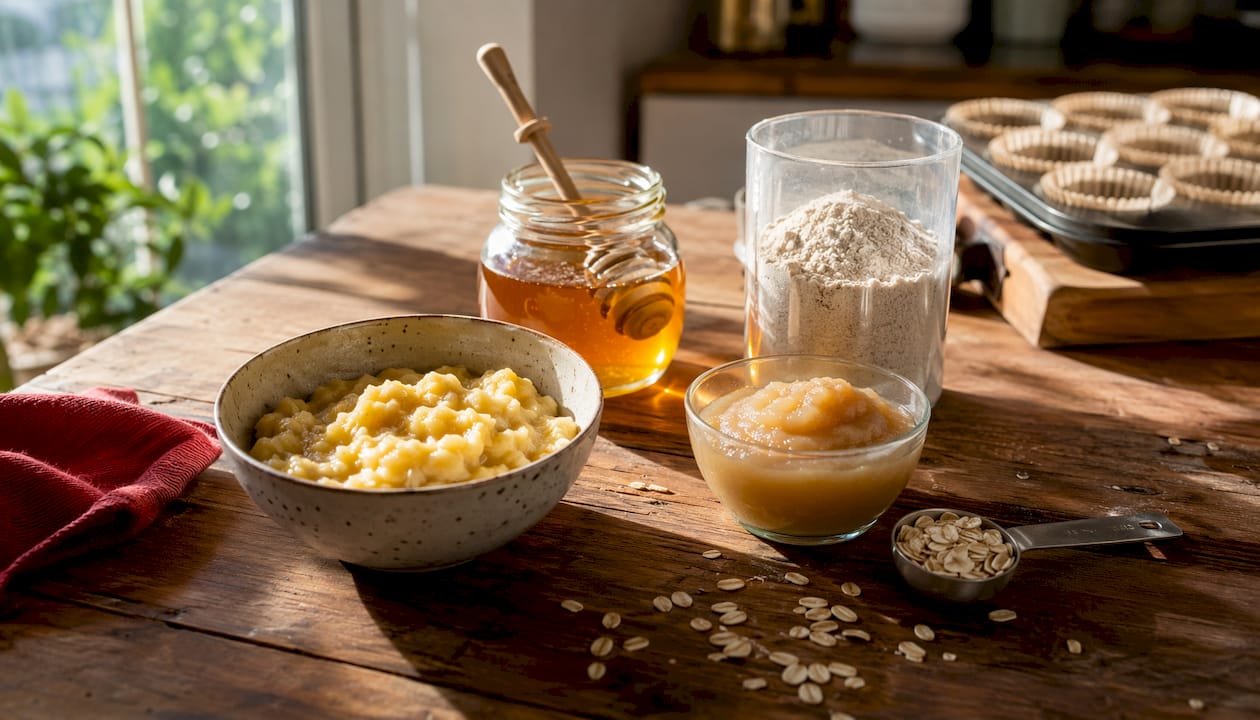
- Replace up to half the granulated sugar with unsweetened applesauce (use the same volume). The applesauce adds moisture and mild sweetness; reduce milk by 1 tablespoon to balance.
- Honey or maple syrup work as 1:1 swaps for sugar by volume, though they add slight liquid, so reduce milk by 1 tablespoon.
Fat swaps: Oil produces a slightly more tender crumb than butter because it stays liquid at room temperature. Greek yogurt can replace up to half the oil; it adds protein and keeps the muffin soft, though the texture is a touch denser. Using a combination of oil and Greek yogurt is a reliable middle ground.
Boosting fiber and protein: Swapping ¼–½ cup of all-purpose flour for whole wheat flour or almond meal adds fiber and protein with minimal flavor change. Add 1–2 tablespoons of extra liquid when doing so, since whole-grain flours absorb more moisture.
Scaling, Mini Muffins, and Oven Adjustments
Scaling this recipe is straightforward: multiply or divide every ingredient by the same factor. When halving, round small quantities sensibly (half of ¼ tsp baking soda is a scant ⅛ tsp — just use a small pinch).
| Batch | Yield | Bake temp | Bake time |
|---|---|---|---|
| Half batch | 6 standard | 350°F | 20–22 min |
| Standard | 12 standard | 350°F | 22–25 min |
| Double batch | — | 350°F | 22–25 min |
| Standard (mini) | 12 mini | 350°F | 10 min |
Mini muffins bake fast — start checking at 10 minutes. The toothpick test still applies: a few moist crumbs are fine, wet batter is not.
For convection ovens, reduce the temperature by 25°F (to 325°F) or shorten bake time by about 5 minutes. Convection circulates hot air and browns the tops faster, so watch the color from the 18-minute mark. The spring-back test (press the top lightly; it should bounce back) is more reliable than color alone.
Key Takeaways
Moist apple and banana muffins come down to three things: ripe banana measured by volume, small-diced firm apple tossed in flour, and batter mixed only until just combined.
| Point | Details |
|---|---|
| Measure banana by volume | Target ¾ cup mashed banana — banana sizes vary too much to count by fruit alone. |
| Choose firm apple varieties | Gala, Fuji, Honeycrisp, or Granny Smith hold texture during baking; dice to ¼ inch. |
| Stop mixing early | Fold wet into dry until streaks just disappear; overmixing creates a tough crumb. |
| Freeze for make-ahead ease | Cool completely, freeze flat, then bag with air removed — keeps well for up to 3 months. |
| Hearthlyrecipes tested method | This recipe follows Hearthlyrecipes’s tested approach: pantry-friendly swaps, clear technique notes, and reliable results for everyday bakers. |
A Baker’s Perspective on Getting These Right
The conventional wisdom on fruit muffins is to keep things simple: mash the banana, fold in the apple, bake. That advice is mostly right, but it skips the part that actually separates a good muffin from a great one — the moisture balance between the two fruits.
Banana and apple behave differently in batter. Banana breaks down and blends into the crumb, contributing body and sweetness. Apple stays distinct, and if the pieces are too large or too wet, they create isolated soggy pockets rather than clean bursts of fruit. The fix is not complicated: small dice, a flour coat, and firm varieties. But most recipes mention it as a footnote rather than a central technique.
The other thing worth saying plainly: oil makes a better everyday muffin than butter for this combination. Butter tastes richer, but oil keeps the crumb soft at room temperature for an extra day, which matters when you are baking a batch for the week. If you want the butter flavor, use half butter and half neutral oil. You get both.
More Breakfast Baking from Hearthlyrecipes
If these muffins earn a regular spot in your rotation, the Morning Fuel collection on Hearthlyrecipes has more tested breakfast recipes built around the same principles: simple ingredients, clear technique, and results that actually hold up through the week. The breakfast recipes category is a good place to browse if you want savory options alongside your baking. Save or print this recipe before your next bake, and check the collection for variations worth trying next.

FAQ
What is the secret to keeping banana muffins soft?
Very ripe bananas measured to ¾ cup, combined with a neutral oil and minimal mixing, keep the crumb tender. Adding 2 tablespoons of Greek yogurt in place of some milk adds extra insurance against dryness.
Should you cook apples before putting them in muffins?
No, for most firm varieties. Gala, Fuji, or Granny Smith apples soften perfectly during the 22–25 minute bake while keeping a slight bite. Pre-cooking is only worth it if you want a very soft, compote-like texture throughout.
Is it okay to mix apple and banana together in baking?
Yes, and they complement each other well. Banana provides moisture and sweetness; apple adds texture and a mild tartness that balances the banana’s richness.
What are the simplest three-ingredient banana muffins?
A basic version uses mashed ripe banana, self-rising flour, and one egg. The result is denser and less sweet than a full recipe, but it bakes in the same time and works as a starting point for add-ins.
Useful Sources
- NHS Mini Apple and Banana Muffins — Nutritional baseline (~99 kcal per muffin), prep and cook times, and freezing method.
- Your Home, Made Healthy — Apple Banana Bread — Guidance on measuring mashed banana by volume (¾ cup target) for consistent moisture.
- Just a Taste — Apple Cinnamon Banana Bread — Technique for tossing diced apples in flour to prevent sinking; streusel topping option.
- Food Faith Fitness — Apple Banana Muffins — Two-step bake temperature technique for a taller dome; oil and banana as moisture agents.
- Weelicious — Apple Banana Muffins — Grated apple variation and oat add-in for nutrition; batch-freezing tips.
- Love and Lemons — Healthy Banana Muffins — Whole wheat and all-purpose flour blend for fiber without dryness; maple syrup as a natural sweetener.
- Bell’s Protein Pantry — Protein Muffin Meal Prep — Freeze-flat method and protein-boosting swaps for batch baking.