Apple and Carrot Salad: Quick, Fresh, and Delicious
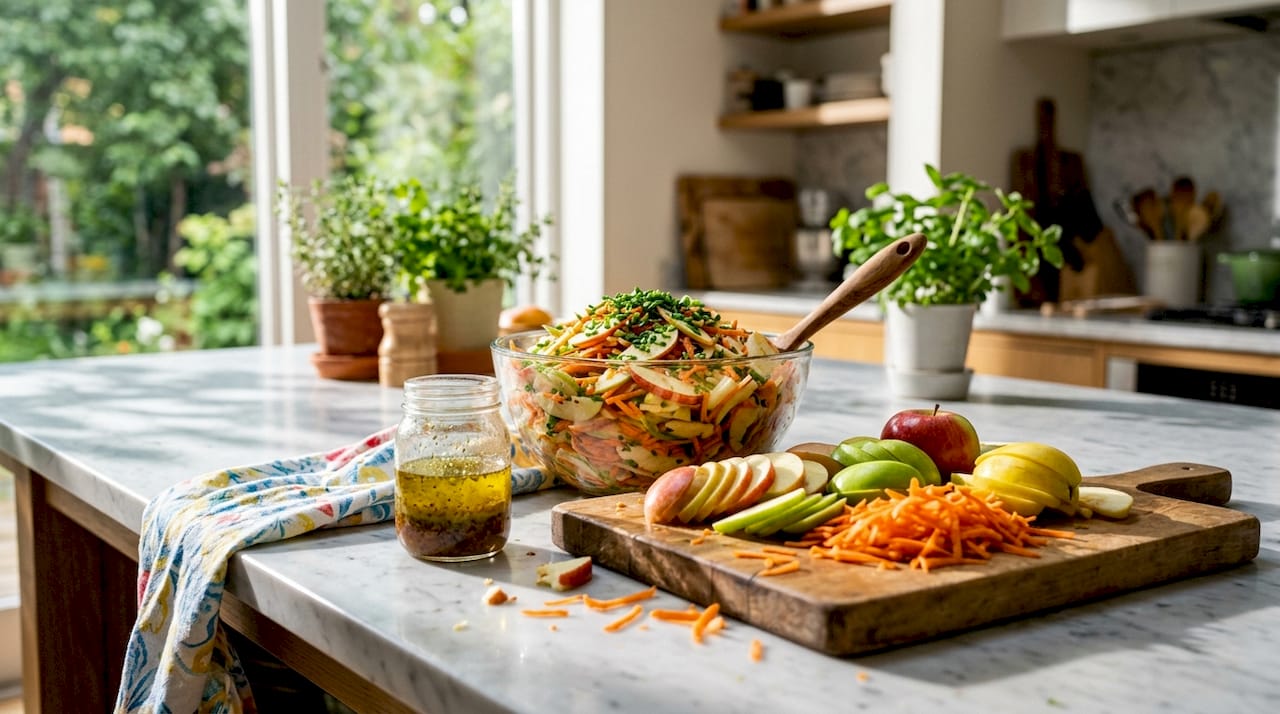
Crisp apples and fresh carrots come together in one of the easiest salads you can make. An apple and carrot salad takes about 10 minutes, needs no cooking, and works as a side dish, a snack, or a light lunch addition. The base is always the same: grated or julienned apples and carrots, tossed in either a creamy Greek yogurt dressing or a bright vinaigrette. From there, you can go in a dozen directions.
Here is what you need to get started:
- Apples: firm varieties like Honeycrisp or Granny Smith hold their texture when grated
- Carrots: large whole carrots, not baby carrots, for better sweetness and crunch
- Dressing base: Greek yogurt for creamy, or olive oil plus lemon juice for a lighter vinaigrette
- Optional add-ins: walnuts, pecans, dried cranberries, raisins, fresh ginger, or feta cheese
The combination is nutritious and complementary, pairing antioxidants, vitamins, and fiber in one bowl. It also keeps well in the refrigerator, which makes it a natural choice for meal prep.
What ingredients make the best apple and carrot salad?
The quality of your ingredients does most of the work here. A few smart choices at the store translate directly into better flavor and texture in the bowl.
Apples to use:
- Honeycrisp: sweet, firm, and holds up beautifully when grated
- Granny Smith: tart and crisp, adds a sharp contrast to sweet carrots
- Fuji: mild sweetness, stays firm after shredding
- Gravenstein, Jonathan, or Rome: old-fashioned varieties that bring complex flavor and vivid color when you mix two or three types
Carrots to use:
- Large whole carrots, not baby carrots. Whole carrots have more natural sugar and a firmer bite. Baby carrots tend to be watery and bland once grated.
- Peel them before grating. Use the medium or large side of a box grater for the best texture.
Optional flavor boosters:
- Fresh ginger root adds spice and extra antioxidants without any calories worth counting
- Fresh lemon juice brightens the whole bowl and brings out the natural sweetness in both the apples and carrots
- Kosher salt ties everything together
Pro Tip: Stop grating about 1–2 inches from the end of each carrot. The stub is too small to grip safely, and your knuckles will thank you.
Which dressings work best with this salad?
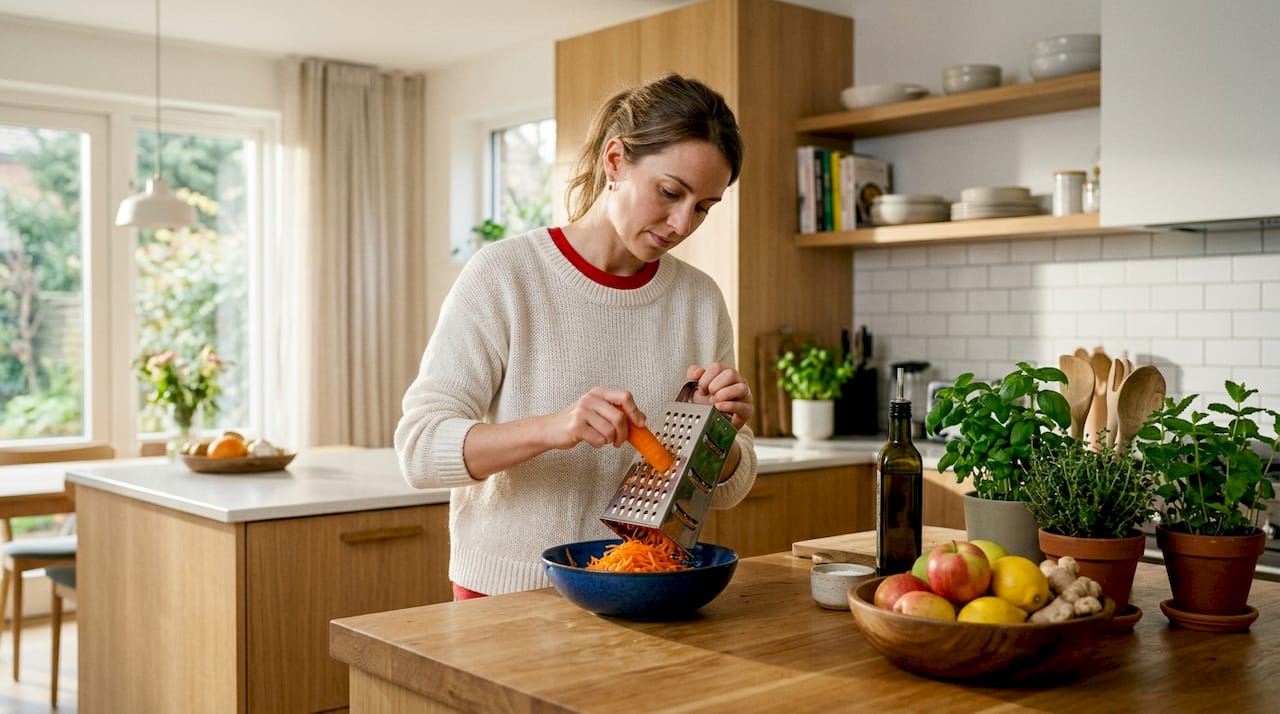
Dressing choice changes the entire character of the salad. A creamy dressing makes it feel more like a slaw or a comfort side dish. A vinaigrette keeps it light and sharp.
Creamy dressings:
- Greek yogurt base: replaces mayonnaise with less saturated fat and fewer calories while keeping the creaminess. Greek yogurt cuts saturated fat compared to mayo, and registered dietitians favor it for exactly that reason. Plain yogurt or whipped cottage cheese both work as substitutes.
- Classic mayo base: still a popular choice for a traditional carrot salad. Mix with a splash of lemon juice or apple cider vinegar to cut the richness.
Vinaigrette dressings:
- Lemon and olive oil: the simplest option. Two tablespoons of fresh lemon juice, one teaspoon of extra virgin olive oil, salt, and pepper.
- Apple cider vinegar base: slightly sweeter than lemon, pairs well with raisins or dried cranberries in the mix.
- Dijon mustard vinaigrette: whisk together cider vinegar, Dijon mustard, olive oil, salt, and pepper for a sharper, more savory profile. Lidia Bastianich’s classic version uses exactly this combination.
Flavor balancers to add to any dressing:
- Honey or maple syrup to soften acidity
- Whole grain or Dijon mustard for depth
- Minced garlic for a savory edge
- Fresh herbs like cilantro, parsley, or chives
Sweeteners and savory elements like honey, mustard, and garlic are what separate a flat dressing from one that actually tastes layered. A teaspoon of honey in a vinaigrette does more than just add sweetness. It rounds out the sharpness of vinegar so neither flavor dominates.
How to make apple and carrot salad step by step
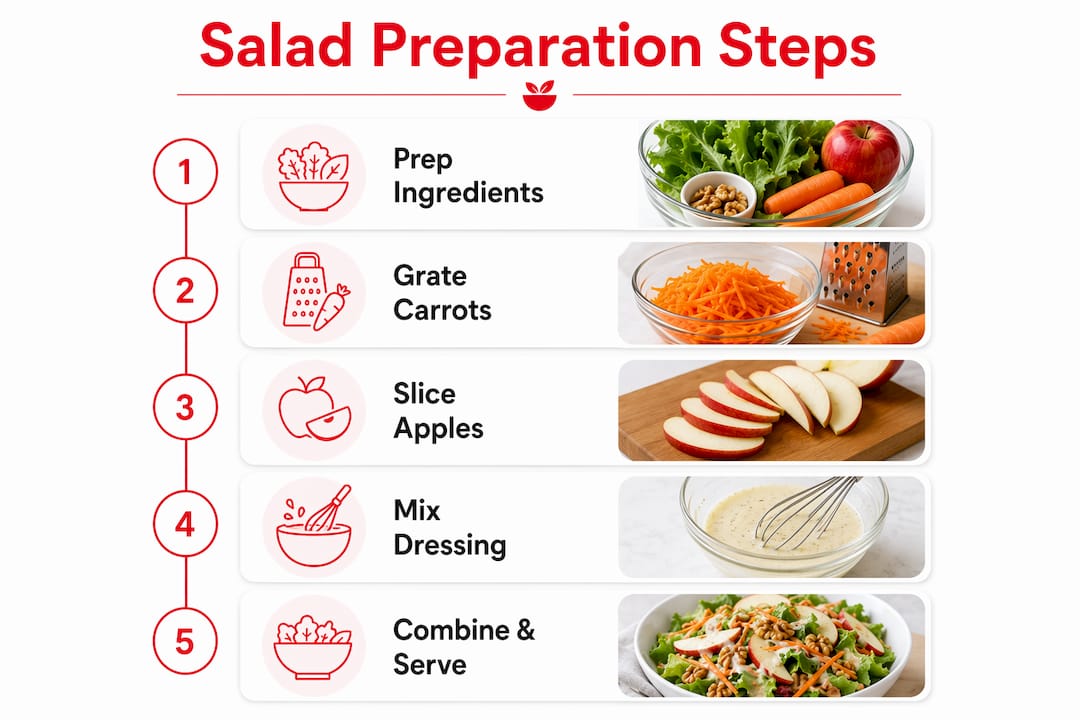
This comes together in minutes. The only technique worth slowing down for is the grating, and even that goes fast once you have a rhythm.
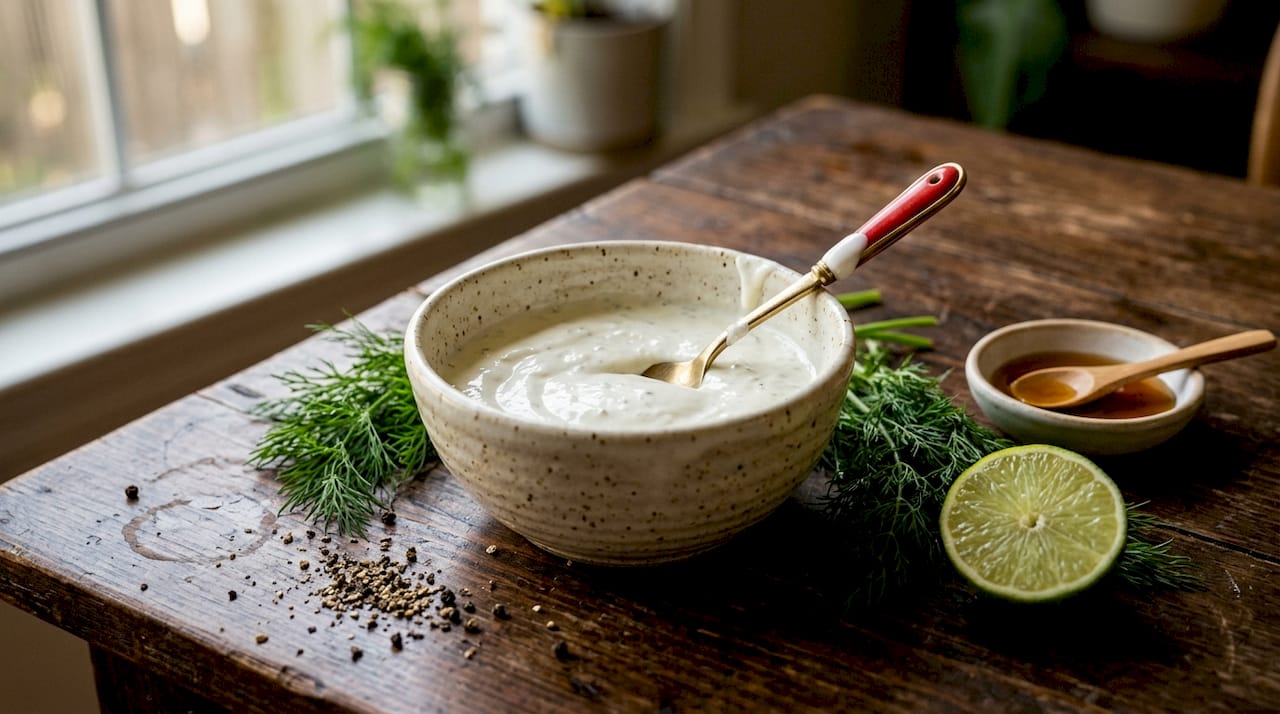
- Grate the carrots and apples. Use a box grater on the medium or large side. For a different texture, use a julienne peeler or pulse briefly in a food processor. Keep the apple pieces roughly the same size as the carrot shreds so every bite has both.
- Add acid immediately. Toss the grated apple right away with lemon juice or vinegar. This prevents enzymatic browning and keeps the salad looking fresh for hours.
- Grate the ginger using a citrus zester or the fine side of your box grater. A half tablespoon goes a long way.
- Combine everything in a large bowl. Add the carrots, apple, ginger, and your dressing of choice. Toss thoroughly so every strand gets coated.
- Taste and adjust. Add more salt, a squeeze of lemon, or a drizzle of honey depending on your apple’s sweetness level.
- Rest before serving. Cover the bowl and refrigerate for a short while before serving. The flavors meld, the carrots soften slightly, and the whole salad tastes more cohesive. If liquid pools at the bottom, use a slotted spoon when serving.
Pro Tip: If you are making this ahead, grate and prep the apples and carrots separately, toss them with lemon juice, and keep the dressing on the side. Combine everything within an hour of serving for the best texture.
Ways to customize and serve your carrot apple slaw
The basic recipe is a starting point, not a finish line. A few additions can take this from a simple side to something you actually look forward to eating.
Add crunch:
- Chopped walnuts or pecans bring richness and a satisfying bite
- Sliced almonds add a lighter crunch
- Toasted sesame seeds add a nutty, slightly smoky note
Add sweetness:
- Dried cranberries or raisins add a chewy, sweet contrast to the tart apple
- Chopped dates work well if you want something less sharp than cranberries
Turn it into a slaw:
- Add shredded purple or green cabbage to bulk it up and give it more structure. This carrot apple slaw version holds up well for picnics and potlucks because the cabbage does not wilt as quickly as lettuce.
- Crumbled feta cheese adds a salty, creamy element that plays well against sweet cranberries
Vary the apple:
- Using one sweet apple (Honeycrisp) and one tart apple (Granny Smith) in the same bowl gives you both flavor notes at once
Serving ideas:
- Alongside grilled or baked chicken for a complete, balanced plate. Check out Hearthlyrecipes’ chicken recipes for protein pairings that work especially well with this salad.
- As a side with pork chops or smoked salmon
- Tucked into a wrap with leftover roasted vegetables
- On its own as an afternoon snack
Why this salad is genuinely good for you
This is one of those dishes where the healthy version also happens to taste better. The ingredients each bring something specific to the nutritional picture.
Carrots are one of the best dietary sources of beta-carotene, which your body converts to vitamin A. Vitamin A supports eye health, immune function, and skin. Raw carrots also deliver antioxidants that help protect cells from oxidative stress.
Apples add dietary fiber that supports gut health, plus their own set of antioxidants. The fiber in apples slows digestion in a way that keeps you full longer, which is part of why this salad works as a snack rather than just a side.
Greek yogurt dressing contributes protein and probiotics while keeping saturated fat low. Carrots, apples, and Greek yogurt together create a nutrient-dense combination that a registered dietitian would call genuinely well-rounded, not just “healthy” in the vague marketing sense.
Fresh ginger adds more antioxidants and has a long history of use for digestive support. It also makes the salad taste more interesting without adding any meaningful calories.
For cooks watching calories, the Greek yogurt version comes in light. The lemon-olive oil vinaigrette version is even lighter. Either way, you are getting a lot of nutritional value per bite compared to most side dishes.
Key Takeaways
A simple apple and carrot salad delivers real nutrition, is quick to prepare, and stays fresh in the refrigerator, making it one of the practical sides in a home cook’s rotation.
| Point | Details |
|---|---|
| Choose firm apple varieties | Honeycrisp, Granny Smith, and Fuji hold their texture when grated and do not turn mushy. |
| Add acid immediately | Tossing grated apple with lemon juice or vinegar right away prevents browning and keeps the salad looking fresh. |
| Greek yogurt beats mayo | Swapping Greek yogurt for mayonnaise lowers saturated fat while keeping the dressing creamy. |
| Rest before serving | Chilling the salad before serving lets flavors meld and softens the carrots to a better texture. |
| Customize freely | Add nuts, dried cranberries, cabbage, or feta to turn the base recipe into a slaw or a heartier side. |
Why this salad deserves a permanent spot in your weekly rotation
Most home cooks underestimate how much a salad like this can do. It is not just a side dish you make when you have nothing else. It is one of the few recipes that actually gets better after sitting in the refrigerator, which means you can make it Sunday and eat it Tuesday without any loss of quality.
The sweet-tart-crunchy combination is also one of those flavor profiles that works across seasons, making it a great choice as explained in Cómo preparar ensaladas completas y equilibradas. In summer it feels refreshing next to grilled meat. In winter it cuts through heavier, richer dishes in a way that a green salad sometimes cannot. Lidia Bastianich has served a version of this for decades, and the reason it endures is simple: the flavors make sense together in a way that does not need much explanation.
The Greek yogurt dressing swap is worth taking seriously if you cook for people who are watching their saturated fat intake. The texture difference from mayonnaise is minimal. The nutritional difference is real. And the slightly tangy flavor of yogurt actually works better with tart apples than a neutral mayo does.
If you are new to this kind of salad, start with the basic version: Honeycrisp apple, large carrots, Greek yogurt, lemon juice, and a pinch of salt. Get comfortable with that, then start experimenting. Add ginger. Try a Dijon vinaigrette. Throw in some walnuts. The base recipe from Hearthlyrecipes is tested and reliable, and the healthy recipe collection has plenty of directions to take it from there.
FAQ
Is it good to eat apple and carrot together?
Yes. Apples and carrots pair well nutritionally, combining beta-carotene, vitamin C, dietary fiber, and antioxidants in one dish. The flavors also complement each other naturally, with the tartness of apple balancing the sweetness of carrot.
What dressing goes best with carrot salad?
Both creamy and vinaigrette styles work well. Greek yogurt with lemon juice is a lighter creamy option, while a Dijon mustard and cider vinegar vinaigrette adds a sharper, more savory flavor. A small amount of honey in either style balances the acidity.
What dressing goes well with apple salad?
A lemon-olive oil vinaigrette with a touch of maple syrup or honey works especially well, as does a Greek yogurt dressing with fresh ginger. Mustard and garlic in the dressing add depth without overpowering the apple’s natural flavor.
Is carrot and apple salad good for you?
It is a genuinely nutrient-dense option. Carrots provide beta-carotene and antioxidants, apples add fiber and vitamin C, and a Greek yogurt dressing contributes protein while keeping saturated fat low.