Barbecued Beans From Scratch: Smoky, Saucy, Done Right
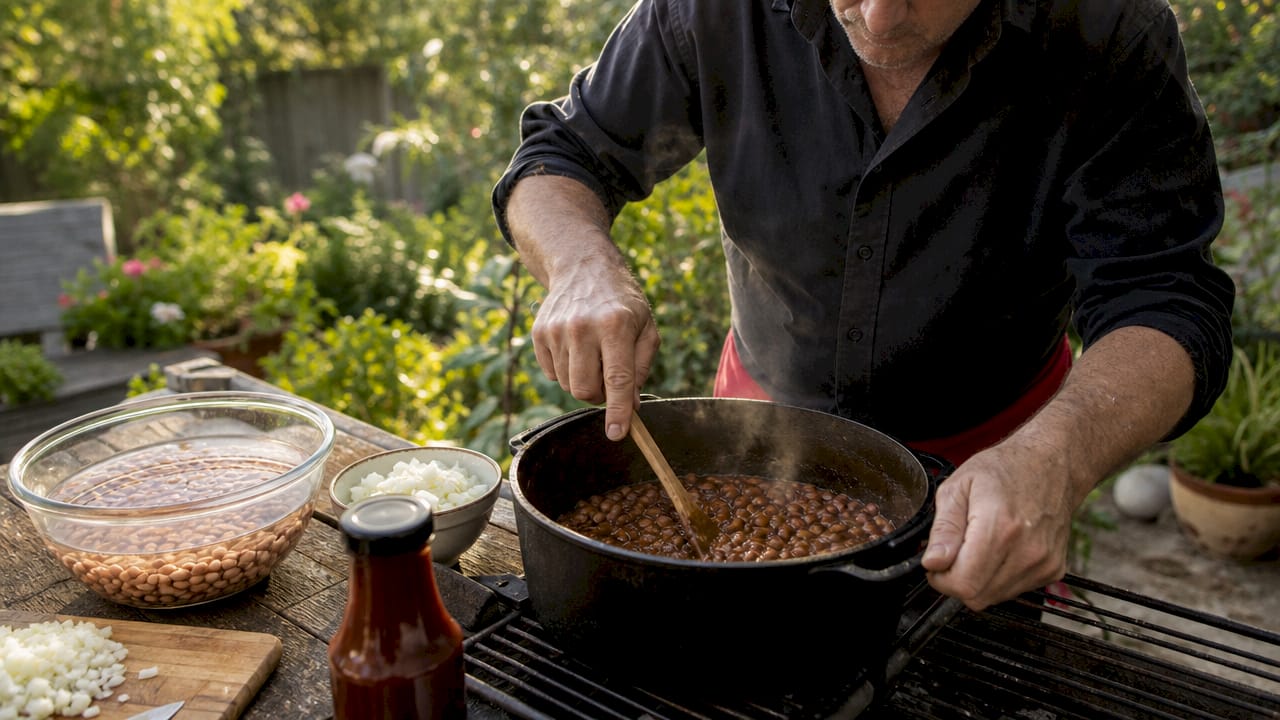
TL;DR:
- Smoked, saucy barbecue beans made from scratch are a satisfying side for cookouts, with stovetop-to-oven methods providing deep flavor. Using salt-soaked dried beans yields a creamier interior and richer taste than canned beans, which offer quicker results. Techniques like bacon rendering, delayed acid addition, and low-and-slow cooking build complex, balanced flavors.
Smoky, saucy barbecued beans made from scratch are one of the most satisfying things you can bring to a cookout, and the stovetop-to-oven method delivers the best balance of creamy beans, thick sauce, and deep flavor. Here’s the short version before you dive in:
- Total time: around two hours with canned beans or much longer with dried-bean soaking and long cooking
- Active time: 25–30 minutes
- Passive/oven time: 1–2 hours
- Yield: 10–12 servings as a side dish
- Flavor profile: Smoky, tangy, balanced sweet, meaty
Shortcut vs. from-scratch: Canned beans get you bright, tangy results in about an hour. Dried beans, soaked overnight and slow-cooked, build a deeper, more concentrated flavor that canned beans simply can’t replicate. Both are worth knowing.
Table of Contents
- What goes into great barbecued beans?
- Which cooking method is right for you?
- Step-by-step instructions for all three methods
- How to build BBQ flavor and adapt the recipe
- Fixing common problems before they ruin the batch
- Planning ahead: timing, storage, and reheating
- What to serve alongside barbecue baked beans
- Why these techniques actually work
- Key Takeaways
- The stovetop-to-oven method is worth the extra hour
- More tested recipes worth cooking next
- Useful sources
- FAQ
What goes into great barbecued beans?
The canonical from-scratch ingredient list
Beans (choose one or mix):
- about 1 pound dry navy or great northern beans (soaked overnight) or a combination of canned navy, pinto, and kidney beans, drained
- 1 cup reserved bean cooking liquid (or low-sodium chicken stock)
Meat and fat:
- several strips of thick-cut bacon, chopped
- lean ground beef (optional for cowboy-style)
Aromatics:
- one medium yellow onion, finely diced
- one red bell pepper, finely diced
- garlic cloves, minced
Sauce base:
- ketchup
- BBQ sauce
- tomato sauce
- molasses
- packed light brown sugar
- yellow mustard or Dijon mustard
- cider vinegar
- Worcestershire sauce
- hot sauce to taste
- optional liquid smoke
- smoked paprika
- Salt and black pepper to taste
Substitutions and swaps
| Need | Swap |
|---|---|
| Vegetarian/vegan | Replace bacon with smoked tempeh or 2 tbsp olive oil + 1 tsp smoked paprika; skip beef |
| Lower sodium | Use no-salt-added tomato sauce; reduce ketchup by half |
| Less sweet | Cut brown sugar to ⅓ cup; increase cider vinegar by 1 tbsp |
| No molasses | Use an equal amount of dark brown sugar or pure maple syrup |
| Canned bean shortcut | Three 15 oz cans (navy + pinto + kidney), drained; reduce liquid by ½ cup |
Why these ingredients matter
Bacon does two jobs: the crispy pieces add texture on top, and the rendered fat becomes the cooking medium that carries flavor into every aromatics sauté. Molasses brings bitterness and depth that plain brown sugar lacks. Mixing bean varieties (navy, pinto, great northern) gives you varied textures and reduces the risk of a uniformly mushy pot. Liquid smoke or smoked paprika bridges the gap when you’re cooking indoors and can’t put the pot under real smoke.
Which cooking method is right for you?
Essential tools
- Dutch oven or large heavy-bottomed pot (6-quart minimum): the workhorse for stovetop-to-oven cooking
- 9×13 casserole dish or disposable aluminum pan: for oven finishing or grill placement
- Slow cooker (6-quart): for the hands-off method
- Instant-read thermometer: useful for checking internal temp on smoker runs
Choosing your method
Stovetop simmering followed by oven-baking concentrates flavors and thickens the sauce better than any other indoor method. It’s the best all-around choice for home cooks who want depth without a smoker.
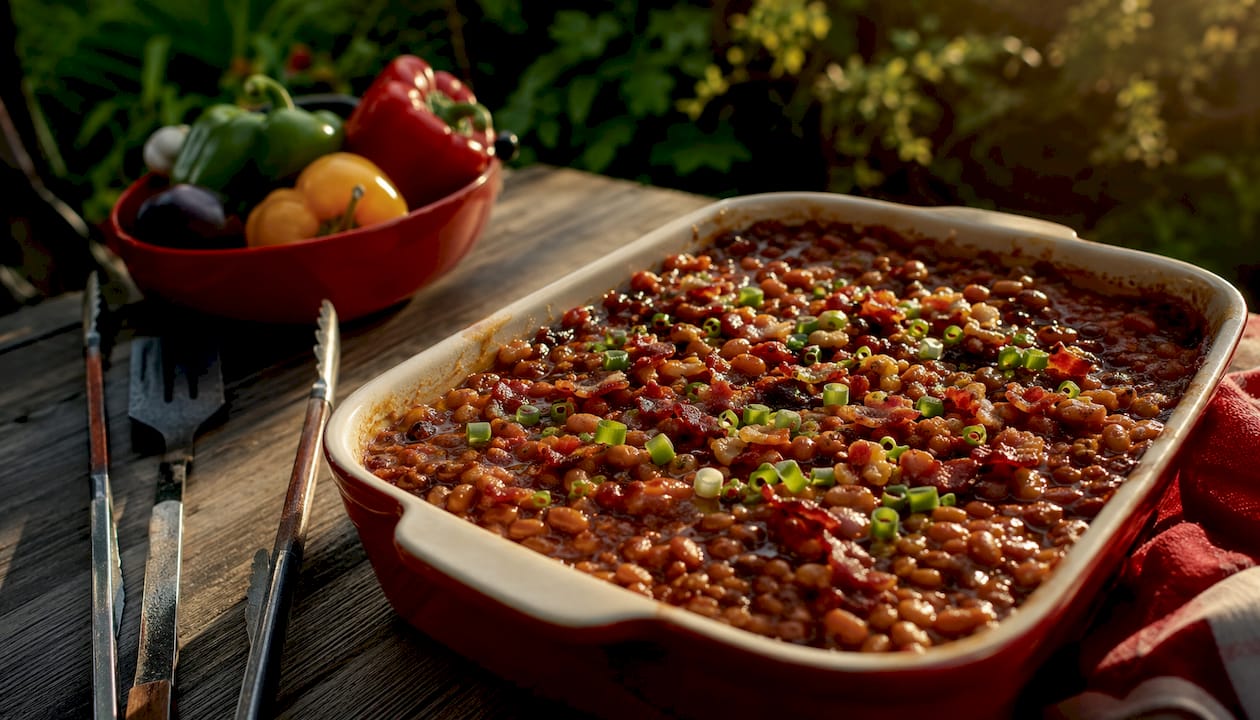
The slow cooker is the right call when you want to set it and walk away. The tradeoff is a thinner sauce at the end, which usually needs a 30-minute uncovered reduction on the stovetop or a quick high-heat oven finish.
The smoker or grill adds real pit character that no liquid smoke can fully replicate. The catch: beans need to be nearly done before they go on the grill. The smoke and drippings add flavor, but the grill won’t significantly tenderize raw beans.
Pro Tip: If you’re cooking on a gas grill, set one burner to low (around 250°F) and place the bean pan on the indirect side. This mimics a low oven and lets the beans pick up ambient smoke from any wood chips you’ve added.
Step-by-step instructions for all three methods
Method 1: Stovetop to oven (recommended)
- Prep dried beans (night before): Dissolve 1 tablespoon of salt in 2 quarts of cold water. Add beans and soak 8–12 hours. Drain and rinse. This salt-soak method keeps beans intact and gives them a creamier interior.
- Par-cook beans: Cover soaked beans with fresh water by 2 inches. Simmer 45–60 minutes until just barely tender. Reserve 1 cup of cooking liquid. Drain.
- Render bacon: In a Dutch oven over medium heat, cook chopped bacon until crisp, about 8 minutes. Transfer to a paper-towel-lined plate. Pour off all but 1–2 tablespoons of fat.
- Sauté aromatics: Add onion and bell pepper to the bacon fat. Cook 4–5 minutes until softened. Add garlic; cook 1 more minute. Rendering bacon and using its fat to sauté aromatics is what builds the savory backbone of the dish.
- Build the sauce: Add ketchup, BBQ sauce, tomato sauce, molasses, brown sugar, mustard, vinegar, Worcestershire, hot sauce, smoked paprika, and liquid smoke. Stir well.
- Combine: Add par-cooked beans and reserved liquid. Stir to coat. Bring to a boil, then reduce to a simmer for 5 minutes.
- Oven finish: Transfer to a 9×13 baking dish. Cover with foil. Bake at 325°F for 1 hour. Remove foil; bake uncovered for 30–45 more minutes until sauce is thick and glossy. Rest 15 minutes before serving.
Method 2: Slow cooker
- Complete steps 3–6 above on the stovetop.
- Transfer everything to a 6-quart slow cooker.
- Cook on LOW for 4–6 hours or HIGH for 2–3 hours.
- Slow-cooker beans often need a final reduction: transfer to a pot and simmer uncovered 20–30 minutes, or bake uncovered at 375°F for 20 minutes to thicken.
Method 3: Smoker or grill
- Follow the stovetop-to-oven method through step 6, but stop before the oven finish. Beans should be about 80% tender.
- Transfer to a disposable aluminum pan.
- Place pan in a smoker at 225–250°F, or on the indirect side of a grill. If cooking ribs or pork shoulder, slide the bean pan directly underneath to catch drippings.
- Smoke 1–2 hours until beans are fully tender and sauce has thickened.
Timing at a glance
| Method | Prep | Active | Passive | Total |
|---|---|---|---|---|
| Stovetop to oven (canned beans) | 15 min | 25 min | 1–2 hours | ~2 hr 15 min |
| Stovetop to oven (dried beans) | 15 min + overnight soak | 25 min | 2–3 hours | ~3 hr + soak |
| Slow cooker | 15 min | 25 min | 4–6 hours | ~5–7 hours |
| Smoker/grill | 15 min | 25 min | 1–2 hours | ~2–3 hours |
Pro Tip: Check sauce consistency 20 minutes before the end of any bake. If it looks soupy, remove the lid or foil early. If it looks tight, stir in a splash of reserved bean liquid or stock.
How to build BBQ flavor and adapt the recipe
The flavor architecture of great barbecue beans has four layers: fat and meatiness, sweetness, acid and tang, and smoke and heat. Getting the balance right is more important than following any single regional style.
The four flavor layers
- Fat and meatiness: Bacon is the baseline. Ground beef (90% lean) adds heartiness for a cowboy-style version. Three-meat versions combining bacon, ground beef, and smoked sausage push the dish toward a main course.
- Sweetness: Brown sugar gives clean sweetness; molasses adds bitterness and complexity. Maple syrup is a softer alternative. Start with less and taste as you go.
- Acid and tang: Cider vinegar and mustard cut through the sweetness. If your beans taste flat or cloying, a tablespoon of vinegar added at the end fixes it fast.
- Smoke and heat: Smoked paprika is the indoor workaround. Liquid smoke is effective in small doses (½ teaspoon maximum). Hot sauce adds heat without muddying the smoke flavor.
Regional flavor matrix
| Style | Sweetener | Acid | Smoke/Heat | Meat |
|---|---|---|---|---|
| Kansas City | Brown sugar + molasses | Mild vinegar | Liquid smoke | Bacon |
| Texas-style | Less sugar | More mustard + vinegar | Heavy smoked paprika | Ground beef or brisket |
| Southern molasses | Heavy molasses | Cider vinegar | Smoked paprika | Bacon |
| Cowboy beans | Moderate brown sugar | Mustard | Smoked sausage drippings | Bacon + beef + sausage |
| Vegetarian | Maple syrup | Apple cider vinegar | Smoked tempeh + paprika | None |
To shift toward Texas-style, reduce brown sugar by half and double the mustard. For a Southern molasses profile, swap all the brown sugar for molasses and add a splash more vinegar to keep it from tasting heavy. BBQ beans with meat are the easiest way to turn a side dish into a full meal.
Fixing common problems before they ruin the batch
Runny sauce: Remove the lid and bake or simmer uncovered. Alternatively, mash about ¼ cup of beans against the side of the pot and stir them back in. The starch thickens the sauce naturally without a cornstarch slurry. Finishing beans uncovered is the standard fix across tested recipes.
Greasy mouthfeel: If you used a lot of bacon or fatty ground beef, skim the surface fat with a spoon while the beans are hot. For a cleaner fix, let the pot cool, refrigerate overnight, and lift the solidified fat cap off the top before reheating.
Too sweet: Add cider vinegar one tablespoon at a time, tasting between additions. A teaspoon of Dijon mustard also works. Don’t add more salt first — sweetness and saltiness are different problems.
Undercooked beans: Return to the oven covered at 325°F and check every 20 minutes. Adding acidic ingredients (vinegar, tomato) before beans are fully tender slows their softening, so hold off on those until the beans pass the pinch test.
Overcooked, mushy beans: Nothing fully rescues burst beans, but stirring in a can of drained, firm beans at the end adds texture contrast. Next time, pull the pot 15 minutes earlier than you think you need to.
Pro Tip: Add vinegar and mustard only after beans are fully tender. Acid slows the softening of bean cell walls, so adding it too early can leave you with beans that never quite get there.
Planning ahead: timing, storage, and reheating
Make-ahead strategy
The best approach for a cookout or potluck: complete everything through the stovetop step (steps 1–6), then refrigerate the assembled, unbaked dish for up to 3–4 days. Pull it from the fridge 30 minutes before baking, then finish in the oven as directed. The resting time lets the flavors meld, and the final bake tightens the sauce perfectly.
For same-day cooking with canned beans, you can have the dish on the table in about 2 hours 15 minutes. Dried beans require overnight soaking, so plan for a two-day window.
Storage and reheating
| Stage | Method | Duration |
|---|---|---|
| Refrigerator (cooked) | Airtight container | Up to 5 days |
| Freezer | Freezer-safe container | Up to 3 months |
| Reheat (stovetop) | Medium-low heat, splash of water or stock | 10–15 minutes |
| Reheat (oven) | 325°F covered with foil | 20–25 minutes |
| Reheat (microwave) | Medium power, covered, stir halfway | 3–4 minutes |
Beans thicken considerably in the fridge. Always add a splash of water or stock when reheating to restore the saucy consistency.
Rough cost and nutrition notes
Using dried beans costs significantly less per serving than canned. Adding ground beef or multiple meats raises both cost and calorie count; a vegetarian version with smoked tempeh keeps costs low and protein solid. The dish is naturally high in fiber and plant-based protein from the beans themselves. Sodium is the main variable: using low-sodium tomato sauce and reducing ketchup can cut it meaningfully without losing flavor.
What to serve alongside barbecue baked beans
Classic pairings work because they balance the beans’ richness. Smoked ribs, pulled pork, and grilled sausages are the obvious choices, and they’re obvious for good reason. The beans catch the drippings and the fat from the meat makes every bite better. For grilling nights, a pan of beans under the ribs is the move.
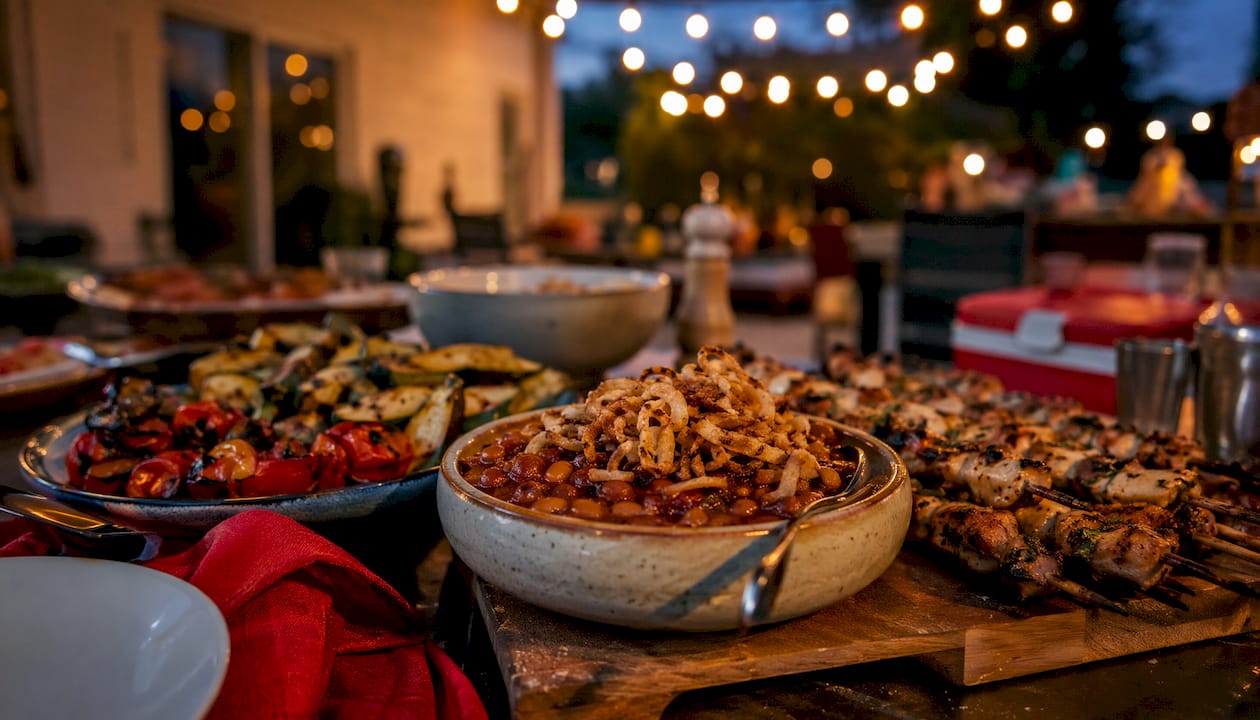
Cornbread is the traditional starch pairing, and it earns its place by soaking up the sauce. Coleslaw adds crunch and a vinegary contrast that cuts through the sweetness. Grilled corn, a simple green salad, or pickled jalapeños all work well on the side.
Portioning guidance:
- Side dish: ½ cup per person (8–10 servings from a standard batch)
- Main dish (cowboy-style with meat): 1 cup per person (5–6 servings)
- Potluck/large gathering: a 9×13 pan feeds 12–15 as a side
Garnish ideas: Chopped scallions, crispy bacon bits reserved from cooking, pickled red onions, or a drizzle of hot sauce all add visual appeal and a flavor contrast on top.
Why these techniques actually work
The science behind great barbecue beans isn’t complicated, but skipping any one step shows up in the finished dish.
Salt-soaking dried beans in brine (rather than plain water) helps them retain their shape during long cooking and produces a creamier interior. The salt seasons the bean from the inside out, which plain soaking doesn’t do.
Rendering bacon first and using the fat to cook aromatics creates the savory, meaty backbone that defines authentic barbecue baked beans. The fat carries fat-soluble flavor compounds from the aromatics into the sauce in a way that olive oil alone can’t replicate.
Delaying acidic ingredients (vinegar, tomato sauce, mustard) until the beans are tender is the step most home cooks skip. Acid toughens bean cell walls, so adding it early can leave you with beans that simmer for hours and never soften properly.
Low-and-slow finishing in the oven or smoker thickens the sauce through gradual evaporation and lets the beans absorb the surrounding flavors without breaking apart.
Key Takeaways
The most reliable path to great barbecued beans is the stovetop-to-oven method with salt-soaked dried beans, delayed acid additions, and an uncovered finish to thicken the sauce.
| Point | Details |
|---|---|
| Best method for depth | Stovetop-to-oven with dried beans builds the most concentrated, complex flavor. |
| Slow cooker tradeoff | Convenient but needs a 20–30 minute uncovered reduction to thicken the sauce. |
| Acid timing matters | Add vinegar and mustard only after beans are fully tender to avoid tough skins. |
| Make-ahead window | Assemble through the stovetop step; refrigerate up to 3–4 days before the final bake. |
| Hearthlyrecipes approach | Tested recipes with method options, troubleshooting, and make-ahead guidance at Hearthlyrecipes. |
The stovetop-to-oven method is worth the extra hour
There’s a version of this dish that takes 20 minutes and tastes fine. Then there’s the version where you render the bacon, build the sauce in the same fat, and let the whole thing finish low and slow in the oven until the sauce is thick and the beans have absorbed everything around them. The difference isn’t subtle.
The stovetop-to-oven approach is my consistent recommendation for home cooks because it gives you control at every stage. You can taste and adjust the sauce before it goes into the oven. You can pull it early if the sauce looks right. And you get the caramelized edges around the pan that no slow cooker can produce.
If you’re cooking for a crowd, make the stovetop step the day before. The flavors genuinely improve overnight, and all you have to do the next day is slide the pan into the oven. That’s the kind of recipe that makes you look like you’ve been cooking all day.
More tested recipes worth cooking next
Hearthlyrecipes is built around exactly this kind of recipe: thoroughly tested, with method options for every schedule and clear guidance on what actually matters. If you loved making these beans, the slow cooker recipes collection is a natural next stop, with the same hands-off approach applied to everything from pulled pork to chili.

For more BBQ recipes and sides, browse the full collection at Hearthlyrecipes. Whether you’re planning a summer cookout or a weeknight dinner, you’ll find tested recipes with the same level of detail. Head to all recipes to browse by method, ingredient, or occasion and find your next favorite dish.
Useful sources
These are the primary recipe sources and testing writeups that shaped the methods and guidance in this article:
- Serious Eats — The Best Barbecue Beans Recipe: The most rigorous testing on dried-bean prep (salt soaking), sauce reduction, and flavor balance. Essential reading for understanding why each step matters.
- America’s Test Kitchen — Smoky Kansas City BBQ Beans: Authoritative source on the smoker/grill method and why beans must be nearly tender before going under the meat.
- Cuisine at Home — Stove-Top Barbecue Beans: Clear method sequencing for stovetop-to-oven and grill finishing.
- Allrecipes — The Best Barbecue Baked Beans: Practical home-cook instructions emphasizing bacon rendering and aromatic sautéing.
- The Kitchn — One-Pot Cowboy Beans: Slow-cooker adaptation guidance and final thickening techniques.
- JustAPinch — Three Meat BBQ Baked Beans: The cowboy/three-meat variation combining bacon, ground beef, and sausage for a main-dish version.
FAQ
What’s the secret to great barbecue beans?
Balance is the real secret: the best barbecued beans are meaty, tangy, and smoky in roughly equal measure, not just sweet. Rendering bacon first and adding acid (vinegar, mustard) only after the beans are fully tender are the two steps that separate a good batch from a great one.
What kind of beans work best for barbecue beans?
Navy beans are the classic choice for their creamy texture, but mixing navy, pinto, and great northern beans gives you more varied texture and visual interest. Avoid chickpeas or lentils, which don’t hold up to long baking times.
How do you make Southern-style barbecue beans?
Use heavy molasses as the primary sweetener instead of brown sugar, add cider vinegar for balance, and finish with smoked paprika. A Southern-style approach leans on deeper, more bitter sweetness and a pronounced smoky note rather than the bright, ketchup-forward profile of Kansas City beans.
How do you make Texas-style BBQ beans?
Texas-style beans use less sugar and more mustard and vinegar for a sharper, more savory profile, often with ground beef or brisket instead of (or alongside) bacon. Reduce brown sugar by half, double the mustard, and add a generous amount of smoked paprika to push the flavor in that direction.