Batch Cooking Recipes That Turn One Sunday Into a Week
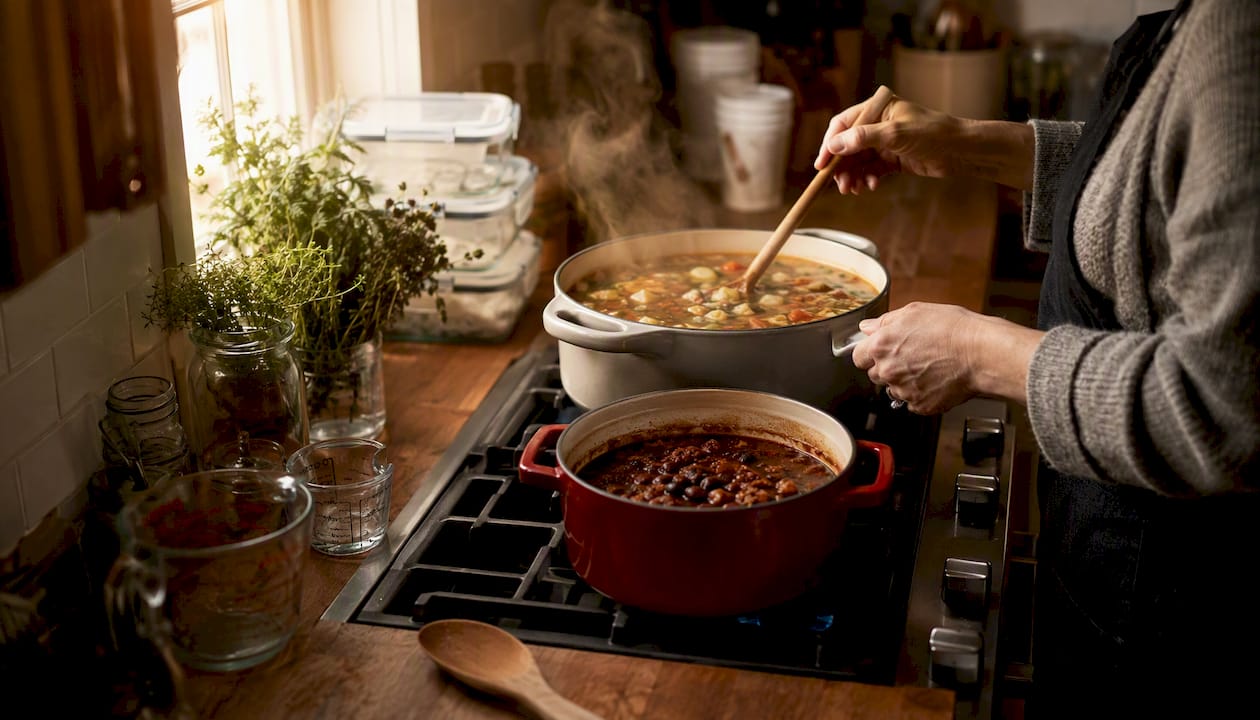
Pick one protein base, one soup, and one grain, and you can cover most of the week’s dinners with a single afternoon in the kitchen. Make a pot of chili, a batch of pulled pork or shredded chicken, and a big pot of vegetable soup, and you have the raw material for six or seven meals that don’t taste like reruns. These bases work because they freeze cleanly and shape-shift into tacos, sandwiches, casseroles, and grain bowls without much extra effort.
Start this weekend with three doable targets: a slow-cooker pulled pork shoulder, a pot of turkey chili, and a large-batch vegetable soup you can portion into the freezer. All three scale up easily and hold their texture after reheating.
Pro Tip: Shop for double the meat and aromatics you’d normally buy for one meal, then cook everything in the same afternoon so your oven and stovetop are both working instead of sitting idle.
One quick-action checklist item before you shop: buy a pork shoulder or three pounds of chicken thighs, two cans of beans, a bag of frozen mixed vegetables, and a dozen freezer-safe containers. That’s the whole starting list.
Key Takeaways
Batch cooking works best when you cook modular components, not finished dishes, and pair each base with clear portioning, labeling, and reheating rules.
| Point | Details |
|---|---|
| Pick versatile bases | Choose one protein (pulled pork, chili, or shredded chicken) plus one soup that freezes and reheats cleanly. |
| Batch components, not plates | Cook protein, sauce, and grain separately so you can recombine them into different meals all week. |
| Plan portions before cooking | Use 1 to 1.5 cups per soup serving and 4 to 6 ounces of protein per portion as your baseline. |
| Label everything | Mark date, contents, and reheating instructions on every container before it goes in the freezer. |
| Use Hearthlyrecipes as your base library | Tested, freezer-tagged recipes in Practical Meal Solutions make picking and scaling a base straightforward. |
Table of Contents
- Best Batch Cooking Recipes to Make First
- How Do You Plan a Batch Cooking Session?
- Which Equipment Works Best for Big Batches?
- What Does a Batch Cooking Day Actually Look Like?
- How Long Do Batch-Cooked Meals Last in the Freezer?
- How Do You Turn One Batch Into Different Meals?
- What Home Cooks Get Wrong About Batch Cooking
- Where to Find Tested Batch Cooking Recipes
- Sources
- FAQ
Best Batch Cooking Recipes to Make First
Not every dish batches well. The ones below earn their freezer space because they hold flavor, reheat cleanly, and split into different meals without much rework.
- Pulled pork or pulled chicken — Best for sandwiches, tacos, and freezer stashes; shreds into enchiladas or a quick barbecue bowl.
- Chili (beef, turkey, or bean) — Best for quick weeknight dinners; spoon over baked potatoes or fold into cornbread casserole.
- Meatballs — Best for stretching one cook session across two cuisines; swap marinara for a soy glaze and you’ve got a different dinner entirely, as this tested dump-and-bake meatball casserole shows.
- Tomato-based ragù — Best for pasta night now, stuffed peppers or lasagna later in the week.
- Hearty vegetable soup — Best for lunches and light dinners; a bowl like lasagna soup proves soup doesn’t have to be boring to batch well.
- Shredded chicken — Best for families with picky eaters; goes into quesadillas, soup, or a rice bowl.
- Cooked ground beef or turkey — Best for budget stretching; becomes tacos one night, shepherd’s pie the next.
Doubling a protein base and reworking it into a different dish the following night is one of the more reliable ways home cooks save time without repeating meals, according to Allrecipes’ cook-once, eat-twice guide.
How Do You Plan a Batch Cooking Session?
Start with portions, not recipes. A reasonable rule of thumb: plan for 1 to 1.5 cups of soup or stew per adult serving, and roughly 4 to 6 ounces of cooked protein per portion. If you’re feeding a family of four for a week, that means scaling most recipes to 8 to 12 servings, split between what goes in the fridge for the next three days and what goes straight into the freezer.
A realistic shopping checklist for one session looks like this:
- Two proteins (a pork shoulder or chicken thighs, plus ground beef or turkey)
- Canned beans, diced tomatoes, and broth or stock
- A bag or two of frozen mixed vegetables
- Aromatics: onions, garlic, celery, carrots
- A grain or two: rice, farro, or dried pasta (cooked separately, added later)
- Freezer bags, rigid containers, and a permanent marker for labels
A single focused session can realistically produce a mix of ready-to-eat meals, freezer stock, and half-finished components you assemble later in the week, which is the approach Good Food’s batch-cooking session plan recommends. One simple session plan: cook a pulled pork base and a pot of chili on the stovetop while a tray of roasted vegetables and a batch of rice go in the oven. That’s four components from one afternoon.
Which Equipment Works Best for Big Batches?
The right tool depends more on your schedule than your kitchen size. A slow cooker is unbeatable for hands-off pulled meats. You load it in the morning and shred dinner by evening. An Instant Pot or other pressure cooker cuts that same job down to under 90 minutes, which matters if you’re batching on a Sunday with limited hours.
For soups and stews in real volume, a large stockpot works for most families, but an electric roaster oven earns its keep once you’re cooking for a crowd or doubling recipes past what your stovetop burners can handle evenly, a point echoed in this large-batch chicken noodle soup guide. Sheet-pan roasting handles vegetables and proteins simultaneously, freeing your stovetop for sauces.
- Slow cooker: pulled meats, chili, dried beans from scratch
- Instant Pot: fast shredded chicken, rice, and beans
- Stockpot or electric roaster: large-batch soups and stews
- Sheet pans: roasted vegetables, sausages, or bulk-roasted chicken thighs
Pro Tip: Frozen vegetables hold nutrition nearly as well as fresh and let you portion exactly what you need without waste, a habit worth building into every batch session, as Jamie Oliver’s batch cooking guide points out.
What Does a Batch Cooking Day Actually Look Like?
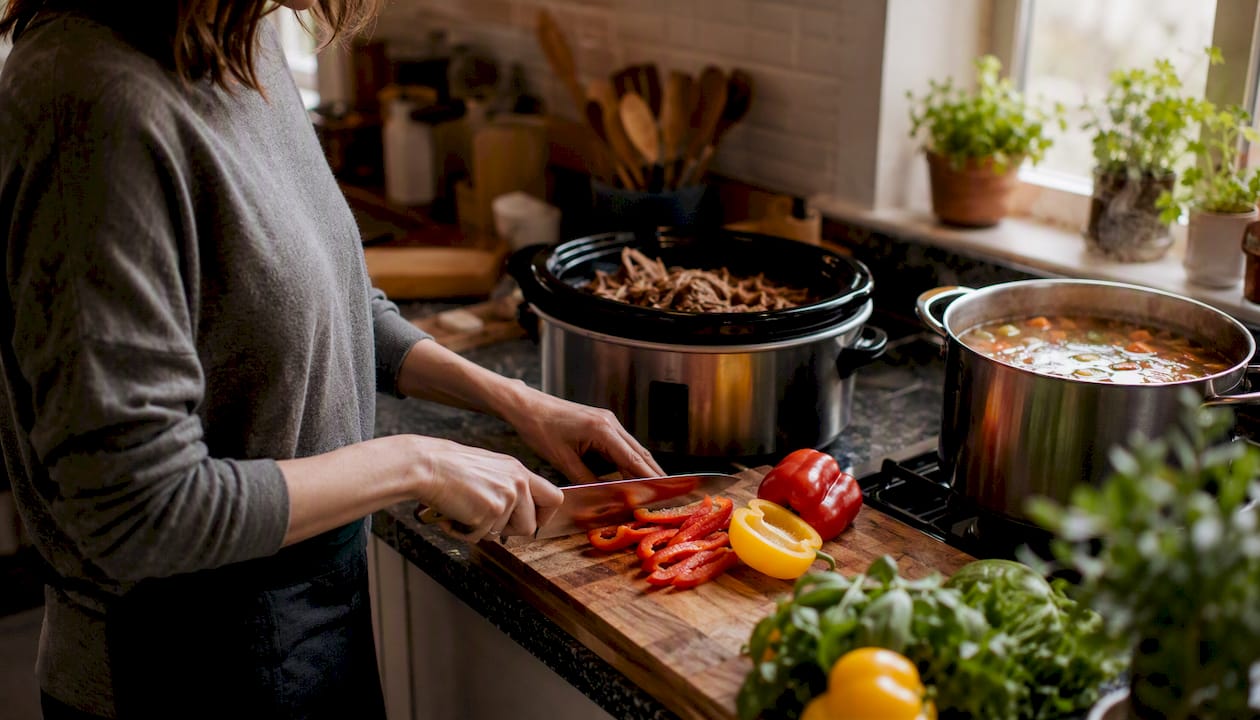
Treat your cooking day like a timeline, not a to-do list. Start with whatever takes longest, then layer in faster tasks while the slow stuff simmers.
| Time | Task |
|---|---|
| First half hour | Prep and chop all vegetables and aromatics for every recipe at once |
| Half hour to one hour | Start slow cooker (pulled pork) and stovetop chili simultaneously |
| Hour 1 to 2 | Roast vegetables and cook grains in the oven while soup simmers |
| Hour 2 to 3 | Cook soup base; caramelize onions if using, which shrink dramatically and need long, patient heat at low temperature |
| Hour 3 to 4 | Cool components, portion into containers, label with date and contents |
A simple numbered checklist keeps the last hour organized:
- Cool hot food to room temperature before sealing containers, no more than two hours out.
- Portion into meal-sized containers, not one giant batch.
- Label everything with the date and contents before it goes in the freezer.
- Reuse the same pot for two components when flavors overlap, like broth for soup and rice.
Mixing make-now meals with freeze-for-later batches in the same session, rather than cooking only for the freezer or only for tonight, is the structure most batch-cooking guides build around, and it’s the fastest way to get both an immediate dinner and a stocked freezer out of one afternoon.
How Long Do Batch-Cooked Meals Last in the Freezer?
Soups and stews hold up well in the freezer for several months without much quality loss. Cooked proteins like pulled pork or shredded chicken last just as long when sealed tightly. Casseroles are a bit more finicky. Aim to eat them within two to three months for the best texture.
Portion before freezing, not after. One to two cups per container works for individuals; three to four cups suits a family dinner. Label every container with the date, contents, and reheating instructions. Future you, digging through a full freezer in February, will thank present you.
- Soups and stews: about 3 months, rigid containers or freezer bags
- Cooked proteins: about 3 months, vacuum-sealed if possible
- Casseroles: 2 to 3 months, foil-covered freezer-safe dishes
- Cooked grains and pasta: 1 to 2 months, separate from sauce
Pro Tip: If a soup includes pasta, leave the noodles out and cook them fresh only for the portion you’re serving. Frozen pasta turns mushy and soaks up broth, leaving the rest of the batch thin and starchy.
Reheat soups and stews to an internal temperature of 165°F, and stir partway through microwave reheating to avoid cold spots.
How Do You Turn One Batch Into Different Meals?
Batch a base, not a finished plate, and you buy yourself real variety. Cook the protein, the sauce, and the grain as separate components, then recombine them differently each night instead of eating the same casserole four nights running. That modular approach is what makes a week of batch-cooked food feel like five different dinners instead of one dinner repeated.
A few concrete swaps:
- Pulled pork becomes barbecue sliders on Monday and enchiladas on Wednesday with a different sauce and tortillas instead of buns.
- Tomato ragù goes over pasta the first night, then fills stuffed peppers or a baked ziti later in the week.
- Shredded chicken turns into quesadillas one night and a soup base the next, just by changing the liquid and seasoning.
- Meatballs swap between a marinara skillet and a sweet-and-sour glaze for an entirely different cuisine.
Reframing these repeats as planned extras rather than leftovers is a small mental shift that makes the whole week feel intentional instead of repetitive, an idea The Seasoned Mom’s cook-once, eat-twice framework leans on heavily.
Pro Tip: A splash of vinegar or a handful of fresh herbs revives reheated food more than almost anything else. It resets flavor that dulls slightly in the freezer. If you have a friend who also batch cooks, trade dishes some weeks. You each get real variety without doubling your own workload.
What Home Cooks Get Wrong About Batch Cooking
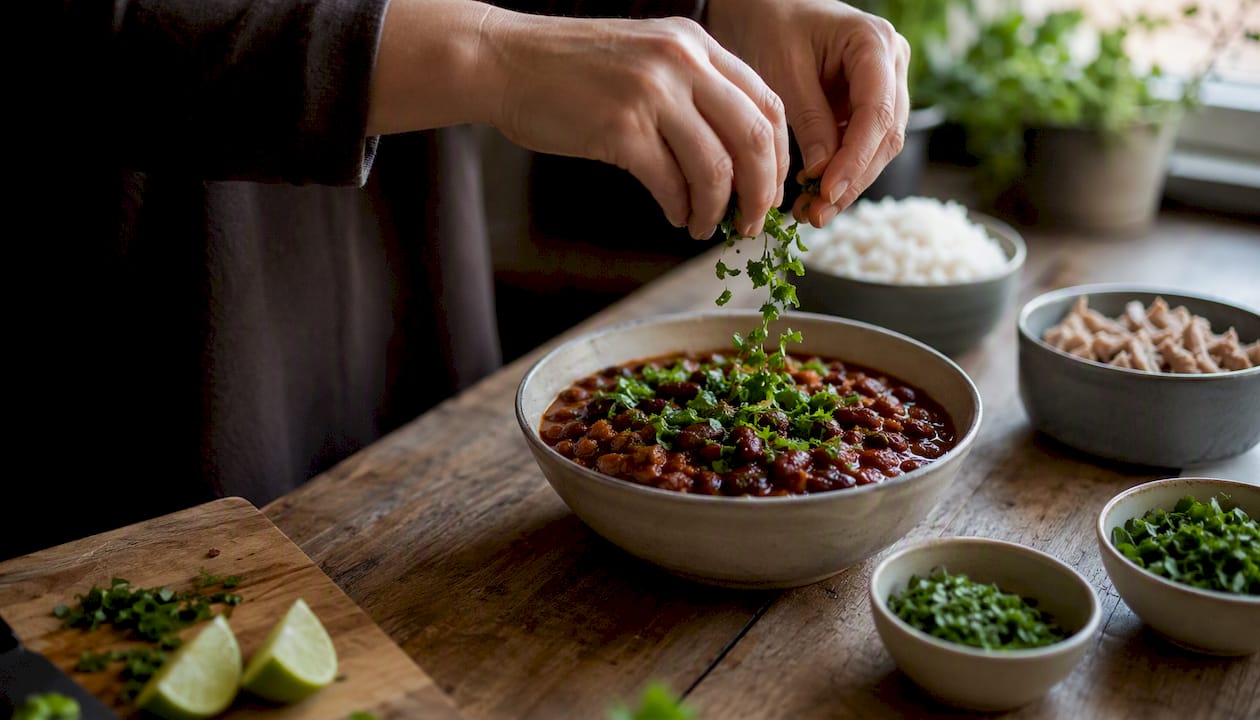
Most people over-plan the menu and under-plan the freezer space. The mistake isn’t picking bad recipes. It’s treating batch cooking as meal prep for one dish repeated five times, instead of a handful of components you recombine. A pot of chili is not a week of dinners. It’s Monday’s dinner and Thursday’s baked potato topping.
The other blind spot: skipping the labeling step because “I’ll remember what this is.” You won’t, three weeks later, staring at an unmarked bag of something brown. Test a couple of these approaches through Practical Meal Solutions before committing your whole Sunday to a five-recipe plan, and you’ll figure out fast which bases your family actually eats through.
Where to Find Tested Batch Cooking Recipes
Hearthlyrecipes is built for exactly this kind of weekend: recipes that are already tested for how well they hold up in the freezer, not just how they taste fresh out of the pot.
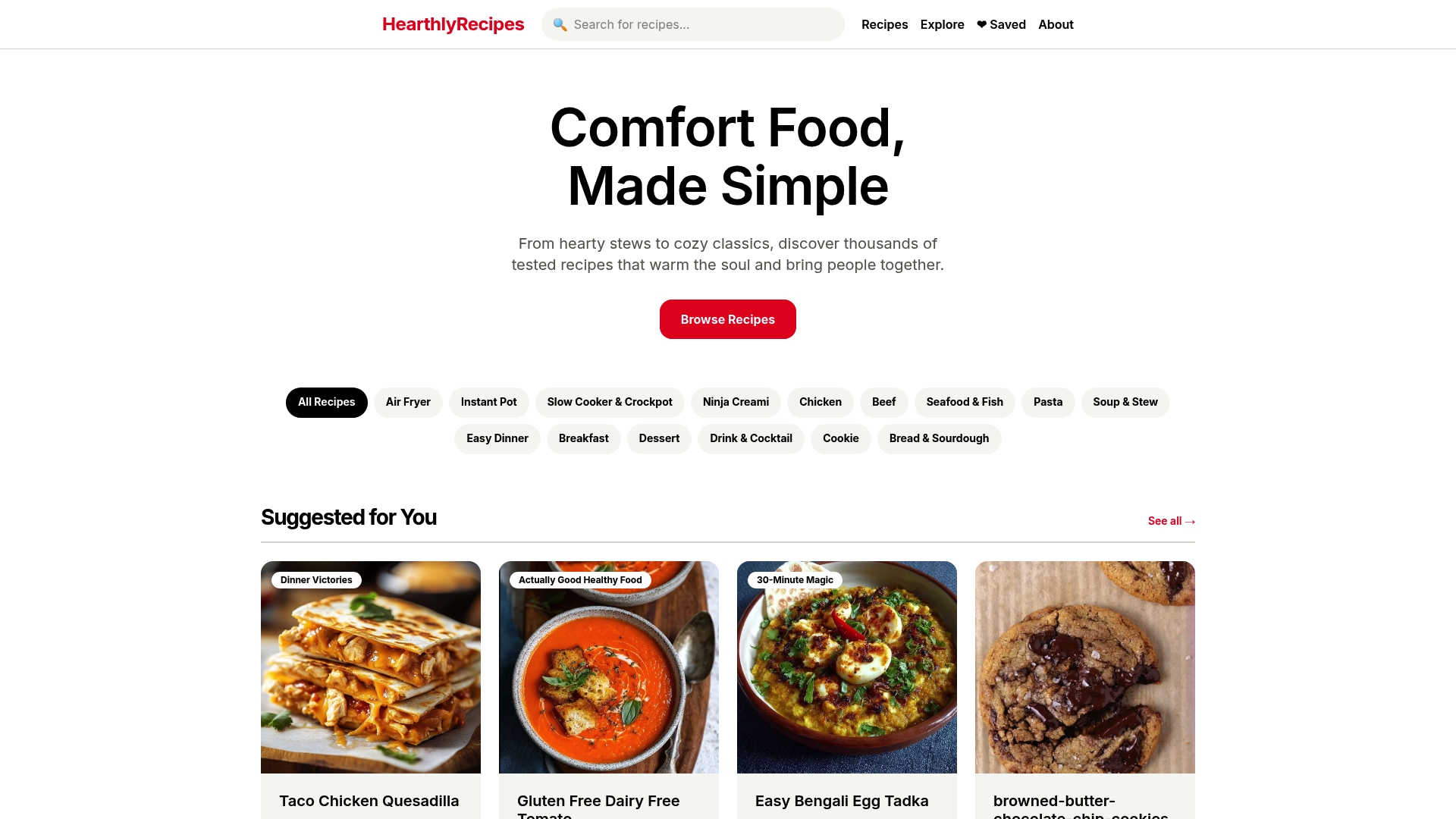
Every recipe on the site carries clear step-by-step instructions and freezer-friendly tags, so you’re not guessing whether a dish will survive three weeks in a freezer bag. The Practical Meal Solutions category is built specifically around make-ahead and cook-once, eat-twice strategies, with prep timelines that tell you what to do the night before versus the day of. If you want a starting recipe that shows the modular idea in action, the dump-and-bake meatball casserole doubles easily and reheats without losing texture. Browse the full recipe collection for user-rated dishes across slow cooker, Instant Pot, and oven methods, filter by freezer-friendly tags, and build your own batch-cook lineup for next weekend with Delicious Recipes at Dough Dorks that include double-batch protein ideas and transformation recipes.
Sources
- Batch cooking session meal plan | Good Food
- Cook Once, Eat Twice Meals {Planned Extras for Busy Weeks} – The Seasoned Mom
- 5 Cook Once, Eat Twice Recipes That Make Tomorrow’s Dinner Easy
- Batch Cooking Recipes | Family Food | Jamie Oliver
- Chicken Noodle Soup For A Crowd - Plowing Through Life
FAQ
What Are the Best Meals to Batch Cook?
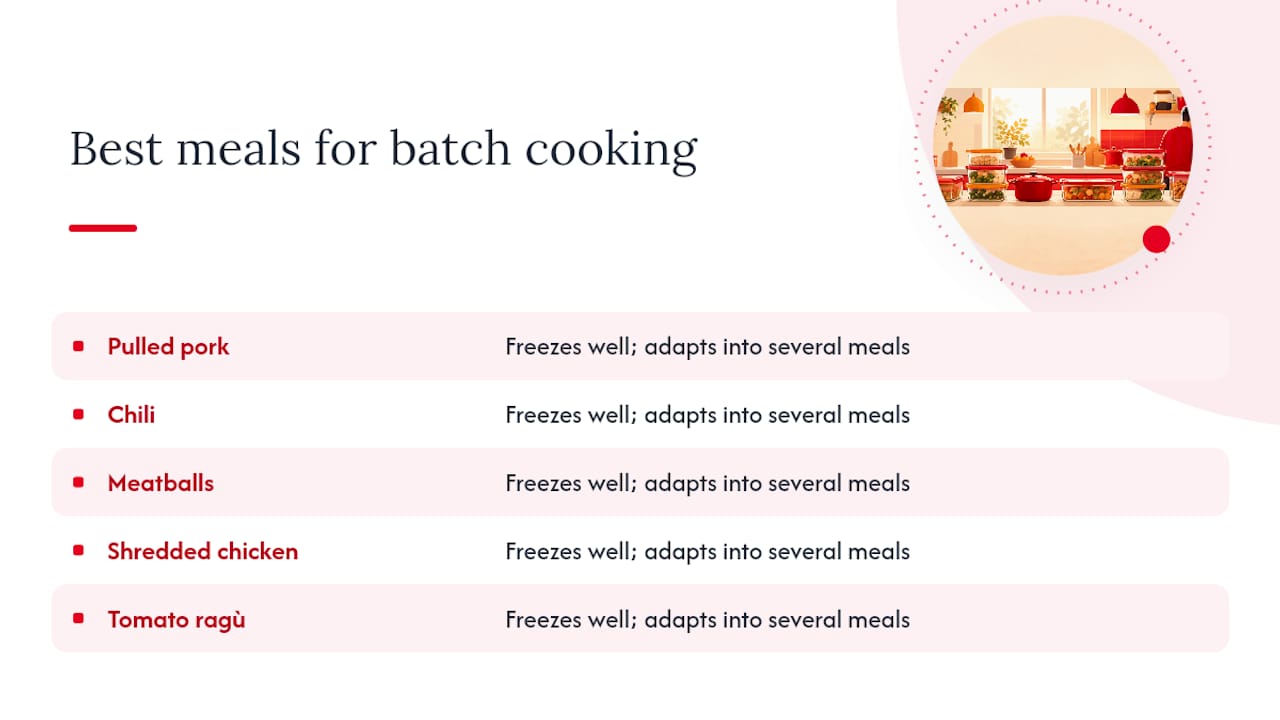
Pulled pork, chili, meatballs, shredded chicken, tomato ragù, and hearty vegetable soup top the list because they freeze well and adapt into several different meals.
What Foods Work Best for Batch Cooking?
Proteins that shred or hold sauce (pork shoulder, chicken thighs, ground beef), tomato-based sauces, beans, and sturdy vegetables all hold texture and flavor through freezing and reheating.
What Meals Can I Make in Bulk and Freeze?
Soups, stews, chili, pulled meats, meatballs, and casseroles all freeze reliably for roughly two to three months when portioned and sealed tightly.
How Many Meals Should One Batch Cooking Session Make?
A single Sunday session can realistically produce enough make-now and freeze-for-later components to cover most weeknight dinners, especially when you batch two proteins plus a soup.
Can I Batch Cook Soups With Pasta in Them?
Cook the pasta separately and add it only to the portion you’re serving. Frozen pasta turns mushy and thins out the broth on reheating.