Breakfast Casserole: The Make-Ahead Formula That Works
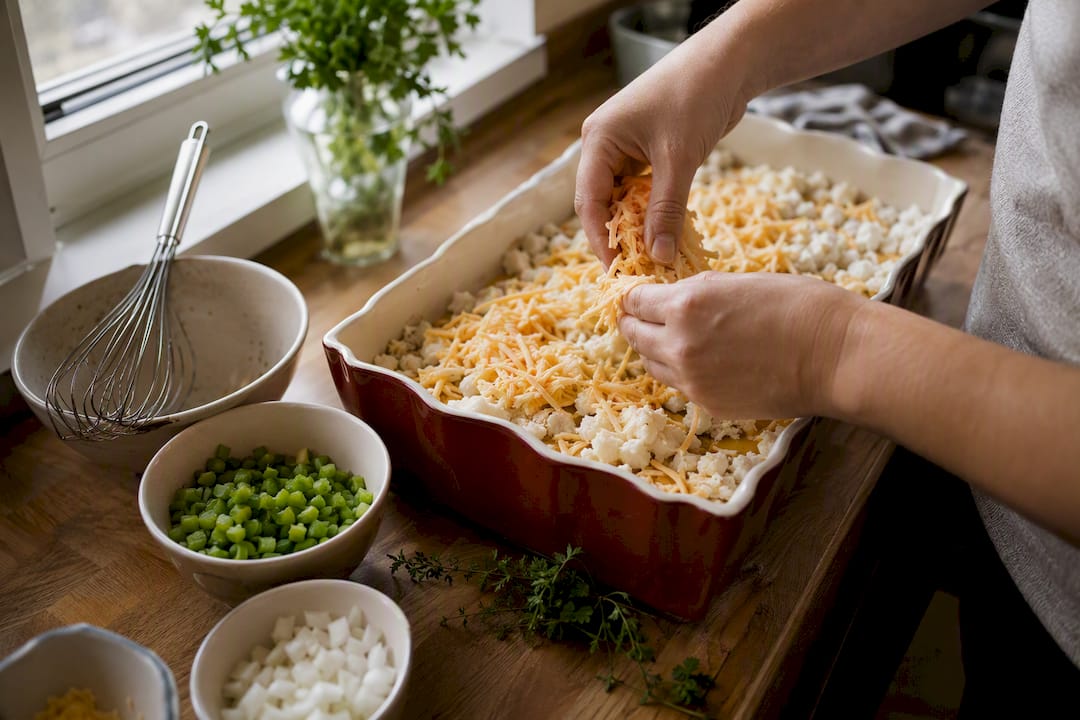
A breakfast casserole is a baked egg custard built on a starchy base, bound with cheese and pre-cooked meat or vegetables, and finished with a golden, set top and a tender, custardy interior. The reliable formula: eggs, dairy, a base of toasted bread or hash browns, cheese, and pre-cooked fillings, layered in a 9x13 pan and baked at 350°F until the center holds its shape. Prep runs about 20 to 25 minutes; bake time lands between 40 minutes and an hour depending on the base.
- Base: cubed toasted bread or thawed hash browns
- Binder: eggs plus milk, half-and-half, or a mix
- Structure: cheese, sausage or vegetables, seasoning
One tray this size feeds 8 to 10 people. That is exactly why this dish shows up at every holiday brunch table from Thanksgiving through Easter. Refrigerate it assembled the night before and you wake up to a 45 minute bake with almost no morning cleanup.
Key Takeaways
A breakfast casserole succeeds when the base is dried out first, the fillings are pre-cooked, and the custard includes enough fat to avoid a rubbery set.
| Point | Details |
|---|---|
| Toast the base first | Dry out bread cubes or pre-bake hash browns to prevent a soggy final texture. |
| Pre-cook every filling | Brown sausage and sauté vegetables fully before layering to remove excess moisture. |
| Balance the custard | Use half-and-half or a spoonful of sour cream with the eggs to avoid a rubbery bite. |
| Plan the make-ahead window | Refrigerate assembled casseroles for 1 to 24 hours, or freeze a baked one for up to 1 month. |
| Rest before slicing | Let the casserole sit 10 minutes after baking so the custard fully sets. |
Table of Contents
- Ingredients and Equipment for a Classic Breakfast Casserole
- How Do You Assemble and Bake a Breakfast Casserole?
- Can You Make a Breakfast Casserole Ahead of Time?
- Bread Strata or Hash Brown Crust: Which Base Wins?
- Why Did My Breakfast Casserole Turn Out Soggy or Rubbery?
- How Many People Does a Breakfast Casserole Feed?
- What Hearthly Recipes Learned From Testing This Casserole
- Why the “One Perfect Recipe” Advice Misses the Point
- Sources
- FAQ
Ingredients and Equipment for a Classic Breakfast Casserole
You need one 9x13 inch baking dish, a large mixing bowl, a whisk, and a skillet for browning meat and vegetables. A New York Times Cooking recipe built around these exact quantities has become a go-to holiday reference, and it scales cleanly for 8 to 10 servings.
- 1 pound bulk breakfast sausage (or diced ham, cooked bacon, or a vegetarian sausage substitute)
- 1 pound frozen shredded or diced hash browns, thawed, or 8 cups cubed sturdy bread (Italian or sourdough)
- 12 large eggs
- 2 cups whole milk or half-and-half
- 2 cups shredded sharp cheddar, plus more for topping
- 1 teaspoon salt, ½ teaspoon black pepper, and any add-ins (diced peppers, onion, spinach)
A few notes worth knowing before you shop. Shredding cheese yourself from a block melts smoother than pre-shredded bags, which are coated in anti-caking starch that can leave a slightly grainy finish. Whole milk keeps the custard lighter; half-and-half or a splash of sour cream makes it noticeably richer and helps guard against the rubbery texture that plagues rushed versions. If you’re choosing between bread and potatoes for your base, buy whichever you already have a use for elsewhere in the week. Both work. They just behave differently, which the next section gets into.
How Do You Assemble and Bake a Breakfast Casserole?
Getting the texture right comes down to sequence: dry the base, cook the fillings, then layer before the custard ever touches raw ingredients.
- Prep the base. If using bread, toast the cubes lightly in a 350°F oven for 8 to 10 minutes, or leave them out uncovered overnight to stale. This step keeps the bread from turning to mush once it soaks up the egg mixture, a fix America’s Test Kitchen landed on after testing soggy versions. For hash browns, spread them on a sheet pan and pre-bake until the edges start to brown, about 20 minutes, so they don’t dump excess water into the dish later.
- Cook the fillings. Brown the sausage in a skillet over medium heat, breaking it into crumbles, then drain the fat. If you’re adding vegetables like onion, peppers, or mushrooms, sauté them in the same pan until any moisture cooks off. Serious Eats points out that skipping this step is the single biggest cause of a watery casserole, since raw vegetables release liquid as they bake.
- Layer the dish. Grease the 9x13 pan, spread the base evenly, scatter the cooked sausage and vegetables on top, then sprinkle half the cheese over that layer.
- Whisk and pour the custard. Beat the eggs with milk or half-and-half, salt, and pepper until fully combined, then pour it slowly over the layered dish so it settles evenly into every corner. Top with the remaining cheese.
- Bake. Set the oven to 350°F and bake 40 to 50 minutes for a hash brown base, or closer to an hour for a bread strata, until the center is set and a knife inserted comes out clean.
- Rest before slicing. Let the casserole sit for 10 minutes. This lets the custard finish firming up, so your first slice holds together instead of sliding apart.
Pro Tip: Tent the pan loosely with foil for the first 30 minutes of baking, then remove it. This keeps the top from browning too fast while the center catches up, which is the fix for a casserole that looks done on top but jiggles in the middle.
Can You Make a Breakfast Casserole Ahead of Time?
Yes, and it’s the entire reason this dish dominates holiday menus. You have two reliable paths: assemble it raw and refrigerate, or bake it fully and store or freeze it.
For the overnight method, layer everything, pour the custard over the top, cover tightly, and refrigerate. Once Upon a Chef recommends anywhere from a few hours to overnight, and America’s Test Kitchen confirms a window of 1 to 24 hours works well without the bread turning mushy. Pull it straight from the fridge to the oven in the morning, adding a few extra minutes to the bake time since it’s starting cold.
If you’d rather bake ahead, a fully cooked casserole keeps in the refrigerator for 3 to 4 days, tightly covered. For longer storage, Bon Appétit notes a hash-brown-based casserole can be baked and frozen for a reasonable period when wrapped well.
- Whole pan reheat: cover with foil and warm in a 350°F oven until heated through
- Single portions: microwave in 30-second intervals to avoid rubbery edges
- From frozen: thaw overnight in the fridge before reheating, rather than baking straight from frozen
Bread Strata or Hash Brown Crust: Which Base Wins?
Neither base beats the other outright. They just deliver different textures, and picking the right one depends on what you’re craving.
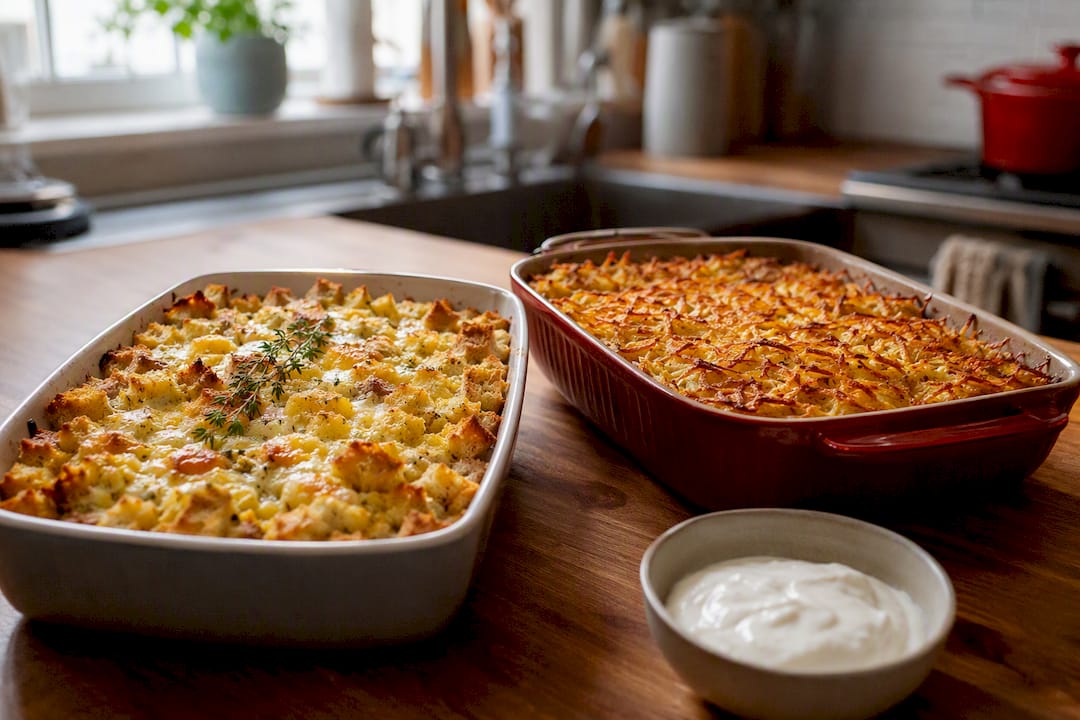
A bread strata gives you a softer, more custardy bite throughout, closer to a savory bread pudding. It works best with sturdy, slightly stale bread that can absorb the egg mixture without collapsing. A hash brown crust, on the other hand, creates a crisp bottom layer with browned edges, giving the dish more textural contrast, a trait Bon Appétit highlights as the main reason to choose potatoes over bread.
For fillings, pre-cooked meats keep things simple. Diced ham or crumbled cooked bacon can go in straight from the fridge without extra browning, while raw sausage always needs a trip through the skillet first. Vegetarian versions swap in sautéed spinach, mushrooms, or roasted bell peppers, and Sally’s Baking Addiction notes these swaps hold up just as well as meat as long as excess moisture gets cooked off first.
- Chorizo and pepper jack for a spicier, Tex-Mex leaning version
- Spinach, mushroom, and Gruyère for a vegetarian option with real depth
- Ham, cheddar, and green onion as a classic, kid-friendly combo
Why Did My Breakfast Casserole Turn Out Soggy or Rubbery?
Most failures trace back to one of three things: too much liquid, undercooked fillings, or an oven that’s running too hot.
- Soggy texture: usually caused by raw bread or unbaked hash browns releasing water as they cook. Toast the bread or pre-bake the potatoes first, and reduce the milk slightly if you’re using a very moist bread.
- Rubbery eggs: almost always a sign of too little fat in the custard or an oven that’s too hot. Swapping some milk for half-and-half or a spoonful of sour cream, as Serious Eats tests confirm, keeps the eggs tender instead of tightening up into a spongy texture.
- Undercooked center: tent with foil earlier in the bake and give it another 10 to 15 minutes, checking with a knife at the center rather than the edges.
- Over-browned top: cover loosely with foil for the last stretch of baking if the cheese is browning faster than the center is setting.
Pro Tip: A wobbly center after the recommended bake time doesn’t always mean it’s underdone. Give it the full 10-minute rest first. Carryover heat often finishes the job without any extra oven time.
How Many People Does a Breakfast Casserole Feed?
A standard 9x13 pan cuts into 8 to 10 generous squares, which makes it an easy anchor for a holiday spread without needing to do math on servings.
- Pair it with fresh fruit, a simple green salad, or morning fuel recipes like muffins or coffee cake to round out the table
- Top individual servings with hot sauce, sliced avocado, or a dollop of sour cream for guests who want to customize
- If you’re serving a bigger crowd with multiple pans, keep extras warm in a 200°F oven, covered loosely with foil, until you’re ready to serve
What Hearthly Recipes Learned From Testing This Casserole
Hearthly Recipes runs its entire catalog, from casseroles to slow cooker meals, through repeated kitchen testing before publishing, which is part of why so many recipes on the site carry 5-star ratings from home cooks who’ve actually made them. This breakfast casserole recipe went through several rounds focused on one thing: keeping the center custardy without letting the base turn to mush.
The two adjustments that mattered most were toasting the bread before assembly and adding a splash of half-and-half to the eggs. Skip either one and the texture suffers, even if every other step is followed exactly.
Recipe editor Susan Scortberg oversaw the testing rounds for this dish, with particular attention to how the bread and hash brown versions held up after an overnight rest in the fridge.
Why the “One Perfect Recipe” Advice Misses the Point
Most breakfast casserole content treats this dish like there’s a single correct recipe waiting to be discovered. That’s backwards. The real skill here isn’t memorizing one ingredient list, it’s understanding the two structural choices, bread versus hash browns, and knowing which fits your morning.
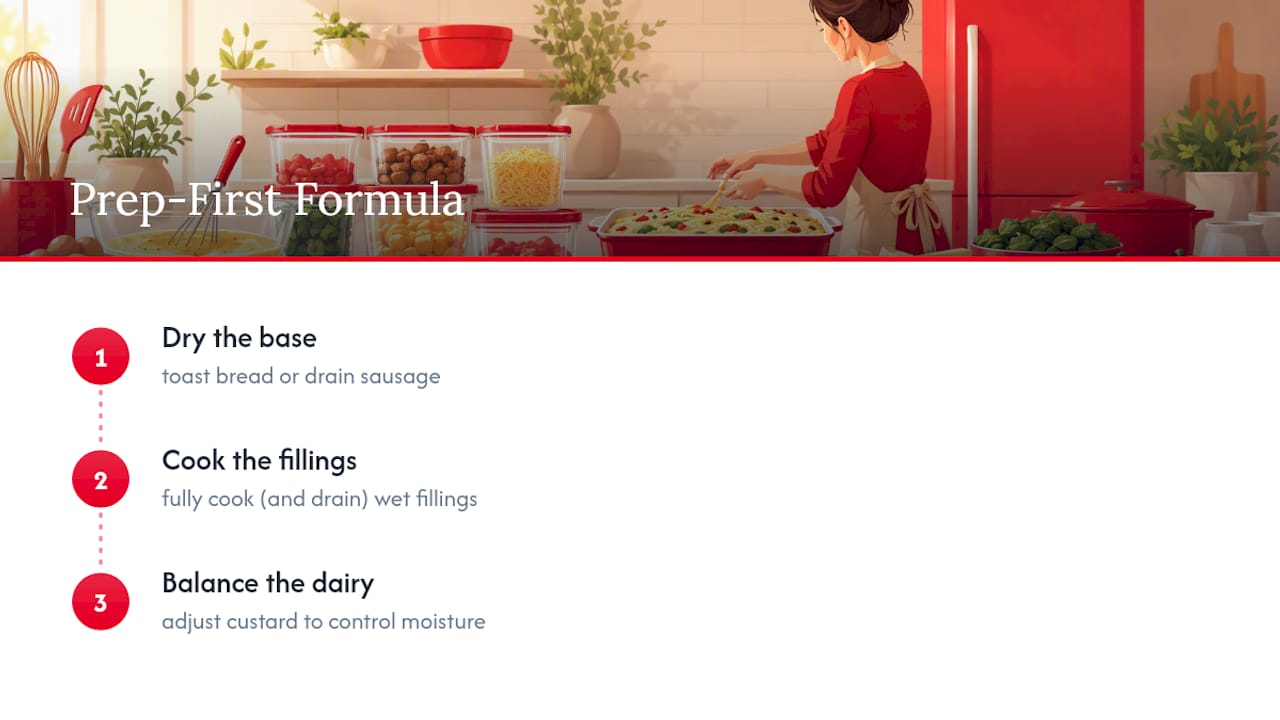
Conventional advice tends to obsess over exact ratios while glossing over the step that actually determines success: moisture control. A recipe can have perfect proportions on paper and still turn soggy if nobody bothered to toast the bread or drain the sausage. That’s the gap between what most articles promise and what the oven actually delivers.
If you take one thing from this, prioritize prep order over ingredient perfectionism. Dry your base, cook your fillings, balance your dairy. Get those three things right and you can swap almost anything else, meat, cheese, vegetables, without risking the dish. The formula is forgiving. The shortcuts around moisture are not.
— Susan Scortberg
Sources
These are the recipes and technique guides that shaped the make-ahead and troubleshooting advice throughout this article:
- Hash Brown Breakfast Casserole | Bon Appétit
- Make-Ahead Breakfast Casserole | America’s Test Kitchen
- Cheesy Sausage Breakfast Casserole Recipe | Serious Eats
- Breakfast Casserole | New York Times Cooking
- Overnight Breakfast Casserole with Sausage and Cheese | Once Upon a Chef
Ready to build your own version? Browse the full casserole recipe collection or explore 43,000+ recipes in the Hearthly Recipes vault for more make-ahead breakfast ideas.
FAQ
What Is the Best Breakfast Casserole for a Crowd?
A hash-brown-and-sausage version with cheddar cheese is one of the most reliable options for feeding a crowd, since the potato base holds up well after baking and reheats without turning mushy.
What Is Dolly Parton’s Five-Ingredient Casserole?
Dolly Parton has shared a simple casserole built from just five pantry staples, though exact versions vary by source; most home versions follow the same core idea of a starch base, eggs or a binder, cheese, and a protein, kept intentionally minimal.
What Mistakes Should I Avoid When Making a Breakfast Casserole?
The most common mistakes are skipping the toasting or pre-baking step on the base, using raw vegetables that release water during baking, and pulling the casserole out before the center fully sets.
What Is an Amish Breakfast Casserole?
An Amish breakfast casserole typically layers hash browns, sausage or bacon, and cheese with an egg custard, similar in structure to the classic version but often includes cottage cheese for extra richness.
Can I Make a Vegetarian Breakfast Casserole?
Yes, swap the sausage for sautéed spinach, mushrooms, or roasted peppers, making sure to cook off excess moisture first so the finished dish doesn’t turn watery.