3 Fast Ways to a Crispy Top Chicken Casserole for Weeknights
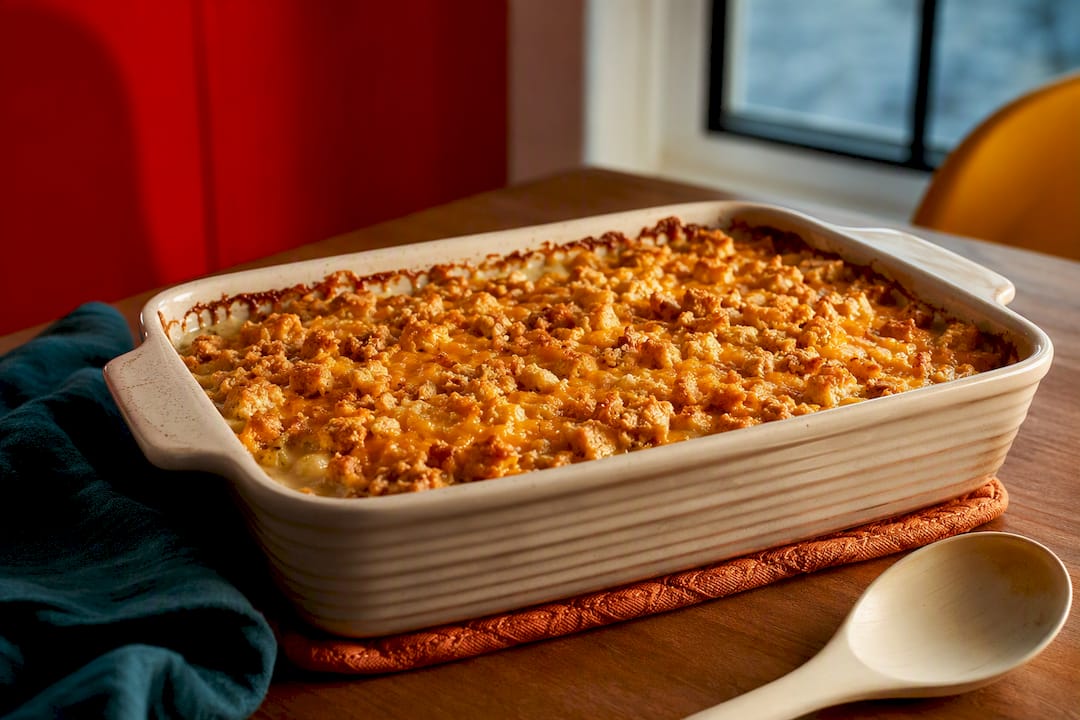
A creamy baked chicken casserole with a crunchy topping is the fastest route to a family-pleasing dinner. Use cooked or rotisserie chicken and you’re at the table in a short amount of time suitable for a quick family dinner. Follow the ratios and bake times below and you’ll never end up with a watery bottom or dried-out filling again.
TL;DR:
- Using cooked rotisserie or leftover chicken significantly reduces prep and total cooking time, making the dish suitable for weeknights.
- Drain vegetables thoroughly and reduce sauce beforehand to prevent excess liquid and achieve a firm, bubbling casserole.
- Baking at 375°F for 25 to 30 minutes ensures a crisp topping and a hot, evenly cooked filling.
- Incorporating buttered cracker or panko toppings in the last 20 minutes and broiling briefly yields a golden, crunchy crust.
- Casseroles can be assembled a day in advance or frozen unbaked for up to three months, with adjustments to baking time.
Table of Contents
- Chicken Casserole Recipe Card
- What Goes Into a Creamy Chicken Casserole
- Equipment and Getting Ready to Cook
- How to Make Chicken Casserole Step by Step
- Chicken Casserole Variations Worth Trying
- Getting a Crisp, Golden Topping Every Time
- Make-Ahead, Freezing, and Reheating Chicken Casserole
- What to Serve With Chicken Casserole
- Troubleshooting Common Chicken Casserole Problems
- Why We Keep Coming Back to This Recipe
- Try More Comfort Food From Hearthlyrecipes
- Sources
- FAQ
Chicken Casserole Recipe Card
This one bakes at 375°F for 25 to 30 minutes in a 9x13 dish, which is the sweet spot for a bubbling center and a topping that’s actually crisp rather than just warmed through.
| Detail | Amount |
|---|---|
| Servings | 6 |
| Prep time | 15 minutes |
| Cook time | 25 to 30 minutes |
| Total time | 40 to 45 minutes |
| Oven temperature | 375°F |
| Pan size | 9x13 inch baking dish |
The short version: 3 cups cooked, shredded chicken (rotisserie works great here), a creamy binder built from condensed soup or a from-scratch sauce, 2 cups of a starchy filler like rice or egg noodles, a cup or so of vegetables, and a buttered cracker or panko topping. Whether you use raw or cooked chicken changes your timeline more than anything else in the recipe, and that’s covered in the method section below.
What Goes Into a Creamy Chicken Casserole
Every ingredient in a good chicken casserole is doing a specific job, and once you see the roles, swapping ingredients gets a lot less intimidating.
- 3 cups cooked, shredded chicken — the protein; rotisserie, poached, or leftover roast chicken all work.
- a moderate amount of cooked rice or egg noodles — the starchy filler that soaks up sauce without turning mushy.
- 1 can (10.5 oz) condensed cream of chicken soup, or 1½ cups from-scratch white sauce — the binder that holds everything together.
- a small amount of sour cream or Greek yogurt — adds tang and creaminess; Greek yogurt swaps in at a 1:1 ratio and cuts fat without changing texture much.
- 1 cup shredded cheddar or Monterey Jack — melts into the sauce and reinforces the crust.
- 1 to 1½ cups vegetables — broccoli florets, peas, mushrooms, or diced carrots; stick to this range so you don’t dilute the sauce.
- 1 cup crushed buttery crackers, panko, or crushed cornflakes — the topping for crunch.
- 3 to 4 tablespoons melted butter — tossed with the topping for browning.
- Salt, pepper, garlic powder, and a pinch of onion powder — the seasoning backbone.
For dairy sensitivities, cottage cheese blended smooth can replace sour cream, and gluten-free crackers or gluten-free panko sub in for the topping without any adjustment to quantities. If you’re loading up on vegetables, thaw and drain frozen ones first. Wet veggies are the number one reason casseroles turn watery.
Equipment and Getting Ready to Cook
A standard 9x13 ceramic or glass baking dish is the right size for this recipe. Metal pans work too, but glass lets you see if the bottom is browning too fast. Place the rack in the center of the oven for even heat.
You don’t need much beyond that:
- A large skillet, if you’re sautéing onions or building a sauce from scratch.
- A slow cooker or Instant Pot, if you’re going that route instead of the oven.
- Two mixing bowls: one for the filling, one for tossing the cracker topping in butter.
Before you start cooking, run through this: shred the chicken, let cream cheese or sour cream come to room temperature so it mixes without lumps, thaw any frozen vegetables and pat them dry, and preheat the oven to 375°F so it’s ready the moment your dish is assembled.
How to Make Chicken Casserole Step by Step
There isn’t just one way to get here. Pick the route that matches your schedule and what’s already in your fridge.
Route 1: The rotisserie shortcut (45 minutes total). This is the one to use on a Tuesday night.
- Preheat the oven to 375°F and grease your 9x13 dish.
- Shred 3 cups of rotisserie chicken and spread it in the bottom of the dish.
- Stir together your soup or sauce, sour cream, half the cheese, and vegetables in a bowl, then pour it over the chicken.
- Fold in the cooked rice or noodles so everything is evenly coated.
- Top with the remaining cheese, then the buttered cracker crumbs.
- Bake for 25 to 30 minutes, until the edges bubble and the top is golden.
Route 2: From-scratch with raw chicken. Dice 1.5 pounds of raw chicken breast or thighs and sauté in a skillet with a little oil and diced onion until the chicken hits an internal temperature of 165°F, roughly 8 to 10 minutes. Build your sauce right in that same skillet, deglazing with a splash of chicken broth before adding cream and seasoning. Assemble as above, then bake at 375°F for 30 to 35 minutes since the sauce is starting cooler.
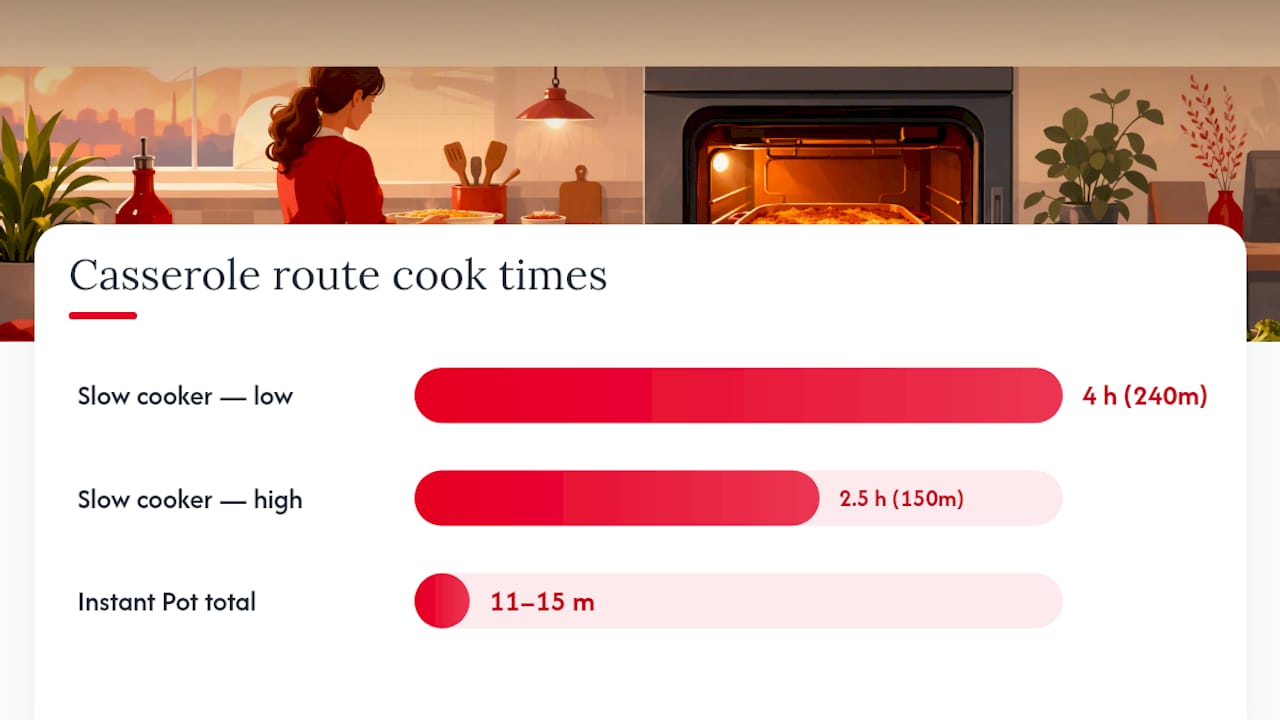
Route 3: Slow cooker or Instant Pot. Layer raw or cooked chicken, sauce, vegetables, and rice (use slightly more liquid than the oven version, since less evaporates). Slow cooker: 4 hours on low or 2.5 hours on high. Instant Pot: 8 to 10 minutes on high pressure with a quick release. Transfer to a baking dish, top with cheese and crackers, and broil for 3 to 5 minutes just to crisp the top.
You know it’s done when the sauce bubbles at the edges and the internal temperature of the chicken (if using raw) reads 165°F on an instant-read thermometer. A viral casserole video that racked up millions of views built its whole appeal around exactly this shortcut formula: canned soup, crackers, and block cheese, assembled fast and baked hot. That popularity isn’t an accident. The structure works because it balances binder, starch, and crunch every time.
Chicken Casserole Variations Worth Trying
The base formula bends easily once you understand what each ingredient is doing.
- Million Dollar Chicken Casserole: Add a full 8 oz block of cream cheese to your sauce along with cottage cheese and sour cream, then top with a thicker layer of buttered Ritz crumbs for a richer, tangier result.
- Chicken and rice casserole with broccoli: Use pre-steamed broccoli florets, not raw, and keep the rice slightly undercooked going in so it finishes absorbing sauce in the oven rather than releasing more liquid.
- Enchilada-style: Swap the cream soup for a mix of red or green enchilada sauce and a can of diced green chiles, add cumin and chili powder, and top with crushed tortilla chips instead of crackers. A recipe like this green chili chicken enchilada casserole leans on that exact swap.
- Vegetarian swap: Replace chicken with an equal volume of chickpeas or extra-firm tofu, pressed and cubed, and use vegetable broth in place of chicken broth in your sauce.
Getting a Crisp, Golden Topping Every Time
The topping is where most casseroles either shine or disappoint, and the fix is almost always the same: fat and timing.
Toss your cracker crumbs or panko with 3 to 4 tablespoons of melted butter before it goes on the casserole. Dry crumbs on top of a wet filling just steam instead of crisping. Add the topping in the last 20 to 25 minutes of baking rather than at the very start, especially with panko or cornflake crumbs, which burn fast under prolonged heat.
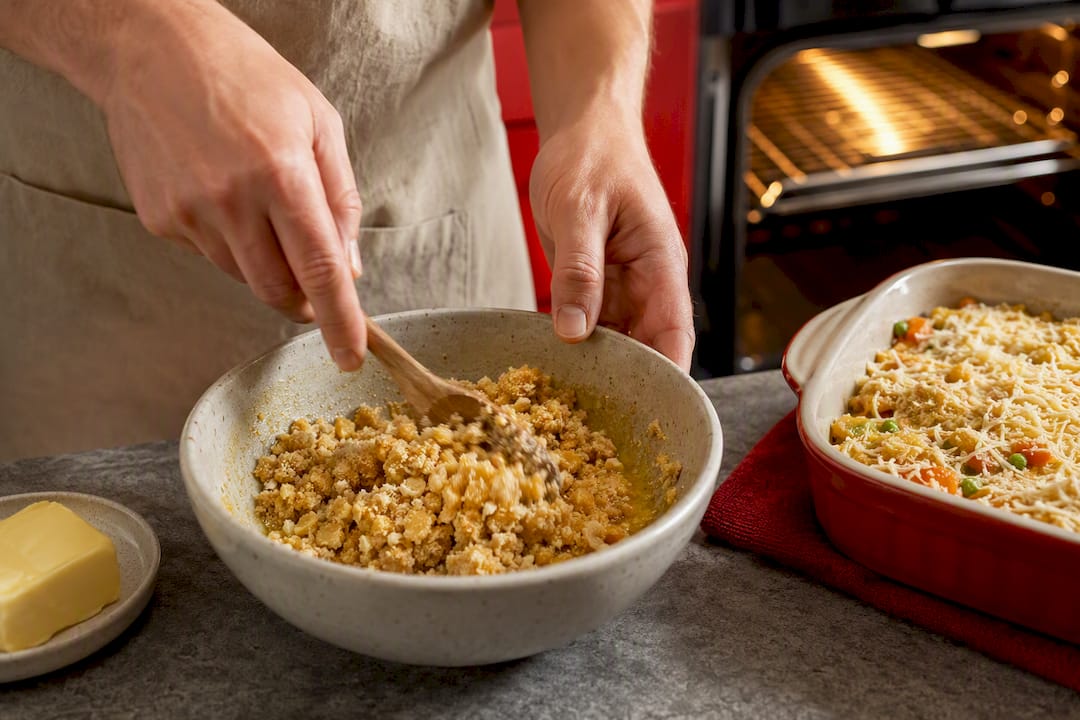
Pro Tip: If your topping still looks pale with five minutes left, switch the oven to broil for the final 2 to 3 minutes and watch it closely. It goes from perfect to burnt in seconds.
If the filling looks watery once it’s out of the oven, let it rest uncovered for 5 minutes. The sauce thickens as it cools, and a lot of “watery casserole” complaints solve themselves right there.
Make-Ahead, Freezing, and Reheating Chicken Casserole
Casseroles are meal-prep friendly, and reader feedback across recipe communities consistently points out that a chicken casserole tastes even better the day after baking, once the flavors have had time to settle.
- Assemble ahead: Build the casserole up to 24 hours before baking, cover tightly, and refrigerate. Hold off on adding the cracker topping until right before it goes in the oven, or it turns soggy.
- Freeze unbaked: Wrap tightly in plastic and foil, then freeze up to 3 months. Thaw overnight in the fridge before baking, and add 10 to 15 minutes to the covered bake time since it’s starting cold.
- Freeze baked leftovers: Cool completely, then freeze in an airtight container for up to 3 months.
- Reheat: Cover with foil and warm at 350°F for 20 minutes, then uncover for the last 5 minutes to re-crisp the topping. Microwaving works in a pinch but leaves the crust soft.
If you’re mapping out a week of dinners around dishes like this, a resource such as this weeknight meal planner can help you slot make-ahead casseroles into busier nights.
What to Serve With Chicken Casserole
Since the casserole is already rich and starchy, the best sides lean light or crisp to balance it out.
- Steamed green beans or roasted asparagus — both cook in about 15 minutes, timed to finish right as the casserole comes out of the oven.
- Crusty bread or a simple side salad — no cook time needed, just set out while the casserole rests.
- Quick pickles or a vinegar-based slaw — the acidity cuts through the creaminess nicely.
Skip a second starchy side. Between the rice or noodles inside the casserole and a bread basket, you don’t need mashed potatoes on the same plate.
Troubleshooting Common Chicken Casserole Problems
Most casserole disasters trace back to two things: too much liquid or not enough heat where it counts.
- Dry chicken: Warm a little extra sauce or broth, stir it in, cover the dish with foil, and let it steam in a 300°F oven for 10 minutes.
- Watery casserole: Next time, reduce your sauce on the stove for a few extra minutes before assembling, and drain vegetables thoroughly. For a batch already in the oven, uncover it and bake an extra 5 to 10 minutes to let liquid evaporate.
- Undercooked center: If the middle is cool, the casserole was probably assembled with cold ingredients straight from the fridge. Tent with foil and extend the bake by 10 minutes rather than cranking the temperature.
- Bland flavor: Season the sauce itself, not just the topping. A pinch of garlic powder and a dash of hot sauce in the binder goes further than table salt sprinkled on top.
Why We Keep Coming Back to This Recipe
We test casserole recipes the way most families actually cook them, on a weeknight, with whatever chicken is on hand, and this one has held up through every version we’ve tried, including the night a batch went into the fridge half-assembled and came out fine the next day anyway. Readers tell us the topping is what gets requested again. If you want a next variation to try, our chicken rice and broccoli casserole uses the same bones with a different vegetable ratio.
— Susan Scortberg
Try More Comfort Food From Hearthlyrecipes
Once you’ve got this casserole on rotation, Hearthlyrecipes gives you a whole shelf of tested, reader-rated recipes to fill out the rest of your week without the guesswork of a random search result.

If broccoli and rice are already a staple in your kitchen, the Chicken Rice and Broccoli Casserole is worth trying next. It uses the same creamy binder and crunchy-topping technique from this recipe but leans more vegetable-forward, and it’s held a consistent reader rating across the site. For more dinners built on the same easy, comfort-first approach, browse the full casserole collection or the broader Sweet Comfort recipes hub. Start there tonight and pick your next make-ahead dinner before the week gets away from you.
Sources
This recipe draws on tested internal casserole formulas from Hearthlyrecipes, standard technique references like Campbell’s Country Chicken Casserole, and the viral 12 million-view casserole video that shows how well the shortcut format resonates with home cooks.
- The Chicken Casserole Recipe with 12 Million views! (Facebook video)
FAQ
What Is the Most Popular Chicken Casserole Recipe?
Classic cream-soup-and-cracker style chicken casseroles remain the most searched and shared version, largely because they use pantry staples and come together fast, as shown by a viral video that gathered millions of views around exactly this format.
What Is a 5-Ingredient Chicken Casserole?
A bare-bones version typically uses cooked chicken, condensed soup, sour cream, shredded cheese, and a cracker topping, skipping vegetables and extra seasoning for speed.
What Ingredients Go in Chicken Casserole?
The core building blocks are cooked chicken, a creamy binder (canned soup or a from-scratch sauce), a starch like rice or noodles, vegetables, cheese, and a buttered crunchy topping.
How Do I Keep My Chicken Casserole From Getting Soggy?
Drain and pat dry any vegetables before adding them, reduce your sauce slightly before assembly, and add the buttered topping in the last 20 to 25 minutes of baking instead of at the start.
Can I Make Chicken Casserole Ahead of Time?
Yes. Assemble it up to 24 hours ahead and refrigerate, holding the topping until just before baking, or freeze it unbaked for up to 3 months and add 10 to 15 minutes to the covered bake time from frozen.