1 Egg = 1/4 Cup: Nine Tested Egg Substitutes for Baking
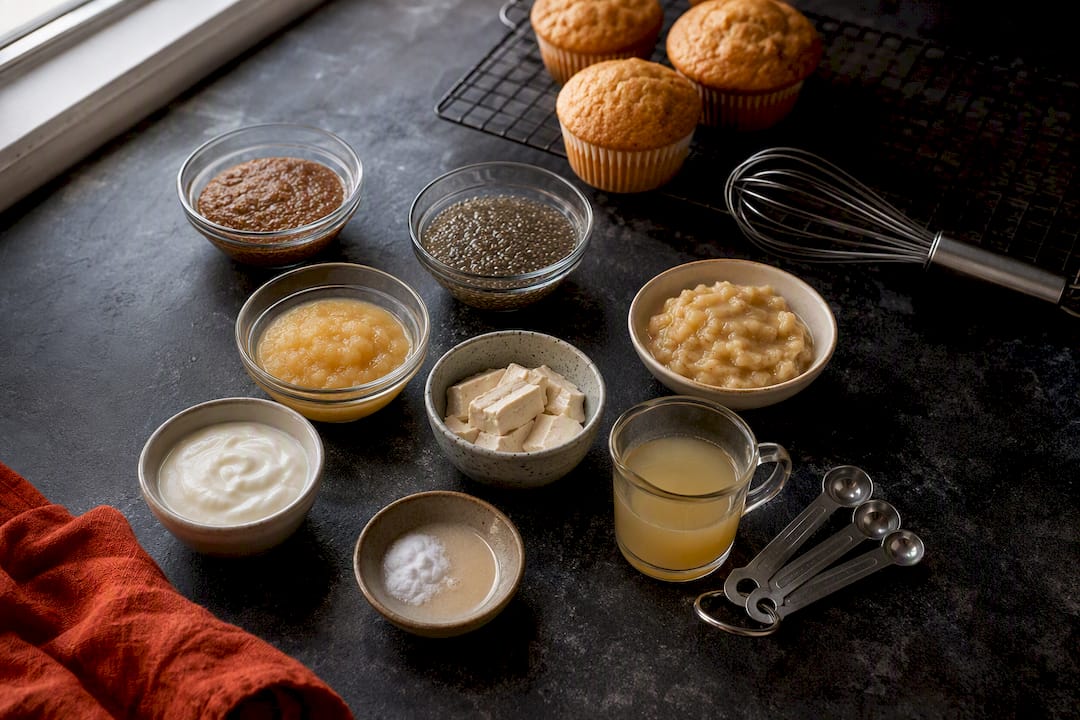
For most cookies, cakes, and muffins, your go-to swaps are flax or chia gel for binding, applesauce or mashed banana for moisture, and aquafaba when you need whipped volume. The core rule: 1 large egg equals about 1/4 cup (50 to 60 grams) of purée, yogurt, or dairy substitute; a flax or chia egg is 1 tablespoon of ground seed plus 3 tablespoons of water; and aquafaba runs 3 tablespoons per whole egg. Recipes leaning on eggs for structure, like sponge cake or meringue, usually need a recipe built without eggs from the start, not a swap.
TL;DR:
- Flax eggs are best for binding in cookies and muffins, but do not provide leavening, requiring recipe adjustments for lift.
- Greek yogurt or silken tofu are ideal for dense baked goods like brownies, enhancing moisture and texture without adding cholesterol.
- Applesauce and mashed banana work well in quick breads and cakes for moisture and sweetness, but may alter flavor profiles significantly.
- Combining substitutes, such as a flax egg with extra baking powder, often yields better results than relying on a single type, especially in recipes needing both structure and lift.
- Using egg substitutes requires understanding their specific functions in recipes and may necessitate small trial runs to perfect results without affecting texture or appearance.
Table of Contents
- What Eggs Actually Do in a Recipe (and Why That Determines Your Substitute)
- Egg Substitute Conversion Chart: Ratios and Notes for Every Recipe
- How to Pick the Right Egg Substitute for Your Recipe
- Nine Egg Substitutes, Broken Down: How to Use Each One
- Which Substitute Works Best for Cookies, Cakes, Brownies, and More
- Adjusting Leavening, Liquid, and Fat After an Egg Swap
- Fixing Common Egg Substitute Mistakes
- How Hearthlyrecipes Tests Egg Substitutes in Real Recipes
- How Long Do Egg Substitutes Actually Keep?
- Do Egg Substitutes Change the Nutrition of Your Baked Goods?
- Why Function-First Substitution Beats Guesswork
- Try These Substitutions in a Recipe Built to Handle Them
- Sources
- FAQ
What Eggs Actually Do in a Recipe (and Why That Determines Your Substitute)
Eggs are doing at least one of five jobs in any given recipe, and figuring out which job matters most is the entire game of egg substitute baking. Get the function right and the swap works. Get it wrong and you end up with a gummy brownie or a cookie that spreads into a puddle.
Here’s what eggs are actually contributing:
- Binding: holding flour, sugar, and fat together so the batter doesn’t crumble apart once baked.
- Moisture: adding liquid and fat that keeps a cake or muffin from drying out.
- Leavening: trapping air (especially when whipped) to help a batter rise.
- Emulsifying: blending fat and water-based ingredients into a smooth, uniform batter instead of a separated mess.
- Browning and structure: proteins that firm up during baking and contribute to golden color and a set crumb.
Most substitutes are specialists, not generalists. A flax egg binds well but does nothing for leavening. Aquafaba whips into foam and adds lift but barely binds anything. Applesauce adds moisture and a little sweetness, but it will not help a batter rise or set. That mismatch is why a straight one-for-one swap sometimes flops: you replaced the egg, but not the job it was doing.
This is also where scale matters. Replacing one egg in a two-egg cookie recipe is low risk. Replacing three or more eggs in a chiffon cake, angel food cake, or a soufflé is a different problem entirely, because those recipes depend on egg proteins for their actual architecture. When a recipe leans that heavily on egg foam or egg-based structure, reaching for a recipe already developed to be egg-free beats trying to force a substitute into a role it was never designed to play.
Egg Substitute Conversion Chart: Ratios and Notes for Every Recipe
Bookmark this table. It covers the ten substitutes home bakers reach for most, with the ratio to use per egg and what to actually expect once it comes out of the oven.
| Substitute | Amount per 1 egg | Best for | Notes |
|---|---|---|---|
| Flax egg | 1 tablespoon ground flax plus 3 tablespoons water | Cookies, muffins, quick breads | Adds a mild nutty flavor and can darken the crumb slightly, per NC State Extension |
| Chia egg | 1 tablespoon ground or whole chia plus 3 tablespoons water | Muffins, dense cookies | Similar binding to flax; whole chia leaves visible flecks |
| Applesauce | 1/4 cup (about 60g) | Cakes, quick breads, muffins | Adds sweetness and moisture; reduce added sugar slightly |
| Mashed banana | 1/4 cup, roughly half a medium banana | Banana bread, spiced muffins | Adds distinct banana flavor; works against neutral-flavored bakes |
| Silken tofu | 1/4 cup, blended smooth | Brownies, dense cakes | Neutral flavor but can make crumb denser if overused |
| Yogurt or buttermilk | 1/4 cup | Cakes, muffins, pancakes | Greek yogurt gives a richer, slightly tangy crumb |
| Aquafaba | 3 tbsp per whole egg; 2 tbsp per egg white | Meringues, mousses, whipped applications | Reduce homemade chickpea liquid by simmering if it’s thin, per Fond’s ratio guide |
| Vinegar + baking soda | 1 tbsp vinegar + 1 tsp baking soda | Cakes, pancakes needing lift | Contributes leavening, not binding; pair with a moisture source |
| Oil + water + baking powder | Roughly 1 tbsp oil + 2 tbsp water + 1/2 tsp baking powder | Pancakes, muffins | A pantry hack when nothing else is on hand |
| Commercial egg replacer | Per package directions | Most baked goods | Formulated for consistent results across recipe types |
The baseline behind most of these purée and dairy ratios comes from a simple rule bakers rely on constantly: 1 large egg equals about 1/4 cup, or 50 to 60 grams. Memorize that one number and you can improvise with almost any moist ingredient in your fridge.
A word of caution on the binder-heavy options. Flax and chia gels get gummy fast when you scale them up, so if a recipe calls for three eggs, do not simply triple the flax. Cut the ratio back slightly and lean on extra baking powder to make up the lift you would otherwise lose.
How to Pick the Right Egg Substitute for Your Recipe
Don’t start by asking “what egg substitute do I have?” Start by asking what the egg is doing in that specific recipe. Here’s the four-step process:
- Identify the egg’s primary job. Is the recipe wet and cakey (moisture), crumbly and cookie-like (binding), airy and light (leavening or whip), or does it depend on a smooth batter (emulsifying)?
- Match a substitute to that function. Binding calls for flax or chia. Moisture calls for applesauce, banana, or yogurt. Whipped volume calls for aquafaba. Lift alone calls for vinegar and baking soda or extra baking powder.
- Run a half-batch test when the bake matters. If you’re making a cake for a birthday, don’t gamble the whole batch on an untested swap. Bake half in a smaller pan first.
- Watch for red flags that say “don’t substitute here.” Recipes calling for three or more eggs, recipes titled sponge, chiffon, or angel food, and any recipe where eggs are whipped separately before folding in are all poor candidates for a simple swap.
Sometimes one substitute alone won’t cut it, and that’s fine. Combining a binder with extra leavening, say, a flax egg plus an added quarter teaspoon of baking powder, is a completely normal move when you want both structure and lift. Seriouseats’ test kitchen work backs this up directly: no single substitute reliably reproduces every egg function, but combined tweaks (a bit more leavening plus a bit more liquid or fat) consistently outperform a single ingredient swap across different recipe types.
Pro Tip: Keep a small notebook (or a note on your phone) tracking which substitute you used in which recipe and how it turned out. Egg substitute baking rewards pattern recognition more than memorized rules.
Nine Egg Substitutes, Broken Down: How to Use Each One
Flax egg. Mix 1 tablespoon of ground flaxseed with 3 tablespoons of water and let it sit for at least five minutes until it thickens into a gel, per NC State Extension’s guidance. It’s the most reliable binder for cookies and muffins. Expect a slightly denser texture and a faint nutty undertone that mostly disappears once other flavors like chocolate or cinnamon are in play.
Chia egg. Same ratio as flax: 1 tablespoon ground or whole seed to 3 tablespoons water, rested the same five minutes. Chia gel is a touch more gelatinous than flax and, if you use whole seeds instead of ground, you’ll see small dark specks throughout the finished bake. Use it anywhere flax works, unless a perfectly smooth crumb matters.
Applesauce. A quarter cup of unsweetened applesauce replaces one egg cleanly in moist cakes and quick breads. It brings real sweetness along with the moisture, so pull back the recipe’s added sugar by a tablespoon or two to keep things balanced. This is one of the most affordable and pantry-friendly swaps around.
Mashed banana. Also a quarter cup, roughly half a medium banana, mashed until smooth. It’s built for banana bread and spiced muffins where the flavor is welcome, but skip it in anything meant to taste neutral, like a vanilla layer cake, unless you actually want banana flavor competing with vanilla.
Silken tofu. Blend a quarter cup smooth (lumps will show up in the finished crumb otherwise) and use it per egg in brownies and dense cakes. It’s essentially flavorless, which makes it more versatile than fruit purées, but leaning on it too heavily can leave the crumb noticeably denser than the original recipe.
Yogurt, buttermilk, or Greek yogurt. A quarter cup per egg works in cakes, muffins, and pancake batter. Regular yogurt or buttermilk keeps things light and slightly tangy; Greek yogurt, being thicker, produces a richer, almost pound-cake-like crumb. Good Housekeeping’s test kitchen actually ranked Greek yogurt as the closest match to real eggs for boxed brownie mix, both in texture and taste.
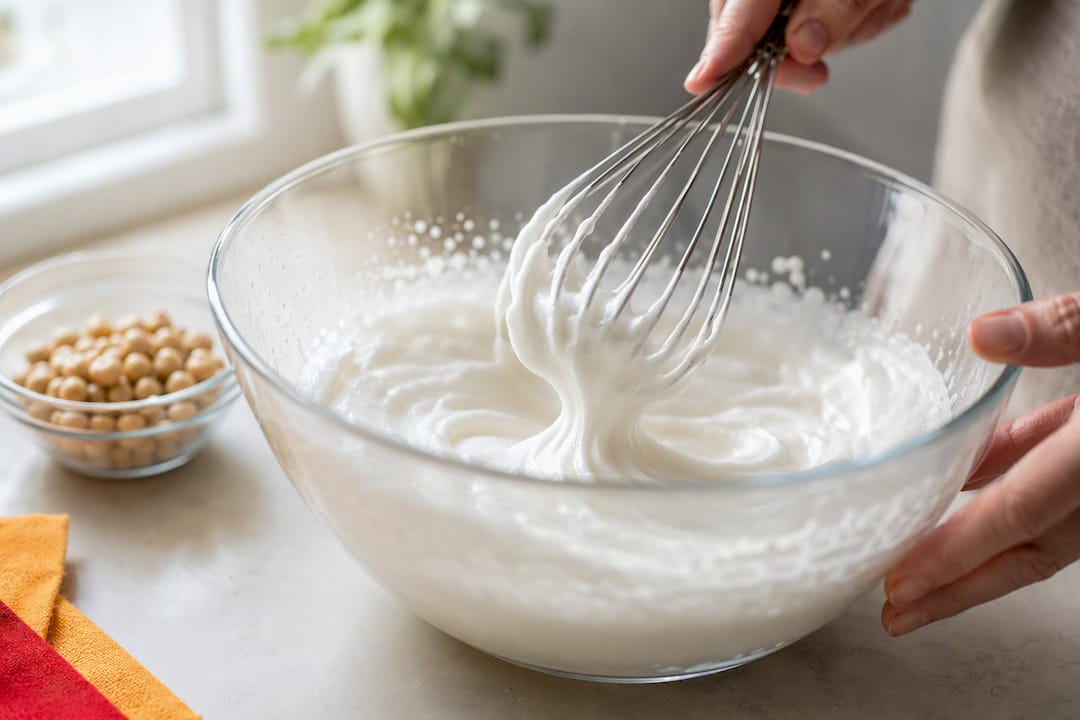
Aquafaba. Three tablespoons of the liquid from a can of chickpeas replaces one whole egg; use two tablespoons per egg white if you’re only replacing whites for whipping. It’s the only plant-based option that genuinely whips into stiff peaks, which makes it the default for meringues and mousses. If you’re making your own aquafaba from scratch rather than using canned, simmer it down first to concentrate the proteins. Thin, watery aquafaba simply won’t whip.
Vinegar plus baking soda. One tablespoon of vinegar mixed with one teaspoon of baking soda creates a quick fizzy reaction that adds lift to cakes and pancakes. It contributes zero binding or moisture, so it works best paired with something else, like applesauce, rather than standing in alone.
Oil, water, and baking powder. Roughly one tablespoon of oil, two tablespoons of water, and half a teaspoon of baking powder per egg gets you fat and lift without needing anything from the fridge. Extension research on egg-free baking points to this kind of oil-and-leavener combination, or even plain carbonated water, as a workable stand-in when binding matters less than moisture and rise, as in pancakes.
Commercial egg replacers. Powdered blends formulated specifically for baking (not the liquid egg substitutes meant for omelets) tend to behave predictably because they’re engineered to mimic multiple egg functions at once. Follow the package ratio exactly rather than eyeballing it, since these products are more concentrated than a spoonful of flaxseed.
Which Substitute Works Best for Cookies, Cakes, Brownies, and More
Different bakes stress different egg functions, so the “best” substitute really does change depending on what you’re making.
- Cookies: flax egg gets you closest to classic chew and structure. Yogurt adds extra softness if you want a chewier cookie. Mashed banana works if you’re fine with a softer, cakier cookie that carries a mild fruit flavor.
- Brownies: Greek yogurt or silken tofu wins for fudgy, moist results, and it lines up with what Good Housekeeping’s test kitchen found when testing boxed mixes. Aquafaba is worth trying if you want a slightly lighter, less dense brownie.
- Cakes and cupcakes: applesauce or yogurt gives you a sturdier crumb that holds up to frosting. If the cake feels flat after baking, add a touch of vinegar and baking soda, or simply bump up your baking powder, since lift is often the missing piece.
- Muffins and quick breads: applesauce or a fruit purée is the natural fit, and since fruit purées bring their own sugar, cut the recipe’s sugar back slightly to avoid an overly sweet result.
- Pancakes: oil plus baking powder, or a splash of carbonated water, keeps the batter light. Aquafaba tends to underperform here since pancakes need quick, even lift rather than a stable foam.
- Meringues and whipped egg whites: aquafaba is the only realistic plant-based option, and it demands patience. Chill it first, whip it slowly, and add a stabilizer like cream of tartar for the best chance at stiff, glossy peaks.
If you’re testing pancake substitutes, Hearthlyrecipes’ fluffy pancake recipe is a forgiving place to practice lift-oriented swaps before trying them somewhere higher stakes, like a layer cake.
Adjusting Leavening, Liquid, and Fat After an Egg Swap
Swapping the egg out often means the batter’s chemistry shifts underneath you, even when the ratio on paper looks correct. Here’s how to correct for it:
- Add extra baking powder when the bake seems flat. A rough starting point is an extra 1/4 to 1/2 teaspoon of baking powder per egg replaced, especially when using a dense binder like flax, chia, or tofu that offers no lift of its own.
- Add a splash of liquid or fat when the batter feels too thick. Purée-based substitutes like banana or applesauce can make batter stiffer than the original recipe intended. An extra tablespoon of liquid, or a teaspoon of oil, usually loosens it back to a normal consistency.
- Adjust your mixing and bake time. Egg-free batters often need slightly less mixing to avoid toughness, and they can bake a few minutes faster or slower than the original recipe. Start checking a few minutes before the original recipe’s timer and watch color rather than trusting the clock alone.
Pro Tip: If a cake or muffin batter looks noticeably thicker than usual after your substitute goes in, don’t force it into the pan as-is. A tablespoon of milk or water stirred in gently will save you from a dry, dense result later.
Fixing Common Egg Substitute Mistakes
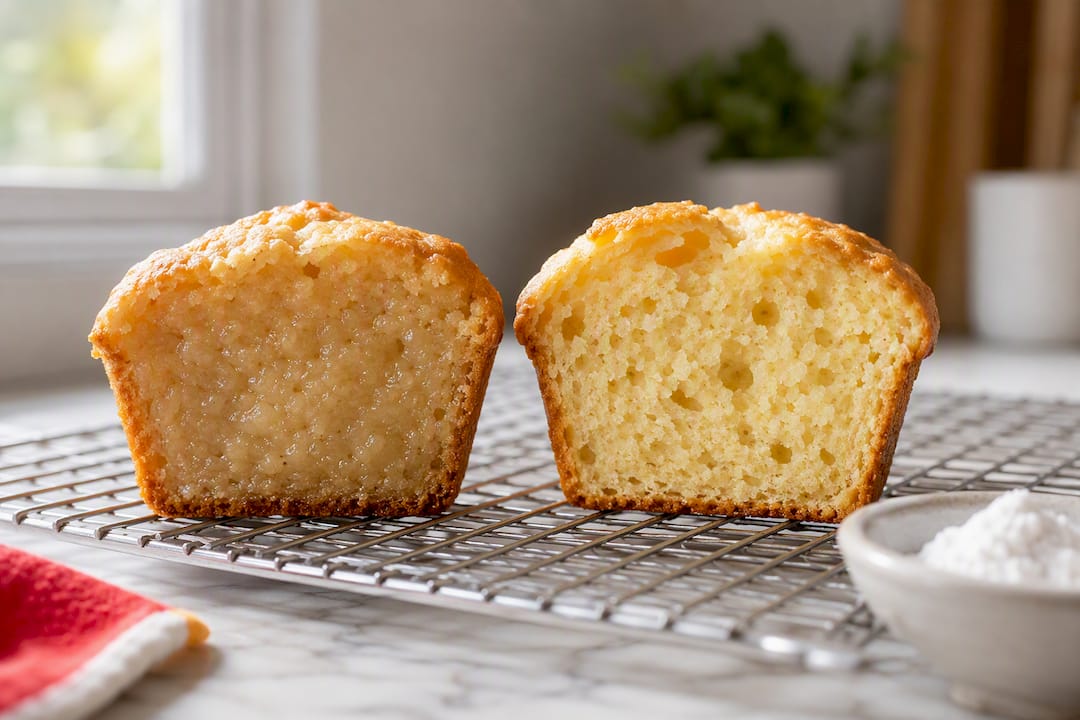
Dense or gummy crumb. This almost always means too much binder relative to leavening. Cut back the flax or chia slightly next time, or add a small amount of extra baking powder to lighten things up.
Odd bean or mineral flavor. This shows up most with aquafaba used generously in a delicately flavored bake. Use it sparingly, lean on yogurt or silken tofu instead when flavor neutrality matters, or mask it with cocoa powder or warm spices in recipes where that’s already an option.
Visible seeds or gritty texture. Ground flaxseed disappears into batter far better than whole flax or chia. If a smooth crumb matters, always reach for the ground version and strain chia gel if needed.
Multiple substitutions stacking up. Swapping out one egg is forgiving. Swapping out three compounds every risk above at once: too much binder, not enough structure, and unpredictable rise. At that point, the more reliable move is choosing a recipe built specifically without eggs rather than layering substitute on top of substitute and hoping for the best.
How Hearthlyrecipes Tests Egg Substitutes in Real Recipes
Small batch tests before recommending any swap, baking a half batch with the substitute alongside notes on texture, rise, and flavor helps validate recommendations. This approach is consistent with common recipe development practices.
Scortberg’s defaults, built from repeated kitchen testing: Greek yogurt or silken tofu for brownies, flax for cookies, aquafaba for anything whipped, and applesauce for quick breads and muffins. When a recipe truly matters, whether that’s a birthday cake or a batch for guests, a half-batch test run is still the safest move before committing the whole thing.
Pro Tip: Write the substitute and ratio directly on your printed recipe or in your notes app the first time you try it. You’ll thank yourself the second time you make it.
How Long Do Egg Substitutes Actually Keep?
Storage life varies more than most bakers expect, and getting this wrong is a quiet way to ruin a bake before it even starts.
Flax and chia gel should be used within a day or two of mixing and kept refrigerated; they lose thickening power the longer they sit. Unopened commercial egg replacer powder keeps for months in the pantry, same as any dry baking mix, but once mixed with water it behaves like the gels above and needs to be used quickly. Applesauce and mashed banana are the most fragile of the bunch: banana browns and turns overly sweet within a day, while opened applesauce is good for about a week refrigerated.
Aquafaba is the trickiest to store. Canned chickpea liquid keeps for around four to five days refrigerated in a sealed container, and it also freezes well in ice cube trays for portioned future use, a genuinely useful trick if you bake meringues occasionally rather than constantly. Yogurt and buttermilk follow their normal dairy shelf life, typically one to two weeks refrigerated, and silken tofu should be used within a few days of opening the package.
The practical habit: buy or prepare only what a recipe needs, since most of these substitutes don’t hold up to being stockpiled the way a carton of eggs does.
Do Egg Substitutes Change the Nutrition of Your Baked Goods?
Yes, and the direction of that change depends entirely on which substitute you reach for. Eggs bring protein, fat, and cholesterol to a recipe, and swapping them out shifts all three, sometimes for the better and sometimes not.
Applesauce and mashed banana cut fat and cholesterol significantly since they’re essentially fruit, but they also add natural sugar, which is why pulling back a bit of added sugar elsewhere in the recipe helps keep things balanced. Flax and chia eggs go the opposite direction nutritionally: they add fiber and omega-3 fats that the original egg never contributed, which is a genuine upgrade if that matters to you. Silken tofu and aquafaba are both lower in fat than eggs and contribute modest plant protein, though nowhere near what a real egg provides. Greek yogurt lands closest to eggs on the protein front while cutting cholesterol out entirely.
None of these swaps make a cookie or cake “healthy” outright. What they do is shift the nutritional profile in a specific direction, more fiber here, less cholesterol there, and knowing which direction you’re shifting it matters more than assuming any substitute is automatically the lighter choice.
Why Function-First Substitution Beats Guesswork
The biggest mistake I see home bakers make with egg substitute baking is treating it like a single universal swap: find “the” egg replacer and use it everywhere. That approach fails constantly, because a cookie recipe and a meringue are asking eggs to do completely different jobs.
What actually works is asking what the egg is doing before reaching for anything. Once you know you need binding versus whipped volume versus straightforward moisture, the right substitute becomes obvious almost every time, and the guesswork disappears.
I’d also push back gently on the idea that substituting eggs is a compromise. Some of these swaps, applesauce in a spiced muffin, banana in a quick bread, genuinely improve the final result rather than just standing in for something missing. Try a few of Hearthlyrecipes’ vegan recipes with these swaps already built in, and see for yourself which ones earn a permanent spot in your regular baking.
— Susan Scortberg
Try These Substitutions in a Recipe Built to Handle Them
This platform offers a collection of recipes that have been tested from start to finish rather than assembled from theory. That matters more with egg substitute baking than almost any other kitchen skill, because a ratio that works on paper doesn’t always survive contact with a real oven.

Start with something forgiving. The Sweet Comfort recipe collection is full of cakes, cookies, and quick breads where a flax egg or a scoop of applesauce slides in easily, and the cookie collection is a low-risk place to test a flax or chia binder for the first time. If brownies are your goal, look for a dense chocolate bake, like the chocolate zucchini cake, where a yogurt or silken tofu swap tends to shine. Pick one recipe this week, try the substitute that matches what the egg is actually doing in it, and see how close you land to the original.
Sources
For readers who want to dig further into the numbers behind these ratios, these sources go deeper than most recipe blogs:
- No Egg? No Problem: 3 Vegan Breakfast Recipes
- The best egg substitutes, tested
- The best egg substitutes for baking, tested by chefs
FAQ
How do I replace eggs in a boxed cake mix?
Use 1/4 cup of unsweetened applesauce, mashed banana, or plain yogurt per egg the mix calls for; Greek yogurt tends to produce the closest texture and taste to the original mix in independent test kitchen comparisons.
What can I use if I don’t have eggs and need a quick fix?
Reach for whatever pantry hack matches the job: a tablespoon of vinegar plus a teaspoon of baking soda for lift, or a spoonful of oil mixed with water and baking powder, both of which use ingredients most kitchens already have on hand.
What is the best all-around egg replacer for baking?
There isn’t one substitute that wins every category, but flax egg is the most reliable all-purpose binder for cookies and muffins, while Greek yogurt or silken tofu tends to perform best in moist, dense bakes like brownies according to test kitchen results.
How much aquafaba replaces one egg white?
Use 2 tablespoons of aquafaba per egg white when whipping, or 3 tablespoons per whole egg, and chill and whip it carefully since consistency varies between canned and homemade batches.
Are egg substitutes cheaper than eggs?
Applesauce, mashed banana, and aquafaba are generally inexpensive and widely available, and using them can also reduce food waste since they often repurpose ingredients available in many kitchens already sitting in the kitchen.