Easy Gluten Free Brownie Recipes: Fudgy and Reliable
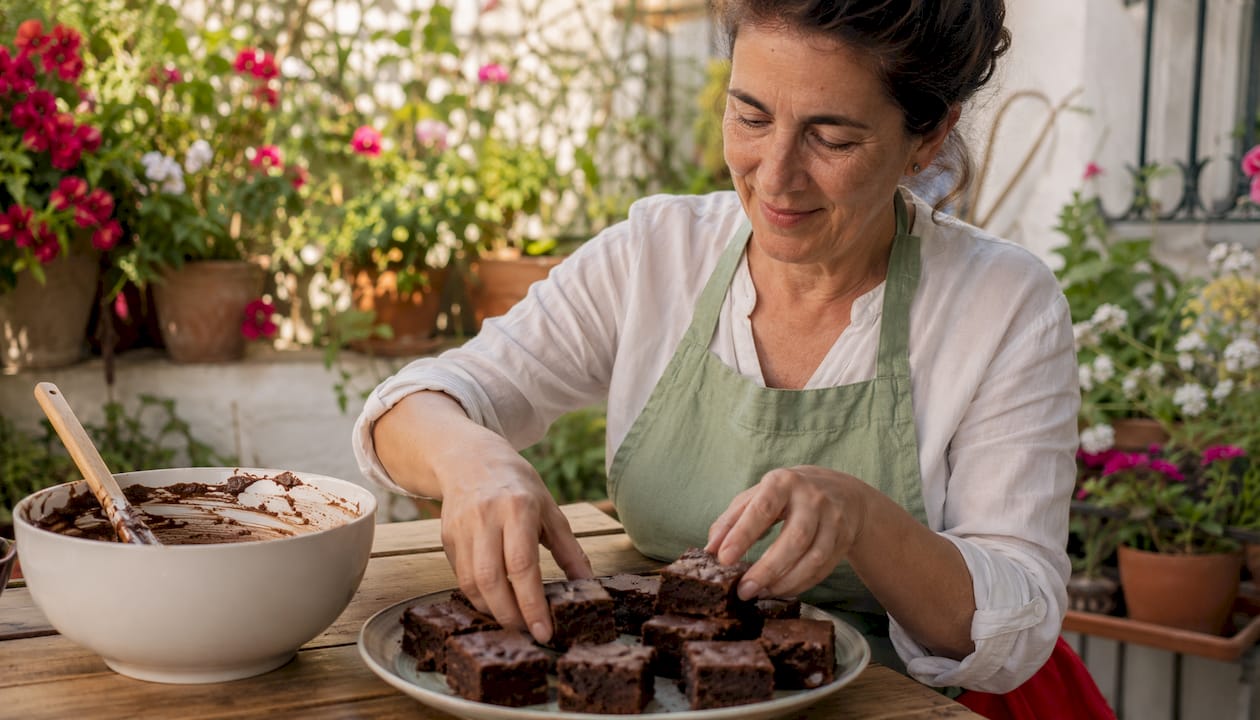
The best gluten-free brownie recipes deliver fudgy, moist brownies with a shiny, crackly top — and they are genuinely easy to pull off at home. The secret is a gluten-free flour blend that contains xanthan gum, combined with high-quality semi-sweet chocolate chips and cocoa powder. Get those two things right, and you are already most of the way there.
Table of Contents
- What makes the best gluten free brownie recipes work
- What ingredients do you need for gluten-free brownies?
- How do you make gluten-free brownies step by step?
- Expert tips for getting gluten-free brownies right every time
- How to store and serve gluten-free brownies
- Which gluten-free flour works best, and what can you substitute?
- What is the nutritional profile of gluten-free brownies?
- What equipment do you need for best results?
- How do you test for gluten contamination in ingredients?
- Troubleshooting common gluten-free brownie problems
- Key Takeaways
- FAQ
What makes the best gluten free brownie recipes work
The hallmarks of a great gluten-free brownie are a dense, fudgy center and that paper-thin glossy crust on top. Both come down to technique and ingredient choices, not luck.
- Fudgy, moist texture from combining melted butter with both cocoa powder and melted chocolate chips
- Shiny, crackly top from dissolving sugar thoroughly into warm butter before adding eggs
- Proper structure from a gluten-free flour blend containing xanthan gum, which replaces the binding role of gluten
- Deep chocolate flavor from using high-quality semi-sweet chocolate, such as Guittard semisweet chocolate chips, alongside unsweetened cocoa powder
- Simple pantry ingredients including butter, eggs, vanilla extract, and sugar — nothing obscure
- Consistent results from accurate flour measurement and careful baking time management
Brownies are one of the easiest gluten-free desserts to perfect from scratch, and the homemade version beats any boxed mix on flavor.
What ingredients do you need for gluten-free brownies?
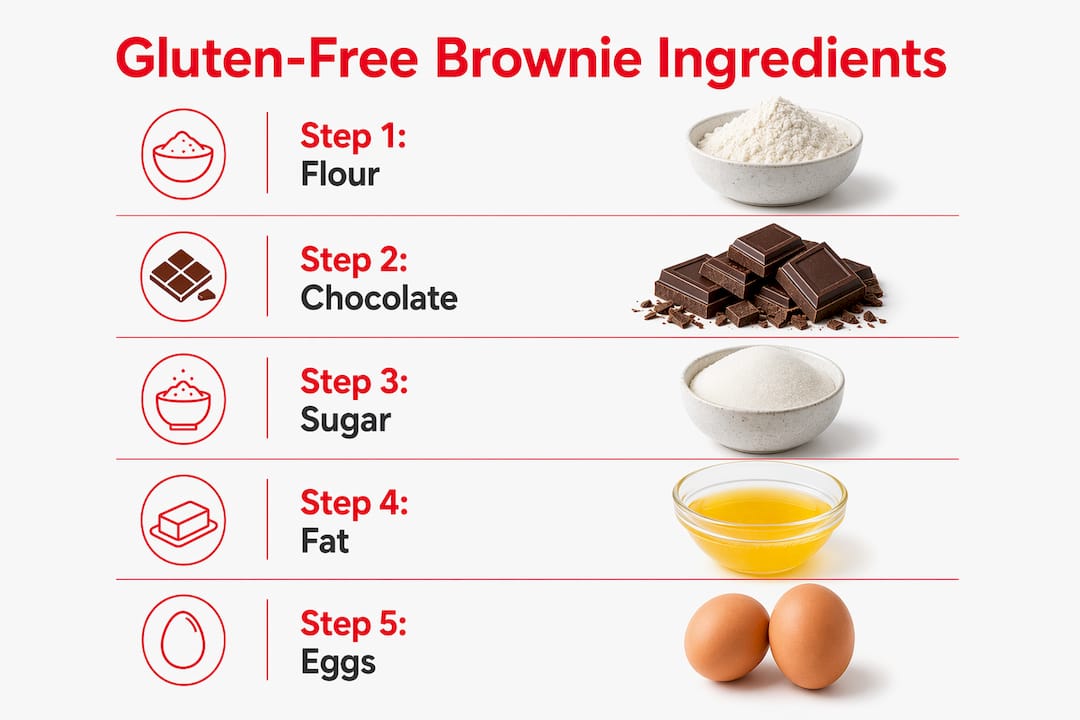
Every ingredient in a gluten-free brownie pulls its weight. Here is what goes in and why it matters.
- Gluten-free all-purpose flour with xanthan gum: The structural backbone. A measure-for-measure blend with xanthan gum already included gives you the best results without guesswork.
- Unsalted butter: Adds richness and fat for a fudgy crumb. For a dairy-free version, substitute a vegan butter like Smart Balance at a 1:1 ratio with no other changes needed.
- Granulated sugar and brown sugar: Using both creates a balance of sweetness and moisture. Superfine sugar dissolves more completely in butter and yields a fudgier texture than standard granulated sugar, which can push brownies toward cakey.
- Eggs: Provide structure and richness. Adding an extra egg yolk deepens the fudgy quality.
- Unsweetened cocoa powder: Dutch-process cocoa gives a richer, darker flavor; natural cocoa delivers the classic brownie taste. Both work.
- High-quality semi-sweet chocolate chips: Guittard is a top choice. Melted chocolate, combined with cocoa powder, creates a superior moist texture compared to cocoa powder alone.
- Pure vanilla extract: Rounds out the chocolate flavor.
- Salt: Sharpens and balances sweetness.
- Optional: Espresso powder intensifies the chocolate flavor without making the brownies taste like coffee.
Dairy-free and nut-free options: Swap butter for plant-based butter and use dairy-free chocolate chips. Most gluten-free brownie recipes are naturally nut-free, but always check your chocolate chip label.
Pro Tip: If you want to reduce sugar without losing flavor, try cutting back gradually and compensating with a pinch of extra salt or a half-teaspoon of espresso powder to keep the chocolate flavor bold.
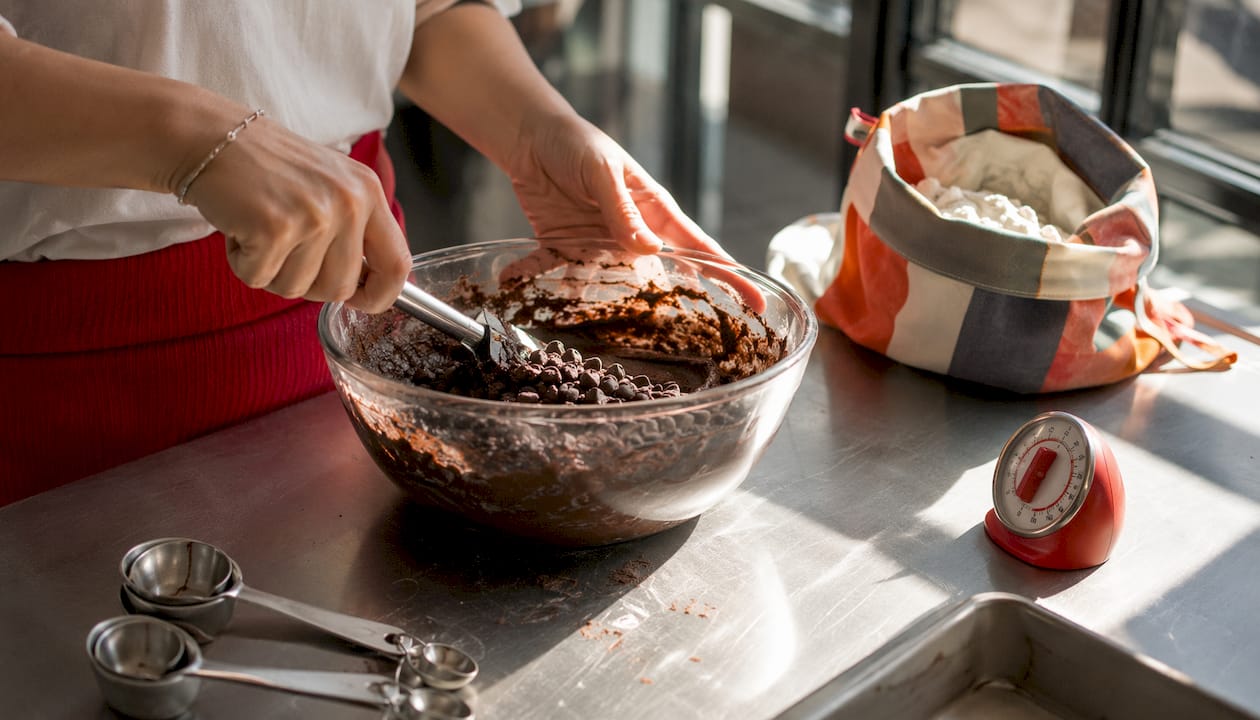
How do you make gluten-free brownies step by step?
This method works for an 8x8 or 9x9 metal pan at 350°F.
- Preheat and prep the pan. Heat your oven to 350°F. Line your pan with parchment paper and spray lightly with nonstick cooking spray.
- Melt butter and chocolate. Combine butter and semi-sweet chocolate chips in a microwave-safe bowl. Microwave at 50% power in 30-second intervals, stirring between each, until fully smooth. Alternatively, melt them together in a saucepan over low heat.
- Dissolve the sugar. Add granulated sugar and brown sugar to the warm butter-chocolate mixture and whisk vigorously for a full minute. You want the sugar to dissolve as much as possible into the warm mixture — this step is what creates the shiny, crackly top.
- Add eggs and vanilla. Stir in eggs one at a time, whisking about 20 seconds after each. Add vanilla extract and, if using, espresso powder and salt.
- Fold in dry ingredients. Using a rubber spatula, gently fold in cocoa powder and gluten-free flour until just combined. Do not overmix.
- Add mix-ins. Stir in additional chocolate chips or any other mix-ins.
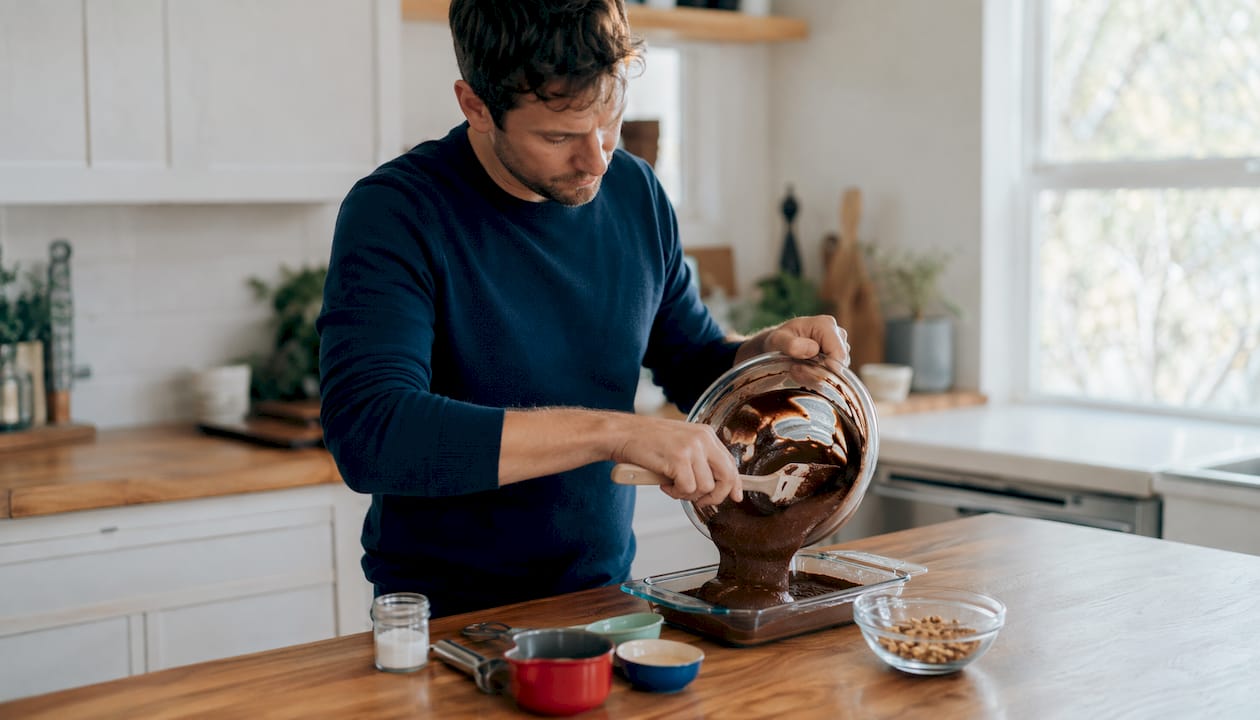
- Bake. Pour batter into the prepared pan and smooth into an even layer. Bake for 30–35 minutes. For a 9x13 pan, check at 26 minutes.
- Test for doneness. A toothpick inserted in the center should come out with a few moist crumbs — not wet batter, but not bone dry either. The brownies will continue setting as they cool.
- Cool before slicing. Let the brownies cool in the pan for at least 30 minutes before cutting. Slicing too early gives you ragged, gooey edges.
Pro Tip: At the 25-minute mark, loosely tent the pan with foil. This keeps the top soft and crinkly while the center finishes baking without burning the edges.
Expert tips for getting gluten-free brownies right every time
Getting the texture right is mostly about avoiding a handful of common mistakes.
- Measure flour accurately. Over-measuring gluten-free flour is the fastest way to dry, dense brownies. Use the spoon-and-level method: spoon flour into the measuring cup, then sweep a knife across the top. Better yet, weigh it.
- Do not skip the sugar-dissolving step. Whisking sugar into warm butter is what creates the glossy crust. Skipping it produces a dull, flat top.
- Use a metal pan when possible. Metal conducts heat more evenly and consistently than glass, which can cause uneven baking. If you only have a glass pan, reduce the oven temperature by 25°F and add a few minutes to the bake time.
- Pull them early. Gluten-free brownies look underdone in the center when they are actually perfectly set. Trust the toothpick-with-moist-crumbs test, not the visual.
- Choose quality chocolate. Guittard semisweet chocolate chips are a reliable standard. Cheap chocolate chips often contain stabilizers that affect how they melt and taste.
- Mix-ins that work well: chocolate chips, flaky sea salt on top, peanut butter swirls, chopped walnuts or pecans, or M&Ms for a fun variation.
Pro Tip: If your brownies consistently come out cakey, switch from granulated sugar to superfine sugar. The difference in texture is noticeable from the very first batch.
How to store and serve gluten-free brownies
Proper storage keeps gluten-free brownies tasting fresh far longer than you might expect.
- Room temperature: Store in an airtight container for up to 3 days.
- Refrigerator: Keeps well for up to 1 week in a sealed container. Let them come to room temperature before serving for the best texture.
- Freezer: Wrap individual brownies tightly in plastic wrap, then place them in a zip-top freezer bag. They keep for up to 3 months. Thaw at room temperature for a few hours or overnight in the refrigerator.
- Slicing: Use a sharp knife and wipe the blade clean between cuts for neat edges. Greasing the knife lightly also helps.
- Serving: A warm brownie pairs well with a scoop of vanilla ice cream or a dusting of powdered sugar. For clean presentation, chill the brownies for 30 minutes before slicing.
Which gluten-free flour works best, and what can you substitute?
Not all gluten-free flours behave the same way in brownies, and the choice you make affects both texture and flavor.
- Measure-for-measure blends (also called 1:1 or all-purpose gluten-free flour) are the most reliable choice. They are formulated to swap directly for wheat flour with no ratio adjustments. Look for blends that already contain xanthan gum.
- Xanthan gum’s role: It mimics gluten by binding the batter and giving the brownies structure. If your flour blend does not include it, add about 1/4 teaspoon per cup of flour. Adding extra xanthan gum to a blend that already contains it produces gummy brownies.
- Almond flour is a workable alternative but requires recipe adjustments. It has a higher fat content, so recipes using it often call for olive oil instead of butter and produce a denser, chewier result.
- Tapioca flour (tapioca starch) works as a binder in some recipes and produces an exceptionally fudgy texture, though it is typically used in combination with other flours rather than alone.
- Dairy substitutes: Vegan butter replaces dairy butter at a 1:1 ratio. Olive oil or vegetable oil can replace butter in some recipes, though the flavor profile shifts slightly.
- Hidden gluten risks: Certified gluten-free labeling matters beyond just the flour. Baking powder, chocolate chips, and flavorings can all carry hidden gluten if processed in shared wheat facilities.
What is the nutritional profile of gluten-free brownies?
Gluten-free brownies are not inherently lower in calories or sugar than conventional brownies. The swap from wheat flour to a gluten-free blend does not significantly change the macronutrient profile. A standard brownie made with butter, sugar, eggs, and chocolate will be calorie-dense regardless of the flour used.
That said, ingredient choices do shift the numbers. Using almond flour adds more fat and protein per serving compared to a rice-based blend. Reducing sugar or swapping in coconut sugar lowers the glycemic load but can affect texture. For bakers watching sugar intake, the cocoa powder brownies approach — relying more on cocoa than melted chocolate — tends to reduce total sugar and fat while keeping the chocolate flavor strong. Specific calorie counts vary by recipe and serving size, so checking the nutrition panel of your chosen flour blend and chocolate is the most accurate approach.
What equipment do you need for best results?
You do not need much, but the right tools make a real difference.
| Equipment | Why it matters |
|---|---|
| 8x8 or 9x9 metal baking pan | Even heat distribution; produces consistent bake |
| Parchment paper | Prevents sticking and makes removal easy |
| Microwave-safe bowl or saucepan | For melting butter and chocolate safely |
| Rubber spatula | Folds dry ingredients without overworking the batter |
| Whisk | Dissolves sugar into butter for the shiny top |
| Kitchen scale | Most accurate way to measure gluten-free flour |
| Toothpick or cake tester | Tests doneness without cutting into the brownies |
| Sharp knife | Clean cuts after cooling |
A stand mixer or hand mixer is not necessary. Most gluten-free brownie recipes are one-bowl affairs that come together with a whisk and a spatula.
How do you test for gluten contamination in ingredients?
For anyone with celiac disease or a serious gluten sensitivity, ingredient sourcing goes beyond reading the front of the package. Hidden gluten can appear in baking powder, vanilla extract, chocolate chips, and cocoa powder when those products are manufactured in facilities that also process wheat.
The safest approach is to look for products labeled “certified gluten-free,” which means they have been tested to meet a threshold of less than 20 parts per million of gluten — the standard recognized by the FDA. Brands like King Arthur Baking publish detailed allergen programs that describe their cross-contact prevention practices. When in doubt, contact the manufacturer directly and ask about shared equipment. At-home gluten test strips are also available and can detect gluten in food products, though they are most useful for testing prepared foods rather than raw ingredients.
Troubleshooting common gluten-free brownie problems
Brownies are too crumbly: The most likely cause is too much flour or not enough fat. Recheck your measurement method and make sure you are not packing the flour. Adding an extra egg yolk also helps bind the crumb.
Brownies are too dense: Dense brownies usually mean the batter was overmixed after adding the flour, or the oven temperature was too low. Mix dry ingredients in just until combined, and verify your oven with a thermometer.
No shiny top: This happens when sugar is not dissolved into warm enough butter. The butter-chocolate mixture needs to be genuinely warm when you whisk in the sugar, not just room temperature.
Gummy texture: Almost always caused by adding xanthan gum to a flour blend that already contains it. Check your flour label before adding any separately.
Dry or overbaked brownies: Pull them at the first sign of moist crumbs on the toothpick. Gluten-free brownies continue to set as they cool, so what looks underdone in the oven is often perfect once rested.
Brownies stick to the pan: Always line with parchment and spray the paper. Lifting by the parchment overhang makes removal clean and easy.
Hearthlyrecipes has a full collection of gluten-free cake recipes if you want to keep exploring wheat-free baking beyond brownies.
Key Takeaways
Fudgy gluten-free brownies require a flour blend with xanthan gum, high-quality chocolate, and dissolved sugar whisked into warm butter for the signature shiny top.
| Point | Details |
|---|---|
| Flour choice is critical | Use a measure-for-measure gluten-free blend with xanthan gum already included for proper structure. |
| Dissolve sugar for the crust | Whisk sugar vigorously into warm butter-chocolate mixture to achieve the shiny, crackly top. |
| Measure flour accurately | Use the spoon-and-level method or a kitchen scale to avoid dry, dense brownies from over-measuring. |
| Test doneness correctly | Pull brownies when a toothpick shows a few moist crumbs; they continue setting as they cool. |
| Storage extends freshness | Airtight at room temperature for 3 days, refrigerator for 1 week, or freezer for up to 3 months. |
FAQ
What flour is best for gluten-free brownies?
A measure-for-measure or all-purpose gluten-free flour blend that already contains xanthan gum gives the most reliable structure and texture. Almond flour also works but requires adjustments to fat ratios.
What can you add to gluten-free brownie mix to make it better?
Stir in high-quality semi-sweet chocolate chips, a half-teaspoon of espresso powder, or a pinch of flaky sea salt on top. These additions deepen chocolate flavor and improve the overall texture without changing the base recipe.
What’s the secret to fudgy gluten-free brownies?
Whisk sugar thoroughly into warm melted butter and chocolate before adding eggs, and pull the brownies from the oven when a toothpick comes out with just a few moist crumbs. Cooling completely before slicing locks in the fudgy texture.
Does the type of sugar affect gluten-free brownie texture?
Yes. Superfine sugar dissolves more completely in butter and produces a fudgier brownie, while standard granulated sugar that is not fully dissolved tends to push the texture toward cakey.