Green Bean Casserole: Classic Recipe and Easy Variations
TL;DR:
- A classic green bean casserole combines tender green beans, mushroom sauce, and crispy fried onions in one dish.
- Preparing the dish properly involves cooking the beans just right, thickening the sauce, and adding toppings late to keep them crisp.
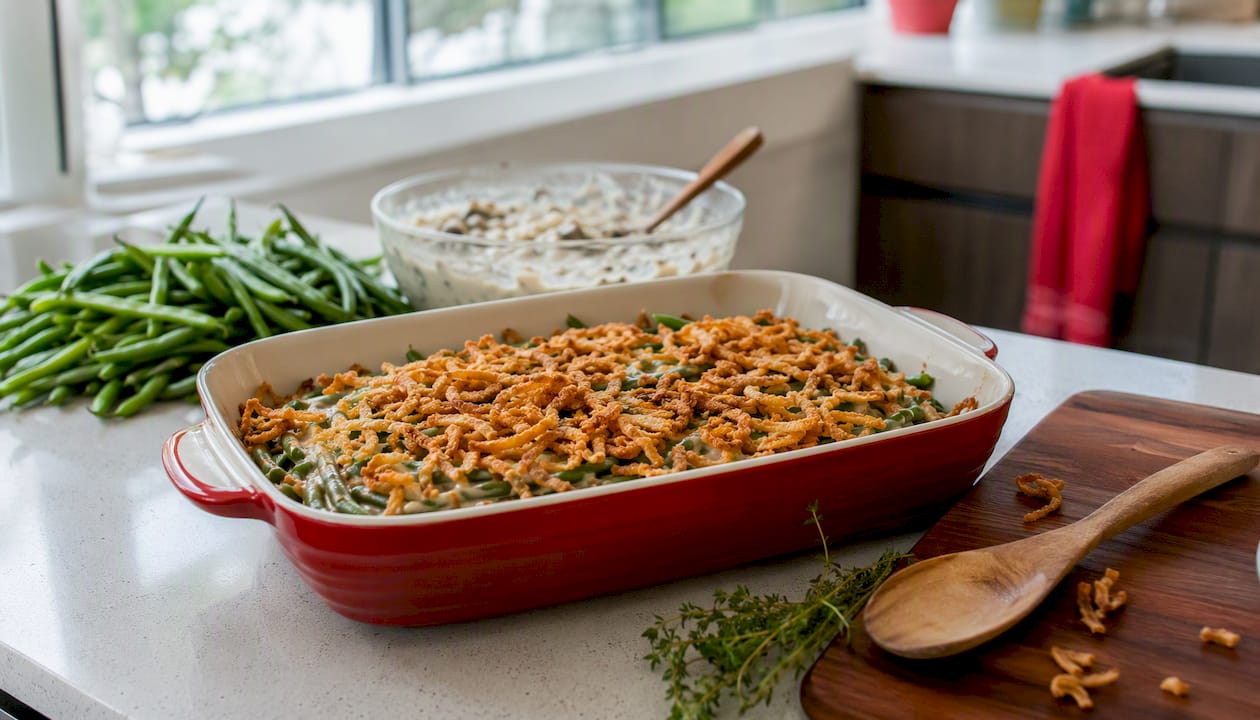
A classic green bean casserole brings together tender green beans, a creamy mushroom sauce, and a golden, crispy fried onion topping in one dish that serves 6 in about 40 minutes total. The pantry shortcut version uses Campbell’s condensed cream of mushroom soup and French’s French-fried onions for a reliable result every time. Hearthlyrecipes tests every recipe for consistent timing and ease, and the USDA recommends reheating leftovers to an internal temperature of 165°F before serving. Below you’ll find the full recipe card, ingredient swaps for fresh or frozen beans, a from-scratch sauce option, make-ahead instructions, and quick troubleshooting fixes.
Table of Contents
- What goes into a classic green bean casserole?
- Which bean form works best: canned, frozen, or fresh?
- How do you make a from-scratch mushroom cream sauce?
- What toppings and variations keep the dish interesting?
- Can you make green bean casserole ahead of time?
- How do you fix a soggy or runny green bean casserole?
- What equipment and timing do you need?
- Key Takeaways
- Why the recipe order matters more than the ingredients
- More tested side dishes from Hearthlyrecipes
- Useful sources
- FAQ
What goes into a classic green bean casserole?
The classic pantry version calls for just a handful of ingredients and a two-stage bake. Here’s everything you need.
Ingredients (serves 6)
- canned cut green beans, drained
- condensed cream of mushroom soup
- whole milk
- soy sauce (optional, adds umami depth)
- black pepper
- French’s French-fried onions, divided
Step-by-step instructions
- Preheat your oven to 350°F.
- In a 1.5-quart baking dish, stir together the condensed soup, milk, soy sauce, and black pepper until smooth.
- Fold in the drained green beans and half of the French-fried onions.
- Bake uncovered until the mixture is bubbling around the edges.
- Remove from the oven, scatter the remaining onions evenly over the top.
- Return to the oven and bake until the onions are golden and crisp.
- Let the casserole rest 5 minutes before serving so the sauce sets slightly.
Bake timing by starting temperature
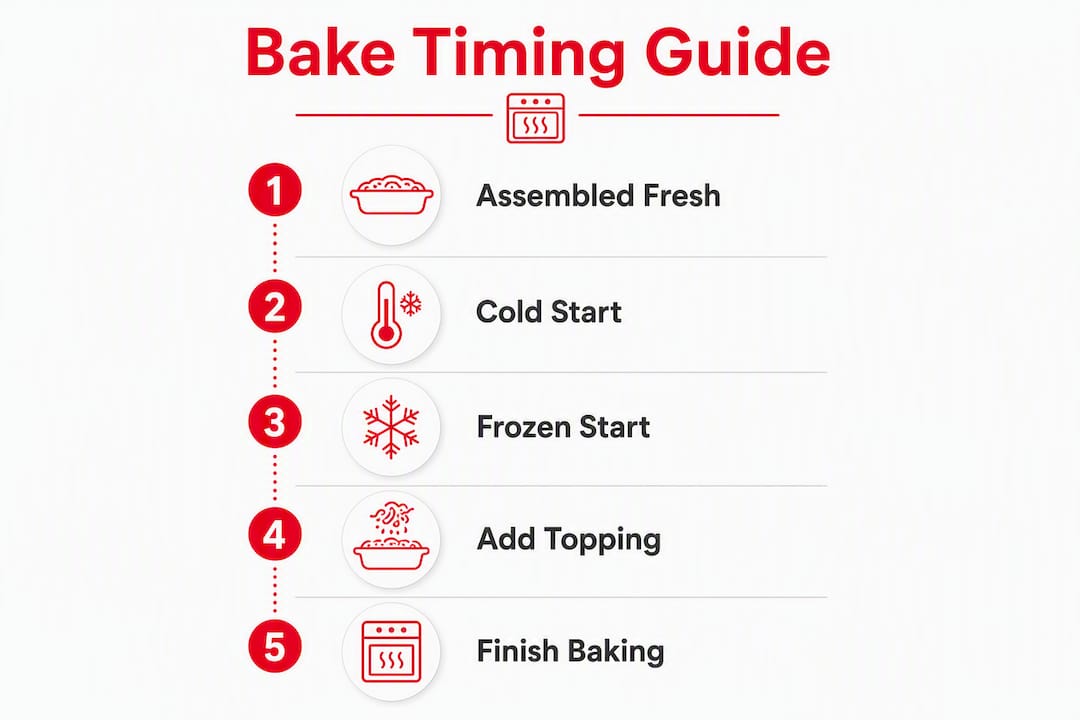
| Starting condition | Oven temp | Covered bake | Uncovered finish |
|---|---|---|---|
| Assembled fresh (room temp) | 350°F | None | 25 min + 5 min topping |
| Assembled, refrigerated (cold) | 350°F | 20 min | 25 min + 5 min topping |
| Assembled, frozen | 350°F | 45 min | 20 min with topping |
Scaling note: To double the recipe, use a 3-quart baking dish and add 5–8 minutes to the initial bake. Halving the recipe works well in an 8x8-inch dish with no timing changes needed.
Which bean form works best: canned, frozen, or fresh?
The form you choose affects texture, prep time, and how much liquid ends up in your sauce.
Canned beans are the fastest option. Drain them thoroughly and pat dry if they seem wet. The trade-off is a softer texture since they’re already fully cooked before they go in the oven.
Frozen beans hold their shape better. Campbell’s recommends boiling frozen beans for 2–4 minutes, then transferring them immediately to an ice bath to stop the cooking. Drain well before mixing with the sauce.
Fresh green beans deliver the best texture but need a little more prep. Simmer trimmed fresh beans until just crisp-tender, then shock in ice water. Serious Eats recommends blanching in well-salted boiling water until just crisp-tender and shocking immediately to halt carryover cooking, which is the main reason fresh-bean casseroles turn mushy.
Pro Tip: Salt your blanching water generously — it seasons the beans from the inside and keeps their color bright green through the bake.
For the sauce, the condensed soup can be swapped for cream of celery soup at a 1:1 ratio. If you’re reducing sodium, use low-sodium broth plus 2 tablespoons of cornstarch whisked together as a rough substitute, though the sauce will be thinner and may need a longer simmer before baking.
Common substitutions at a glance:
- Dairy-free: Replace milk with unsweetened oat milk or full-fat coconut milk (the latter adds a slight sweetness).
- Gluten-free: Use a certified gluten-free condensed mushroom soup and gluten-free fried onions.
- Vegetarian: The classic recipe is already vegetarian; skip the soy sauce or use tamari.
How do you make a from-scratch mushroom cream sauce?
Replacing the canned soup takes about 15 minutes and produces a noticeably richer, less salty sauce. The Kitchn frames the casserole as three independent elements: beans, mushroom cream sauce, and crispy topping. Getting the sauce right is where the upgrade happens.
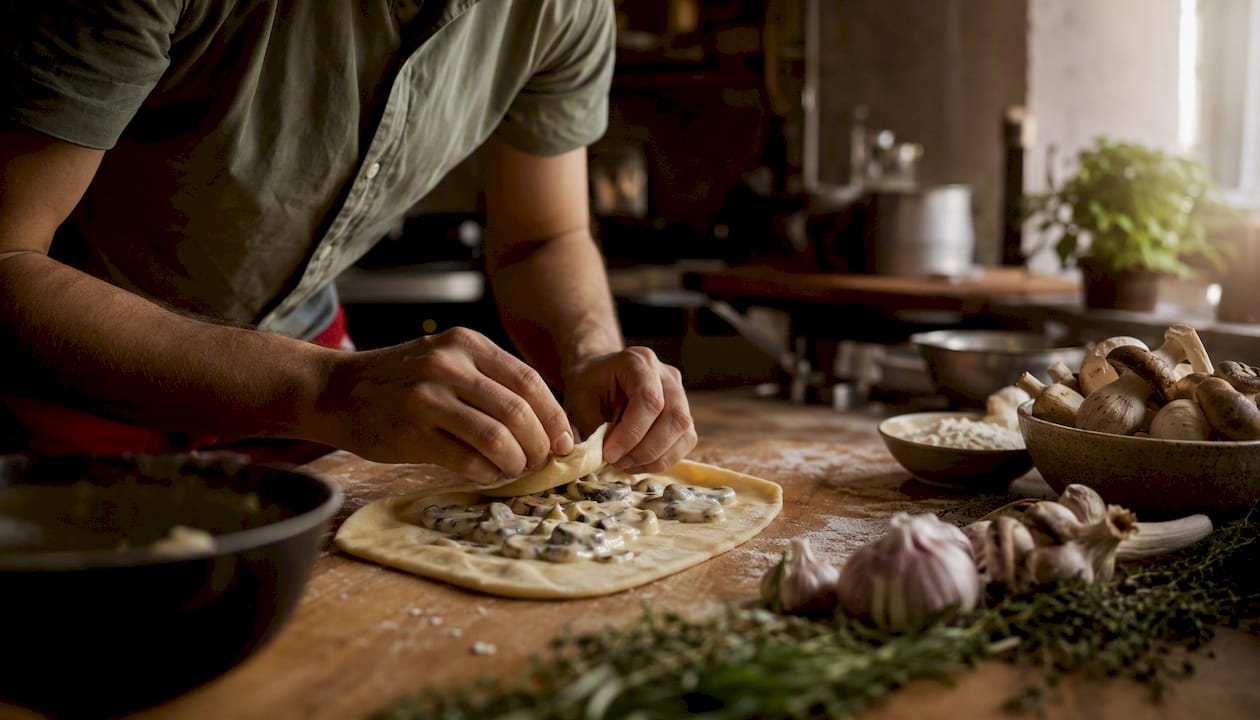
- Melt butter in a skillet over medium heat. Add sliced cremini mushrooms and cook until browned.
- Sprinkle all-purpose flour over the mushrooms and stir to cook out the raw flour taste.
- Slowly whisk in chicken or vegetable broth, then whole milk. Keep whisking to prevent lumps.
- Simmer over medium-low heat, stirring often, until the sauce thickens to coat the back of a spoon.
- Season with salt, pepper, and a splash of soy sauce or a squeeze of lemon juice for brightness.
Swap ratio: This recipe yields a homemade sauce sufficient to replace the canned condensed soup. Because homemade sauce is less concentrated than canned, the bake time stays the same, but let the casserole rest a full 10 minutes after baking so the sauce firms up.
Pro Tip: For a vegetarian version, use vegetable stock. For extra richness, swap half the milk for heavy cream.
What toppings and variations keep the dish interesting?
The topping is where you have the most room to play without changing what makes the dish work.
Store-bought French’s French-fried onions remain the gold standard for convenience and crunch. Add them only in the last 5 minutes of baking so they stay crisp rather than steaming under the sauce.
For a homemade upgrade, Serious Eats recommends shallow-frying thinly sliced shallots in oil until lightly golden, then draining and cooling them completely. Fried shallots store well for up to a month and deliver noticeably better crunch and aroma than the canned version. You can also make crispy air fryer onion rings as a fresher topping alternative with less oil.
Other topping options worth trying:
- Panko + Parmesan: Mix 1/2 cup panko with 1/4 cup grated Parmesan and a drizzle of olive oil. Add for the last 10 minutes uncovered.
- Crushed Ritz crackers: Buttery and fast. Scatter over the top for the final 5 minutes.
- Toasted slivered almonds: Works well for a gluten-free crunch.
Easy flavor variations:
- Stir 4 strips of cooked, crumbled bacon or pancetta into the bean mixture before baking for smoky depth.
- Fold in 1/2 cup shredded sharp cheddar with the sauce for a cheesy, Southern-style version.
- Use a mix of cremini and shiitake mushrooms in the from-scratch sauce for more complex flavor.
Pro Tip: For a vegan topping, French’s original French-fried onions are made without dairy or eggs — check the label to confirm, since formulations can vary by retailer.
This dish pairs naturally with roasted turkey, glazed ham, or a simple roast chicken. It also holds its own as a Thanksgiving side dish alongside mashed potatoes and stuffing.
Can you make green bean casserole ahead of time?
Yes, and it actually benefits from it. The sauce melds with the beans overnight, and the only thing you need to manage is the topping.
Make-ahead and reheating timeline
| Prep window | Storage method | Reheat instructions | When to add topping |
|---|---|---|---|
| Up to 2 days ahead | Covered in fridge | 350°F, covered 20 min, then uncovered 25 min | Last 5 min of uncovered bake |
| Up to 2 weeks ahead | Frozen (wrapped tightly) | 350°F, covered 45 min from frozen | After 45 min, add onions, bake 20 min more |
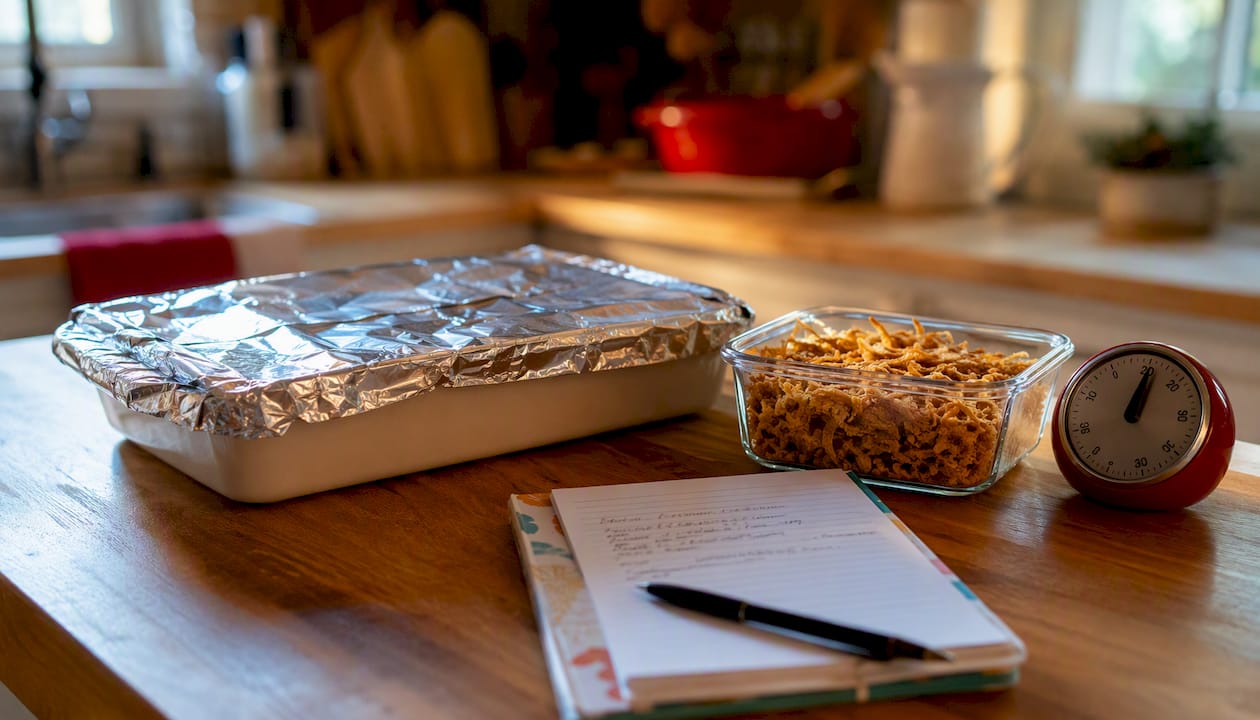
Freezing instructions: Cool the assembled bean-and-sauce mixture completely to room temperature. Wrap the dish tightly in plastic wrap, then a layer of foil. Label with the date. When ready to bake, go straight from freezer to oven — no thawing needed.
Reheating from the fridge: Cover the dish with foil and bake at 350°F for 20 minutes, then remove the foil, bake another 25 minutes until bubbling, and add the fried onions for the final 5 minutes.
The USDA recommends reheating all leftovers to 165°F internally before serving. A quick-read thermometer takes the guesswork out of this, especially when reheating from frozen.
Pro Tip: Store the fried onion topping in a separate airtight container at room temperature. Add it only during the final uncovered bake so it crisps up rather than absorbing steam from the casserole.
How do you fix a soggy or runny green bean casserole?
Most texture problems trace back to one of two causes: too much liquid in the sauce, or beans that were overcooked before they went into the dish.
Thin sauce fix: If your sauce looks watery before baking, simmer it for a few extra minutes until it coats the back of a spoon. The Kitchn and Serious Eats both point to this as the single most reliable fix for a runny casserole. Once it coats the spoon, it’s ready.
Mushy beans: This almost always comes from skipping the ice bath. Beans keep cooking from residual heat even after you pull them from the boiling water. The blanch-and-shock method from Serious Eats stops that carryover cooking cold, literally. Canned beans are already soft, so if texture matters to you, frozen or fresh beans are worth the extra step.
Soggy topping: Add the French-fried onions only at the very end, never mixed into the filling. If the topping still comes out soft, slide the dish under the broiler for 60–90 seconds. Watch it closely.
Quick pre-serving checklist
- Sauce should be bubbling at the edges, not pooling in the center.
- Beans should yield when pressed with a spoon but not fall apart.
- Topping should be golden and audibly crisp when you tap it lightly.
Pro Tip: If you’re reheating a casserole that sat overnight and the topping went soft, scrape it off, bake the filling uncovered for 10 minutes to drive off moisture, then add fresh onions and broil briefly.
What equipment and timing do you need?
Equipment list
- Baking dish: A 1.5-quart (roughly 11x7-inch) dish for a standard 6-serving batch; a 3-quart dish for a doubled recipe.
- Skillet: A 10-inch skillet for making the from-scratch sauce or browning mushrooms.
- Colander and large bowl: For draining canned beans or setting up an ice bath for fresh or frozen beans.
- Instant-read thermometer: Useful when reheating from frozen to confirm the center hits 165°F.
- Aluminum foil: For covering the dish during the covered bake stage.
Holiday prep timeline (working backward from serving time)
- 60 minutes out: Preheat oven; prep beans (blanch and shock if using fresh or frozen).
- 45 minutes out: Mix sauce and beans; assemble in baking dish.
- 40 minutes out: Place dish in oven for the initial bake.
- 15 minutes out: Remove from oven, add fried onion topping.
- 10 minutes out: Return to oven for the topping bake.
- 5 minutes out: Pull from oven; rest before serving.
Scaling note: A deeper dish holds heat longer at the center. When doubling the recipe in a 3-quart dish, add 5–8 minutes to the initial covered bake and check the center for bubbling before adding the topping.
Key Takeaways
A reliable green bean casserole comes down to three things: a sauce thick enough to coat the beans, beans that aren’t overcooked before they go in, and a topping added late enough to stay crisp.
| Point | Details |
|---|---|
| Bake temp and finish | Bake at 350°F; add the fried onion topping only in the last 5 minutes to keep it crisp. |
| Blanching fresh beans | Blanch in salted water 4–5 minutes and shock in ice water immediately to prevent mushy texture. |
| Canned soup vs. from-scratch | Canned condensed soup is fast and reliable; homemade mushroom sauce (about 2 cups) replaces the canned soup and adds richer flavor. |
| Make-ahead timing | Refrigerate up to 2 days or freeze up to 2 weeks; always add the crispy topping at the final uncovered bake stage. |
| Hearthlyrecipes | Hearthlyrecipes tests casserole timing and technique so home cooks get consistent results with both the pantry shortcut and from-scratch versions. |
Why the recipe order matters more than the ingredients
Most people who end up with a disappointing green bean casserole didn’t use the wrong ingredients. They assembled everything at once, mixed the onions into the filling, and pulled the dish before the sauce had a chance to bubble properly.
The sequence matters more than any single swap. Sauce first, beans second, topping last and late. That order is what separates a casserole with a creamy center and a genuinely crisp top from one that’s uniformly soft throughout.
There’s also a tendency to overthink the from-scratch upgrade. A homemade mushroom cream sauce is better than canned soup, but the gap isn’t as wide as food writers sometimes suggest. What closes that gap faster is using cremini mushrooms instead of white button mushrooms, and reducing the sauce until it’s genuinely thick before it goes into the dish. Those two moves matter more than whether you opened a can.
The make-ahead angle is where home cooks leave the most value on the table. Assembling the bean-and-sauce mixture a day or two ahead actually improves flavor. The only thing to protect is the topping, which should never touch the filling until the final minutes of baking. Store it separately, add it late, and the texture problem most people associate with reheated casserole disappears entirely.
More tested side dishes from Hearthlyrecipes
If this casserole is headed for a holiday table, you’ll want sides that are just as reliable and just as easy to time. Hearthlyrecipes has a full collection of thoroughly tested recipes built for exactly that kind of cooking, from crowd-pleasing casseroles to quick weeknight sides that hold up well when made ahead.
Browse the complete recipe collection to find tested casseroles, holiday sides, and practical make-ahead meals organized by cooking method and occasion. Whether you’re building out a full Thanksgiving spread or just need a dependable side for a weeknight dinner, the Practical Meal Solutions collection is a good place to start.
Useful sources
The timing and technique guidance in this article draws from the following authoritative recipe and test-kitchen sources:
- Green Bean Casserole | Campbell’s Recipes — classic pantry proportions, bean-form prep guidance (canned, frozen, fresh), and two-stage bake timing.
- Green Bean Casserole Recipe (Easy) | The Kitchn — from-scratch roux-based mushroom sauce method and sauce-thickness test (coats the back of a spoon).
- The Ultimate Homemade Green Bean Casserole | Serious Eats — blanch-and-shock technique for fresh beans, fried shallot method, and topping timing guidance.
- Make-Ahead Green Bean Casserole | Food Network Kitchen — freezer-ahead workflow, bake times from frozen (45 min covered + 20 min with topping), and topping-staging method.
FAQ
What are the basic ingredients in green bean casserole?
The classic version uses drained canned green beans, one can of condensed cream of mushroom soup, 3/4 cup of milk, black pepper, and French-fried onions for the topping. Soy sauce is optional but adds a savory depth.
How do you make green bean casserole better?
The biggest improvements come from using fresh or frozen beans (blanched and shocked), thickening the sauce until it coats a spoon before baking, and adding the fried onion topping only in the last 5 minutes so it stays crisp rather than steaming soft.
Can you use fresh green beans instead of canned?
Yes. Trim and blanch about 1.5 pounds of fresh beans in salted boiling water for 4–5 minutes, then transfer immediately to an ice bath to stop the cooking. Drain thoroughly before mixing with the sauce.
Can green bean casserole be made ahead?
Assemble the bean-and-sauce mixture up to 2 days ahead and refrigerate, or freeze it for up to 2 weeks. Store the fried onion topping separately and add it only during the final uncovered bake to keep it crisp.