Keep Ground Beef Safe and Juicy: Cook to 160°F and Probe It Right
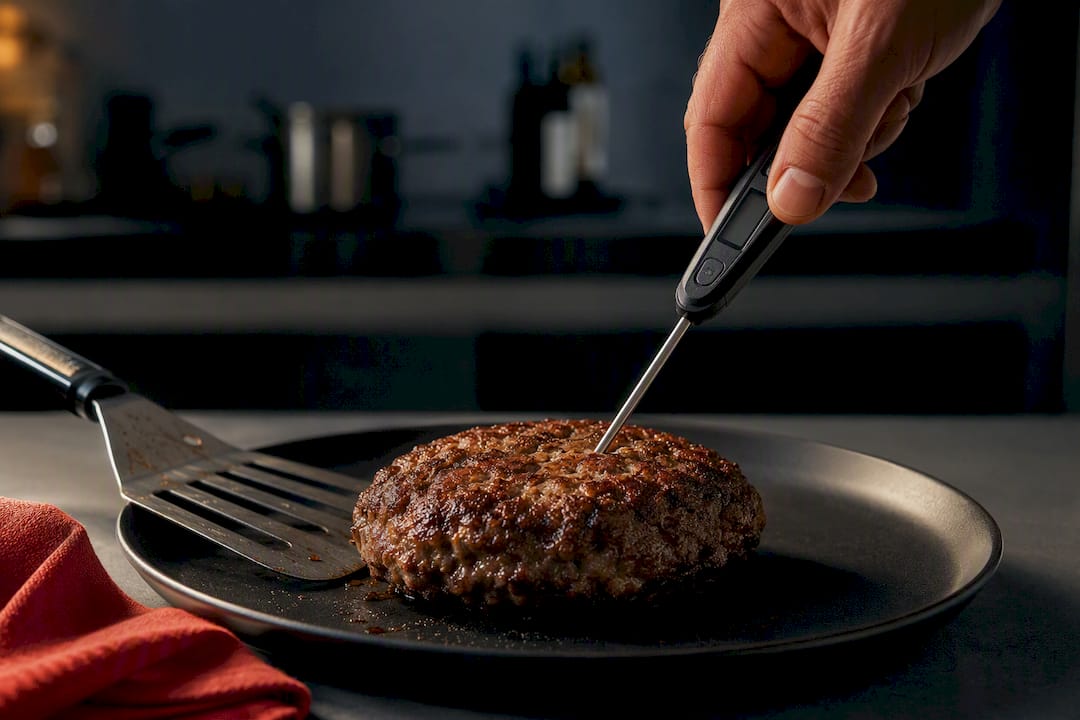
Cook ground beef to 160°F (71°C) and confirm it with a digital instant-read food thermometer before you serve it. That number comes from USDA/FSIS, not a cookbook guess, and it applies to burgers, meatloaf, tacos, and casseroles alike. Color is not a reliable stand-in for a reading. A gray patty can still be under temp, and a pink one can already be safe.
TL;DR:
- Ground beef must be cooked to a minimum internal temperature of 160°F to ensure safety, regardless of pink color or appearance.
- Grinding distributes bacteria throughout the meat, making surface searing insufficient; testing the center temperature with a digital instant-read thermometer is essential.
- Use the thermometer probe correctly in the thickest part of the meat and allow carryover heat to reach the safe temperature if removing early.
- Bacteria can survive in ground beef even if it looks fully cooked, due to variations in pH, fat, and added ingredients that affect color.
- Handling and storage practices, such as refrigerating at 40°F or below and avoiding room temperature longer than 2 hours, are critical to preventing foodborne illness.
Table of Contents
- What the 160°F Rule Actually Covers
- Why Grinding Changes the Safety Math
- How Do You Check Ground Beef’s Temperature Correctly?
- Can Ground Beef Be Pink at 160 Degrees and Still Be Safe?
- Storing and Handling Ground Beef Safely
- How Hearthly Recipes Tests Ground-Beef Dishes for Safety
- Find Tested Ground-Beef Recipes That Get the Temp Right
- Sources
- FAQ
What the 160°F Rule Actually Covers
FSIS lists 160°F (71°C) as the minimum internal temperature for all ground meats, including beef, on its safe minimum internal temperature chart. That single number covers every ground-beef dish, from a smashed drive-through-style patty to a family meatloaf.
It sits higher than some other meat temps you might already know:
- Whole steaks and roasts: 145°F (63°C), plus a 3-minute rest
- Ground beef, pork, veal, and lamb: 160°F (71°C)
- Poultry, ground or whole: 165°F (74°C)
You may also see 155°F attached to ground beef somewhere, usually on a restaurant menu or training chart. That number comes from the FDA Food Code, which lets commercial kitchens use a lower temperature paired with a specific holding time, like 15 to 17 seconds at 155°F. That rule exists for professional equipment and monitoring most home kitchens don’t have. For your own stove or grill, 160°F stays the number that matters.
Why Grinding Changes the Safety Math
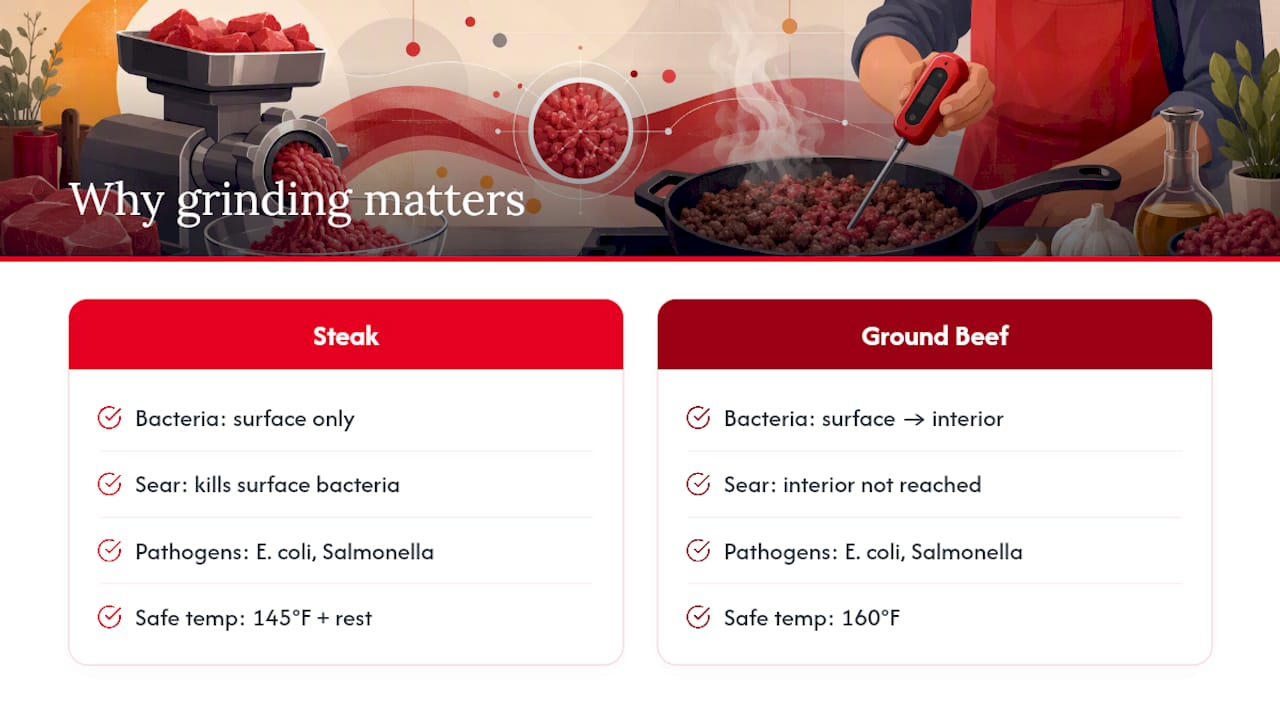
A steak only needs surface searing because the bacteria that matter sit on the outside of the muscle. Grinding wrecks that logic. The process pulls whatever bacteria were on the meat’s surface and works them straight through the interior of every patty, meaning contamination that used to live only on the outside can now sit at the center of your burger.
That’s why E. coli O157:H7 and Salmonella get named specifically in FSIS guidance on ground beef. Both survive a quick sear that would be plenty for a whole-muscle cut. A steak cooked to 145°F with a rest period kills what’s on its surface. Ground beef at that same temperature could still carry live bacteria in the middle, which is exactly why the safe number jumps 15 degrees higher once the meat has been ground.
How Do You Check Ground Beef’s Temperature Correctly?
A digital instant-read thermometer is the tool for this job, not a fork, not a timer, and not the color of the juices. FSIS recommends one specifically because it gives a faster, more accurate reading than the older dial-style thermometers many kitchens still have in a drawer.
- Insert the probe correctly. Push it at least a half inch into the thickest part of the patty. For a thin smashed burger, insert the probe sideways through the edge into the center instead.
- Take a second reading if you’re unsure. Check another spot, especially near the middle, before you trust the number.
- For juicier burgers, pull early and let carryover finish the job. Remove the patty around 155°F and let it rest a couple of minutes. Residual heat typically carries the center up those last few degrees to 160°F without drying out the meat.
- For meatloaf and casseroles, probe the geometric center, avoiding pockets of fat or any bone if the dish includes one. Dense dishes hold heat unevenly, so the middle is always your true test point.
- For microwaved leftovers, rotate the dish, cover it, and recheck in more than one spot, since microwaves notoriously heat food in uneven pockets.
Pro Tip: Buy a cheap two-pack of instant-read thermometers and leave one by the stove and one by the grill. The habit only sticks if the tool is always within reach.
If you want to see this play out in an actual recipe, our meatloaf recipe walks through exact probe placement for a dense loaf, and our burger collection covers pull temps for different patty thicknesses.
Can Ground Beef Be Pink at 160 Degrees and Still Be Safe?
Yes, and this trips up more home cooks than any other part of the process. FSIS testing found that more than a quarter of ground beef patties browned prematurely, meaning they looked fully cooked well before they hit a safe internal temperature. The reverse happens too: some lean patties stay pink at 160°F, even 165°F.
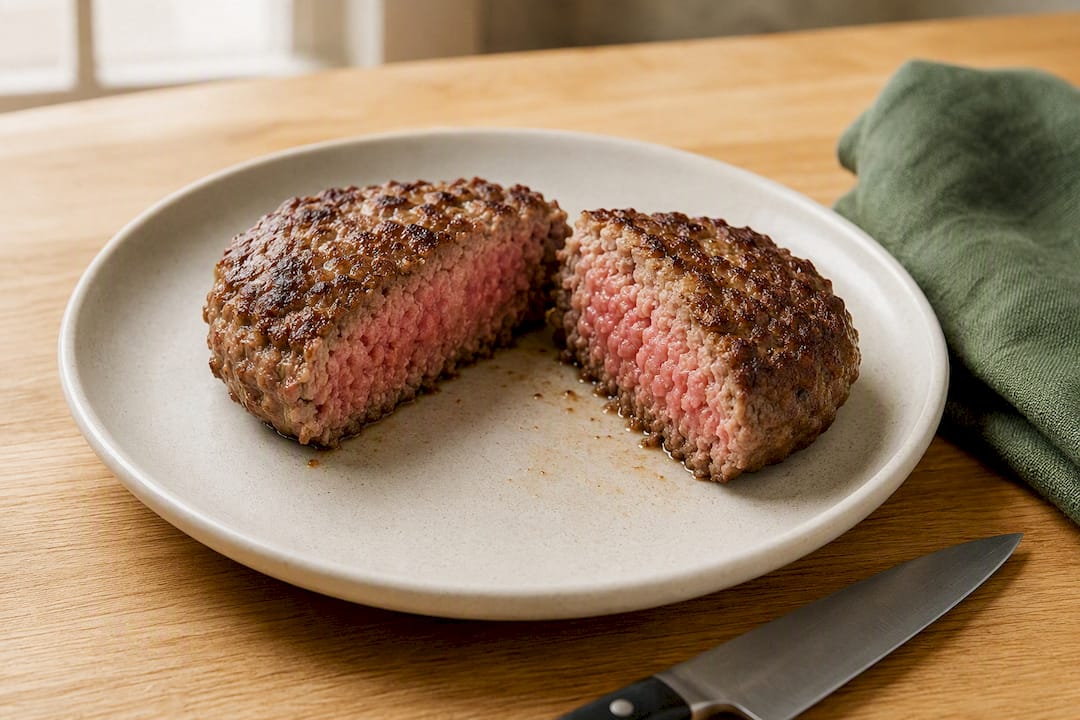
The color comes down to chemistry, not doneness. pH level, myoglobin content, fat percentage, and added ingredients all affect how a patty looks once it’s cooked. A very lean burger can stay rosy in the middle at a perfectly safe temp, while a fattier one might turn uniformly gray before it’s actually done. Grill marks tell you even less. They only measure what happened to the surface, not the center. The thermometer is the only test that doesn’t lie to you.
Storing and Handling Ground Beef Safely
Most foodborne illness from ground beef traces back to handling before the meat ever hits the pan, not the cooking itself.
- Keep raw ground beef refrigerated at 40°F or below, and use it within 1 to 2 days or freeze it.
- Never leave ground beef sitting at room temperature for more than 2 hours, or 1 hour if it’s above 90°F outside, per FSIS guidance on the danger zone.
- Reheat fully cooked ground-beef dishes, like leftover casseroles or meatloaf, back to 165°F.
- Cool leftovers quickly by splitting them into shallow containers rather than one deep pot.
- Wash hands, cutting boards, and utensils that touched raw ground beef before they touch anything else.
None of this is complicated, but skipping any one step is how bacteria get a window to multiply. A casserole like our ground beef pizza enchiladas sits in that danger zone longer than a quick-cooked burger simply because of its size, so it deserves extra attention when cooling and storing leftovers.
How Hearthly Recipes Tests Ground-Beef Dishes for Safety
I’m Susan Scortberg, and I’ve spent a good chunk of my time at Hearthlyrecipes elbow-deep in ground-beef recipes, from weeknight tacos to holiday meatloaf. The habit that never changes across any of them is the thermometer check. We don’t eyeball doneness, and we don’t trust a timer alone, because timers don’t know how thick your patty is or how cold your fridge runs.
When we test a recipe, we note the pull temperature and the rest time right in the recipe card, so you’re not guessing at when carryover cooking will finish the job. If a dish calls for pulling burgers at 155°F to rest into 160°F, that detail shows up in the instructions, not buried in a footnote. Check the notes section on any ground-beef recipe before you cook it. That’s where the real technique lives.
— Susan Scortberg
Find Tested Ground-Beef Recipes That Get the Temp Right
Guessing your way through a burger recipe wastes good meat. Hearthlyrecipes built its recipe vault around the opposite idea: every dish gets tested with real thermometer checks before it’s published, so the pull temps and rest times you read are ones someone actually verified.

If burgers are what brought you here, our grilling and griddle recipes collection includes patty thickness and pull-temp notes for different cooking methods, from cast iron to charcoal. Prefer something heartier for a weeknight dinner? Our tested Mongolian ground beef bowl shows the same thermometer-first approach applied to a stovetop dish instead of a grill. Open the vault, search “ground beef,” and start with whichever recipe matches tonight’s dinner plan.
This article is general information, not a substitute for advice from a qualified doctor. Consult a qualified healthcare professional about your own circumstances before acting on anything here.
Sources
- Ground Beef and Food Safety | Food Safety and Inspection Service
- FDA Food Code | U.S. Food and Drug Administration
FAQ
Does Ground Beef Have to Be 165 Degrees?
No. The safe minimum for ground beef is 160°F (71°C), not 165°F. That higher number applies to poultry, including ground chicken and turkey, which carries different pathogen risks.
Can You Eat a Hamburger at 145 Degrees?
Not safely. 145°F is the safe temperature for a whole steak with a rest period, but ground beef needs to reach 160°F because grinding can distribute bacteria throughout the patty rather than leaving it on the surface alone.
Why Does Ground Beef Need to Be Cooked at 155 Degrees?
You may be thinking of the FDA Food Code, which allows commercial kitchens to use 155°F combined with a specific hold time under controlled conditions. For home cooking, 160°F confirmed with a thermometer remains the standard.
Is Ground Beef Still Pink at 160 Degrees Safe to Eat?
Yes. Pink coloring at or above 160°F can happen due to pH level, fat content, or added ingredients, and it doesn’t indicate the meat is undercooked. Trust your thermometer reading over the color every time.