Healthy Meal Prep: Your 1-Week Blueprint for Busy Cooks
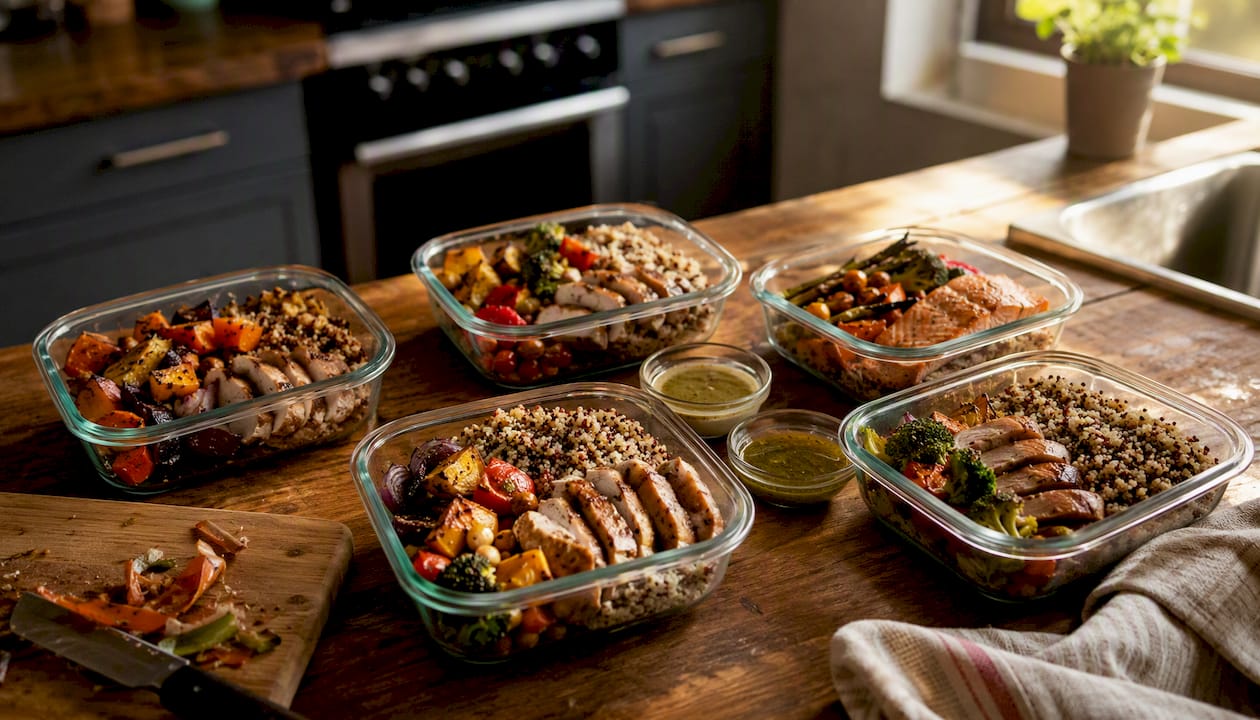
Prep these five components this weekend and you’ll have breakfasts, lunches, dinners, and snacks covered for the entire week: one batch grain (brown rice, farro, or quinoa), two proteins (one animal, one plant or fish), a tray of roasted vegetables plus washed salad greens, two sauces or dressings, and four portable breakfasts or snacks. A single focused session runs about two to three hours. Split it across two evenings — grains and proteins Sunday, veg and sauces Monday — and no single session tops 90 minutes. Harvard T.H. Chan School of Public Health’s Meal Prep Guide confirms there is no single correct method; the approach that matches your schedule is the one that sticks. All recipes referenced throughout this article are tested and published by Hearthlyrecipes.
Here is the weekend checklist to copy right now:
- Cook one large batch of whole grain (2–3 cups dry).
- Roast or bake one animal protein (chicken thighs, salmon, or ground turkey).
- Cook one plant or fish protein (lentils, chickpeas, or canned tuna dressed simply).
- Roast two sheet pans of mixed vegetables; wash and dry salad greens.
- Mix two sauces (a tahini dressing and a simple vinaigrette cover almost everything).
- Prep four grab-and-go breakfasts or snacks (overnight oats, hard-boiled eggs, energy bites, or yogurt jars).
CDC public-health data underscores why consistent healthy eating patterns matter at a population level, and component prepping is one of the most practical ways to make those patterns stick day to day.
Key Takeaways
Component prepping — one batch grain, two proteins, roasted veg, and two sauces — is the most efficient way to cover a full week of healthy meals in a single focused session.
| Point | Details |
|---|---|
| Start with five components | Batch grain, two proteins, roasted veg, and two sauces cover breakfasts through dinners all week. |
| Storage windows matter | Most cooked proteins keep 3–4 days refrigerated; soups and curries freeze well for 2–3 months. |
| Start small to build the habit | Prepping even one meal per week builds consistency and prevents burnout, per Loyola Medicine dietitians. |
| Sauces are the highest-leverage prep | Two dressings made in 10 minutes make the same components taste different every day. |
| Hearthlyrecipes for tested recipes | The Practical Meal Solutions collection offers verified, rated recipes built for weekly batch cooking. |
Table of Contents
- Healthy make-ahead breakfasts that keep well and taste good
- Lunch bowls and salads you can mix and match all week
- Batch dinners you can cook once and repurpose all week
- Snacks, sides, and portable small meals to round out a week
- Efficient workflows, batch techniques, and essential equipment
- Storage, reheating, and food-safety rules for meal prep
- How to plan a week, build a shopping list, and save money on meal prep
- Six Hearthlyrecipes-tested meal-prep picks worth bookmarking
- Why component prepping beats cooking full meals every time
- Hearthlyrecipes has the tested recipes to make this week’s prep easy
- Sources
- FAQ
Healthy make-ahead breakfasts that keep well and taste good
Mornings are where meal prep pays off fastest. Spend 30 minutes on Sunday and you will not touch a pan before 8 AM all week.
These eight options store well and travel easily:
- Overnight oats: Combine rolled oats, milk or plant milk, chia seeds, and a spoonful of nut butter in a jar. Keeps 4–5 days refrigerated. Top with fresh fruit just before eating.
- Chia pudding jars: Three tablespoons of chia seeds per cup of milk, sweetened with maple syrup. Set overnight, layer with mango or berries. Keeps 4–5 days.
- Egg bake (sheet-pan frittata): Whisk 8–10 eggs with diced peppers, spinach, and feta. Bake in a greased 9x13 pan at 375°F for 22–25 minutes. Slice into squares; reheat 60 seconds in the microwave. Keeps 4 days.
- Grain-and-egg bowls: Leftover farro or quinoa topped with a soft-boiled egg and a drizzle of hot sauce. Assemble cold; microwave the grain base 90 seconds, then add the egg.
- Greek yogurt parfait jars: Layer yogurt, granola, and frozen berries (they thaw by morning). Assemble Sunday night; eat through Wednesday before the granola softens too much.
- Banana-oat muffins: Two ripe bananas, 1.5 cups oats, two eggs, a splash of vanilla. Bake at 350°F for 18 minutes. Freeze extras; thaw overnight in the fridge.
- Smoothie packs: Portion frozen spinach, banana slices, and berries into zip bags. Blend with protein powder and milk in under two minutes each morning.
- Hard-boiled eggs: Six at a time, 10 minutes in boiling water, then ice bath. Keep in the shell up to one week. Pair with a piece of fruit for a complete portable breakfast.
Pro Tip: Assemble yogurt parfaits and chia jars in wide-mouth mason jars — they stack flat in the fridge, seal tight, and go straight into a bag without a separate container.
Lunch bowls and salads you can mix and match all week
The fastest way to avoid the “same lunch every day” problem is to stop prepping full meals and start prepping components. Build each bowl at the moment you eat it, pulling from what you already cooked.
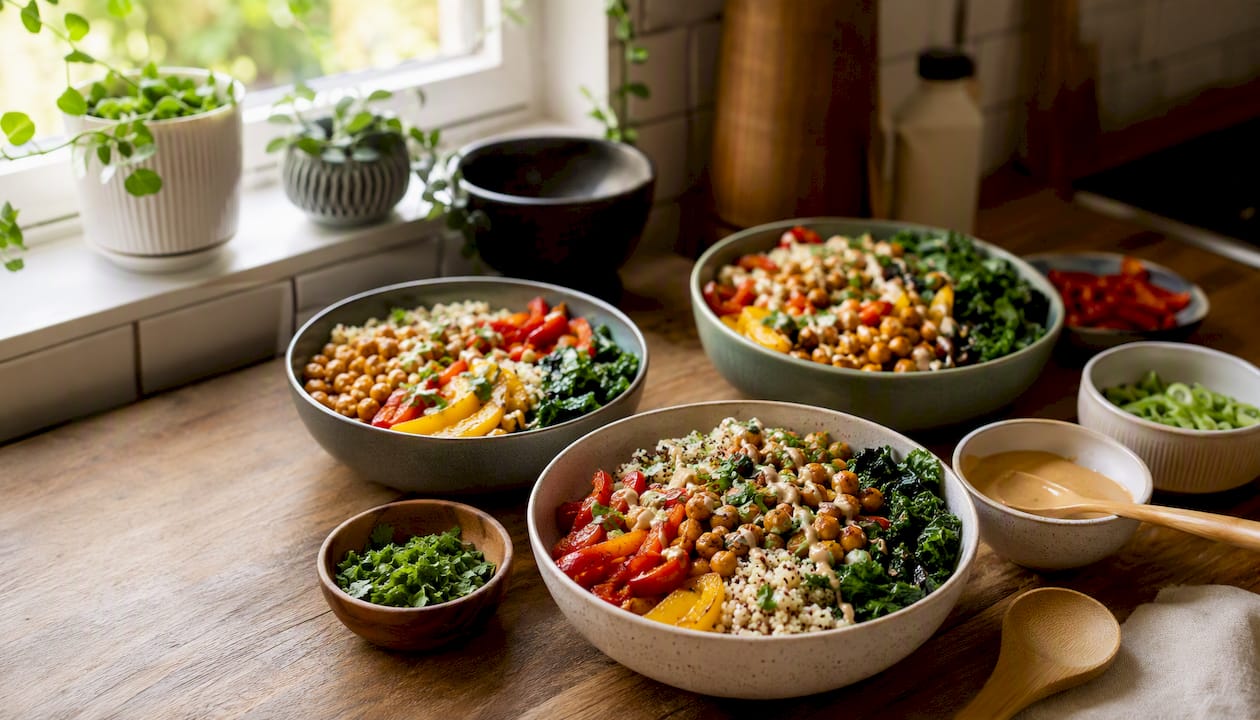
The formula: base + protein + roasted or raw veg + something crunchy + sauce. That structure maps directly to the balanced-plate guidance from Harvard T.H. Chan — whole grain, lean protein, and plenty of vegetables in every meal.
Eight ready-to-pack ideas:
- Farro grain bowl with roasted chickpeas, arugula, roasted sweet potato, pumpkin seeds, and lemon tahini.
- Quinoa salad jar with grilled chicken, cherry tomatoes, cucumber, and a balsamic vinaigrette — keep dressing in a small container on the side until you eat.
- Brown rice burrito bowl with ground turkey seasoned with cumin and chili powder, black beans, corn, shredded cabbage, and salsa.
- Lentil and roasted beet salad over mixed greens with goat cheese, walnuts, and a red wine vinaigrette.
- Tuna and white bean bowl with arugula, sun-dried tomatoes, capers, and olive oil. No reheating needed.
- Korean BBQ meatball rice bowl — try the Korean BBQ Meatball Rice Bowls from Hearthlyrecipes for a tested, crowd-pleasing version.
- Pasta primavera base with roasted zucchini, cherry tomatoes, and a light garlic-olive oil sauce. The Pasta Primavera Vegetable Medley from Hearthlyrecipes works well prepped ahead and served at room temperature.
- Avocado mango salad with shrimp or grilled tofu, lime dressing, and toasted coconut. The Avocado Mango Salad from Hearthlyrecipes is a tested summer option that holds up well for two days.
On assembly vs. storage: Keep dressings separate from greens until the moment you eat. Sturdy greens like kale, shredded cabbage, and romaine hold up two to three days dressed; delicate greens like arugula and spinach wilt within hours. Store crunchy toppings (nuts, seeds, croutons) in a small bag on the side.
Batch dinners you can cook once and repurpose all week
The best batch dinners do double or triple duty. A tray of roasted chicken thighs on Sunday becomes tacos on Tuesday and a grain bowl on Thursday. That kind of repurposing is what keeps the week from feeling repetitive.
Best formats for scaling:
- Sheet-pan proteins and veg: Roast chicken thighs, salmon fillets, or pork tenderloin alongside broccoli, carrots, or Brussels sprouts at 400–425°F. One pan, 25–35 minutes, minimal cleanup.
- One-pot braises and stews: Chicken thighs braised in tomato sauce, beef and vegetable stew, or white bean and kale soup. All freeze well for 2–3 months.
- Saucy bowls and curries: The Quick Vegan Lentil Curry from Hearthlyrecipes is a tested batch option that freezes for up to three months and reheats in five minutes.
- Baked proteins: A whole roasted chicken or a sheet of baked salmon portions out into four to six servings.
- Casseroles: Egg-based casseroles and grain-based bakes (think enchilada casserole or baked ziti) refrigerate well for four days and reheat evenly.
Eight dinner ideas with repurposing notes:
- Roast chicken thighs → shred leftovers for tacos, grain bowls, or chicken soup. Fridge: 3–4 days.
- Baked salmon → flake into a grain bowl or toss with pasta and capers. Fridge: 3 days.
- Ground turkey with taco seasoning → use in burritos, rice bowls, or stuffed peppers. Fridge: 3–4 days.
- Lentil curry → serve over rice, stuff into a wrap, or eat as soup with extra broth. Freezer: 2–3 months.
- Beef and vegetable stew → serve over mashed potatoes or with crusty bread. Freezer: 2–3 months.
- Sheet-pan sausage and peppers → tuck into a hoagie, serve over polenta, or mix into scrambled eggs. Fridge: 3–4 days.
- Baked falafel → stuff into pita with hummus and cucumber, or crumble over a salad. Fridge: 4 days; freezer: 1 month.
- Sticky Asian BBQ Chuck → the Sticky Asian BBQ Chuck from Hearthlyrecipes is a slow-cooker batch recipe that shreds easily for bowls, sliders, or fried rice. Freezer: 2–3 months.
Reheating tip: Add a splash of water or broth before microwaving proteins and grains to prevent drying out. Cover loosely with a damp paper towel.
Snacks, sides, and portable small meals to round out a week
Snacks are where most meal-prep plans fall apart. You prep great dinners, then reach for chips at 3 PM because nothing grab-and-go is ready. Fix that in 20 minutes.
High-protein, high-fiber picks:
- Hummus + veggie cups: Portion hummus into small containers; add pre-cut carrots, celery, and bell pepper strips. Keeps 4–5 days.
- Roasted chickpeas: Toss a can of drained chickpeas with olive oil, smoked paprika, and salt. Roast at 400°F for 30–35 minutes. Keeps 3–4 days in an open container (airtight makes them soggy).
- Hard-boiled eggs: Already covered in breakfasts, but worth doubling the batch for snacking.
- Edamame: Steam a bag, salt lightly, and refrigerate in pods. Keeps 4–5 days; eat cold or warm.
- Energy bites: Combine 1 cup rolled oats, 1/2 cup peanut butter, 1/3 cup honey, and 1/2 cup mini chocolate chips. Roll into balls; refrigerate. Keeps one week; freezes for one month.
- Creamy Garlic Parmesan Butter Beans: The 20-Minute Creamy Garlic Parmesan Butter Beans from Hearthlyrecipes doubles as a protein-rich side or a satisfying snack with crusty bread. Keeps 4 days refrigerated.
Make-ahead portable sides:
- Cut fruit (melon, pineapple, grapes): keeps 3–5 days in an airtight container.
- Quick-pickled cucumbers or red onion: keeps up to two weeks refrigerated.
- Grain salads (farro with lemon and herbs): keeps 4–5 days; flavors improve overnight.
Pro Tip: Use a muffin tin to portion snacks like energy bites or hummus cups before transferring to containers — it speeds up portioning and keeps servings consistent.
Efficient workflows, batch techniques, and essential equipment
The difference between a two-hour prep session and a four-hour one is almost always cooking order. Start the longest items first, then fill the gaps with chopping, washing, and sauce-making.
Here is a proven weekend workflow:
- Preheat the oven and start grains. Brown rice takes 45 minutes; farro takes 30. Get them going before anything else.
- Season and load proteins onto sheet pans. Slide them into the oven alongside or right after the grains.
- While the oven runs, prep produce. Wash and dry greens, chop veg for roasting, and cut fruit for snack containers.
- Use the stovetop for beans, lentils, or a sauce. A pot of lentils takes 20–25 minutes; a tahini dressing takes three.
- Roast vegetables in the second oven slot. Once proteins come out, roast veg at 425°F for 20–25 minutes.
- Cool, portion, and label. Nothing goes into a container hot — let food cool 20–30 minutes to avoid condensation and bacterial growth.
Nutrition highlights parallel cooking (oven and stovetop running together, produce prepped during cook time) as a key time-saver that also reduces waste.
Component prepping vs. full-meal prepping: Prepping components — a batch of grains, a batch of protein, two sauces — creates far more variety than cooking five identical plated meals. Monday’s grain bowl becomes Tuesday’s wrap and Wednesday’s soup base. Harvard T.H. Chan’s research backs this approach, noting that component prepping reduces flavor fatigue and food waste.
Essential equipment:
- Two large rimmed sheet pans (18x13 inch half-sheet size)
- A rice cooker or Instant Pot for hands-off grain and legume cooking
- A set of airtight glass containers in two or three sizes
- Wide-mouth mason jars for overnight oats, chia pudding, and salad jars
- A sharp chef’s knife and a large cutting board — the single biggest time-saver in the kitchen
If you pair your meal prep with a fitness routine, building a workout plan alongside your weekly food prep makes both habits easier to sustain.
Storage, reheating, and food-safety rules for meal prep
Getting the storage right is what separates a week of good eating from a fridge full of food you throw out on Friday.
Fridge and freezer windows for common prepped foods
| Food | Fridge | Freezer |
|---|---|---|
| Cooked grains (rice, farro, quinoa) | 3–5 days | 1–2 months |
| Cooked chicken or turkey | 3–4 days | 2–6 months |
| Cooked fish or seafood | 3 days | 2–3 months |
| Cooked ground meat | 3–4 days | 3–4 months |
| Soups, stews, and curries | 3–4 days | 2–3 months |
| Cooked beans and lentils | 4–5 days | 1–2 months |
| Roasted vegetables | 3–5 days | 2–3 months |
| Hard-boiled eggs (in shell) | 7 days | Not recommended |
| Overnight oats and chia jars | 4–5 days | Not recommended |
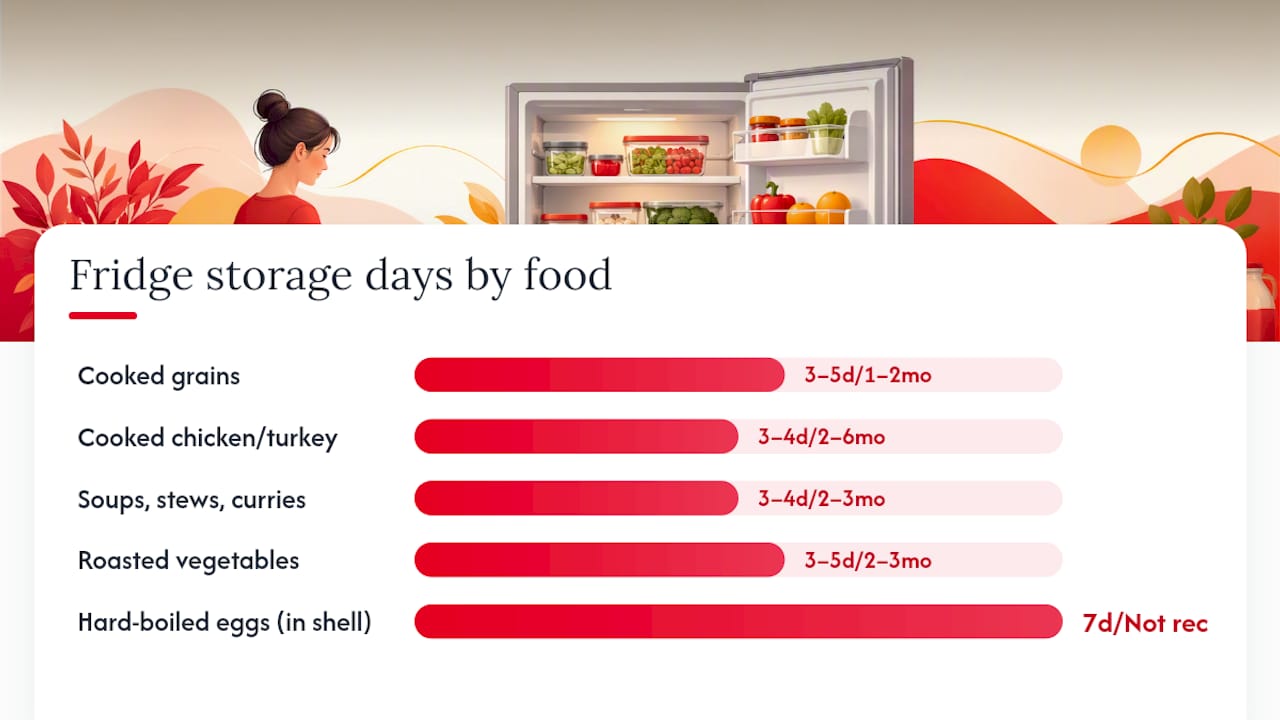
These windows align with public-health food-safety guidance. Loyola Medicine dietitians note that clear labeling and realistic storage windows are among the most practical habits for keeping meal prep consistent week over week.
Labeling and rotation
- Write the date and contents on every container with a piece of masking tape and a marker.
- Follow first-in-first-out: move older containers to the front of the fridge each time you add new ones.
- Thaw frozen meals in the refrigerator overnight, never on the counter at room temperature.
Safety checklist
- Cool cooked food to room temperature (no more than two hours at room temperature) before refrigerating.
- Reheat leftovers to an internal temperature of 165°F.
- When in doubt, throw it out. A container that smells off or has been in the fridge longer than five days is not worth the risk.
- Never refreeze food that has already been thawed.
Pro Tip: A simple dry-erase marker on the outside of glass containers lets you write the date directly on the lid — wipes off clean for the next batch.
How to plan a week, build a shopping list, and save money on meal prep
A shopping list organized by store section cuts 15–20 minutes off every grocery run. Build it from your weekly menu, not the other way around.
Sample 7-day menu using the BLUF blueprint
| Day | Breakfast | Lunch | Dinner |
|---|---|---|---|
| Monday | Overnight oats | Farro grain bowl + roasted chickpeas | Roast chicken thighs + roasted veg |
| Tuesday | Egg bake square + fruit | Quinoa salad jar (chicken) | Lentil curry over rice |
| Wednesday | Chia pudding jar | Brown rice burrito bowl (ground turkey) | Sheet-pan sausage and peppers |
| Thursday | Grain bowl + soft-boiled egg | Tuna and white bean bowl | Repurposed chicken tacos |
| Friday | Yogurt parfait | Lentil and beet salad | Pasta primavera with leftover veg |
| Saturday | Banana-oat muffin + eggs | Leftover curry wrap | Beef and vegetable stew (from freezer) |
| Sunday | Smoothie pack | Avocado mango salad | Cook new batch; simple quesadillas |
Shopping list template (organized by store section)
Produce:
- Salad greens (2 large bags or one head each of romaine and kale)
- Sweet potatoes, broccoli, zucchini, bell peppers, cherry tomatoes, beets
- Bananas, berries (fresh or frozen), mango, avocado, lemons
Proteins:
- Chicken thighs (2–3 lbs)
- Ground turkey (1 lb)
- Canned tuna (3–4 cans)
- Eggs (1 dozen)
- Canned chickpeas and white beans (2 cans each)
- Dried lentils (1 lb bag)
Grains and pantry:
- Brown rice or farro (2 lb bag)
- Quinoa (1 lb bag)
- Rolled oats (large canister)
- Pasta (1 lb)
Dairy and refrigerated:
- Greek yogurt (32 oz container)
- Feta or goat cheese
- Milk or plant milk
Sauces and condiments:
- Tahini, olive oil, balsamic vinegar, soy sauce, canned tomatoes
Budget tips: Buy grains, beans, and lentils in bulk — a two-pound bag of brown rice costs a fraction of per-serving packaged options. Nutrition.gov recommends ingredient substitutions (frozen vegetables for fresh, dried beans for canned) to cut costs without sacrificing nutrition. Use peak-season produce for the best flavor and the lowest price — summer zucchini and tomatoes cost half what they do in January. Freeze any proteins you will not use within three days of purchase.
Six Hearthlyrecipes-tested meal-prep picks worth bookmarking
These six recipes were selected and tested by Susan Scortberg, recipe editor at Hearthlyrecipes. Testing means each recipe was cooked multiple times, storage life was verified, and reheating instructions were confirmed before publishing. User ratings on the site reflect real reader feedback.
- Quick Vegan Lentil Curry: Ready in under 30 minutes, freezes for up to three months, and works over rice, in a wrap, or thinned into soup. A top pick for plant-based batch cooking.
- Korean BBQ Meatball Rice Bowls: The meatballs prep and freeze in batches; the sauce doubles as a marinade. Assemble bowls fresh each day from prepped components.
- Sticky Asian BBQ Chuck: A slow-cooker recipe that requires almost no active time. Shred the beef Sunday; use it in bowls, sliders, or fried rice through Thursday.
- Pasta Primavera Vegetable Medley: A vegetable-forward dish that holds up well at room temperature for packed lunches. Swap in whatever roasted veg you have on hand.
- 20-Minute Creamy Garlic Parmesan Butter Beans: Fast, high in protein and fiber, and versatile enough to serve as a side, a dip, or a bowl base. Keeps four days refrigerated.
- Hot Honey Tortellini Pasta Salad: A crowd-pleasing make-ahead salad that improves overnight as the dressing soaks in. Works as a lunch or a potluck side.
Hearthlyrecipes publishes vegetarian meal-prep options and a full vegan recipe collection for readers building plant-forward weekly menus. Many recipes on the site carry five-star user ratings, reflecting consistent real-world results from home cooks.
Behavior-change research indexed on PubMed supports the idea that structured meal patterns improve dietary adherence over time, which is exactly what a tested, repeatable recipe collection makes possible.
Why component prepping beats cooking full meals every time
Most people approach meal prep by cooking five identical containers of the same dish. By Wednesday, they are bored. By Thursday, they are ordering takeout.
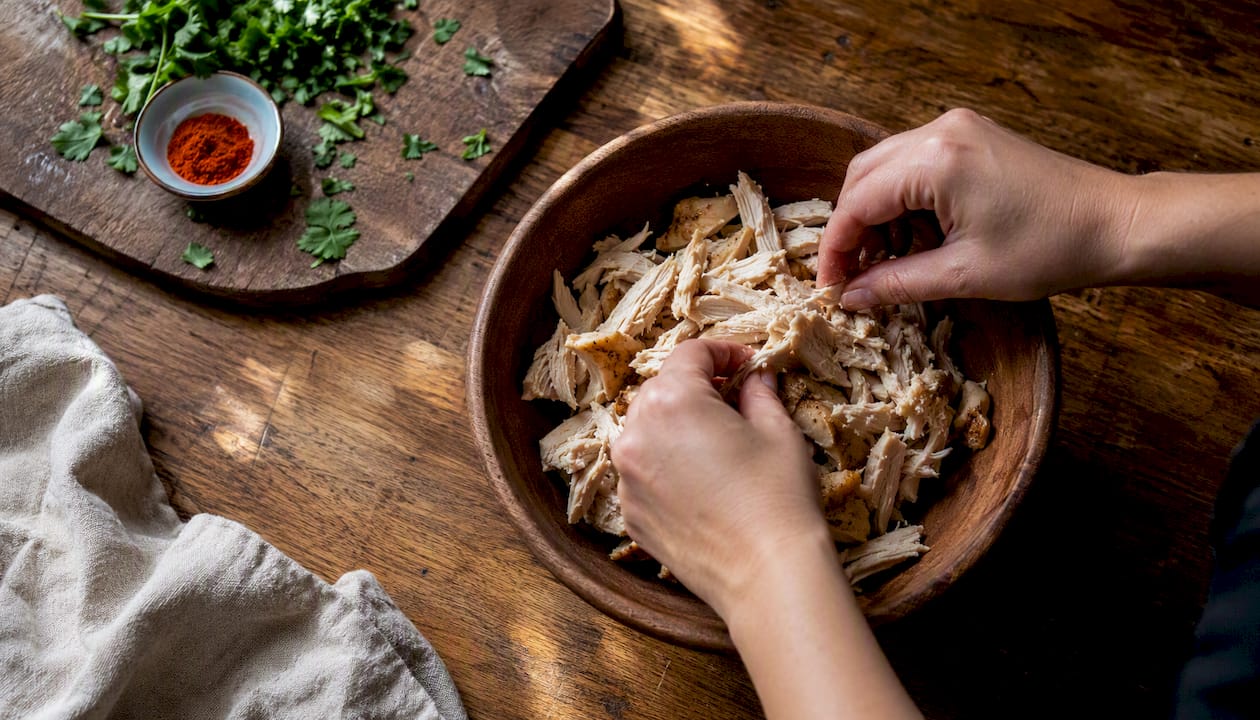
Component prepping solves this at the root. When you cook a batch of farro, a tray of roasted chicken, and two sauces, those same ingredients become a grain bowl on Monday, a wrap on Tuesday, and a quick soup on Wednesday. The food is the same; the meal is different. That variety is what keeps people eating what they prepped instead of abandoning it.
Loyola Medicine dietitians recommend starting with just one prepped meal per week to build the habit without burnout. That is genuinely good advice for beginners. But the next step — moving from one full meal to a set of components — is where the real efficiency lives. A two-hour Sunday session that produces a grain, two proteins, roasted veg, and two sauces covers more meals with less effort than cooking five separate dishes ever could.
The other thing most guides underestimate: sauces. A good tahini dressing and a simple vinaigrette transform the same bowl of rice and chicken into something that tastes completely different on day four. Two sauces, made in ten minutes, are the highest-leverage prep you can do.
Hearthlyrecipes has the tested recipes to make this week’s prep easy
Knowing what to prep is one thing. Having recipes you can trust to actually work is another.
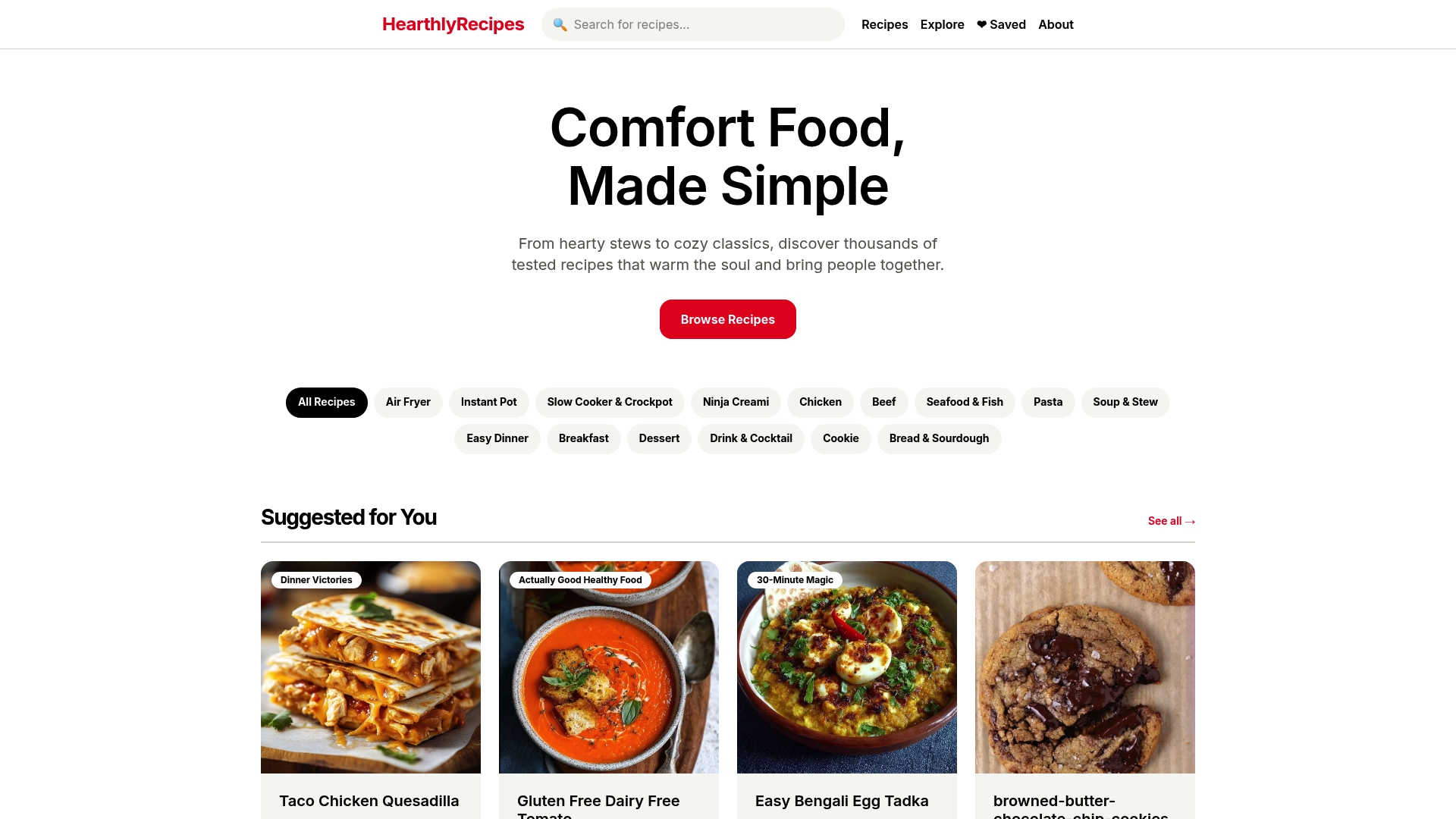
Hearthlyrecipes publishes a curated collection of Practical Meal Solutions — tested, rated recipes built for exactly this kind of weekly prep. Every recipe on the site has been cooked and verified before publishing, so you are not guessing on timing or ratios. Browse the full recipe collection to find batch dinners, make-ahead breakfasts, and bowl-friendly proteins that fit your week. If mornings are your priority, the Morning Fuel collection covers grab-and-go breakfasts that store well all week. Start with one recipe this Sunday, build the habit, and add more as the routine becomes second nature.
Sources
- Meal Prep Guide • The Nutrition Source
- Nutrition
- How meal prep can simplify healthy eating | Loyola Medicine
- Cdc
- Ncbi
FAQ
How long does healthy meal prep take each week?
A single focused session covering five components (grain, two proteins, roasted veg, and two sauces) typically takes two to three hours. Split across two evenings, no single session exceeds 90 minutes.
What foods are best for beginner meal prep?
Start with foods that store reliably: hard-boiled eggs, overnight oats, cooked grains, roasted vegetables, and a simple protein like baked chicken or canned beans. Loyola Medicine dietitians recommend prepping just one meal per week to start.
How do you keep meal-prepped food from getting boring?
Prep components rather than full meals. A batch of farro, roasted chicken, and two sauces becomes a grain bowl, a wrap, and a quick soup across the week. Swapping one sauce or one vegetable each week adds variety without extra effort.
How long do meal-prepped foods last in the fridge?
Most cooked proteins and grains keep 3–5 days refrigerated. Soups, stews, and curries keep 3–4 days in the fridge and freeze well for 2–3 months. Hard-boiled eggs in the shell keep up to seven days.
Where can I find tested healthy meal-prep recipes?
Hearthlyrecipes publishes a tested collection of Practical Meal Solutions recipes, including batch dinners, make-ahead breakfasts, and bowl-friendly proteins, all verified before publishing and rated by real home cooks.