Healthy Slow Cooker Meals for Busy Families: 25+ Recipes
TL;DR:
- This article offers a curated list of healthy slow cooker meals, emphasizing quick prep, tested flavor, and family approval. It categorizes recipes into soups, chilis, lean mains, vegetarian options, and meal-prep picks, with practical tips to optimize results. Emphasizing ingredient swaps and batch cooking, it promotes nutritious, flavorful meals suited for busy schedules.
Here’s what you’re getting from this article: a curated shortlist of healthy slow cooker meals grouped by type, plus the practical techniques, ingredient swaps, and storage rules you need to cook them confidently tonight. No fluff, no 45-minute prep times disguised as “easy.”
Quick picks to get you started:
- High-protein: Slow Cooker Sweet Chili Chicken (5 min prep | GF, DF) — tested and family-rated on Hearthlyrecipes
- Kid-friendly comfort: Lasagna Soup (10 min prep | adaptable DF)
- Vegetarian: White bean and kale stew (10 min prep | GF, V, high fiber)
- Meal-prep freezer pick: Turkey and lentil chili (15 min prep | GF, DF, freezes beautifully)
- Low-effort weeknight: Crock Pot BBQ Chicken (5 min prep | GF option)
Most nutritious slow cooker recipes on Hearthlyrecipes take 5–15 minutes of active prep, and all picks below are tested for flavor and family approval.
Table of Contents
- Healthy slow cooker meals by category
- How to get the most out of your slow cooker
- Simple swaps that make any crockpot recipe healthier
- How to build a nutritionally balanced slow-cooker meal
- Meal prep, storage, and reheating for slow-cooker meals
- Key Takeaways
- Why slow cooking is the smartest method for busy, health-conscious cooks
- Hearthlyrecipes has a tested slow-cooker collection worth bookmarking
- Useful sources
- FAQ
Healthy slow cooker meals by category
Large recipe roundups consistently show that the best crockpot collections span soups, chilis, curries, lean-protein mains, and vegetarian dishes. Here’s how they break down, with time and nutrition callouts for each.
Soups and stews
| Recipe | Prep | Cook | Servings | Diet | Why It’s Healthy |
|---|---|---|---|---|---|
| Chicken and white bean soup | 10 min | 6–8 hr low | 6 | GF, DF | Lean protein + high fiber |
| Lentil and root vegetable stew | 10 min | 7–8 hr low | 6 | GF, DF, V | Plant protein, iron, beta-carotene |
| Turkey and vegetable minestrone | 15 min | 6–7 hr low | 8 | DF | Lean protein, low saturated fat |
| Lasagna soup | 10 min | 4–6 hr low | 6 | Adaptable | Comfort with portion control |
Chilis and curries
| Recipe | Prep | Cook | Servings | Diet | Why It’s Healthy |
|---|---|---|---|---|---|
| Turkey and black bean chili | 15 min | 6–8 hr low | 8 | GF, DF | Lean protein, high fiber, low fat |
| Chickpea and sweet potato curry | 10 min | 6–7 hr low | 6 | GF, DF, V | Plant protein, vitamin A, anti-inflammatory |
| Sweet chili chicken | 5 min | 4–6 hr low | 4 | GF, DF | High protein, low added sugar |
Lean-protein mains
Dietitian-favored slow cooker meals consistently feature chicken thighs and lean ground turkey as the top protein picks — affordable, forgiving in the slow cooker, and easy to shred for multiple uses.
| Recipe | Prep | Cook | Servings | Diet | Why It’s Healthy |
|---|---|---|---|---|---|
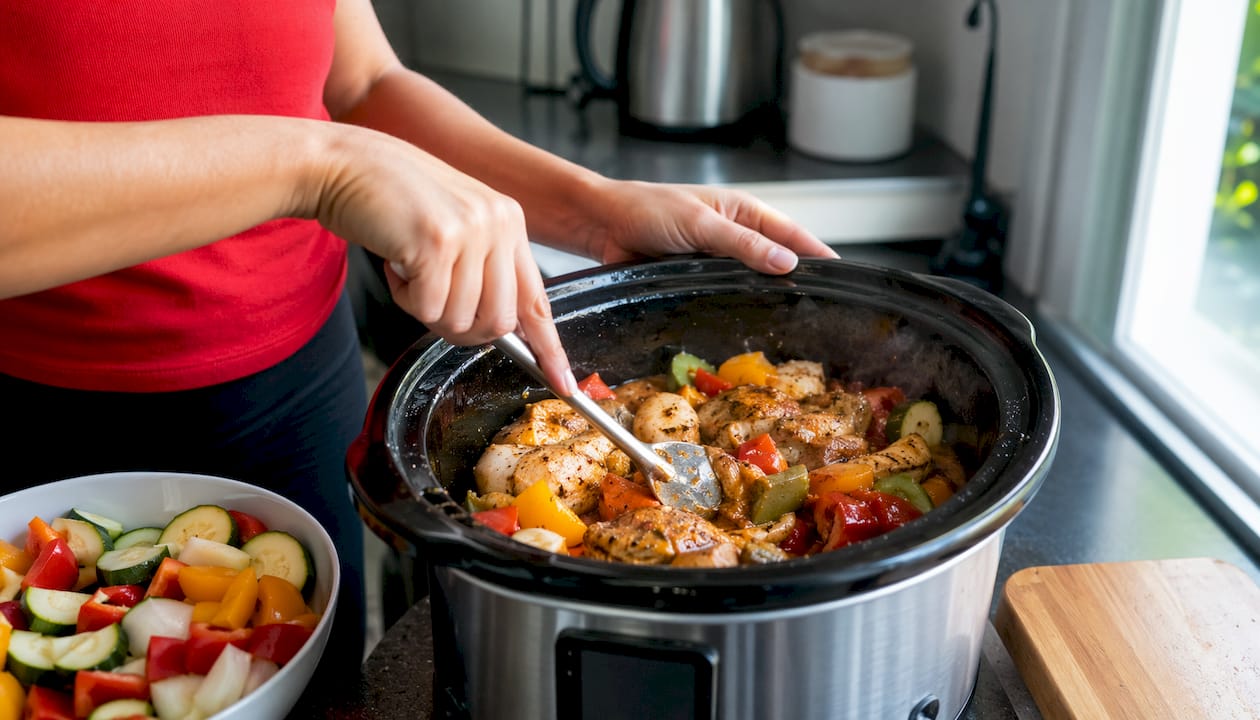
| BBQ pulled chicken | 5 min | 4–6 hr low | 6 | GF, DF | Lean protein, low fat |
| Salsa verde turkey | 10 min | 6–7 hr low | 6 | GF, DF | High protein, minimal sodium |
| Honey garlic salmon (foil packet) | 10 min | 2–3 hr low | 4 | GF, DF | Omega-3s, lean protein |
Vegetarian and legume-based
| Recipe | Prep | Cook | Servings | Diet | Why It’s Healthy |
|---|---|---|---|---|---|
| White bean and kale stew | 10 min | 6–8 hr low | 6 | GF, DF, V | High fiber, calcium, plant protein |
| Black bean and corn soup | 10 min | 6–7 hr low | 6 | GF, DF, V | Fiber-rich, low fat |
| Red lentil dal | 10 min | 6–7 hr low | 6 | GF, DF, V | Complete amino acids with rice |
| Butternut squash and quinoa stew | 15 min | 6–7 hr low | 6 | GF, DF, V | Whole grain, vitamin A |
One-pot comfort and meal-prep picks
Some of the best dump-and-go recipes take as little as 5–10 minutes of active prep, making them genuinely practical for weeknights. These also freeze well.
| Recipe | Prep | Cook | Servings | Diet | Why It’s Healthy |
|---|---|---|---|---|---|
| Turkey and lentil chili | 15 min | 7–8 hr low | 8 | GF, DF | Freezer-friendly, high protein + fiber |
| Chicken and brown rice casserole | 10 min | 5–6 hr low | 6 | GF, DF | Whole grain, lean protein |
| Beef and vegetable stew | 15 min | 7–8 hr low | 8 | GF, DF | Iron-rich, fiber-packed |
How to get the most out of your slow cooker
Slow cookers are forgiving by design, but a few techniques separate a great result from a watery, bland one.
Layer ingredients correctly. Dense root vegetables (carrots, potatoes, turnips) go on the bottom, closest to the heat source. Proteins sit on top. Delicate greens like spinach or kale go in during the last 20–30 minutes to preserve their color and nutrients.
Brown meat when you can. Searing chicken thighs or ground turkey before adding them builds a Maillard crust that no amount of slow cooking replicates. A
handles this in the insert itself, cutting down on extra pans. Worth the upgrade if you cook this way regularly.
Liquid ratios matter more than most recipes admit. Slow cookers trap moisture, so you need significantly less liquid than a stovetop braise. A general rule: use about half the liquid you’d use on the stove. Too much liquid dilutes flavor and washes out nutrients.
Add dairy and delicate ingredients late. Milk, cream, sour cream, and fresh herbs break down or curdle over long cook times. Stir them in during the final 15–30 minutes.
Timing guide by dish type
| Dish Type | Low Setting | High Setting |
|---|---|---|
| Soups and stews | 6–8 hours | 3–4 hours |
| Chilis and curries | 6–8 hours | 3–4 hours |
| Chicken (bone-in) | 6–7 hours | 3–4 hours |
| Chicken (boneless) | 4–6 hours | 2–3 hours |
| Beef stew cuts | 7–8 hours | 4–5 hours |
| Lentils and beans | 6–8 hours | 3–4 hours |
| Fish (foil packets) | 2–3 hours | 1–2 hours |
Pro Tip: Most slow cooker recipes tolerate about one hour of extra cook time without major quality loss — so if you’re running late, don’t panic. Set it on low before you leave, and dinner will still be waiting.
Food safety basics: Poultry should reach an internal temperature of 165°F; beef and pork, 145°F. Never put frozen meat directly in the slow cooker — thaw it first. Cool leftovers within two hours and refrigerate in shallow containers.
Simple swaps that make any crockpot recipe healthier
The beauty of slow-cooking techniques is that long, low heat extracts deep flavor from inexpensive, nutrient-dense ingredients — which means you can cut sodium and fat without sacrificing taste.
| Original Ingredient | Healthy Swap | Benefit |
|---|---|---|
| Canned cream of mushroom soup | Low-sodium broth + cornstarch slurry | Cuts sodium significantly, removes processed fat |
| Regular ground beef | 93/7 lean ground turkey | Lower saturated fat, same protein |
| Fatty pork shoulder | Skinless chicken thighs | Leaner, still tender after long cook |
| White rice (added raw) | Brown rice or rinsed quinoa | More fiber, lower glycemic impact |
| Full-sodium canned broth | Low-sodium or homemade broth | Easier sodium control |
| Jarred pasta sauce | Crushed tomatoes + Italian seasoning | Less sugar, no added preservatives |
| Heavy cream | Light coconut milk or evaporated skim milk | Lower saturated fat, similar richness |
| Canned beans (high sodium) | Dried beans (cooked) or rinsed canned | Significant sodium reduction with rinsing |
Shopping tips: Dried beans cost a fraction of canned and let you control sodium entirely. Rinsing quinoa before adding it to the slow cooker removes saponins that cause bitterness, and rinsing rice prevents gummy texture. Always check the sodium panel on broth — labels vary wildly between brands.
When you make a swap, compensate for flavor with acid and aromatics. A squeeze of lime or lemon at the end of cooking, a handful of fresh cilantro, or an extra clove of garlic can do more for perceived saltiness than adding salt ever would. Finishing with citrus and fresh herbs is one of the most effective low-sodium tricks in slow-cooker cooking.
How to build a nutritionally balanced slow-cooker meal
Every satisfying, fiber- and protein-rich slow cooker meal rests on three pillars. Get these right and you’ve got a meal that keeps the family full for hours.
The three pillars:
- Quality protein: Chicken thighs, lean ground turkey, 93/7 beef, canned or dried beans, lentils, or salmon. Aim for at least one palm-sized portion per serving.
- Fiber-rich vegetables and legumes: Carrots, sweet potatoes, kale, spinach, black beans, chickpeas, lentils. These slow digestion and support satiety.
- Healthy fat: A drizzle of olive oil before serving, moderate coconut milk in curries, or avocado on the side. Fat carries fat-soluble vitamins and makes the meal satisfying.
An example plate from one pot: Shredded chicken thighs + green lentils + diced sweet potato and kale + a finish of olive oil and lemon zest. That single pot delivers protein, complex carbs, iron, vitamin A, and healthy fat. Portion it into 1.5–2 cup servings for adults, 1 cup for younger kids.
Nutritionists note that slow cooker meals naturally support satiety because the format encourages combining protein and fiber-rich ingredients that curb cravings between meals.
Adjusting for common goals:
- Weight management: Increase the legume-to-grain ratio and add an extra cup of non-starchy vegetables (zucchini, spinach, celery).
- Lower-carb: Swap beans for extra protein and replace starchy veg with cauliflower or broccoli.
- Vegetarian: Double the legumes and add a tablespoon of nutritional yeast for a savory, B12-boosted finish.
For portion guidance, the client recipe portion guide from humn. offers a practical framework for balancing macros across family-sized servings.
Meal prep, storage, and reheating for slow-cooker meals
Slow cookers are built for batch cooking. Double a recipe on Sunday and you’ve covered three weeknight dinners with almost no extra effort.
Batch and modular cooking: Cook a large batch of shredded chicken or turkey on its own. Use it across multiple meals: tacos on Monday, grain bowls on Wednesday, soup on Friday. The protein does the heavy lifting; you just change the supporting ingredients.
Storage timeline:
- Refrigerator: 3–4 days in airtight containers
- Freezer: 2–3 months for most soups, stews, and chilis
Freezing best practices: Cool meals quickly by spreading them into shallow containers before refrigerating. Once cooled, portion into freezer bags or containers and label with the date. Soups and chilis freeze best; potato-heavy dishes can turn grainy after thawing.
What to add after thawing: Fresh herbs, a squeeze of citrus, and any dairy (sour cream, cheese) should go in after reheating, not before freezing. They’ll taste fresher and won’t separate.
Reheating: Reheat on the stovetop over medium-low heat, stirring occasionally, until the dish reaches 165°F throughout. The microwave works for single portions; add a splash of broth to restore consistency.
Repurpose ideas: Last night’s beef stew becomes today’s grain bowl base. Turkey chili becomes a burrito filling or a topping for baked sweet potatoes. Lentil soup thickens overnight into a hearty sauce for whole-grain pasta.
Key Takeaways
Healthy slow cooker meals come down to three things: the right protein-fiber-fat combination, smart ingredient swaps, and a batch-cooking habit that turns one cooking session into several meals.
| Point | Details |
|---|---|
| Use the three-pillar framework | Build every meal with lean protein, fiber-rich veg or legumes, and a healthy fat source. |
| Prep takes 5–15 minutes | Most nutritious crockpot recipes need minimal active time — set it before work, eat when you’re home. |
| Swap sodium and fat strategically | Replace canned soups and high-sodium broth with low-sodium alternatives; rinse beans and grains. |
| Freeze extras immediately | Cool in shallow containers, freeze in portions, and add fresh herbs and dairy after reheating. |
| Hearthlyrecipes for tested recipes | The slow-cooker collection on Hearthlyrecipes offers family-rated, tested recipes with clear prep and cook times. |
Why slow cooking is the smartest method for busy, health-conscious cooks
Slow cooking gets dismissed as old-fashioned, but that’s a mistake. No other method lets you build a genuinely nutritious, flavor-forward meal with 10 minutes of morning prep and zero attention for the next eight hours. That’s not a minor convenience. For a parent managing school pickups, work, and dinner, it’s the difference between a home-cooked meal and a drive-through.
What I find most underestimated about this method is how well it handles inexpensive, nutrient-dense ingredients. Lentils, dried beans, root vegetables, and bone-in chicken thighs all get better with long, low heat. They don’t need fat or sodium to taste good — they need time, which is exactly what a slow cooker provides. The flavor development that happens over six to eight hours on low is genuinely hard to replicate any other way.
The one-hour wiggle room is also real and worth trusting. Recipes tested across Hearthlyrecipes’ slow-cooker collection consistently hold up when life runs long. That reliability is what makes the method stick for busy families, not just the convenience.
Hearthlyrecipes has a tested slow-cooker collection worth bookmarking
If you’ve been cooking from random internet recipes and ending up with watery stews or flavorless chicken, the difference is usually in the testing. Hearthlyrecipes’ slow-cooker recipe collection is built around recipes that have been cooked, adjusted, and rated by real home cooks — not just written and published.
Every recipe includes clear prep and cook times, diet labels, and serving sizes. You can filter by protein type, dietary preference, or occasion, so finding a weeknight dinner that fits your family’s needs takes about 30 seconds.
- Recipes are tested for flavor and texture.
- Family-friendly options rated 5 stars by home cooks across the site
- Easy to adapt with the swaps covered in this article
Browse the full tested recipe library or head straight to practical meal solutions for weeknight-ready picks.
Useful sources
The following resources informed the nutrition guidance, timing rules, and recipe categories in this article:
- American Heart Association — Slow Cooker Recipes: Heart-healthy slow cooker recipes vetted by one of the most authoritative nutrition organizations in the U.S.
- EatingWell — Dietitian-Favorite Slow Cooker Meals: Registered dietitian picks with protein and vegetable balance as the selection criteria.
- Baptist Health — Crock-Pot Cheat Sheet: Practical guidance on boosting fiber and protein in slow cooker meals.
- University of Nebraska–Lincoln — Healthy Meals Using a Slow Cooker: Evidence-based overview of how slow cooking supports healthier eating.
- Our Nourishing Table — 30 Healthy Slow Cooker Recipes: A broad recipe roundup covering the main healthy slow cooker categories.
- The Real Food Dietitians — Healthy Crockpot Recipes: Dietitian-developed recipes with a focus on whole-food ingredients and minimal prep.
- Kristine’s Kitchen — The Complete Slow Cooker Guide: Detailed technique and timing reference for slow cooker cooking.
FAQ
What are the healthiest proteins to use in a slow cooker?
Skinless chicken thighs, lean ground turkey, 93/7 ground beef, dried or canned beans, and lentils are the top picks. They stay tender over long cook times and deliver high protein with controlled fat.
How long can you leave food in a slow cooker on low?
Most soups, stews, and chilis are safe and still good on low for 6–8 hours. Many recipes tolerate up to one extra hour without significant quality loss, making them reliable for busy schedules.
Can you meal prep and freeze slow cooker meals?
Yes. Most soups, chilis, and stews freeze well for 2–3 months. Cool them quickly in shallow containers, freeze in portions, and add fresh herbs or dairy after reheating for the best texture.
What size slow cooker works best for family meals?
A 6-quart slow cooker handles most family-sized recipes (4–8 servings) comfortably. A 4-quart works for couples or smaller households. If you batch cook regularly, the 6-quart or larger is the practical choice.
How do you keep slow cooker meals from tasting bland?
Layer aromatics (garlic, onion, spices) at the start, and finish with acid — a squeeze of lemon or lime — plus fresh herbs right before serving. This brightens flavor without adding sodium or fat.