Instant Pot Hard Boiled Eggs: The 5-5-5 Method
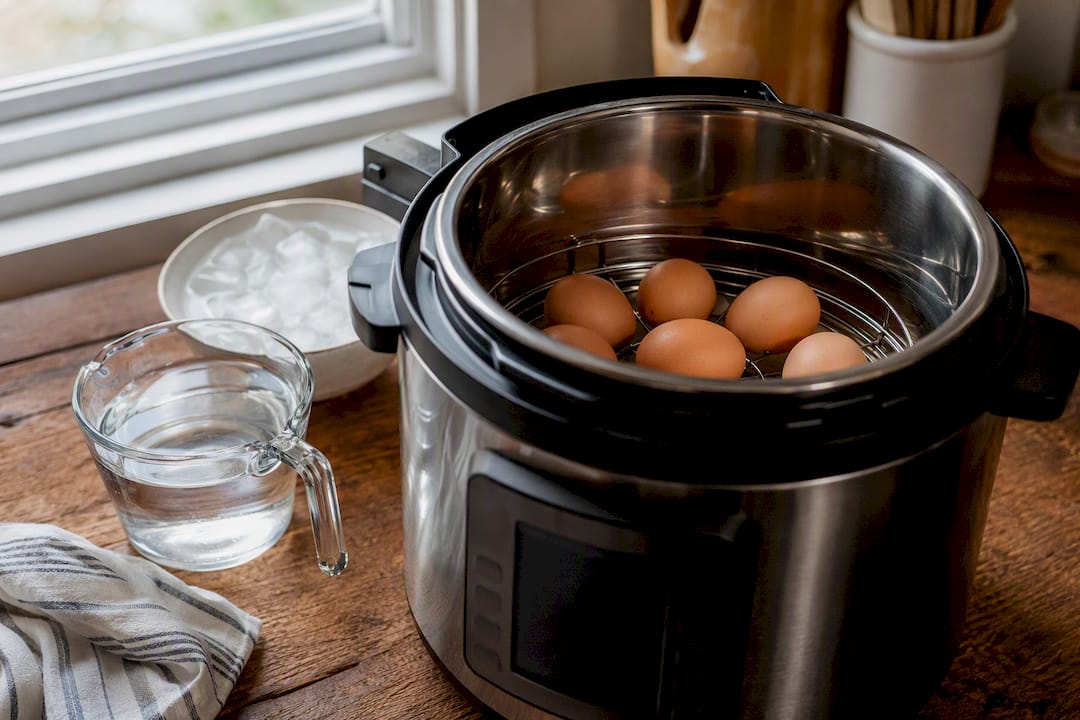
The 5-5-5 method is the fastest route to perfect Instant Pot hard boiled eggs: add 1 cup of water, set eggs on a trivet, pressure cook on high for 5 minutes, natural release for 5 minutes, then plunge them into an ice bath for 5 minutes. That’s it. This works for 1 to 12 eggs as long as they sit in a single layer, and the timing holds whether you’re making a couple for breakfast or a dozen for meal prep.
- Want jammy, dippable yolks? Cut the pressure time to 4 minutes.
- Want fully firm yolks for deviled eggs or egg salad? Push it to 7 to 9 minutes.
- Everything in between follows the same water, rack, and ice bath setup.
Key Takeaways
Perfect Instant Pot hard boiled eggs come down to one fixed method with one adjustable variable: pressure cook time, everything else stays constant.
| Point | Details |
|---|---|
| Master the 5-5-5 ratio | Use 1 cup water, 5 minutes high pressure, 5-minute natural release, 5-minute ice bath. |
| Adjust only the cook time | Try 4 minutes for jammy yolks or 8 to 9 minutes for fully firm centers. |
| Don’t stack eggs | Keep eggs in a single layer on the trivet to avoid cracks and uneven cooking. |
| Ice bath is non-skippable | Five minutes in ice water stops overcooking and loosens the shell for peeling. |
| Store within 2 hours | Refrigerate unpeeled eggs in a covered container for up to a week; don’t freeze them. |
Table of Contents
- Ingredients and Equipment for Instant Pot Boiled Eggs
- How to Cook Eggs in an Instant Pot Step by Step
- How Long Should You Cook Eggs for Each Yolk Texture?
- Why Do Instant Pot Eggs Peel So Easily?
- How to Store and Use Your Hard Boiled Eggs
- Why Hearthlyrecipes Trusts the 5-5-5 Method
- Fast, Foolproof Eggs: What Actually Matters Most
- Sources
- FAQ
Ingredients and Equipment for Instant Pot Boiled Eggs
You need less than you think. Grab 1 cup of water (check your model’s manual, since some smaller pressure cookers require a slightly different minimum liquid amount to build pressure safely) and a trivet or steamer basket to keep the eggs off the bottom of the pot. No trivet? A metal steaming basket or even a makeshift foil sling works fine.
Use large eggs straight from the refrigerator. Cold eggs are the standard for these timings; room-temperature eggs will cook slightly faster, which throws off the texture you’re aiming for. You’ll also need a bowl of ice water for the cooldown.
- 1 cup water (baseline for a 6-quart Instant Pot)
- Trivet, steam rack, or steamer basket
- 6 to 12 large eggs, cold
- Large bowl with ice and cold water
A 6-quart model comfortably holds a dozen eggs in one layer; an 8-quart can sometimes fit a few more. Either way, don’t stack eggs on top of each other. Stacking increases the odds of cracked shells and uneven cooking, according to Simply Recipes.
How to Cook Eggs in an Instant Pot Step by Step
Step 1: Set up the pot. Pour 1 cup of water into the inner pot and place the trivet on top. Arrange your eggs in a single layer on the trivet, spacing them so they aren’t touching if possible. Don’t drop them in from a height. Setting them down gently reduces cracks before cooking even starts.
Step 2: Seal and cook. Lock the lid and make sure the pressure valve is turned to Sealing. Select Manual or Pressure Cook and set the timer for 5 minutes at high pressure. Skip the automatic “Egg” preset if your model has one. Inspired Taste recommends dialing in High Pressure manually instead, since it gives you exact control over the cook time rather than relying on a preset you can’t adjust.
Step 3: Release pressure in two stages. Once the timer beeps, leave the pot completely alone for a 5-minute natural release. Don’t touch the valve. After 5 minutes, manually release any remaining pressure by carefully turning the valve to Venting, keeping your hand and face clear of the steam.
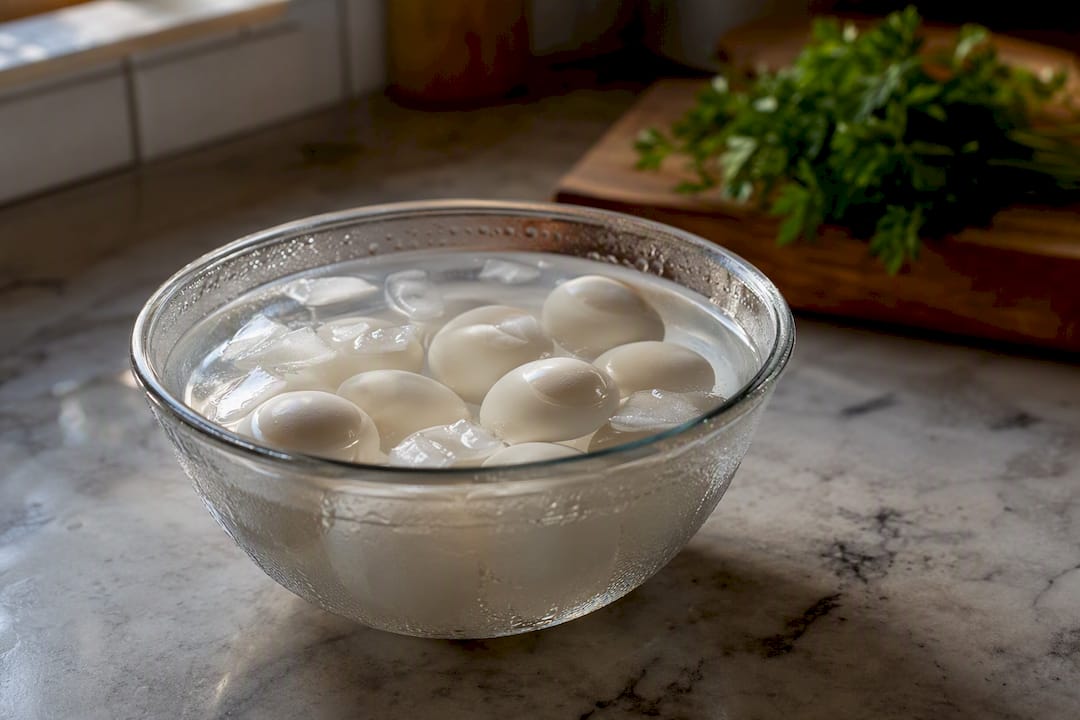
Step 4: Ice bath immediately. As soon as the pin drops, transfer the eggs straight into your ice water bowl. Let them sit for 5 minutes. This step matters more than people realize. It stops the eggs from continuing to cook off residual heat and it shrinks the egg slightly inside the shell, which is exactly what makes peeling so much easier.
Pro Tip: If you only have a few eggs cooking, shave the natural release down to nothing and quick-release instead. Fewer eggs hold less heat, so they’re less likely to overcook during a longer natural release.
That’s the entire method, straight from the recipe Instant Pot’s own team publishes and echoed by outlets like Taste of Home. Stovetop pressure cookers can shave a minute or so off these times since they build pressure faster than most electric models, so if you’re using a stovetop unit, watch your first batch closely and adjust from there.
How Long Should You Cook Eggs for Each Yolk Texture?
Cook time is the only variable that changes your yolk. Everything else in the 5-5-5 method stays fixed.
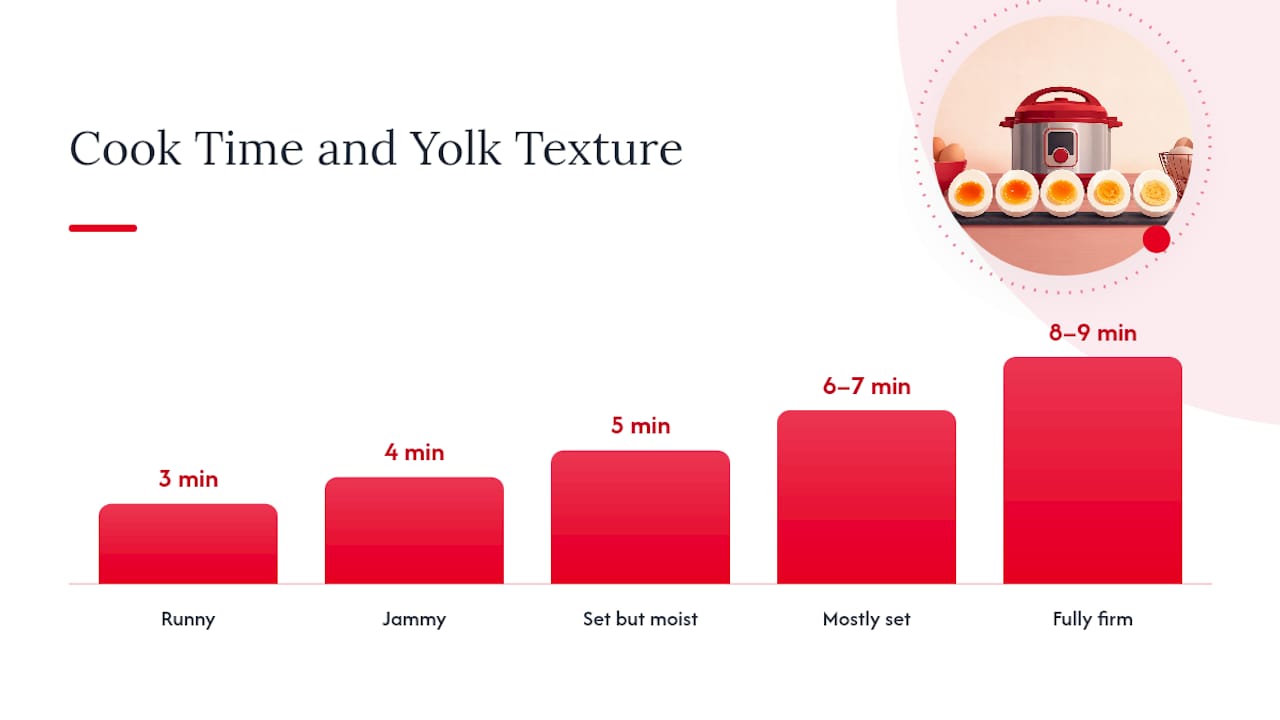
| Pressure Cook Time | Yolk Result |
|---|---|
| 3 minutes | Runny, soft yolk |
| 4 minutes | Jammy with a creamy center |
| 5 minutes | Set but still moist (classic 5-5-5) |
| 6 to 7 minutes | Mostly set, ideal for salads or deviled eggs |
| 8 to 9 minutes | Fully firm yolk all the way through |
Keep in mind the timer only counts once the pot reaches pressure. Electric multicookers typically need 5 to 10 extra minutes to pressurize before the countdown even starts, so your total time in the kitchen will run longer than the number on the display.
If you’re working with extra-large or jumbo eggs instead of large, add 1 to 2 minutes to whichever time you pick. Taste of Home notes that all standard timings assume large eggs as the baseline, and bigger eggs simply need a little more heat to reach the same doneness.
Why Do Instant Pot Eggs Peel So Easily?
Pressure cooking changes the chemistry of the egg just enough to loosen its grip on the shell, and the cold shock from the ice bath finishes the job. The membrane pulls away from the shell more readily than it does after a stovetop boil, which is why Simply Recipes and other pressure-cooker recipes consistently report cleaner peels than traditional methods.
To peel: tap the egg all over on a hard surface, then roll it gently under your palm to crack the shell into a fine web. Start peeling at the wider end, where there’s usually a small air pocket. If shell bits are stubborn, peel under a thin stream of cold running water.
- Cracked shells during cooking are usually caused by eggs banging into each other or the pot. Place them gently and skip the stacking.
- Worried about egg white leaking out of a crack? A tablespoon of vinegar in the water helps the whites set faster if they do escape.
- A greenish ring around the yolk means it sat too long under heat. Move to the ice bath faster next time.
- Rubbery, tough whites usually mean the cook time or natural release ran too long for your egg size.
Pro Tip: A cracked egg isn’t a wasted egg. Peel it right away, even if it looks a little rough, and use it that day in egg salad or on toast.
How to Store and Use Your Hard Boiled Eggs
Get eggs into the refrigerator within 2 hours of cooking. Keep them unpeeled in a covered container, and they’ll stay good for up to a week. Whole hard-boiled eggs don’t freeze well. The texture turns rubbery and watery once thawed, so it’s not worth trying.
Most people eat these cold straight from the fridge. If you want them warm, peel first, then drop the egg into a bowl of hot (not boiling) water for a minute or two, or microwave briefly at low power in short bursts to avoid an eggsplosion.
- Chop into classic egg salad for sandwiches or pitas.
- Halve and fill for deviled eggs at your next gathering.
- Slice over ramen for a quick protein boost.
- Add to breakfast bowls with greens, avocado, and grains.
Why Hearthlyrecipes Trusts the 5-5-5 Method
Hearthlyrecipes builds its collection around recipes that hold up in a real kitchen, not just on paper, and this method fits that standard because it’s simple enough for a beginner and consistent enough for someone cooking eggs weekly for meal prep.
- The timing here matches what Instant Pot’s own recipe team publishes, which is about as close to a manufacturer guarantee as you’ll get for a pressure cooker recipe.
- It scales cleanly from a single egg to a full dozen without changing water amount or cook time.
- If your batch turns out differently than expected, small adjustments (cook time, egg size, release method) fix it fast.
Browse more Instant Pot recipes built with the same testing standard, and let us know how your eggs turn out.
Fast, Foolproof Eggs: What Actually Matters Most
Most advice on hard-boiled eggs obsesses over the wrong variable. People argue about vinegar, baking soda, salt in the water, older eggs versus fresher ones. None of that matters much once you’re using a pressure cooker. What actually determines your outcome is the cook time and the ice bath, full stop. Everything else is folklore carried over from stovetop boiling.
The conventional wisdom that “Instant Pot eggs are hard to dial in” doesn’t hold up either. The method is fixed and the only thing you’re choosing is a number between 3 and 9. That’s a simpler decision than most people expect walking in.
If you take one thing from this: don’t skip or shorten the ice bath to save time. It’s not a garnish step. It’s doing real work, stopping the cook and loosening the shell at the same time. Get that right and the peeling problem that scares people away from hard-boiled eggs mostly disappears.
Sources
- The Perfect Hard Boiled Eggs – Instant Pot
- Pressure-Cooker Hard-Boiled Eggs Recipe — Taste of Home
- How to Make Instant Pot Hard Boiled Eggs — Simply Recipes
- Instant Pot Boiled Eggs Recipe — Inspired Taste
FAQ
What is the 5-5-5 method for Instant Pot eggs?
It means pressure cook on high for 5 minutes, natural release for 5 minutes, then cool in an ice bath for 5 minutes, using 1 cup of water and a trivet for up to a dozen eggs.
How long do you cook eggs in an Instant Pot to hard boil them?
Five minutes at high pressure produces a classic hard-boiled egg with a set but moist yolk; go to 8 or 9 minutes if you want a fully firm center.
What is the 6-6-6 method for Instant Pot eggs?
It’s a variation of the 5-5-5 method using 6 minutes for each stage instead of 5, generally producing a slightly firmer yolk and a bit more margin for larger eggs.
Does the 5-5-5 method work for other yolk textures too?
Yes. Keep the water amount, natural release, and ice bath the same, and just change the pressure cook time, 4 minutes for jammy, 6 to 7 for mostly set, or 8 to 9 for fully firm.
Why are Instant Pot eggs easier to peel than stovetop boiled eggs?
Pressure cooking loosens the membrane’s grip on the shell, and the ice bath shock finishes separating it, which is why pressure-cooked eggs peel more cleanly than most stovetop methods.