Minestrone Soup: Easy, Flexible, and Full of Flavor
TL;DR:
- A hearty minestrone recipe emphasizes building flavor through a layered process, using a soffritto, a Parmesan rind, and careful timing for added ingredients.
- Adjustments for dietary needs include replacing pasta with legumes or grains and omitting cheese, while proper storage ensures the soup maintains quality.
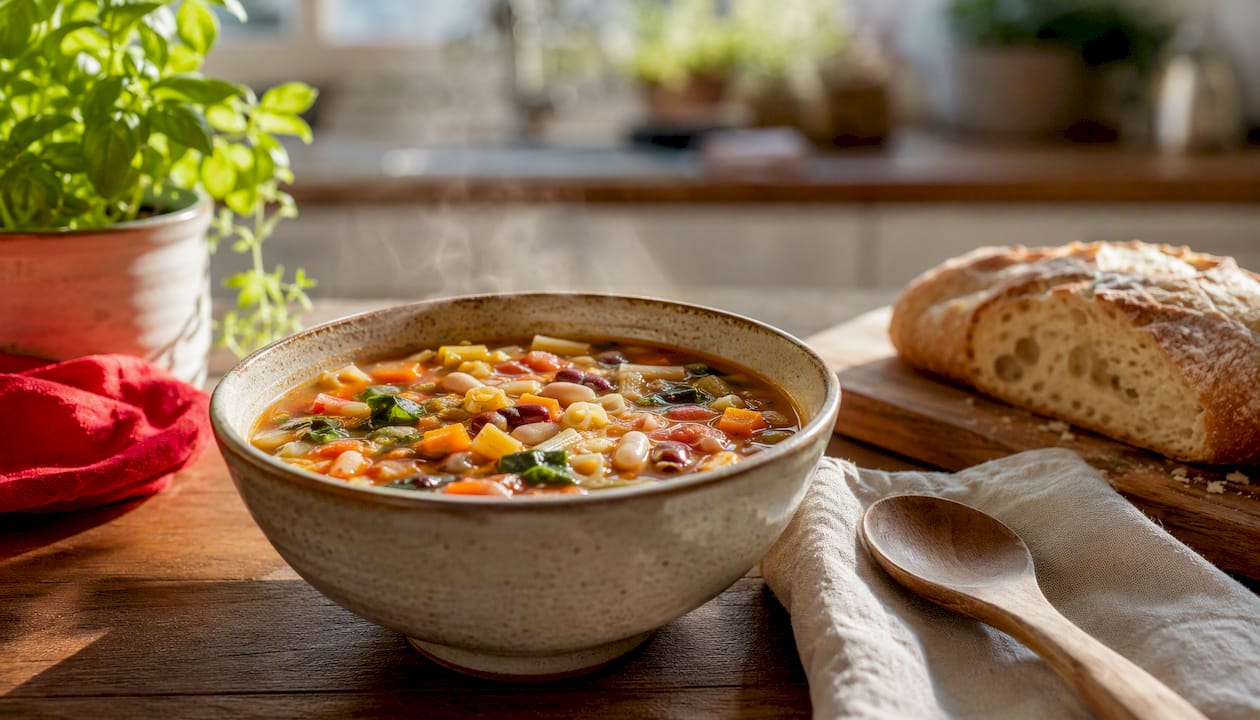
This recipe makes several hearty servings in about an hour, depending on whether you use canned beans and how long you let it simmer. The method is simple: build a soffritto, add tomatoes and beans, simmer with broth, then finish with pasta or greens. That’s it. No meat stock required, no obscure ingredients, and no fixed vegetable list — minestrone has never had a single canonical recipe, which is exactly what makes it one of the most practical soups you can cook.
Quick recipe card:
- Yield: several servings
- Prep time: 15 minutes
- Cook time: roughly half an hour to 45 minutes (quick version with canned beans)
- Method: Soffritto → tomatoes and beans → broth simmer → pasta or greens finish
- Flavor anchor: Parmigiano-Reggiano rind simmered in the broth
- Nutrition note: High in fiber from beans and vegetables; USDA dietary guidelines count legumes as both a protein and a vegetable source
Table of Contents
- What goes into a great minestrone soup?
- What equipment and prep do you need before you start?
- How to make minestrone soup, step by step
- How do you adapt minestrone for different diets?
- What should you serve with minestrone?
- How do you store, freeze, and reheat minestrone?
- Is minestrone soup good for blood sugar?
- What are the secrets to better-tasting minestrone?
- Why does this recipe actually work?
- Key Takeaways
- A note on this recipe
- More recipes worth cooking next
- Useful sources
- FAQ
What goes into a great minestrone soup?
Minestrone has no single fixed recipe — it’s a seasonal, process-driven soup built around a soffritto base, tomatoes, legumes, and a starch. The list below is for a 6-serving batch. Swap freely based on what’s in your fridge.
Soffritto base:
- 1 medium yellow onion, diced
- 2 medium carrots, diced
- 2 stalks celery, diced
- 3 tablespoons extra-virgin olive oil
- 4 garlic cloves, minced
- 2 tablespoons tomato paste
Tomatoes and broth:
- 1 can of whole peeled tomatoes, crushed by hand
- 4–5 cups vegetable or chicken broth
- 1 Parmigiano-Reggiano rind (optional but highly recommended)
Beans and starch:
- 1 can of cannellini beans, drained and rinsed (or cooked beans from dried)
- ¾ cup small pasta (ditalini, elbow, or small shells) — or 1 medium Yukon Gold potato, diced
Vegetables:
- 1 medium zucchini, diced
- 2 cups chopped kale or spinach
- 1 cup green beans, cut into 1-inch pieces (optional)
Herbs and seasoning:
- 1 teaspoon dried oregano
- 1 teaspoon dried thyme (or a fresh sprig)
- Salt and black pepper to taste
- Fresh basil or flat-leaf parsley for finishing
Substitution notes: Dried beans work well and add body to the broth — their cooking liquid is starchy and savory, so reserve it and use it in place of some broth. For a gluten-free version, swap in certified gluten-free pasta or use diced potato instead. Farro or pearl barley can replace pasta for a whole-grain version; both add a nutty chew. For a dairy-free finish, skip the Parmesan rind and drizzle good olive oil or stir in a spoonful of pesto made without cheese.
What equipment and prep do you need before you start?
Getting your mise en place right before the heat goes on saves you from scrambling mid-cook. Minestrone moves in stages, and the vegetables go in at different times, so grouping them beforehand is the single most useful thing you can do.
Equipment you’ll need:
- Dutch oven or large stockpot (at least 6 quarts)
- Chef’s knife and cutting board
- Ladle
- Fine-mesh sieve (if straining bean liquid)
- Four small bowls for staged vegetables
How to organize your vegetables:
Group them by when they go into the pot. Bowl 1 holds your soffritto (onion, carrot, celery) for the very start. Bowl 2 holds longer-cooking vegetables like green beans or diced potato. Bowl 3 holds quick-cooking vegetables like zucchini. Bowl 4 holds greens and fresh herbs for the final two minutes.
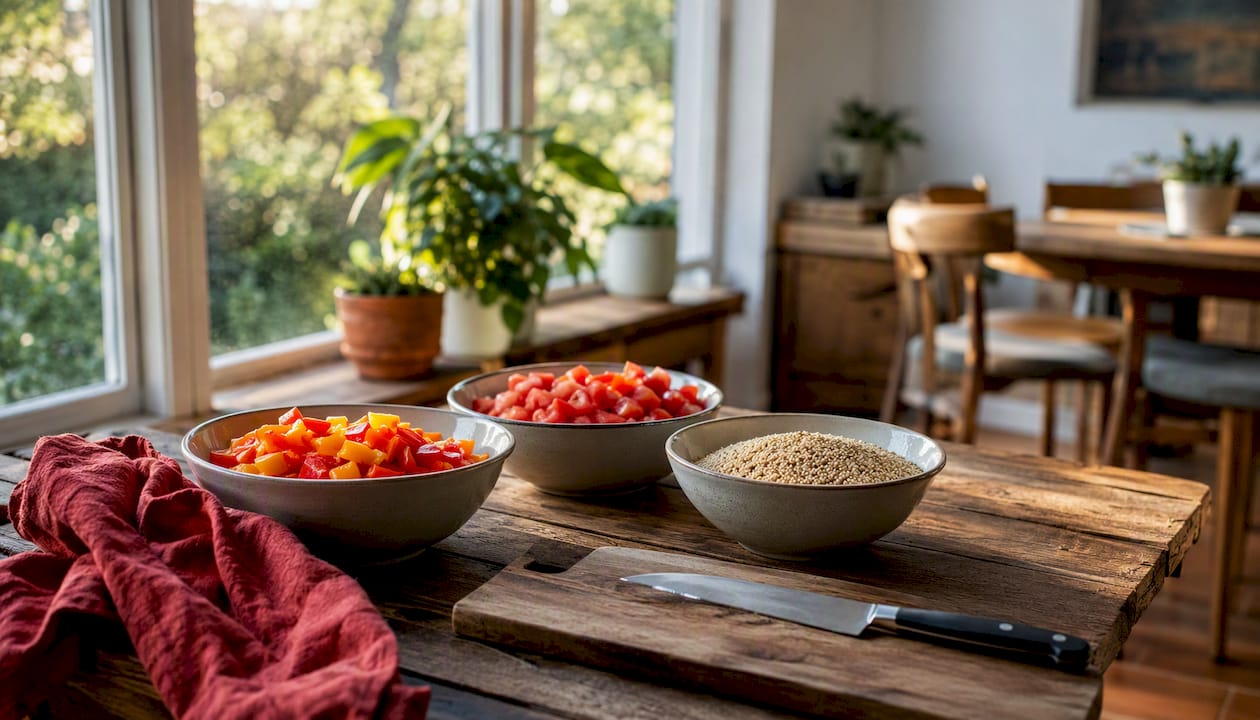
Measure your pasta into a separate bowl and keep it off to the side. If you’re cooking it separately (recommended for leftovers), have a small pot of salted water ready.
Pro Tip: Cut all your vegetables to roughly the same size — about ½ inch. Uneven pieces mean some turn mushy while others stay undercooked. A uniform dice also makes the soup look more finished in the bowl.
For a faster weeknight version, canned beans and frozen vegetable blends cut prep time significantly. Frozen mixed vegetables (carrots, green beans, corn) go straight into the pot without chopping.
How to make minestrone soup, step by step
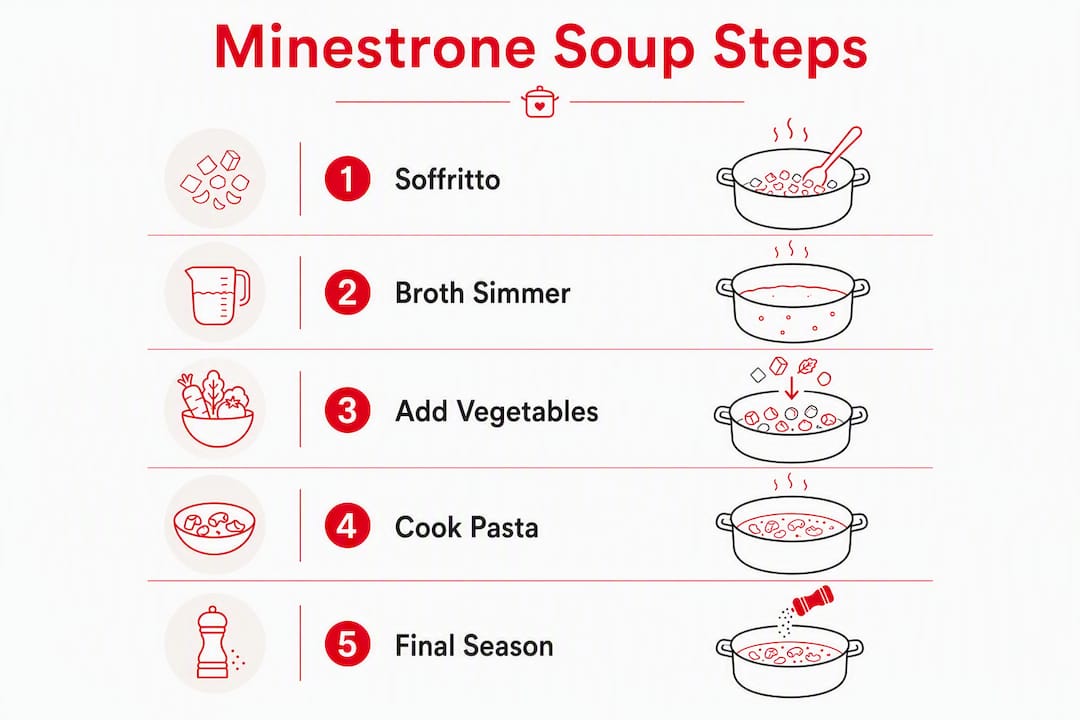
The core technique is layered heat: build flavor in fat, then in liquid, then finish with brightness. Follow the steps below and the soup comes together reliably every time.
- Heat the oil (2 minutes). Warm 3 tablespoons of olive oil in your Dutch oven over medium heat. If you’re adding pancetta or Italian sausage, render it here first until lightly browned, then remove and set aside.
- Cook the soffritto (8–10 minutes). Add onion, carrot, and celery. Cook over medium heat, stirring occasionally, until soft and translucent but not browned. The vegetables should smell sweet and look slightly shrunken.
- Add garlic and tomato paste (2 minutes). Stir in minced garlic and tomato paste. Cook until the paste darkens slightly and smells toasty.
- Add tomatoes and deglaze (3 minutes). Pour in the crushed tomatoes. Scrape up any browned bits from the bottom of the pot.
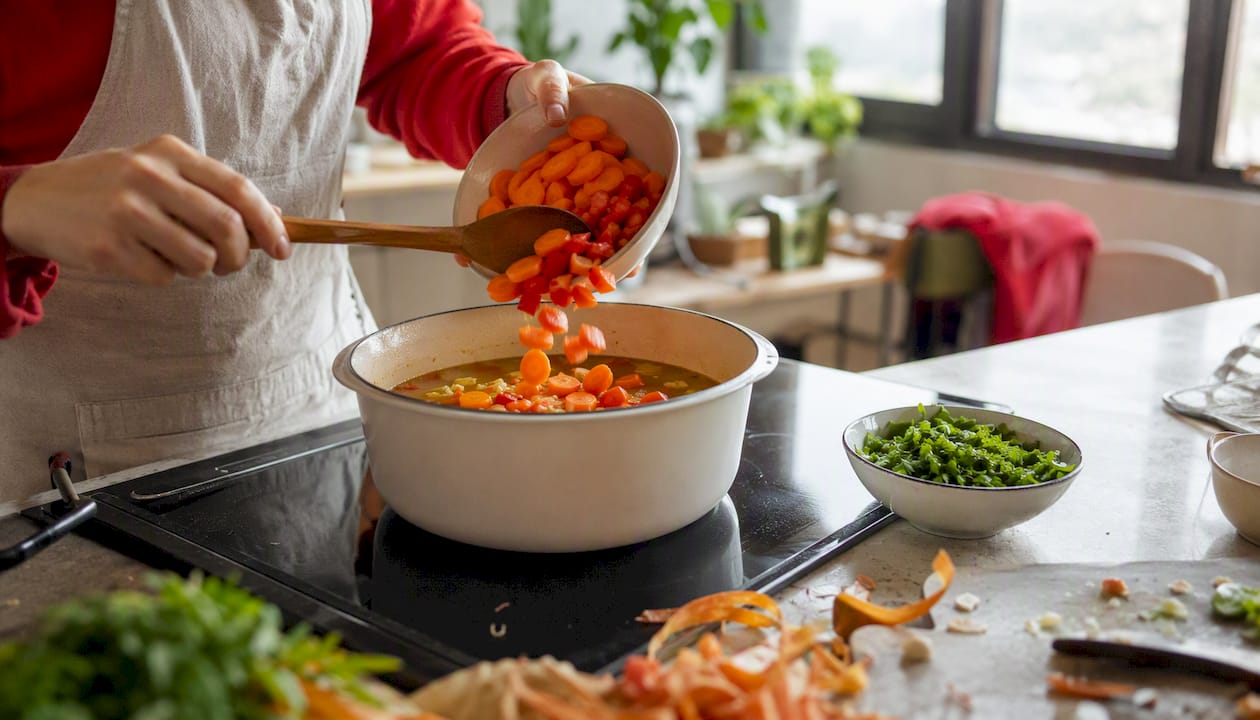
- Add broth, beans, and the Parmesan rind (20–25 minutes). Pour in the broth, add the drained beans and the Parmesan rind if using. Bring to a gentle simmer. Add your longer-cooking vegetables (green beans, potato) now. Simmer uncovered for 20–25 minutes.
- Add pasta and quick-cooking vegetables (10–12 minutes). Stir in the zucchini and pasta. Add pasta only in the final 10–15 minutes if the soup will be eaten right away — any longer and it turns gluey.
- Finish with greens and herbs (2 minutes). Stir in kale or spinach and fresh basil. Remove the Parmesan rind. Taste and adjust salt.
- Serve immediately with a drizzle of olive oil or a spoonful of basil pesto.
Timing at a glance: soffritto takes the longest at 8–10 minutes; the broth simmer is 20–25 minutes; pasta and quick vegetables add another 10–12 minutes. Total active time is about 15 minutes; the rest is mostly hands-off.
Vegetables added in stages preserve texture throughout — root vegetables and green beans go in early, zucchini goes in mid-cook, and greens go in last.
How do you adapt minestrone for different diets?
The core process stays the same across every variation. What changes is the protein source, the starch, and the finishing element.
Vegetarian and vegan: Use vegetable broth and skip the Parmesan rind. To replace that savory depth, add a teaspoon of white miso or a small splash of soy sauce to the broth. Finish with a pesto made without cheese, or just a generous pour of your best olive oil.
Meat-added: Render 3–4 oz of diced pancetta in the pot before the soffritto, or brown crumbled Italian sausage and set it aside to add back in step 5. The rendered fat becomes your cooking fat for the soffritto, which adds a layer of flavor you can’t replicate with oil alone. For a bean and bacon variation, the technique is nearly identical.
Gluten-free: Swap in certified gluten-free short pasta, or skip pasta entirely and use an extra diced potato or a second can of beans. Cooking times stay the same.
Low-carb: Omit pasta and potato. Add an extra cup of zucchini or cauliflower florets in their place. The soup will be thinner, so let it simmer an extra 5 minutes to concentrate the broth.
Whole-grain (barley or farro): Pearl barley needs 30–40 minutes to cook through, so add it at step 5 with the beans. Farro takes 25–30 minutes. Both absorb a lot of liquid, so add an extra cup of broth and check the consistency before serving.
What should you serve with minestrone?
A finishing touch added right before serving does more for the final flavor than an extra 20 minutes of simmering. Pick one or two from the list below.
Finishing options:
- A swirl of basil pesto (about 1 teaspoon per bowl)
- A drizzle of high-quality extra-virgin olive oil
- Freshly grated Parmigiano-Reggiano or Pecorino Romano
- Cracked black pepper
- A small squeeze of lemon juice or a pinch of lemon zest for brightness
What to serve alongside: Crusty sourdough or focaccia for dipping is the classic pairing. A simple arugula salad with lemon and olive oil keeps the meal light. If you’re serving minestrone as a starter, keep portions to about 1 cup; as a main, 1½–2 cups per person works well.
Pro Tip: Add pesto or olive oil to individual bowls, not to the whole pot. Both lose their brightness quickly when heated, and stirring them into a hot pot wastes the flavor you’re trying to add.
For a hearty Italian bowl on a cold night, serve the soup alongside a slice of good bread and a wedge of aged cheese.
How do you store, freeze, and reheat minestrone?
The biggest storage mistake is freezing minestrone with pasta already in it. The pasta absorbs liquid and turns to mush. The fix is simple: cook pasta separately and add it per bowl, or freeze a portion of the soup before adding the pasta.
| Storage method | Duration | Key tip |
|---|---|---|
| Refrigerator (airtight container) | 3–5 days | Thin with broth or water when reheating; soup thickens as it sits |
| Freezer (without pasta) | Up to 1 month | Cool completely before freezing; leave 1 inch of headspace in containers |
| Freezer (with pasta) | Not recommended | Pasta texture degrades significantly after thawing |
Reheating: Warm over medium-low heat on the stovetop, adding a splash of broth if the soup has thickened. Avoid boiling — it overcooks the vegetables that are already tender.
Make-ahead strategy:
- Cook the full soup base (through step 5) and refrigerate up to 3 days before serving
- Add pasta and quick vegetables only when reheating for service
- Freeze in individual portions for easy weeknight meals
Resting overnight in the refrigerator actually improves the soup. The starches, acids, and aromatics meld together, and the flavor rounds out in a way that’s hard to achieve on the day you cook it. Many cooks deliberately make it a day ahead for exactly this reason.
Is minestrone soup good for blood sugar?
Minestrone is one of the more blood-sugar-friendly soups you can make, largely because of its fiber content. Beans and vegetables lower the glycemic impact of the meal, while refined pasta raises it. The swap is straightforward: use whole-grain pasta, add extra legumes, or skip the pasta entirely.
| Ingredient choice | Effect on glycemic load | Notes |
|---|---|---|
| Canned beans (drained) | Lower | Convenient; rinse to reduce sodium |
| Dried beans (cooked from scratch) | Lower | Bean-cooking liquid adds starchy body to broth |
| Refined white pasta | Higher | Raises glycemic load; fine in moderation |
| Whole-grain pasta | Moderate | More fiber; slightly longer cook time |
| No pasta (extra beans or potato) | Lower to moderate | Potato has moderate glycemic index; beans are lower |
| Vegetable broth | Lower sodium | Watch sodium on labels; low-sodium versions available |
| Water + Parmesan rind | Lowest sodium | Rind adds flavor without added salt |
For anyone managing blood sugar, the most effective single change is replacing refined pasta with an extra half-can of cannellini beans. You keep the body and texture of the soup without the glycemic spike.
What are the secrets to better-tasting minestrone?
Flat-tasting minestrone almost always comes down to one of three problems: an underdeveloped soffritto, no umami anchor in the broth, or no brightness at the finish. Here’s how to fix each one.
Layered flavor from the start: The soffritto needs a full 8–10 minutes over medium heat. Rushing it produces a sharp, raw-onion flavor that never fully cooks out. The tomato paste should darken and stick slightly to the pan before you add liquid — that caramelization is where a lot of the depth comes from.
Umami anchor: Simmering a Parmesan rind releases fat-soluble proteins that create a savory backbone similar to what meat stock provides. If you don’t have a rind, a teaspoon of white miso stirred in at the end achieves a similar effect. Bean-cooking liquid from dried beans also contributes starchy, savory depth — don’t discard it.
Texture fixes: If your pasta is already mushy, there’s no rescuing it in the pot. Pull the pasta out if possible, or serve the soup over freshly cooked pasta in the bowl next time. For overcooked greens, add a fresh handful of spinach right before serving — it wilts in 60 seconds and restores the color.
Fixing bland broth: Add salt in stages, not all at once. Taste after the soffritto, after adding the tomatoes, and again at the end. A small squeeze of lemon juice or a splash of red wine vinegar at the finish lifts the whole pot. Then add pesto or olive oil per bowl.
Pro Tip: If the soup tastes flat even after salting, the problem is usually acid, not salt. Add lemon juice or a small splash of white wine vinegar before reaching for more salt.
Why does this recipe actually work?
The recipe balances savory depth from aromatics and bean starch with brightness from finishing elements — and the timing of each addition is what makes that balance achievable without a long simmer.
The soffritto provides the aromatic foundation. The Parmesan rind adds umami without meat stock. The bean-cooking liquid (or the starch from canned beans) thickens the broth naturally and gives it body. None of these require extra time — they’re built into the process.
Pasta timing is the most common point of failure in home-cooked minestrone. Adding pasta only in the last 10–15 minutes keeps it al dente when the soup is fresh. For leftovers, cooking pasta separately and adding it per bowl is the only reliable method.
The choice between a quick simmer (30–35 minutes total) and a longer one (60+ minutes) changes the texture more than the flavor. A longer simmer breaks down the vegetables further and produces a thicker, more cohesive broth. A quick simmer keeps the vegetables distinct and the broth lighter. Both are correct — it depends on what you want.
Pro Tip: Make the soup base a day ahead and refrigerate it overnight without the pasta. The flavor improves noticeably after resting, and you can add fresh pasta when you reheat it.
Key Takeaways
A great minestrone soup comes down to three things: a properly cooked soffritto, a savory broth anchor like a Parmesan rind or bean liquid, and a bright finishing element added per bowl.
| Point | Details |
|---|---|
| Build the soffritto slowly | Cook onion, carrot, and celery for 8–10 minutes over medium heat before adding anything else. |
| Add pasta late | Stir in pasta only in the final 10–15 minutes, or cook it separately and add per bowl to prevent mushiness. |
| Use a flavor anchor | A Parmesan rind or reserved bean-cooking liquid adds savory depth without meat stock. |
| Finish with brightness | Add pesto, lemon juice, or good olive oil to individual bowls right before serving, not to the whole pot. |
| Hearthlyrecipes approach | This tested recipe treats minestrone as a flexible process, with timing cues and finishing techniques for consistent results. |
A note on this recipe
Testing this version came down to one central question: how do you get real depth of flavor without a long simmer or a meat-based stock? The answer turned out to be less about ingredients and more about sequence — the soffritto, the Parmesan rind, the finishing pesto. Get those three right and the soup tastes like it cooked for hours, even when it didn’t.
If you try this recipe, I’d love to hear what vegetables you used and whether you made any swaps. Minestrone is one of those soups that genuinely improves with your own adjustments, and reader variations are always worth sharing.
More recipes worth cooking next
Minestrone is a great entry point into a whole category of one-pot, vegetable-forward meals that are just as flexible and satisfying. Hearthlyrecipes has a full collection of tested soup and stew recipes that follow the same flavor-first approach — from brothy weeknight bowls to thick, hearty stews.
If you’re planning a full dinner around this soup, the easy dinner recipes category has weeknight mains that pair well with a bowl of minestrone as a starter. And if you want to browse everything in one place, the full recipe collection at Hearthlyrecipes is organized by cooking method, dietary preference, and cuisine — easy to navigate when you know what you’re in the mood for.
Useful sources
These are the sources used for technique, timing, and nutrition claims throughout this article:
- The Best Minestrone Soup — Serious Eats: Covers the Parmesan rind technique, pasta timing, and the process-first approach to building flavor without meat stock.
- Classic Minestrone — America’s Test Kitchen: Test-kitchen authority on finishing techniques (pesto, olive oil) and pasta handling for texture control.
- Classic Minestrone Soup — The Kitchn: Staged vegetable additions and storage guidance (3–5 days refrigerated, 1 month frozen without pasta).
- Minestrone Soup Recipe — Food Network: Quick-version strategy using canned beans and frozen vegetables for a 45–60 minute total time.
- The 5 Best Soups for Better Blood Sugar — EatingWell: Dietitian-backed guidance on fiber, glycemic load, and pasta swap recommendations.
- Minestrone — Wikipedia: Background on the soup’s Italian origins and its defining characteristic as a seasonal, variable recipe.
FAQ
What is the secret ingredient in minestrone soup?
A Parmesan rind simmered in the broth is the most effective single addition — it releases umami-rich fats and proteins that give the soup a savory depth usually associated with meat stock. White miso is a good substitute if you don’t have a rind.
What usually goes in minestrone soup?
The core components are a soffritto (onion, carrot, celery), canned or fresh tomatoes, beans (typically cannellini or borlotti), broth, and a starch like small pasta or diced potato. Seasonal vegetables like zucchini, green beans, and leafy greens round it out.
Does minestrone soup raise blood sugar?
The beans and vegetables in minestrone are high in fiber, which slows glucose absorption. Refined pasta raises the glycemic load, so replacing it with whole-grain pasta or extra legumes is the most effective swap for better blood sugar management.
What makes minestrone soup taste better?
Three things make the biggest difference: a fully cooked soffritto (8–10 minutes, not rushed), a savory anchor in the broth like a Parmesan rind or bean-cooking liquid, and a bright finishing element like basil pesto, lemon juice, or good olive oil added per bowl right before serving.