No Bake Cheesecake: Easy, Foolproof Recipe
TL;DR:
- A no bake cheesecake uses cream cheese and whipped cream or condensed milk, setting within hours in the refrigerator. Proper use of block cream cheese, thorough whipping, and minimum six-hour chilling are essential for firm, sliceable results. The dessert benefits from make-ahead preparation, offering reliable texture and flavor without oven or water bath.
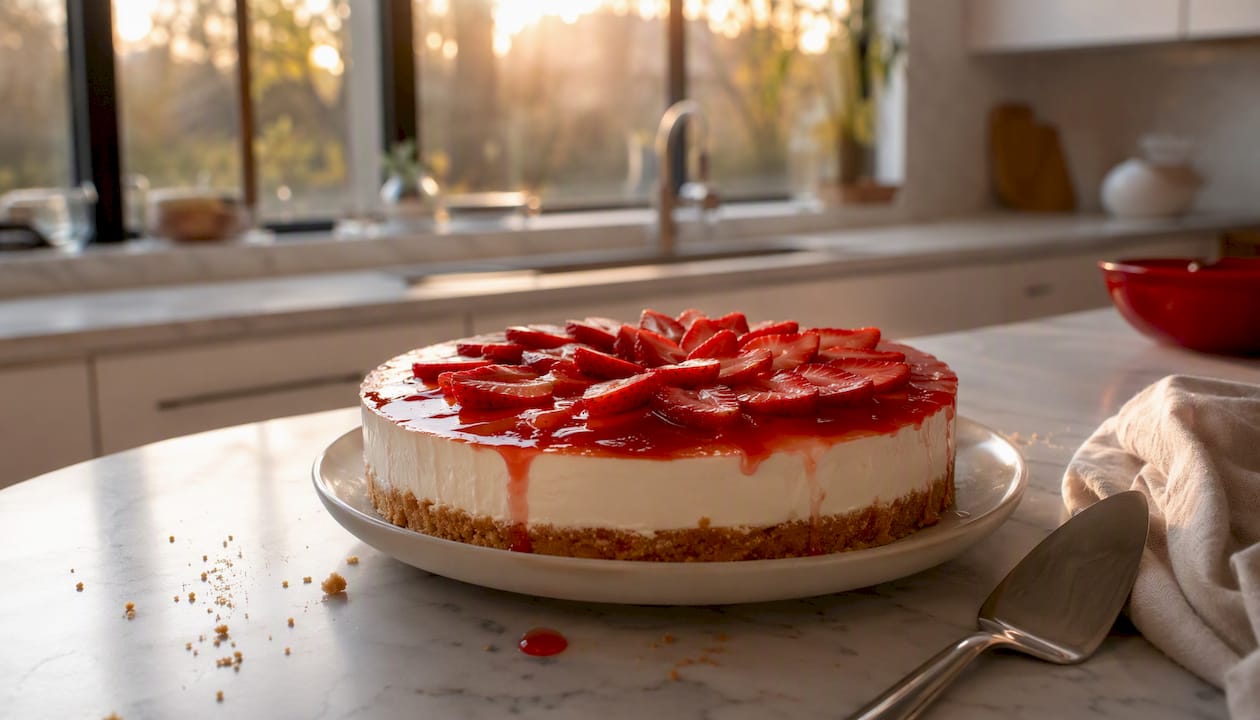
A no bake cheesecake sets in your refrigerator using cream cheese and whipped cream (or sweetened condensed milk) with no eggs, no water bath, and no oven required. The result is a silky, sliceable dessert that most home cooks pull off on the first try.
Quick recipe at a glance (9-inch cheesecake, serves a dozen or so):
- Crust: 1½ cups graham cracker crumbs + 6 tbsp melted butter + 3 tbsp sugar
- Filling (whipped-cream method): 16 oz block cream cheese (room temp) + 1 cup powdered sugar + 1 tsp vanilla + 1 cup cold heavy cream, whipped to stiff peaks
- Filling (condensed-milk method): 8 oz block cream cheese + one 14-oz can sweetened condensed milk + ⅓ cup fresh lemon juice + 1 tsp vanilla
- Active time: 20 minutes. Chill time: minimum 6 hours, ideally overnight.
The whipped-cream version delivers a mousse-like, lightly tangy filling that slices cleanly after an overnight chill. The condensed-milk version sets slightly faster but still benefits from a longer chill; aim for at least 6 hours, ideally overnight, for clean slices and optimal texture.
Table of Contents
- What goes into a no bake cheesecake?
- What equipment do you actually need?
- How to make no bake cheesecake step by step
- Why is my no bake cheesecake runny, and how do you fix it?
- Variations and toppings worth trying
- How far ahead can you make this, and how do you store it?
- Key Takeaways
- The case for no-bake over baked cheesecake
- Hearthlyrecipes has the tested recipe ready for you
- Useful sources
- FAQ
What goes into a no bake cheesecake?
Crust ingredients
The classic no bake cheesecake crust needs just three things: graham cracker crumbs, melted butter, and granulated sugar. For a 9-inch pan, use typical proportions of crumbs, butter, and sugar as suggested in recipes like the Authentic Pre-Cooked Neapolitan Pizza Bases for crusts and bases. Press the mixture firmly up the sides about 1 inch.
Reliable crust swaps:
- Biscoff cookies: richer, caramel-spiced flavor; skip the added sugar
- Oreos (filling removed): deeper chocolate note; use the same crumb-to-butter ratio
- Shortbread or vanilla wafers: milder, buttery base that lets the filling shine
Filling ingredients and two tested approaches
Whipped-cream method (light, mousse-like texture):
- 16 oz block cream cheese, room temperature
- 1 cup powdered sugar
- 1 tsp vanilla extract
- 1–2 tbsp fresh lemon juice or sour cream (for tang)
- 1 cup cold heavy whipping cream
Whipping cold heavy cream to stiff peaks and folding it into the cream cheese base gives the filling its structure. The air you trap in the cream is doing real structural work here.
Condensed-milk method (denser, sweeter, faster set):
- 8 oz block cream cheese
- 14-oz can sweetened condensed milk
- ⅓ cup fresh lemon juice
- 1 tsp vanilla extract
The acid in the lemon juice reacts with the milk proteins to help the filling firm up. This is the classic Eagle Brand approach, and it works.
Substitutions worth knowing
Always use block (brick) cream cheese, not the tub variety. Tub cream cheese contains extra moisture and stabilizers that prevent the filling from setting firmly. Cool Whip can replace freshly whipped heavy cream in a pinch, though it adds sweetness and alters texture somewhat. Gelatin (one packet bloomed in cold water, then dissolved) can be whisked into either filling for extra stability when you need to transport the cheesecake.
| Ingredient | Standard | Swap | Trade-off |
|---|---|---|---|
| Graham crackers | 1½ cups crumbs | Biscoff, Oreo, shortbread | Flavor change; adjust sugar |
| Block cream cheese | 16 oz | None recommended | Tub type won’t set firmly |
| Heavy cream | 1 cup cold | Cool Whip (8 oz) | Sweeter, softer texture |
| Fresh lemon juice | 2–3 tbsp | Bottled (condensed-milk method only) | Slightly flatter flavor |
What equipment do you actually need?
A 9-inch springform pan is a common choice for easy unmolding, though a regular pie dish works as well. A regular 9-inch pie dish works too, but you’ll serve directly from the dish.
Equipment checklist:
- 9-inch springform pan (preferred) or deep pie dish
- Hand mixer or stand mixer (paddle then whisk attachments)
- Food processor or a zip-lock bag and rolling pin for crumbs
- Offset spatula for smoothing the top
- Measuring cups and a kitchen scale (optional but helpful)
Prep steps before you start: Bring block cream cheese (and sour cream if used) to room temperature for at least an hour or two. Cold cream cheese lumps badly and you’ll never fully smooth it out. Keep the heavy cream refrigerator-cold until the moment you whip it.
Pro Tip: After pressing the crust into the pan, pop it in the freezer for 10–15 minutes instead of the fridge. It firms faster and holds its shape better when you pour in the filling. When serving, run a thin knife under hot water and dry it before each slice for clean cuts.
How to make no bake cheesecake step by step
Step 1: Make the crust
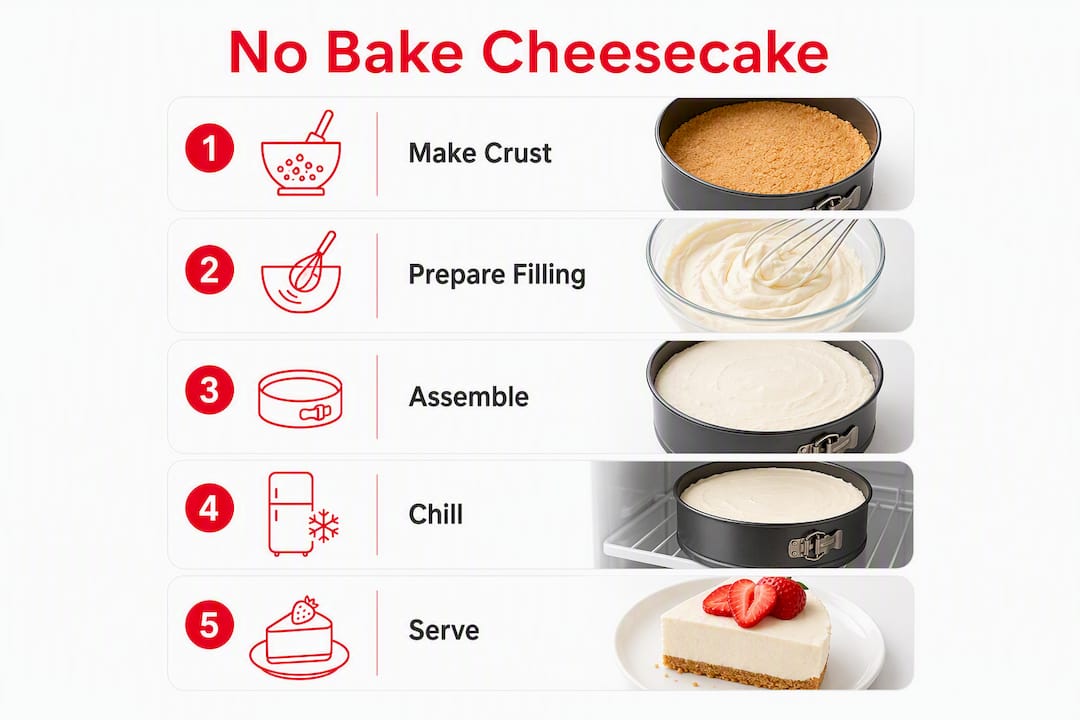
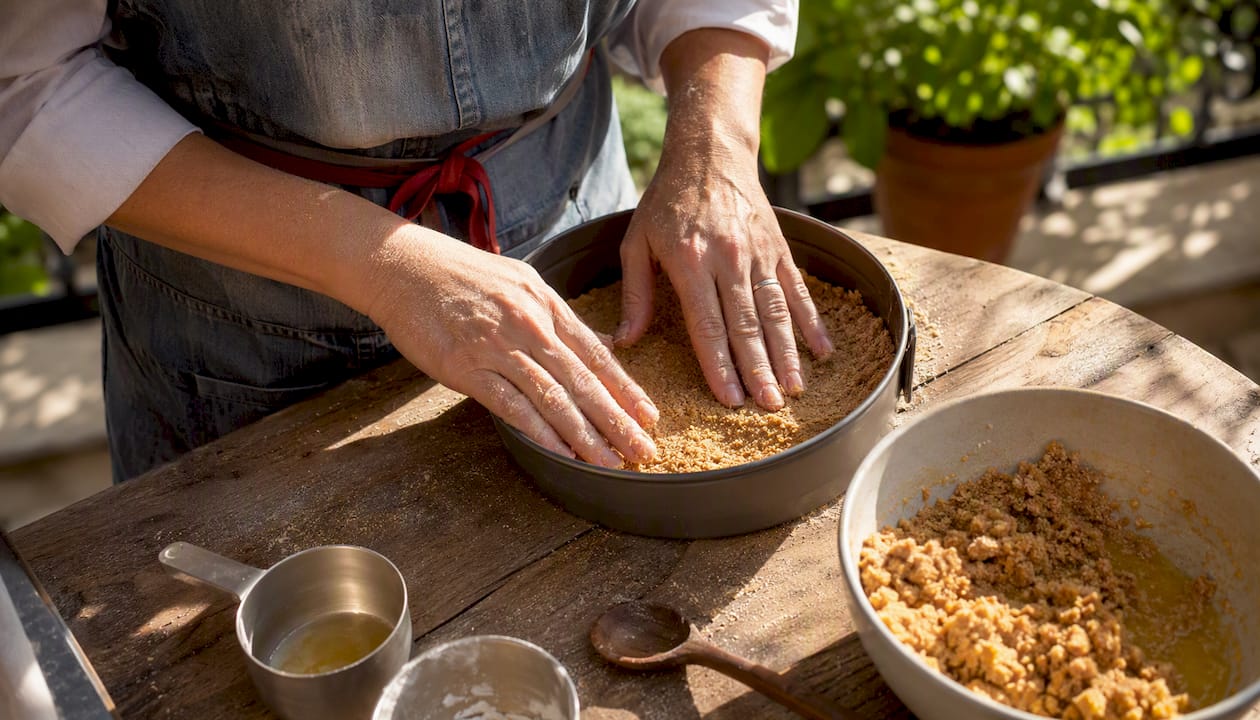
Pulse graham crackers or chosen cookies in a food processor until fine and even. Mix in melted butter and sugar until the crumbs hold together when squeezed. Press firmly into the bottom and about 1 inch up the sides of the springform pan using the flat bottom of a measuring cup. Chill the crust in the freezer or refrigerator briefly to firm it before adding filling.
Step 2: Prepare the filling
Method A (whipped cream): Beat room-temperature cream cheese until completely smooth. Add powdered sugar, vanilla, and lemon juice; beat another minute. In a separate bowl, whip cold heavy cream to stiff peaks. Gently fold the whipped cream into the cream cheese mixture in two additions, keeping as much air as possible.
Method B (condensed milk): Beat room-temperature cream cheese until smooth. With the mixer running on low, slowly pour in the sweetened condensed milk. Add lemon juice and vanilla; mix until fully combined and slightly thickened.
Step 3: Assemble and chill
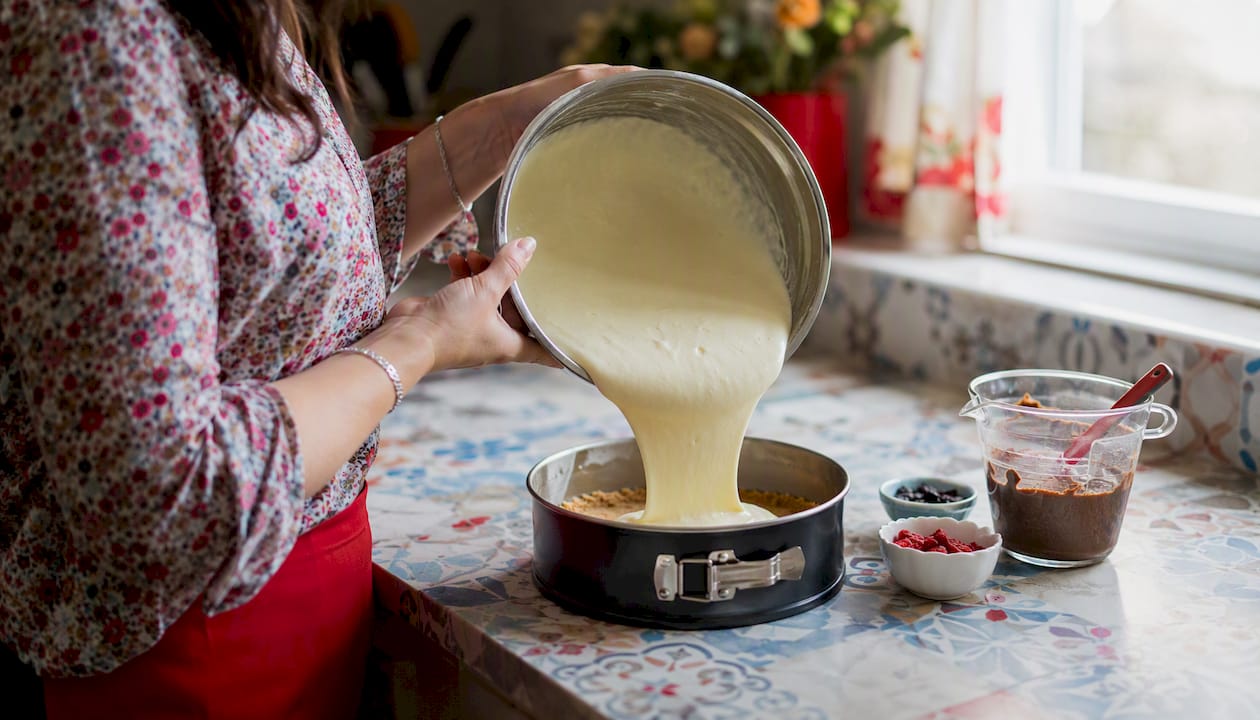
Pour the filling over the chilled crust and smooth the top with an offset spatula. Cover and refrigerate to chill until set.
| Step | Active time | Chill time |
|---|---|---|
| Crust | 5 min | 10–15 min (freezer) |
| Filling | 10–15 min | — |
| Full cheesecake | — | Minimum 6 hours, ideally overnight to a full day. |
Step 4: Unmold and serve
Run a thin knife around the inside edge of the pan before releasing the springform latch. Add toppings just before serving. For clean slices, warm the knife under hot water and wipe it dry between each cut.
Pro Tip: Fold the whipped cream into the cream cheese base with a wide rubber spatula using slow, sweeping motions from the bottom up. Stirring deflates the cream and you lose the light texture you worked to build.
Why is my no bake cheesecake runny, and how do you fix it?
No-bake cheesecakes set through chilled fat solidification and air structure, not egg-protein coagulation the way baked versions do. That means the filling is more sensitive to a few specific mistakes.
Common causes of a runny filling:
- Cold cream cheese that never fully smoothed out, leaving lumps that break down the structure
- Under-whipped cream (soft peaks instead of stiff peaks)
- Using tub cream cheese instead of block
- Not enough acid or stabilizer in the condensed-milk method
- Cutting into the cheesecake before it has chilled long enough
Rescue fixes, in order:
- Chill longer first. If it’s been less than 6 hours, give it more time. Many “runny” cheesecakes just need another 4–6 hours.
- Add dissolved gelatin. Bloom one packet of unflavored gelatin in 2 tablespoons cold water for 5 minutes, then gently warm until dissolved. Let it cool slightly, whisk it into the filling, and return to the fridge.
- Fold in extra whipped cream. Whip ½ cup cold heavy cream to stiff peaks and fold it into the filling to add structure.
- Brief freezer stint. Place the cheesecake in the freezer for 30–45 minutes, then move it back to the fridge. Don’t leave it longer or the texture turns icy.
Pro Tip: Before releasing the springform latch, gently shake the pan. The center should jiggle slightly like firm Jell-O, not slosh like liquid. If it sloshes, it needs more time.
Variations and toppings worth trying
Mini cheesecakes: Line a standard muffin tin with cupcake liners, press 1–2 tablespoons of crust mixture into each, and fill. Chill time for mini cheesecakes should be at least 6 hours for reliable structure, though the smaller size sometimes allows for slightly shorter chilling.
Cool Whip version: Swap the whipped heavy cream for an 8-oz tub of Cool Whip. The cheesecake sets reliably and takes less effort, but it’s noticeably sweeter and the texture is softer. Good for a quick weeknight dessert; less impressive for a dinner party.
Chocolate layer: Pour a thin layer of ganache (equal parts heavy cream and melted chocolate chips, cooled) over the set filling and chill 30 more minutes before serving. For a lemon-blueberry variation, spoon blueberry compote over the top right before serving.
Fruit toppings: Fresh strawberries, blueberry compote, or lemon curd all work well. Add wet toppings just before serving, not during the chill, or they can soften the top layer.
Crust swaps and timing: Biscoff and Oreo crusts behave the same as graham cracker in terms of chilling. Shortbread crumbles more easily, so press it especially firmly and freeze the crust for the full 15 minutes. For more cheesecake-style dessert ideas, the apple crumble cheesecake on Hearthlyrecipes shows how layered textures work in a chilled format.
How far ahead can you make this, and how do you store it?
The long chill time is a feature, not a drawback. Making the cheesecake the night before a gathering frees up your day and actually improves the texture.
Make-ahead and storage:
- Refrigerator: Best made a day or two ahead and stored covered in the refrigerator.
- Freezer: Wrap the whole cheesecake (or individual slices) tightly in plastic wrap, then foil. Freeze for up to 3 months. Thaw overnight in the refrigerator, never at room temperature.
- Transport: Keep the cheesecake in the springform pan until you arrive. Pack it in a cooler with ice packs and limit room-temperature exposure to under 2 hours total (the standard U.S. food safety guideline for perishable dairy).
- Crust prep: If making very far ahead, press and freeze the crust separately and add the filling the day before serving.
The USDA recommends keeping perishable dairy-based desserts refrigerated and discarding anything left at room temperature for more than 2 hours.
Key Takeaways
A no bake cheesecake sets reliably with block cream cheese, properly whipped cold heavy cream, and a minimum 6-hour refrigerator chill, with overnight producing the cleanest slices.
| Point | Details |
|---|---|
| Use block cream cheese | Tub-style cream cheese contains extra moisture and won’t set firmly; always use brick. |
| Chill time is non-negotiable | Minimum 6 hours; overnight chill gives the best texture and clean slices. |
| Whip cream to stiff peaks | Under-whipped cream is the top cause of a soft, runny filling. |
| Hot-knife slicing | Warm the blade under hot water and dry between cuts for clean, presentation-ready slices. |
| Hearthlyrecipes tested recipes | The Hearthlyrecipes dessert collection includes tested, make-ahead cheesecake and related recipes. |
The case for no-bake over baked cheesecake
Most baking guides treat the no-bake version as a shortcut, a lesser cousin to the “real” baked cheesecake. That framing misses the point. No-bake cheesecake is a structurally different dessert, and for home cooks, it’s often the better choice on purpose.
Baked cheesecake demands precision: exact oven temperature, a water bath to prevent cracking, a slow cool-down, and still a reasonable chance of a sunken center. The no-bake version trades thermal protein setting for chilled fat and air structure, which means the margin for error is genuinely wider. You can’t overbake it. There’s no crack to worry about.
What people underestimate is how much the overnight chill improves the flavor. The filling tightens, the tang from the lemon or sour cream deepens, and the crust firms without going soggy. The refrigerator is doing real work, not just holding the dessert until you’re ready. Hearthlyrecipes tests recipes with this make-ahead logic built in, which is why the timing guidance here reflects what actually works at home, not just what looks good on a recipe card.
For hosting, the no-bake method is simply smarter. You make it the night before, your oven stays free, and you serve a dessert that’s genuinely better for having rested.
Hearthlyrecipes has the tested recipe ready for you
The full tested no bake cheesecake recipe, with step-by-step photos and reader-rated results, lives on Hearthlyrecipes alongside dozens of related cake and dessert recipes built for home cooks who want reliable results without complicated techniques.

Every recipe on Hearthlyrecipes goes through real testing before it’s published, so the chill times, ratios, and troubleshooting tips you read here reflect what actually works in a home kitchen. Browse the full dessert collection for more make-ahead ideas, fruit-topped variations, and easy cheesecake bars. Pick a recipe, check what’s in your fridge, and make it tonight.
Useful sources
- Easy No-Bake Cheesecake | Simply Recipes — Technique explanation for how no-bake cheesecakes set without eggs; gelatin stabilization method.
- Eagle Brand Cheesecake | PastryWiz — Classic 5-ingredient condensed-milk recipe and minimum chill time guidance.
- Easy No-Bake Cheesecake | Once Upon a Chef — Make-ahead and freezer-friendly guidance; overnight chill recommendation.
- No-Bake Cheesecake | Martha Stewart — Block vs. tub cream cheese distinction and filling stability notes.
- Perfect No-Bake Cheesecake | Sally’s Baking Addiction — Whipped-cream method detail; stiff-peak technique and folding guidance.
- No-Bake Cheesecake | New York Times Cooking — Hot-knife slicing tip and presentation guidance.
FAQ
What are the ingredients in a 3-ingredient no bake cheesecake?
The simplest version uses cream cheese, sweetened condensed milk, and lemon juice. The acid in the lemon juice helps the filling firm as it chills, no eggs or gelatin needed.
What do you need for a standard no bake cheesecake?
You need block cream cheese, a sweetener (powdered sugar or condensed milk), vanilla, lemon juice or sour cream for tang, and either cold heavy cream or Cool Whip for structure, plus a graham cracker crust.
How do you use Philadelphia cream cheese for a no bake cheesecake?
Bring the block to room temperature for at least 1–2 hours, then beat it until completely smooth before adding any other ingredients. Cold cream cheese will leave lumps that no amount of mixing will fully fix.
What are the most common no bake cheesecake mistakes?
The top mistakes are using tub cream cheese instead of block, not whipping the heavy cream to stiff peaks, and cutting the cheesecake before it has chilled for at least 6 hours. A runny filling is almost always one of these three problems.