The Slow Cooker Beef Stew That Actually Turns Out Right
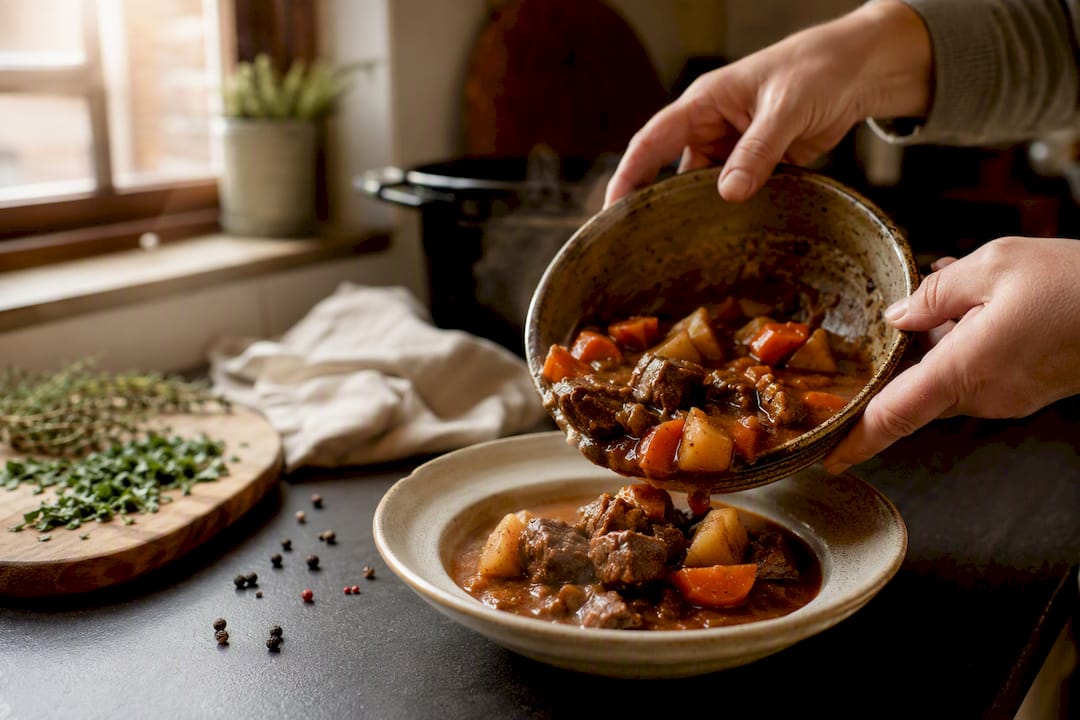
Use chuck roast, cook it low for several hours (or high for a shorter period), and don’t skip the sear if you want real depth of flavor. That’s the whole verdict. This slow cooker beef stew feeds a group, takes around a half hour of hands-on prep, and the rest is the slow cooker doing the work while you go live your life.
The single step that separates a good pot of stew from a great one: cut the chuck into even 1.5 to 2 inch chunks so every piece cooks at the same rate. Uneven pieces mean some chunks turn to mush while others stay tough.
- Yields enough servings for a medium-sized family
- Prep takes a moderate amount of time
- Slow cooking times vary from several hours on low to a shorter period on high heat
- Best cut is boneless chuck roast, cut into uniform chunks
Key Takeaways
Chuck roast, a proper sear, and 7 to 8 hours on low are what separate a forgettable pot of beef stew from one people ask you to make again.
| Point | Details |
|---|---|
| Choose chuck roast | Its collagen and marbling break down over hours of low heat into a rich, spoon-coating broth. |
| Sear for flavor, not safety | Browning triggers the Maillard reaction, adding depth the slow cooker alone can’t replicate. |
| Cook low for 7 to 8 hours | High heat for 4 to 5 hours works too, but low gives more consistently tender results. |
| Add peas and herbs late | Stir delicate ingredients in during the last 10 to 15 minutes to protect their texture and color. |
| Explore more tested recipes | Hearthlyrecipes’ recipe vault offers thousands of tested dishes beyond this stew. |
Table of Contents
- Slow Cooker Beef Stew Recipe: Ingredients and Timing
- How Do You Make Beef Stew in a Slow Cooker?
- What Is the Best Cut of Beef for Stew?
- How Long Does Beef Stew Take in a Slow Cooker?
- How Do You Thicken Beef Stew in a Crock Pot?
- Substitutions for Wine, Vegetables, and Gluten
- Common Beef Stew Mistakes and How to Fix Them
- How Do You Store and Reheat Leftover Beef Stew?
- Equipment That Makes This Recipe Easier
- What to Serve With Slow Cooker Beef Stew
- Why This Slow Cooker Beef Stew Recipe Works
- A Reader-Tested Tweak Worth Trying
- Browse More Tested Slow Cooker Recipes
- Sources
- FAQ
Slow Cooker Beef Stew Recipe: Ingredients and Timing
A 6-quart slow cooker is the sweet spot for this recipe. It’s big enough to hold two pounds of meat plus vegetables without crowding, and crowding is the enemy of even cooking.
Ingredients
- About two pounds boneless chuck roast, trimmed and cut into uniform cubes
- Several tablespoons all-purpose flour (some reserved for thickening at the end)
- A couple tablespoons of olive or vegetable oil, for searing
- Several cups of beef broth
- Optional red wine (about a cup or a bit less) or a vinegar substitute
- Tomato paste and Worcestershire sauce for depth
- Yukon gold or red potatoes, carrots, onion, garlic, and herbs proportioned to suit a slow cooker of good size
- Frozen peas and seasonings added near the end
Prep notes
- Cut beef into uniform cubes. This is not optional if you want consistent texture.
- Chop carrots and potatoes larger than you think you need. They soften a lot over 7 to 8 hours, and small pieces disintegrate.
- Mince garlic and measure the thyme and bay leaf before you start searing, so nothing burns while you hunt for ingredients.
Cook settings
- Low: 7 to 8 hours, best for tenderness and hands-off convenience
- High: 4 to 5 hours, useful when you’re short on time
- Finishing step (thickening): 10 to 15 minutes on high, uncovered or partially covered
Each serving’s calorie content varies depending on the amount of potatoes, broth, and meat included, as well as portion size.
How Do You Make Beef Stew in a Slow Cooker?
Start with mise en place. Cut the beef, chop the vegetables, and measure your liquids before you touch the stove. This takes 10 to 15 minutes and it means you’re not scrambling while a pan is smoking on the burner.
- Season and dredge. Pat the beef dry with paper towels (wet meat won’t brown), season generously with salt and pepper, then toss the cubes in 3 tablespoons of flour until lightly coated.
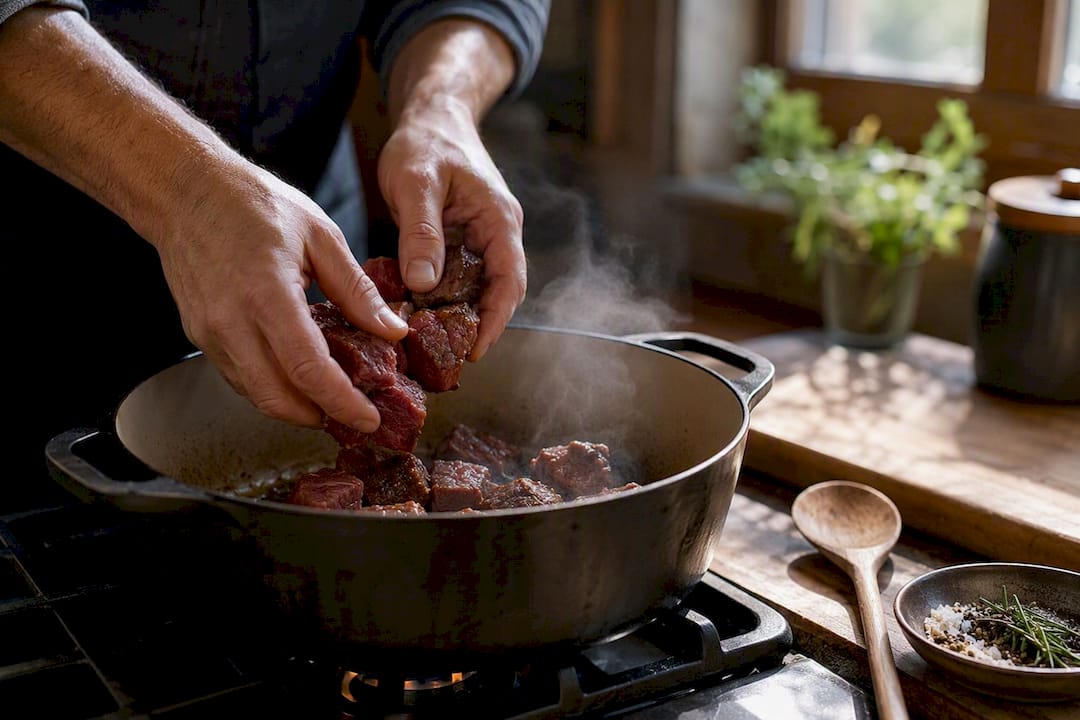
- Sear in batches. Heat oil in a heavy skillet over medium-high heat. Add beef in a single layer, without crowding the pan, and sear 2 to 3 minutes per side until deeply browned. Work in two or three batches if needed. Crowding the pan is the single fastest way to steam the meat instead of browning it, and steamed meat never develops the same flavor.
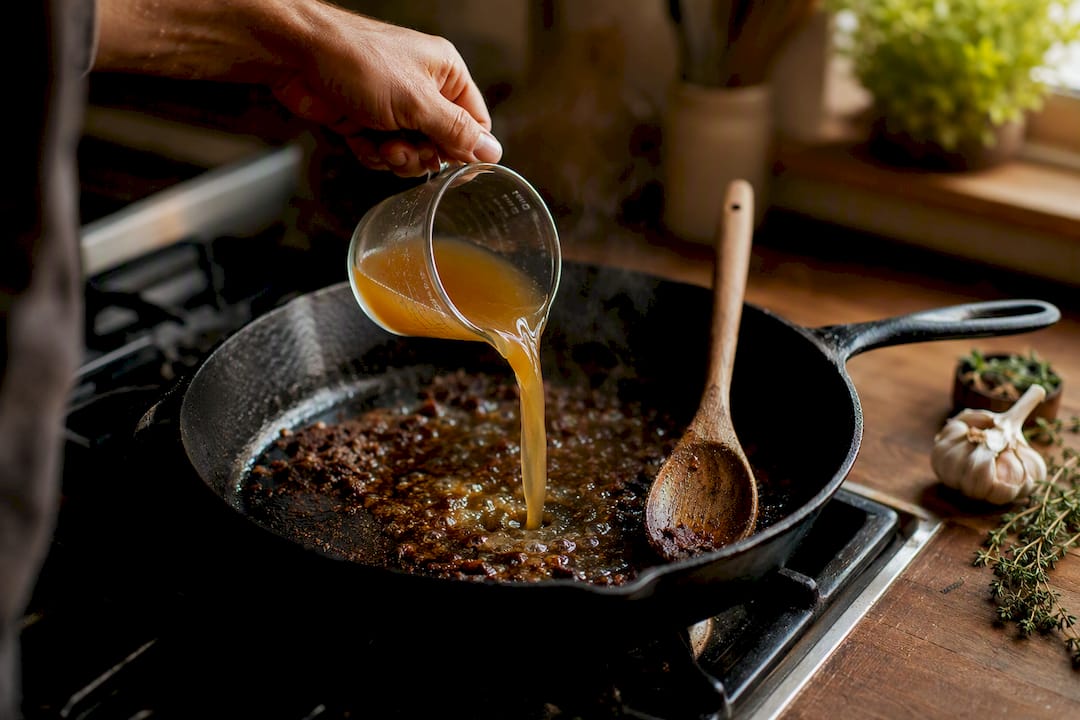
- Build the base. Once the beef is out, add the diced onion to the same skillet for 2 minutes, then stir in the tomato paste and let it cook for 1 minute to deepen its flavor. Pour in the wine (if using) and scrape up the browned bits stuck to the pan. That browned residue is flavor, not waste.
- Layer the slow cooker. Put the potatoes and carrots on the bottom, since they’re denser and benefit from more direct heat, then add the seared beef and pour the wine mixture, broth, Worcestershire, garlic, thyme, and bay leaf over the top. Layering this way keeps the meat from sitting directly against the hot crock wall, where it can overcook at the edges.
- Cook. Cover and cook on low for 7 to 8 hours or high for 4 to 5 hours, until the beef shreds easily with a fork.
- Finish. Remove the bay leaf and thyme stems. Stir in the frozen peas about 10 to 15 minutes before serving so they stay bright green instead of turning to mush, then thicken the broth (see the thickening section below) and adjust seasoning.
Searing isn’t required for food safety. The slow cooker will tenderize raw beef just fine without it. But skipping it means skipping the Maillard reaction, the browning process that builds hundreds of new flavor compounds on the meat’s surface. That’s the difference between a stew that tastes like boiled beef and one that tastes like it took all day.
Pro Tip: Deglaze the skillet with a splash of broth or wine right after searing, and pour every drop into the slow cooker. That fond stuck to the pan carries more concentrated flavor than the seasoning rack in your cabinet.
What Is the Best Cut of Beef for Stew?
Chuck roast wins for one reason: it’s loaded with collagen and marbled fat, and both of those melt down over hours of low heat into a broth that coats your spoon. Lean cuts like sirloin or round dry out and turn stringy in a slow cooker because they don’t have that connective tissue to break down.
- Chuck roast (boneless): the standard choice, widely available, good balance of fat and meat
- Beef short ribs: richer and fattier, excellent flavor, but pricier and needs trimming
- Blade steak or shoulder: similar collagen content to chuck, a good substitute if chuck is out of stock
- Pre-cut “stew meat” packages: convenient, but often a mix of random trim pieces that cook unevenly
However you shop, buy a whole roast and cut it yourself when possible. It’s usually cheaper per pound than pre-cut stew meat, and you control the size. A reliable butcher’s chuck roast gives you more consistency than a shrink-wrapped tray of mystery cubes. Trim away large fat caps and silver skin, but leave the internal marbling alone. That’s what melts into the gravy.
How Long Does Beef Stew Take in a Slow Cooker?
Standard timing is several hours on low or fewer hours on high for about two pounds of chuck in a medium-sized slow cooker. Doubling the recipe or using a smaller pot changes those numbers, since a fuller cooker retains heat differently and takes longer to reach a safe temperature throughout.
- Never put fully frozen beef straight into a slow cooker. It spends too long in the temperature range where bacteria multiply before the appliance heats through.
- Thaw beef in the refrigerator overnight, or use the cold-water method (sealed bag, changed every 30 minutes) if you’re in a hurry.
- Doneness cues: the beef should shred easily with a fork, and it should feel tender rather than springy when pressed with a spoon.
- Potatoes and carrots should pierce easily with a knife with no resistance at the center.
How Do You Thicken Beef Stew in a Crock Pot?
The Swanson approach of stirring a flour-broth mixture into the stew near the end, then letting it simmer on high, avoids the raw-flour taste that ruins a rushed gravy. Whisk 2 tablespoons of flour with a half cup of cold broth until smooth, then stir it in and cook uncovered for 10 to 15 minutes.
- Flour slurry: cheap and reliable, needs a few minutes of simmering to lose its raw taste
- Beurre manié (equal parts softened butter and flour, kneaded together): whisk in at the end for a glossy finish
- Cornstarch slurry: 1 tablespoon cornstarch plus 2 tablespoons cold water, best for a gluten-free option; add only in the last few minutes since it thickens fast and can turn gummy if overcooked
Pro Tip: A splash of red wine vinegar or a squeeze of lemon juice right before serving wakes up a stew that’s tasted flat after hours of cooking. Acid does more for flavor than another pinch of salt.
Substitutions for Wine, Vegetables, and Gluten
No red wine on hand? Swap in extra beef broth with a tablespoon of red wine vinegar or balsamic vinegar, which mimics the acidity a wine addition normally brings without adding alcohol.
- Root vegetables like carrots, potatoes, and parsnips hold up well through 7 to 8 hours; save peas, spinach, and fresh herbs for the last 15 minutes.
- Swap all-purpose flour for cornstarch or a gluten-free flour blend to keep the stew gluten-free.
- Use low-sodium broth and skip added salt until the end if you’re watching sodium, since Worcestershire and broth both carry a good amount already.
Common Beef Stew Mistakes and How to Fix Them
Most stew disasters trace back to a handful of repeat offenders: skipping the sear, crowding the searing pan, dumping in peas at hour one, and never tasting before serving.
- Stew tastes flat: add salt gradually, then finish with an acid splash and a pat of butter stirred in at the end.
- Broth is too thin: simmer uncovered for 15 to 20 minutes, or stir in a slurry as described above.
- Vegetables turned to mush: cut them larger next time, and hold delicate additions like peas until the final 10 to 15 minutes.
- Meat is tough despite long cooking: it likely needed more time, not less. Chuck can take longer than the low end of the range in an older or lower-wattage cooker.
For busy weeks, brown the beef and chop vegetables the night before, then store everything separately in the fridge so the next morning is just a dump-and-go job into the crock. This stew also freezes well before the peas go in, which makes it a legitimate freezer-meal candidate.
Pro Tip: Sear a double batch of chuck roast on a Sunday and freeze half raw and seasoned. You’ll have a head start on the next stew without repeating the messiest step.
How Do You Store and Reheat Leftover Beef Stew?
Cool the stew to room temperature within two hours of cooking, then refrigerate in an airtight container for up to 4 days or freeze for up to 3 months. Potatoes can turn slightly grainy after freezing, so some cooks add fresh potato when reheating a frozen batch instead.
- Thaw frozen stew in the refrigerator overnight rather than at room temperature.
- Reheat gently on the stovetop over medium low heat, stirring occasionally, and add a splash of broth if the sauce has thickened too much in storage.
- Microwave reheating works in a pinch, but covered and in short bursts, stirring between each, to reheat evenly.
Equipment That Makes This Recipe Easier
A 6-quart slow cooker is the right size for this batch. It holds everything without packing it tight, which matters for even heat distribution.
- A heavy skillet or cast-iron pan for searing gets a better crust than a thin nonstick pan, though skipping the sear still produces a safe, edible stew if you’re short on time.
- Keep a set of airtight glass containers on hand for storage. They reheat better than thin plastic and don’t hold onto tomato stains.
- A simple ladle and a sharp chef’s knife cover the rest of what you need.
What to Serve With Slow Cooker Beef Stew
Crusty bread or warm biscuits are the classic move for soaking up the gravy. Mashed potatoes work too, though the stew already has potatoes in it, so some cooks skip the double-starch and serve it over egg noodles or rice instead.
- Crusty bread, dinner rolls, or buttermilk biscuits
- Mashed potatoes, egg noodles, or steamed rice
- A simple green salad with vinaigrette to cut the richness
- Garnish with chopped parsley and a crack of black pepper for color and brightness
Why This Slow Cooker Beef Stew Recipe Works
Hearthlyrecipes builds every recipe through repeated kitchen testing rather than a single run through the kitchen, which is why the timing ranges above (7 to 8 hours low, 4 to 5 high) reflect what actually happens across different slow cooker brands and wattages, not just one machine’s quirks. Recipes across the site consistently earn high reader ratings, a signal that the instructions hold up in real kitchens, not just on paper.
- Cross-check this method against another tested slow-cooker stew, the birria-style slow cooker stew, for a different flavor direction using the same core technique.
- Browse the full soup and stew collection for more slow-cooked comfort food.
- See how the same beef-searing logic applies in a faster format with the beef and broccoli made in an Instant Pot.
A Reader-Tested Tweak Worth Trying
This method holds up because it respects what chuck roast actually needs: time and fat, not shortcuts. One tweak worth trying: swap half the broth for the reserved bay leaf and thyme steeping longer, uncovered, at the very end. It deepens the broth without a single extra ingredient.
— Susan Scortberg
Browse More Tested Slow Cooker Recipes
Once this stew is in the crock, you’ve got hours free, and that’s a good time to line up your next meal. Hearthlyrecipes keeps its recipe vault stocked with more than 43,000 tested recipes, sorted so you’re not digging through pages of untested guesses to find something that actually works on the first try.

If beef stew becomes a regular in your rotation, the beef recipes category has other tested mains built around the same cuts, from stir-fries to slow braises. Start there, pick your next dish, and let the slow cooker do the heavy lifting again tomorrow.
Sources
- Maillard reaction — Wikipedia
- How to Make Beef Stew in a Crock Pot | Food Network Kitchen | Food Network
- Slow Cooker Hearty Beef Stew | Swanson® Recipes
FAQ
Can You Put Raw Beef Directly in a Slow Cooker?
Yes, raw beef can go straight into a slow cooker without searing first, since the appliance will cook it through safely over several hours. Searing is optional for flavor, not required for safety, though skipping it means missing the Maillard browning that deepens taste.
What Are Common Mistakes When Making Crockpot Beef Stew?
The biggest culprits are skipping the sear, crowding the pan while browning, adding peas or delicate vegetables too early, and not tasting the broth before serving. Each is easy to fix by following the layering and timing order in the method above.
What Is the Secret to Good Beef Stew?
Uniform beef cubes, a proper sear before slow cooking, and low heat for the full 7 to 8 hours are the biggest factors behind a tender, flavorful result. Finishing with a flour or cornstarch slurry and a splash of acid rounds out the flavor at the end.
Can I Put Frozen Beef Straight Into the Slow Cooker?
It’s best to thaw beef in the refrigerator overnight or use the cold-water method before slow cooking, since fully frozen meat can linger too long in an unsafe temperature range before the cooker heats through. Thawed beef also sears far better than frozen chunks.
How Do I Know When the Stew Is Done?
The beef should shred apart easily with a fork, and potatoes and carrots should offer no resistance when pierced with a knife. If the meat still feels firm or springy, give it more time on low.