Slow Cooker Mashed Potatoes: The Easy No-Boil Method
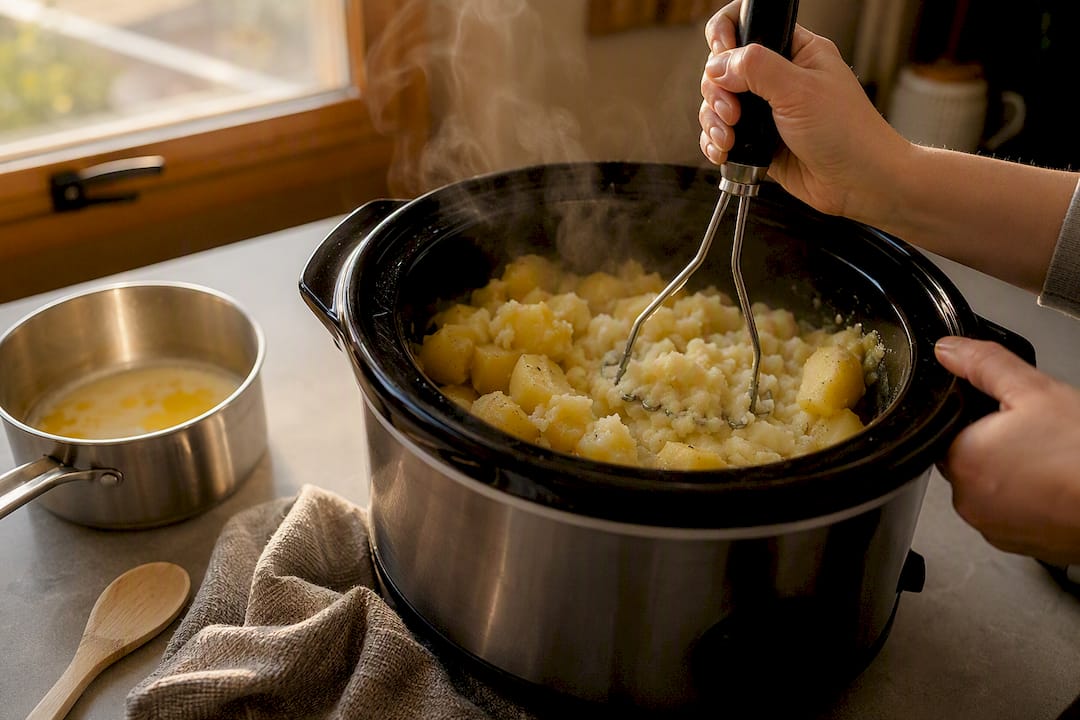
Yes, you can make mashed potatoes entirely in a slow cooker, no stovetop boiling required. Cut raw potatoes into chunks, add a splash of broth, cook until fork-tender, then mash right in the crock with warmed butter and cream. Cold dairy is the one move that ruins the texture, so heat it first according to Nutrition guidance on dairy warming techniques.
- HIGH: 3 to 5 hours, depending on chunk size and your slow cooker.
- LOW: 4 to 8 hours, better if you’re leaving the house.
- Holding on WARM: up to about 2 hours before the texture starts to tighten up.
- The fix if it firms up: a splash of warm milk or broth, stirred in right before serving.
Key Takeaways
Creamy slow cooker mashed potatoes come down to three non-negotiables: uniform potato chunks, warmed dairy, and mashing by hand instead of a machine.
| Point | Details |
|---|---|
| Skip the boiling pot | Cook raw potato chunks directly in the slow cooker with a small amount of broth. |
| Heat your dairy first | Cold milk or cream shocks the starch and causes the gluey texture most cooks complain about. |
| Watch your timing windows | HIGH runs 3 to 5 hours, LOW runs 4 to 8 hours, and doneness means a fork slides through easily. |
| Mash by hand, not machine | A masher or ricer keeps texture creamy; food processors and mixers overwork starch fast. |
| Explore more tested sides | Hearthlyrecipes offers a full slow cooker collection with the same no-boil, tested approach. |
Table of Contents
- What You Need for Creamy Slow Cooker Potatoes
- How Do You Make No-Boil Mashed Potatoes in a Slow Cooker?
- Why Are My Slow Cooker Mashed Potatoes Watery, Gluey, or Undercooked?
- What Are the Best Mix-Ins for Slow Cooker Mashed Potatoes?
- Can You Make Slow Cooker Mashed Potatoes Ahead of Time?
- When Should You Actually Reach for the Slow Cooker?
- Find More Tested Slow Cooker Sides on Hearthlyrecipes
- Sources
- FAQ
What You Need for Creamy Slow Cooker Potatoes
For a 3 to 4 pound batch (feeds 6 to 8 as a side), you’ll want:
- 3 to 4 lbs Yukon Gold or russet potatoes, peeled and cut into 1-inch chunks
- 1 to 2 cups low-sodium chicken or vegetable broth (not water, if you want flavor built in)
- 6 tablespoons butter, cut into pieces
- ½ to 1 cup whole milk, half-and-half, or heavy cream, warmed
- 1½ teaspoons kosher salt, plus more to taste
- Optional: roasted garlic, sour cream, or shredded cheese
Yukon Golds hold their shape better and have a naturally buttery flavor, so many cooks leave the skins on for a rustic mash. Russets break down fluffier but need peeling, since the skin turns tough and stringy once cooked. Red potatoes work in a pinch but turn gummier faster than the other two.
On equipment: a 4 to 6 quart slow cooker fits this batch size without crowding the potatoes into a soggy pile at the bottom. You’ll also want a sturdy potato masher or a ricer, plus a small saucepan for warming the dairy. Doubling the recipe works fine in a 6 to 7 quart cooker, but add cook time in 30 to 45 minute increments rather than assuming it scales linearly.
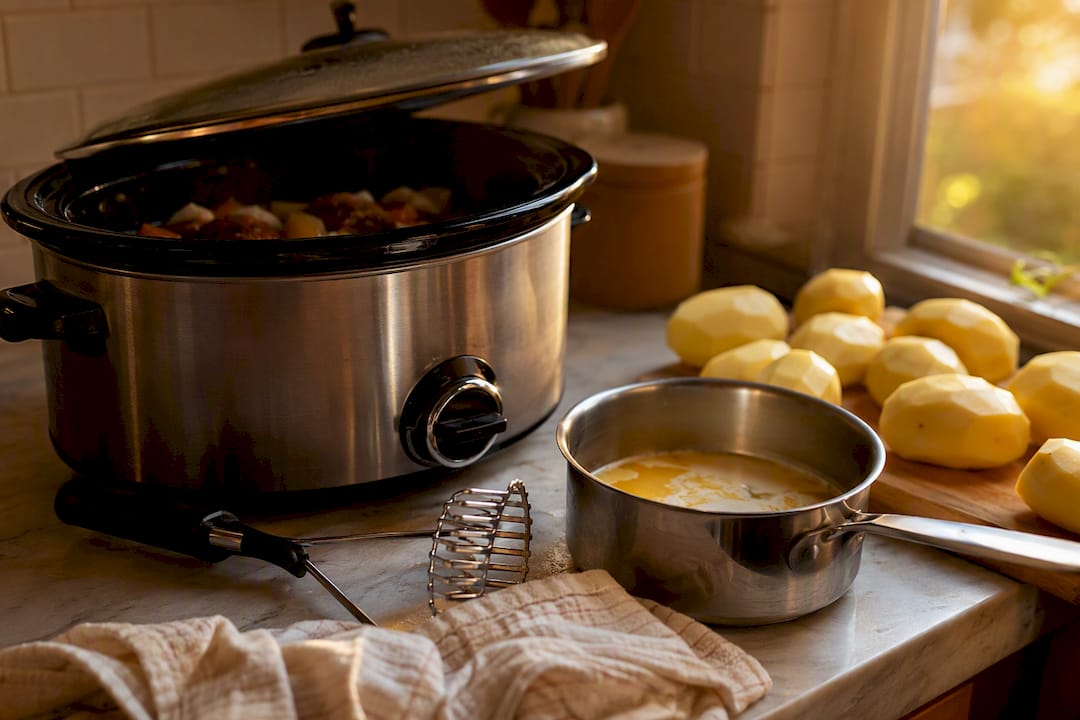
How Do You Make No-Boil Mashed Potatoes in a Slow Cooker?
This method skips the pot of boiling water entirely. The potatoes steam in a small amount of seasoned liquid instead of swimming in it, which is why the payoff, flavor without sogginess, works so well.
Recipe summary: Yield: 6 to 8 servings. Prep time: 15 minutes. Cook time: 3 to 5 hours on HIGH or 4 to 8 hours on LOW.
Ingredients:
- 3 to 4 lbs Yukon Gold potatoes, cut into 1-inch chunks
- 1½ cups low-sodium chicken broth
- 6 tablespoons butter
- ¾ cup whole milk or heavy cream, warmed
- 1½ teaspoons kosher salt, black pepper to taste
Instructions:
- Cut potatoes into uniform 1-inch chunks or thin, even slices. This step matters more than most recipes admit. Irregular pieces cook at wildly different rates, leaving you with mush on one side of the bowl and hard centers on the other.
- Layer the potatoes in the slow cooker and pour in the broth. You’re not submerging them, you’re steaming them in a shallow pool.
- Lay a sheet of parchment paper directly over the potatoes, under the lid. This traps moisture at the top layer so it doesn’t dry out or discolor during the long cook.
- Cover and cook on HIGH for 3 to 4 hours or LOW for 5 to 6 hours, following the timing America’s Test Kitchen settled on after testing thin slices against thicker chunks.
- Check for doneness starting at the low end of the range. A fork should slide through a potato chunk with almost no resistance. If it meets any pushback, put the lid back on and check again in 20 to 30 minutes.
- While the potatoes finish, warm your milk or cream and butter together in a small saucepan over low heat, just until the butter melts. Do not skip this step.
- Do not drain the slow cooker. The liquid left behind carries flavor and moisture you’ll want back in the mash, a detail Cafe Delites and Swanson’s recipe both build around.
- Mash the potatoes directly in the crock using a hand masher or ricer. Add the warmed butter and cream gradually, folding rather than beating.
- Season with salt and pepper, taste, adjust. If the mash looks tight or pasty, stir in a bit more warm broth or milk, a tablespoon at a time.
- Switch the cooker to WARM and serve within 2 hours, stirring once before plates go out.
| Setting | Cook Time | Check Point |
|---|---|---|
| HIGH | 3 to 5 hours | Start checking at 3 hours |
| LOW | 4 to 8 hours | Start checking at 4 hours |
Pro Tip: Cold milk poured straight from the fridge shocks the starch in hot potatoes and turns them gluey almost instantly. Warm it on the stove or in the microwave first, every single time.
Plan on roughly ¾ cup of mashed potatoes per person for a standard side, closer to 1 cup if this is the main event at a smaller gathering.
Why Are My Slow Cooker Mashed Potatoes Watery, Gluey, or Undercooked?
Three failure modes cover almost every complaint about crockpot mashed potatoes, and each one has a fast fix.
Watery mash: Usually means too much broth went in relative to the potato volume, or the lid trapped more condensation than expected. Simmer the mash uncovered on the stove for a few minutes, stirring constantly, or mash in a bit more potato if you have extra on hand.
Gluey or pasty texture: This is almost always a starch problem, not a liquid problem. Stop mixing immediately. Fold in a little extra warm butter or cream, then leave it alone. The Cafe Delites technique notes warn specifically against food processors and high-speed electric mixers, since both overwork the starch and turn a good batch gluey in seconds.
Undercooked centers: Continue cooking on HIGH and check every 15 to 30 minutes rather than guessing at a single fixed time. Chunk size and how full the cooker is both shift the real cook time by an hour or more.
A few habits prevent most of this before it starts:
- Heat the dairy before it touches the potatoes, no exceptions.
- Stir once or twice during the cook, mainly to keep the edges from overcooking while the center lags behind.
- Skip the electric mixer entirely; a masher or ricer gives you control a machine doesn’t.
- Leave the parchment shield in place under the lid to stop the top layer from drying out or turning gray.
Do not drain the pot before mashing. That cooking liquid is doing double duty as flavor and moisture insurance, which is why nearly every tested no-boil recipe builds around keeping it in.
What Are the Best Mix-Ins for Slow Cooker Mashed Potatoes?
Loaded, garlicky, or lightened up, the base method barely changes. Only the finishing touches do.
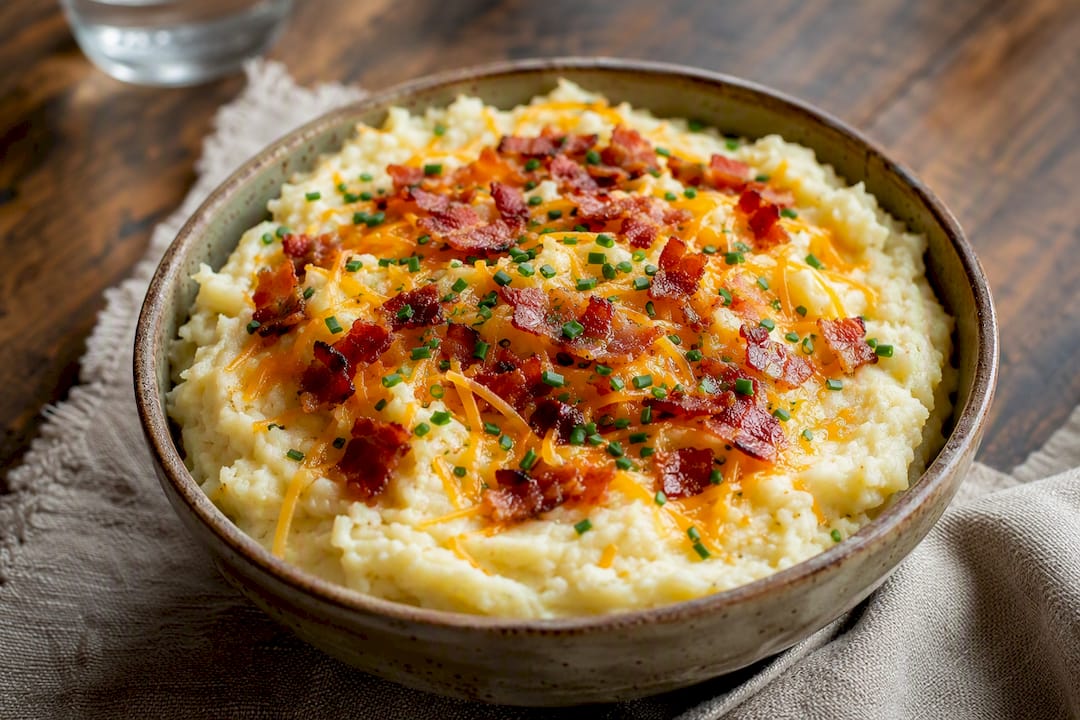
For a loaded version, stir in ½ cup sour cream, ½ cup shredded cheddar, and 2 to 3 tablespoons crumbled bacon after mashing, plus chopped chives on top. Garlic-parmesan lovers can add a head of roasted garlic mashed into the potatoes along with ½ cup grated parmesan; McCormick’s approach leans on garlic and parsley flakes stirred into the broth itself so the flavor infuses during the long cook, not just at the end.
Dairy-free cooks should lean on a full-flavor vegetable broth to make up for the richness butter and cream normally provide, swapping in olive oil or a dairy-free butter and a plain vegan creamer or blended silken tofu for the creamy stage. Expect to add slightly more liquid than the dairy version calls for, since plant-based fats don’t emulsify quite the same way.
For a lighter side, swap in low-fat milk or Greek yogurt for part of the cream, and cut the butter by half while bumping the broth up slightly to keep the texture from turning starchy. If you’re stirring in a heavy amount of cheese, add it after mashing and off the heat. Melted cheese thickens fast, and it’s easy to tip a good batch into paste territory if you add it too early.
For inspiration beyond the classic version, a Persian-style potato curry shows how far potatoes can stretch with different spice profiles, and a garlic herb potato soup uses many of the same cheddar and garlic pairings in a different format.
Can You Make Slow Cooker Mashed Potatoes Ahead of Time?
Slow cooker mashed potatoes hold up well for next-day serving, which makes them a practical choice for holiday timing.
- Same-day serving: Cook as directed, hold on WARM, serve within 2 hours.
- Day-ahead prep: Cook and mash fully, cool within 2 hours of finishing, then refrigerate in an airtight container for up to 3 days.
- Freezing: Portion into freezer-safe containers and freeze up to 2 months; thaw overnight in the refrigerator before reheating.
On the WARM setting itself, plan for roughly 2 hours before the texture noticeably tightens, matching the holding window America’s Test Kitchen recommends. A splash of warm milk or broth stirred in right before serving usually brings the consistency back.
For reheating, a few methods beat the rest:
- Stovetop: Low heat, constant stirring, with warm milk or broth added a splash at a time.
- Oven: Covered dish at 300°F, stirring halfway through, about 20 to 30 minutes.
- Microwave: Short intervals with a stir between each, adding a little liquid if the mash looks dry.
Cool leftovers within 2 hours of cooking and refrigerate promptly. Potatoes sitting at room temperature much longer than that move into food-safety risk territory, the same standard that applies to most cooked starches.
When Should You Actually Reach for the Slow Cooker?
The slow cooker earns its spot on hosting days, not every Tuesday. Freeing up stovetop space while four other dishes fight for burners is the real advantage, not some claim that it beats a stockpot on texture.
A ricer and a hot stove still produce the lightest, fluffiest mash you’ll get, no argument there. But if you’re managing a turkey, two casseroles, and a gravy at the same time, the crockpot version holding steady on WARM for an hour or two is worth more than an extra half-degree of fluffiness. Hearthlyrecipes has tested both approaches side by side, and the slow cooker wins on exactly one axis: it lets you stop thinking about the potatoes.
Find More Tested Slow Cooker Sides on Hearthlyrecipes
If this method worked for your table, Hearthlyrecipes has a full slow cooker and crockpot collection built the same way: no-boil where possible, clear timing ranges, and finish notes that actually explain why a step matters instead of just listing it.

Beyond potatoes, the site’s practical meal solutions collection is worth a look if make-ahead planning is why you landed here in the first place, it’s built around exactly that problem. Every recipe on Hearthlyrecipes gets tested before it’s published, so the timing and quantities you see are the ones that actually worked in a real kitchen, not just numbers that sound right on paper. Browse the full recipe collection for more sides that hold up on a crowded holiday table, and start planning your next make-ahead menu today.
Sources
Timing, no-drain advice, and troubleshooting tips throughout this guide draw on tested recipes from America’s Test Kitchen, The Kitchn, Country Living, Swanson, and Cafe Delites. Check them for alternate timings and flavor variations.
- Slow-Cooker Classic Mashed Potatoes | America’s Test Kitchen
- Slow Cooker Yukon Gold Creamy Mashed Potatoes | Swanson®
- Creamy Slow Cooker Mashed Potatoes - Cafe Delites
FAQ
Can You Make Mashed Potatoes in a Slow Cooker?
Yes. Raw potato chunks cook directly in the crockpot with a small amount of broth, no stovetop boiling needed, and mash right in the cooker once fork-tender.
Can You Put Uncooked Potatoes Directly in a Slow Cooker?
Yes, this is the standard no-boil method. Cut them into uniform 1-inch chunks first so they cook evenly, since irregular pieces finish at different rates.
What Type of Potato Works Best for Slow Cooker Mashed Potatoes?
Yukon Gold potatoes are the top choice for their naturally buttery flavor and creamy texture, and their skins can stay on for a rustic mash. Russets produce a fluffier result but need peeling first.
What Ingredients Go Into a Basic Slow Cooker Mashed Potato Recipe?
A standard batch uses Yukon Gold or russet potatoes, chicken broth, butter, warmed milk or cream, and salt, with optional add-ins like sour cream or roasted garlic for extra richness.
How Long Do You Hold Mashed Potatoes on Warm in a Slow Cooker?
Up to about 2 hours before the texture starts to tighten. A splash of warm milk or broth stirred in right before serving usually restores the creaminess.