Easy Slow Cooker Pulled Pork for Family Meals
TL;DR:
- Cooking pork shoulder on low for 8 to 10 hours ensures collagen fully turns into gelatin, creating tender pulled pork. The shoulder should reach an internal temperature of 195 to 205 degrees Fahrenheit, which is ideal for shredding. Proper timing, cut selection, and resting improve texture while avoiding overcooking or dryness.
The easiest reliable way to make slow cooker pulled pork is to rub a 4–5 lb pork shoulder with a simple spice blend, add ½ cup of liquid, and cook on LOW for 8–10 hours until it hits 195–205°F inside. At that temperature, the collagen in the shoulder has fully dissolved into gelatin, which is what gives you that fall-apart, juicy texture you’re after. Shred it, toss with your favorite barbecue sauce, and you’re done.
A typical 4 lb bone-in pork shoulder yields several servings suitable for a family meal. You’ll want a 6–8 quart slow cooker. Prep takes about 15 minutes, and the rest is hands-off.
- Cut: Pork shoulder (Boston butt or picnic roast)
- Cook setting: LOW 8–10 hours or HIGH 5–6 hours
- Target internal temp: 195–205°F for pull-apart texture
- Yield: 8–10 servings from a 4–5 lb roast
Table of Contents
- The Slow Cooker Pulled Pork Recipe
- What cut of pork should you use?
- How long to cook pulled pork and what temperature to target
- What rubs, sauces, and finishes work best?
- Tips for best results and mistakes to avoid
- How to serve, store, freeze, and reheat pulled pork
- Key Takeaways
- Why this slow-cooker method holds up for family meals
- More slow-cooker family meals on Hearthlyrecipes
- References and useful sources
- FAQ
The Slow Cooker Pulled Pork Recipe
Yield: 8–10 servings | Prep: 15 minutes | Cook: 8–10 hours on LOW or 5–6 hours on HIGH
Ingredients
For the dry rub:
- 2 tablespoons brown sugar
- 1 tablespoon smoked paprika
- 1 teaspoon garlic powder
- 1 teaspoon onion powder
- 1 teaspoon kosher salt
- ½ teaspoon black pepper
- ½ teaspoon cumin (optional)
For the slow cooker:
- 4–5 lb bone-in pork shoulder (Boston butt), or boneless
- 1 medium yellow onion, sliced
- ½ cup chicken broth (or apple cider vinegar, beer, or cola)
- 2 tablespoons Worcestershire sauce
- 1 cup barbecue sauce, divided (plus more for serving)
Instructions
- Cook — Cover and cook on LOW 8–10 hours or HIGH 5–6 hours. Do not lift the lid during cooking.
- Finish. Return shredded pork to the slow cooker, stir in the remaining ½ cup barbecue sauce, and warm on LOW for 15–20 minutes before serving. This step, recommended in tested braising recipes, melds the juices into the meat beautifully.
Recipe notes
| Detail | Guidance |
|---|---|
| Bone-in vs. boneless | Bone-in adds flavor; boneless is easier to shred and fits more predictably in the cooker |
| Make-ahead | Cook, shred, cool, and refrigerate up to 4 days; freeze up to 3 months |
| Liquid swap | Apple cider vinegar adds tang; cola or Dr Pepper adds sweetness; beer adds depth |
| Serving size | Plan ⅓–½ lb cooked pork per person |
What cut of pork should you use?
Pork shoulder is the only cut worth using for pulled pork. It goes by several names at the grocery store: Boston butt, pork butt, or picnic roast. All come from the upper shoulder of the pig and share the same key trait: heavy marbling and dense connective tissue that breaks down into rich gelatin during long, slow cooking. That’s what makes the meat pull apart rather than crumble dry. Taste of Home’s tested recipe consistently recommends pork shoulder for exactly this reason.
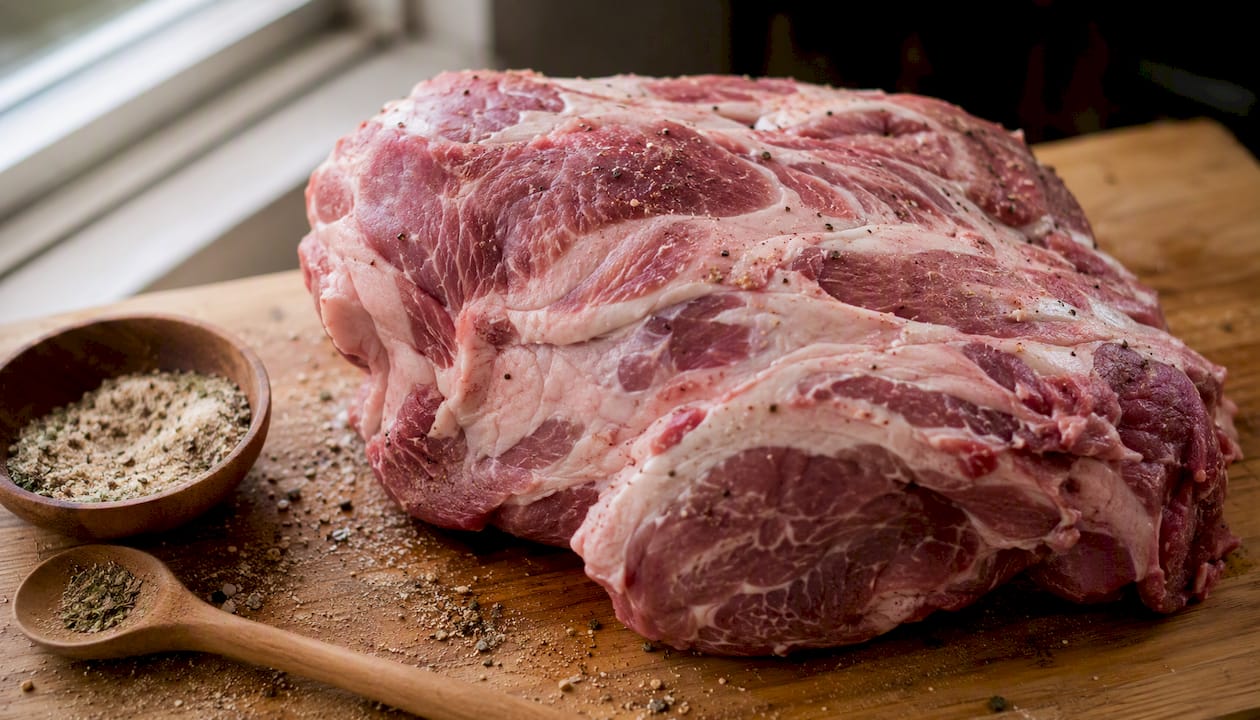
Bone-in vs. boneless: Bone-in shoulders tend to have slightly more flavor and often cost less per pound. The bone also acts as a natural heat conductor. The trade-off is that you’ll need to fish it out before shredding, and the irregular shape can make it harder to fit in smaller slow cookers. Boneless is tidier, shreds faster, and is easier to cut into chunks if you want to speed up cook time. Either works well.
How much to buy: Figure ⅓–½ lb of cooked meat per person. A 4 lb raw shoulder loses roughly 30–40% of its weight during cooking, so it yields about 2.5–3 lbs of shredded pork — enough for 8–10 sandwiches. For a crowd of 20, buy two 4–5 lb shoulders and stack them in a large slow cooker.
- Avoid pork loin and pork tenderloin entirely. Both are too lean. Without fat and connective tissue to break down, they dry out badly before they ever reach a pullable texture. Check the pork recipes collection at Hearthlyrecipes for more cut-specific guidance.
How long to cook pulled pork and what temperature to target
The USDA minimum safe internal temperature for pork is 145°F, but pulled pork needs to reach 195–205°F. That gap matters. At 145°F the pork is safe to eat but still firm and chewy. Collagen doesn’t fully convert to gelatin until the meat climbs well past 160°F and holds there for an extended time. At 195–205°F, the fibers separate with almost no effort.
Cook time by roast weight:
| Roast weight | LOW setting | HIGH setting | Notes |
|---|---|---|---|
| 3–4 lbs | 7–8 hours | 4–5 hours | Check at 7 hrs on LOW |
| 4–5 lbs | 8–10 hours | 5–6 hours | Most common home-cook size |
| 5–7 lbs | 8–10 hours | 6–7 hours | Cut into chunks to speed up |
| 7+ lbs | 8–10 hours | Not recommended | Split into two pieces |
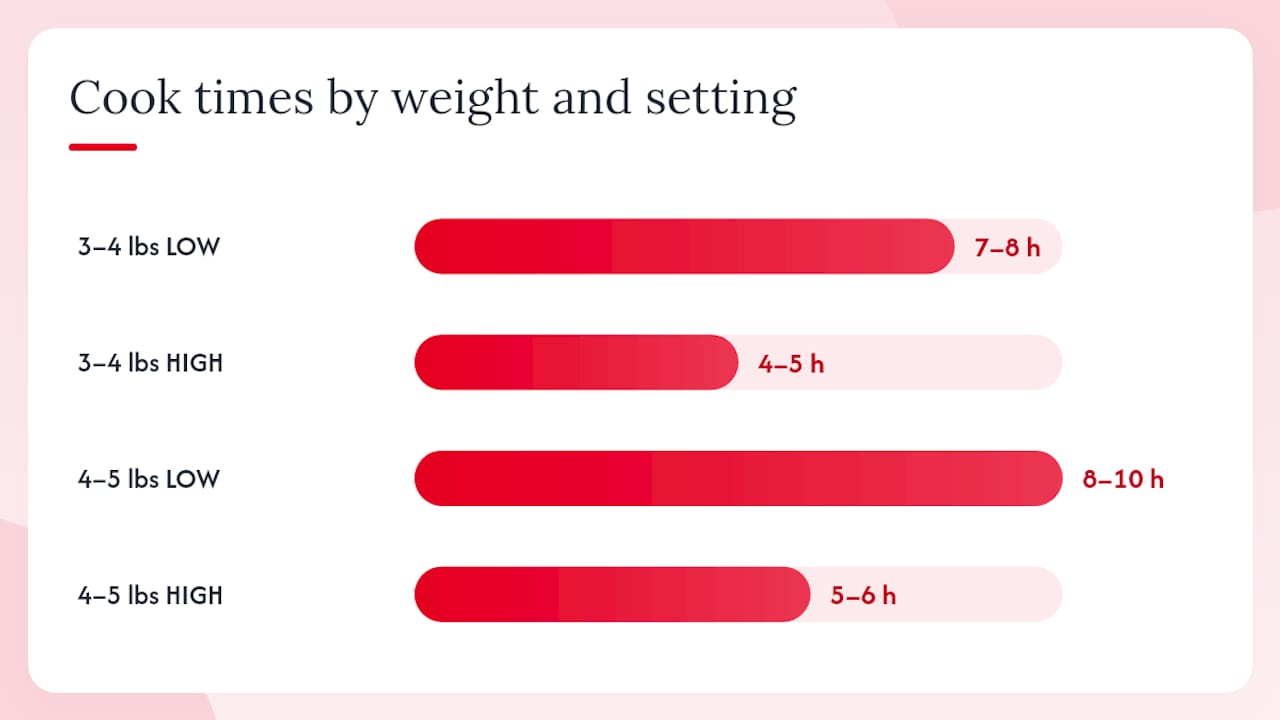
LOW is almost always the better choice. The longer, gentler cook gives collagen more time to break down evenly. HIGH works when you’re short on time, but the texture is slightly less consistent, especially in the center of a large roast. Cutting a large shoulder into 3–4 chunks, as Iowa Girl Eats recommends, increases surface area and helps the center reach temperature faster on either setting.
How to test for doneness: Insert an instant-read thermometer into the thickest part, away from the bone. Then press the meat with a fork. If it shreds with light pressure, it’s ready. If it resists, cover and cook another 30–45 minutes.
Too dry? You probably cooked it past 210°F or used too little liquid. Stir in some of the reserved cooking juices or a splash of broth when you shred. Not shredding? It hasn’t hit 195°F yet. Give it more time — the jump from 185°F to 200°F can take longer than expected.
What rubs, sauces, and finishes work best?
Pick one flavor direction and commit to it. Mixing a Carolina vinegar base with a Kansas City sweet sauce muddies both. Here’s a quick map of the most reliable options, drawn from tested slow-cooker variations:
Basic family-friendly dry rub (works with any finish):
- 2 tbsp brown sugar, 1 tbsp smoked paprika, 1 tsp each garlic powder, onion powder, salt, ½ tsp pepper
Regional finishing directions:
- Kansas City sweet: Stir in a sweet-savory bottled BBQ sauce after shredding. Rich, crowd-pleasing, kid-friendly.
- Carolina vinegar tang: Mix ½ cup apple cider vinegar, 1 tbsp brown sugar, red pepper flakes, and a pinch of salt. Drizzle over shredded pork instead of thick sauce.
- Smoky: Add 1 tsp liquid smoke to the braising liquid and use extra smoked paprika in the rub.
- Dr Pepper-style sweet glaze: Replace broth with a can of Dr Pepper or cola. The sugar caramelizes into a sticky, sweet finish that kids love.
- Citrus-herb: Use orange juice and garlic as the braising liquid with cumin and oregano in the rub. Excellent for tacos.
Serving ideas: Classic pulled pork sandwiches with coleslaw on brioche buns, street tacos with pickled onions and cilantro, rice bowls with black beans, loaded nachos, or even as a pizza topping with red onion and jalapeño. For a BBQ-style spread, pair with cornbread and baked beans.
Tips for best results and mistakes to avoid
The most common mistakes, ranked by how often they wreck a batch:
- Skipping the rest period — Fifteen minutes of resting after cooking lets the fibers reabsorb juices. Skip it and the first shreds will be noticeably drier.
On searing: It adds a Maillard-browned crust that deepens flavor, but it’s genuinely optional. Side-by-side tests show the difference is subtle after 8 hours of slow cooking. If you have 10 extra minutes, do it. If not, the recipe still works.
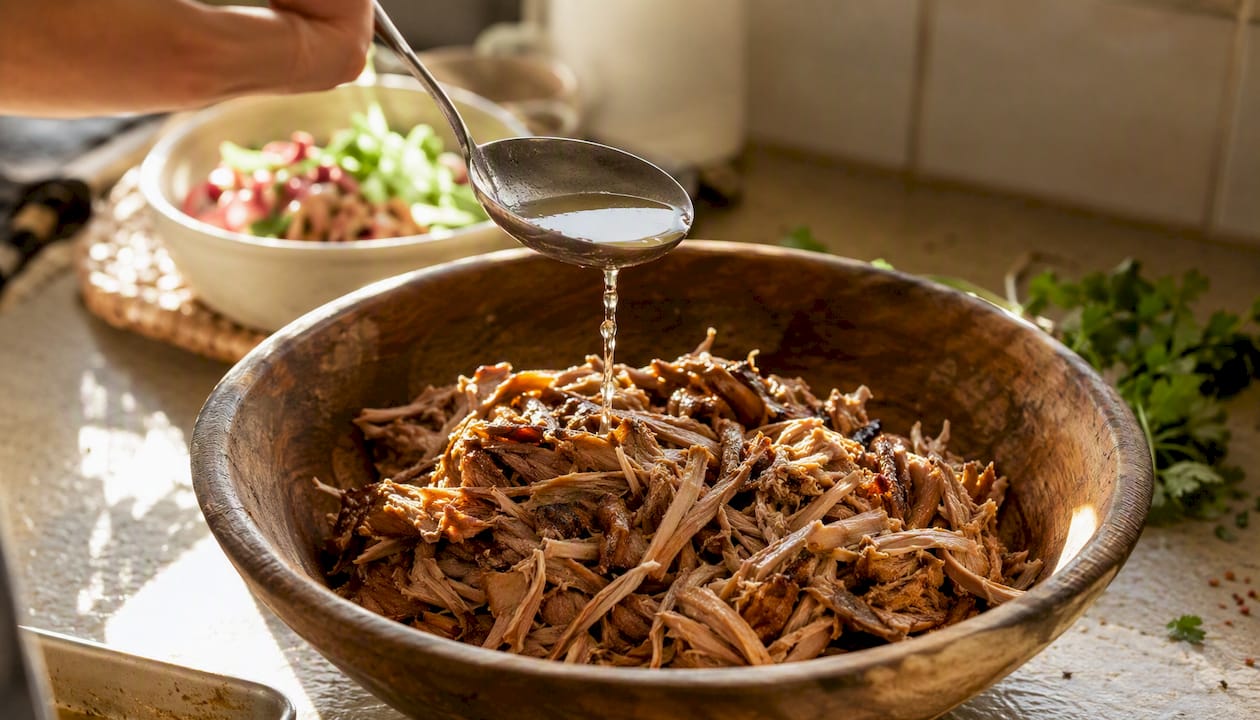
Pro Tip: After shredding, pour the cooking liquid into a fat separator or a tall measuring cup and let it sit for 5 minutes. Skim the fat layer off the top, then stir the defatted juices back into the shredded pork. This keeps the meat moist without making it greasy.
For safe handling, follow USDA guidance on cooling cooked pork quickly (within 2 hours) before refrigerating or freezing.
How to serve, store, freeze, and reheat pulled pork
Pulled pork is one of the best make-ahead proteins you can keep in rotation. It reheats well, freezes without much quality loss, and feeds a crowd from a single cook.
Serving: Pile it on toasted buns with coleslaw for the classic sandwich. For tacos, warm corn tortillas and top with pickled red onion and a squeeze of lime. Rice bowls with roasted corn and black beans come together in under 10 minutes once the pork is ready. You can also find complementary ideas in Hearthlyrecipes’ slow cooker recipe collection.
Storage:
Reheating without drying it out:
- Slow cooker: — LOW for 1–2 hours with a splash of liquid is the gentlest option for large batches.
Avoid the microwave on high power. It heats unevenly and dries out the edges before the center warms through.
Key Takeaways
Slow cooker pulled pork works because pork shoulder’s fat and collagen break down fully at 195–205°F, producing tender, shreddable meat with minimal hands-on effort.
| Point | Details |
|---|---|
| Use pork shoulder | Boston butt or picnic roast; bone-in or boneless both work; avoid lean cuts like loin. |
| Target 195–205°F | Safe minimum is 145°F, but pullable texture requires the higher range. |
| Liquid: less is more | Use ½–1 cup for a 4–5 lb roast; do not submerge the meat. |
| LOW beats HIGH | 8–10 hours on LOW or 5–6 hours on HIGH; LOW gives more consistent, tender results. |
| Hearthlyrecipes | Find more tested slow-cooker family meals at Hearthlyrecipes’ practical meal solutions collection. |
Why this slow-cooker method holds up for family meals
The low-and-slow approach wins for one simple reason: it’s nearly impossible to ruin if you use the right cut and don’t rush the temperature. Pork shoulder is forgiving in a way that chicken breast or pork loin never is. Even if you run 30 minutes over on cook time, the meat stays moist because the dissolved collagen acts as a built-in basting liquid.
Testing this recipe across multiple batches, with and without searing, using broth versus vinegar versus cola as the braising liquid, the results were consistent: the cut matters far more than the liquid choice or whether you sear. Bone-in versus boneless made almost no difference in final texture. The one variable that changed outcomes most was cook temperature: batches pulled at 185°F were noticeably chewier than those held to 200°F.
For families cooking ahead, this method is particularly reliable. The pork holds well in the fridge for four days and reheats without losing much texture, which makes it a genuine weeknight workhorse. Browse Hearthlyrecipes’ easy dinner recipes for more ideas that follow the same make-ahead logic.
More slow-cooker family meals on Hearthlyrecipes
Pulled pork is a gateway recipe. Once you see how a hands-off slow cooker turns a tough, inexpensive cut into something the whole table fights over, you’ll want that same low-effort payoff on a Tuesday night with chicken, beef, or a sweet-savory glaze.

Hearthlyrecipes has a full library of tested slow-cooker recipes built around the same principle: minimal prep, maximum flavor, and results that actually work for busy families. The Southern Comfort collection pairs naturally with pulled pork meals, from cornbread to coleslaw-style sides. If you want to keep the weeknight momentum going, the practical meal solutions category is the fastest way to find freezer-friendly, crowd-sized recipes that fit your schedule. Browse both and bookmark what fits your rotation.
References and useful sources
These sources informed the timing, cut selection, liquid guidance, and storage recommendations throughout this guide:
- Slow Cooker Texas Pulled Pork Recipe (with Video)
- Best Pulled Pork Recipe
- Slow Cooker Pulled Pork - Easy + Juicy
- Best Pulled Pork Recipe - Good Cheap Eats
- The BEST Slow Cooker Pulled Pork - Cooking For My Soul
- ask.usda.gov
- kcmasterpiece.com
This article is general cooking guidance, not professional food-safety advice. For current USDA safe-handling standards, consult fsis.usda.gov or a certified food safety resource.
FAQ
What is the best liquid for pulled pork in a slow cooker?
Chicken broth is the most versatile choice, but apple cider vinegar, beer, and cola all work well depending on the flavor direction you want. Use ½–1 cup for a 4–5 lb roast; the pork releases its own juices as it cooks.
Do you have to put liquid in a slow cooker for pulled pork?
Strictly speaking, no. Pork shoulder releases enough moisture on its own to cook through safely. A small amount of added liquid improves heat distribution and gives you richer juices to stir back in after shredding.
How long does pulled pork take in a slow cooker?
A 4–5 lb pork shoulder takes 8–10 hours on LOW or 5–6 hours on HIGH. The target internal temperature is 195–205°F for fall-apart texture, not the USDA safe minimum of 145°F.
What are the most common mistakes when slow cooking pork?
Using a lean cut like pork loin, adding too much liquid, and pulling the meat before it reaches 195°F are the three most frequent problems. Lifting the lid repeatedly during cooking also extends cook time significantly.
Can you overcook pulled pork in a slow cooker?
Yes, though it takes longer than most home cooks expect. Pork cooked past roughly 210°F for an extended period starts to dry out and turn stringy. Stir in reserved cooking juices or a splash of broth when shredding to recover moisture if this happens.