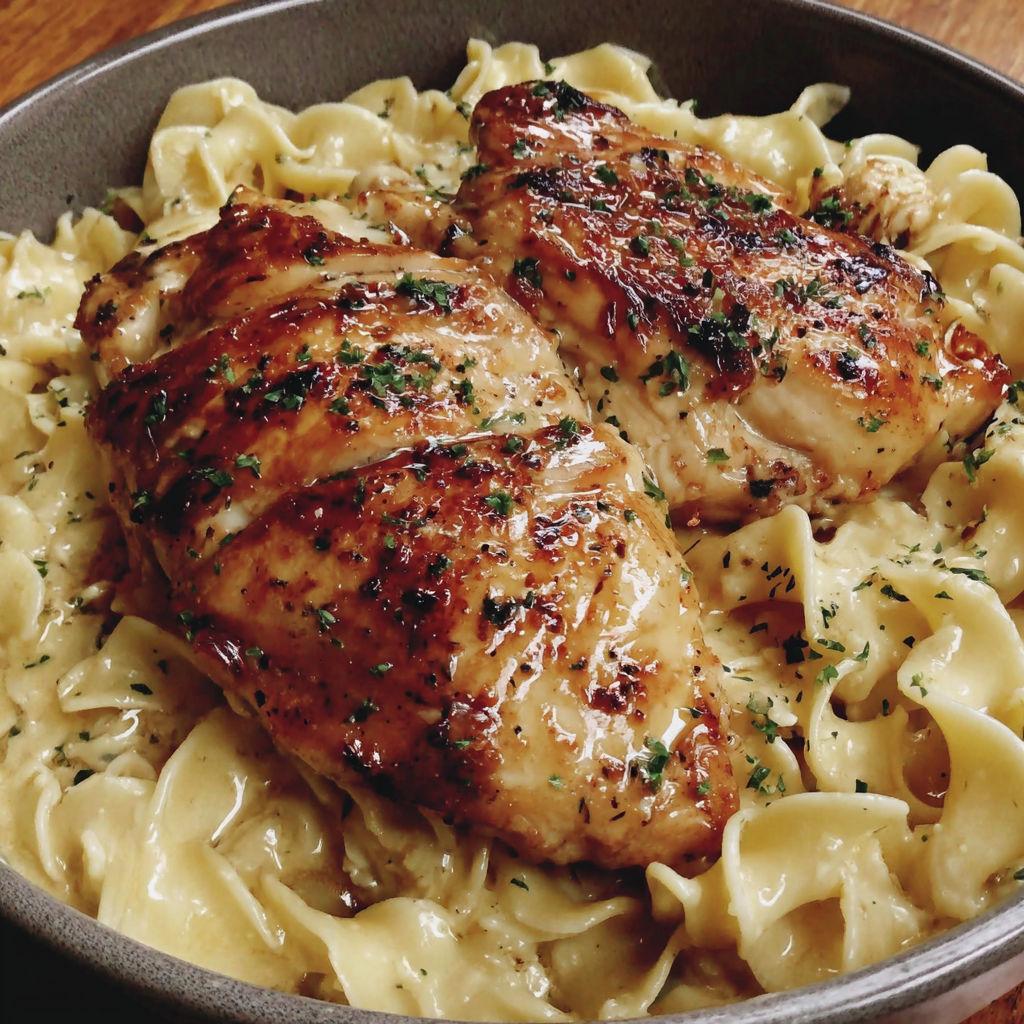
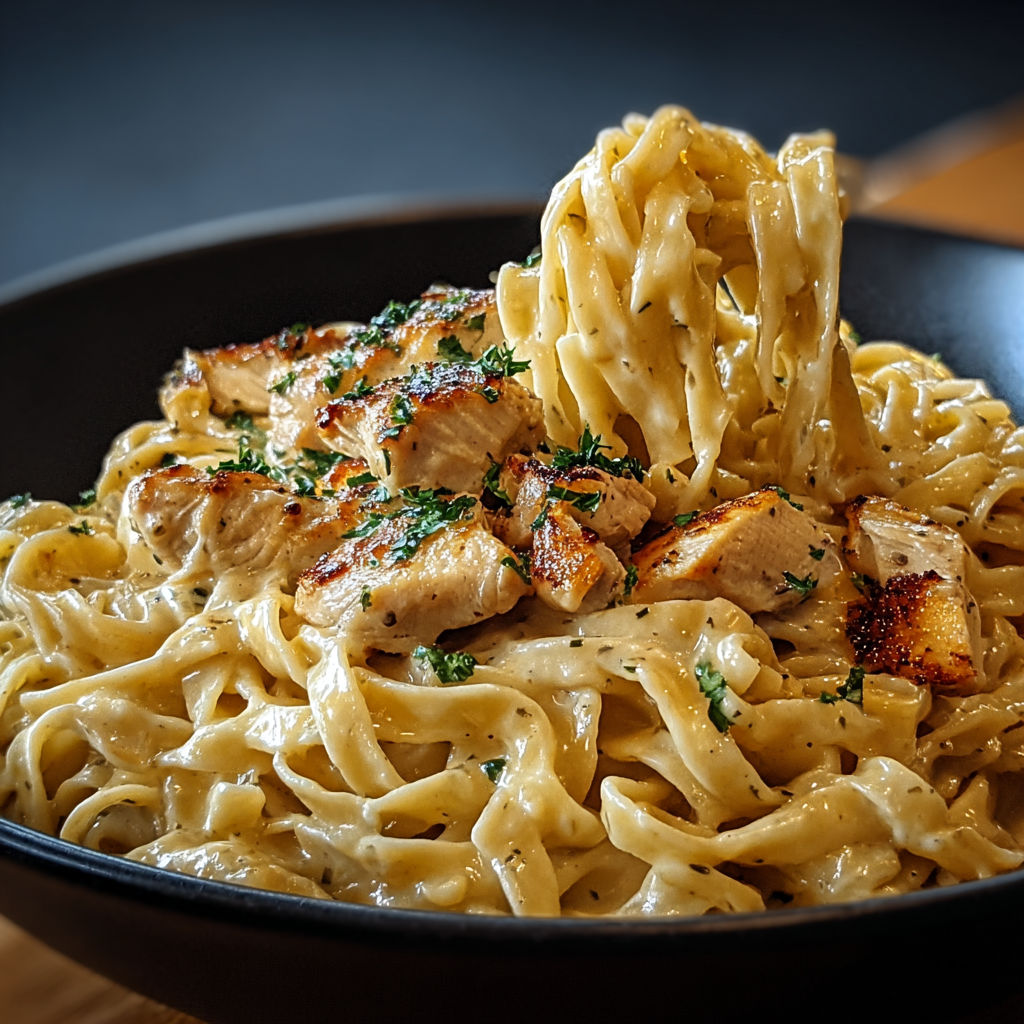
Chicken Buttered Noodles
There's something deeply comforting about a bowl of chicken buttered noodles-warm, creamy, and effortlessly satisfying. Home cooks love this dish for its simplicity and versatility; it's a weeknight hero that feels like a hug in a bowl. Perfect for family dinners, cozy date nights, or even meal-prep Sundays, this recipe delivers that nostalgic, diner-style flavor without the fuss. The magic lies in the buttery garlic sauce that clings to every noodle, making it downright irresistible.
What Makes This Recipe Special
- The secret to this dish's richness is the reduction of chicken broth with butter, creating a velvety sauce that coats the noodles without being overly heavy.
- Using both olive oil (for cooking the chicken) and butter (for the sauce) balances flavor and texture-one for crispiness, the other for luxury.
- Reserved pasta water is your best friend here; it emulsifies the butter and broth into a silky, restaurant-quality coating for the noodles.
- Thyme adds an earthy depth that elevates the dish beyond a basic buttered noodle, making it feel gourmet with minimal effort.
Ingredients
2 boneless, skinless chicken breasts
8 ouncesegg noodles or preferred pasta
4 tablespoonsunsalted butter
3 clovesgarlic, minced
1 teaspoondried thyme or 2 teaspoons fresh thyme
1 teaspoondried parsley or fresh parsley for garnish
1 tablespoonolive oil
1 cupchicken broth, preferably low-sodium
Salt, to taste
Black pepper, to taste
Optional: Red pepper flakes
Nutrition
600 caloriesCalories
Per serving · Values are estimates
Instructions
1
Heat olive oil in a large skillet over medium-high heat. Pat the chicken breasts dry, then season them on both sides with salt, black pepper, and dried thyme.
2
Add the seasoned chicken breasts to the hot skillet and cook for 5 to 6 minutes per side until golden and the internal temperature reaches 165°F. Transfer to a plate and allow to rest before slicing into thin strips.
3
While the chicken cooks, bring a large pot of salted water to a boil. Add the egg noodles and cook according to package instructions until al dente. Drain and set aside, reserving some pasta water.
4
Reduce skillet heat to medium. Add butter to the pan, scraping up any browned bits. Once melted, add the minced garlic and sauté for 1 minute, stirring to avoid burning.
5
Pour chicken broth into the skillet, bringing the liquid to a gentle simmer for 3 to 4 minutes to reduce slightly. Optional: Stir in heavy cream for a richer sauce. Continue simmering until lightly thickened.
6
Add the cooked, drained noodles to the skillet. Toss gently to coat the pasta in the butter sauce, adding reserved pasta water as needed to reach the desired consistency.
7
Return sliced chicken to the pan with the noodles, tossing everything together to distribute flavors. Adjust seasoning to taste with additional salt and black pepper.
8
Sprinkle parsley over the top and finish with red pepper flakes, if desired. Serve hot, with freshly grated parmesan cheese if preferred.
Essential Tips
Don't skip drying the chicken
Pat the chicken breasts dry with paper towels before seasoning. This ensures a golden sear instead of steaming in the pan, which locks in juices and adds texture.
Save the pasta water
Before draining the noodles, scoop out ½ cup of the starchy pasta water. You'll use it to thin the sauce to the perfect consistency-creamy but not soupy.
Low and slow for the broth
After adding the chicken broth to the skillet, let it simmer gently for 3-4 minutes to infuse the butter with flavor. A rolling boil will evaporate too quickly, leaving the sauce underdeveloped.
Slice chicken thinly
Let the chicken rest for 5 minutes after cooking, then slice it thinly against the grain. This ensures tender, easy-to-eat pieces that blend seamlessly into the noodles.
Toast the thyme first
If using dried thyme, sprinkle it into the melted butter and let it sizzle for 20-30 seconds before adding the garlic. This awakens the herb's aroma for maximum impact.
Smart Swaps & Variations
Creamy Version
Stir in ¼ cup of heavy cream or half-and-half with the chicken broth for a richer, more indulgent sauce.
Herb Boost
Add 1 tablespoon of fresh parsley or chives to the finished dish, or swap thyme for rosemary for a piney, aromatic twist.
Veggie-Packed
Sauté 1 cup of sliced mushrooms or spinach with the garlic, then add to the noodles for extra nutrition and texture.
Spicy Kick
Mix in ½ teaspoon of smoked paprika or a dash of hot sauce with the broth for a smoky, fiery depth.
What to Serve With This
- Garlic bread and a simple green salad with a lemon vinaigrette to cut through the richness.
- A crisp white wine like Pinot Grigio or a light lager to complement the buttery, savory flavors.
- Steamed broccoli or roasted Brussels sprouts for a balanced, one-pan meal.
- Shaved Parmesan cheese and a sprinkle of red pepper flakes for serving at the table.
Storage & Reheating
Storage
Store leftovers in an airtight container in the fridge for up to 3 days. The noodles may absorb some of the sauce, so add a splash of water or broth when reheating to restore moisture.
Reheating
Reheat gently in a skillet over low heat with a tablespoon of water or broth, stirring frequently to prevent the sauce from separating. Avoid microwaving, as it can make the noodles gummy.
Expert Chef Tips
- Use a meat thermometer to check the chicken's internal temperature-165°F is the sweet spot for juicy, not dry, chicken.
- For extra richness, deglaze the skillet with 2 tablespoons of white wine after cooking the chicken and before adding the broth.
- If the sauce is too thick after adding the noodles, don't hesitate to add more pasta water-it's the key to a luscious, clingy sauce.
Equipment You’ll Need
- Large skillet or sauté pan with high sides for searing the chicken and reducing the sauce.
- Large pot for boiling the noodles, ensuring they cook evenly.
- Sharp chef's knife and cutting board for prepping the chicken and herbs.
- Tongs for flipping the chicken and tossing the noodles with ease.
Nutritional Benefits
- A balanced meal with lean protein from the chicken and complex carbs from the noodles, providing sustained energy.
- Rich in selenium (from chicken) and B vitamins (from the noodles), which support immune function and metabolism.
- Contains heart-healthy fats from olive oil and butter in moderation, which are essential for nutrient absorption.
- Lower in sodium if you use low-sodium broth and control added salt, making it a heart-smart choice for regular meals.
Reviews
No written reviews yet — be the first to cook this and share how it turned out!
Leave a Review
Frequently Asked Questions
Can I use frozen chicken breasts?
Yes, but thaw them completely first and pat them very dry to avoid excess moisture in the pan. Frozen chicken may require 1-2 extra minutes of cooking time per side.
What's the best substitute for egg noodles?
Medium egg noodles or fettuccine work best for this recipe, but you can also use linguine or pappardelle for a heartier dish. Avoid very thin noodles like angel hair, as they can overcook easily.
How can I make this dish ahead of time?
Cook the chicken and noodles separately, then store them in the fridge. Reheat the chicken in a skillet and the noodles in a pot with a splash of broth. Combine when ready to serve.
Can I make this dish dairy-free?
Absolutely! Swap the butter for olive oil or dairy-free margarine, and use a plant-based cream or omit the cream entirely. The dish will still be rich and flavorful.
Why is my sauce separating?
This happens when the butter and broth aren't properly emulsified. To fix it, remove the pan from heat and whisk vigorously, or add a splash of cold water and whisk to bring it back together.
How do I prevent the noodles from getting mushy?
Cook them 1 minute less than the package instructions and shock them in ice water to stop the cooking process. They'll finish cooking in the sauce.
Can I use chicken thighs instead of breasts?
Yes! Chicken thighs stay juicier and add more flavor, but cook them for 6-7 minutes per side to ensure they're fully cooked. The internal temperature should still reach 165°F.
What's the best way to garnish this dish?
Fresh parsley or chives add color and freshness, while grated Parmesan or pecorino Romano adds umami. A crack of black pepper or red pepper flakes gives it a final zing.
More Dinner Victories

🔒 From the Vault — 43,000+ premium recipes
Cook This Next