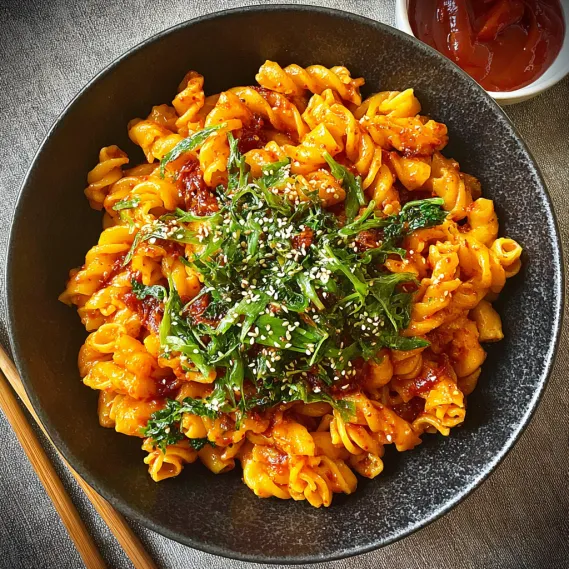
Creamy Gochujang Pasta Fusion
Home cooks adore this Creamy Gochujang Pasta Fusion for its bold, umami-packed flavor that dances between spicy and savory with every bite. It's the perfect 15-minute dinner victory for weeknights when cravings hit hard, or a showstopping dish to bring to potlucks and game days. The magic lies in the creamy gochujang sauce-rich, tangy, and just a little fiery-that clings to every twist of the Fusilli Corti Bucati pasta, making it irresistibly comforting yet exciting. Whether you're feeding a crowd or treating yourself to a solo indulgence, this dish delivers comfort with a kick.
What Makes This Recipe Special
- The fusion of gochujang with heavy cream creates a sauce that's deeply umami with a lingering heat, unlike typical creamy pasta sauces that lean too sweet or mild.
- Using Fusilli Corti Bucati (corkscrew-shaped pasta) ensures the sauce clings beautifully to every ridge and nook, maximizing flavor in every bite.
- The combination of butter and olive oil in the sauce base adds a luxurious richness while balancing the spice, preventing the gochujang from overwhelming the dish.
- Garnishing with fresh parsley at the end brightens the dish, cutting through the richness and adding a pop of color that makes it look as good as it tastes.
Ingredients
8 ozdry Fusilli Corti Bucati Pasta or any pasta shape of your choice
2 tablespoonsGochujang (Korean Red Chili Pepper Paste Sauce)
3 clovesgarlic, minced or pressed
4 tablespoonssalted butter
2 tablespoonsolive oil
½ cupshredded parmesan or cheddar cheese
½ cupheavy cream
½ teaspoonfreshly ground black pepper (optional)
2 teaspoonschopped parsley (optional garnish)
Nutrition
535 caloriesCalories
Per serving · Values are estimates
Instructions
1
Bring water to a rolling boil. Salt water if desired. Add pasta to water and cook for 7-12 minutes or until pasta reaches your desired texture. Strain and set aside.
2
Add butter and olive oil to a sauté pan and bring to medium heat. Add garlic and optional freshly ground black pepper, cooking for 30-60 seconds until garlic is fragrant but not burnt. Add Gochujang, heavy cream, and shredded parmesan or cheddar cheese. Cook for 1-2 minutes or until sauce is slightly thickened.
3
Add the cooked Bucatini pasta to the pan and stir to combine with the sauce.
4
Transfer to a plate, garnish with fresh parsley, and serve immediately.
Essential Tips
Bloom gochujang first
Cook the gochujang paste with the garlic in the butter and oil for at least 30 seconds to mellow its sharp edges and deepen its flavor before adding the pasta. This step is crucial for balancing the heat.
Reserve pasta water
Before draining the pasta, scoop out ½ cup of the starchy cooking water. Tossing the pasta back into the pan with a splash of this water helps emulsify the sauce, making it silkier and more cohesive.
Low and slow for garlic
Cook the minced garlic on medium-low heat to avoid burning it, which would turn bitter and ruin the sauce's delicate balance. You're looking for a golden, fragrant aroma, not any hints of brown.
Cheese timing matters
Add the shredded cheese to the sauce off the heat to prevent it from clumping or turning grainy. The residual heat will melt it smoothly into the sauce, ensuring a velvety texture.
Taste as you go
Gochujang varies in heat and saltiness between brands, so adjust the dish to taste. Add a pinch more cheese for saltiness or a splash of cream to mellow the spice if needed. Don't skip tasting-it's your best tool for perfection.
Smart Swaps & Variations
Dairy-free twist
Swap heavy cream for full-fat coconut milk and use vegan butter and a dairy-free hard cheese like Violife Parmesan to keep the sauce creamy without dairy.
Extra protein boost
Add ½ cup of cooked and shredded rotisserie chicken or crispy pancetta to the sauce for a hearty, protein-packed meal that's still ready in under 20 minutes.
Veggie-packed
Stir in 1 cup of sautéed mushrooms or spinach at the end of cooking for added texture and a nutritional boost without overpowering the gochujang flavor.
Spice control
For milder heat, reduce gochujang to 1 tablespoon and add 1 teaspoon of sweet paprika or a dash of honey to round out the flavors.
What to Serve With This
- Garlic naan or crusty sourdough bread to soak up every bit of the creamy gochujang sauce.
- Quick-pickled cucumbers or a simple arugula salad dressed with lemon vinaigrette to cut through the richness.
- Crispy roasted Brussels sprouts tossed with a sprinkle of chili flakes for a textural contrast.
- Iced Korean barley tea (boricha) or a cold lager beer to complement the spicy, creamy notes.
Storage & Reheating
Storage
Store leftovers in an airtight container in the fridge for up to 3 days. The sauce may thicken as it cools, but it will return to its creamy consistency when reheated.
Reheating
Reheat gently in a skillet over low heat, adding a splash of water or cream to loosen the sauce if needed. Microwaving can make the pasta gummy, so avoid it unless using a low-power setting with frequent stirring.
Expert Chef Tips
- Toast the gochujang in the butter and oil until it darkens slightly to deepen its caramelized, almost smoky notes-this adds layers of complexity that raw gochujang can't achieve.
- For a restaurant-style finish, finish the dish with a drizzle of high-quality olive oil and a sprinkle of flaky sea salt just before serving. This elevates the dish visually and enhances every bite.
- If the sauce breaks or looks grainy, remove the pan from heat and whisk in a teaspoon of cold water or a small pat of butter to bring it back together. Emulsification is all about patience and temperature control.
Equipment You’ll Need
- Large pot for boiling pasta
- Medium skillet or sauté pan (preferably nonstick or cast iron)
- Wooden spoon or silicone spatula for stirring
- Fine-mesh strainer for draining pasta
Nutritional Benefits
- High in protein from the pasta and cheese, providing about 20g per serving for muscle repair and satiety.
- Rich in capsaicin from gochujang, which may boost metabolism and reduce inflammation, though it's still a spicy dish.
- Contains healthy fats from olive oil and butter, which are essential for absorbing fat-soluble vitamins in the cheese.
- Moderate sodium content due to gochujang and cheese, so those watching their salt intake should adjust accordingly or opt for low-sodium versions.
Reviews
No written reviews yet — be the first to cook this and share how it turned out!
Leave a Review
Frequently Asked Questions
Can I use a different type of pasta?
Absolutely! While Fusilli Corti Bucati is ideal for sauce adhesion, any sturdy pasta like penne, rigatoni, or even cavatappi will work. Avoid delicate shapes like angel hair, as they may turn mushy in the rich sauce.
How do I adjust the spice level?
Start with 1 tablespoon of gochujang and taste before adding more. You can also balance the heat by adding a teaspoon of honey, a splash of soy sauce for umami, or a dollop of Greek yogurt to cool it down.
Can I make this ahead of time?
The pasta is best served fresh, but you can prep the sauce and cook the pasta separately up to a day ahead. Store them separately in the fridge, then combine and reheat gently when ready to serve.
What's the best way to melt the cheese smoothly?
Shred the cheese finely and add it to the sauce off the heat. Stir constantly as it melts to prevent clumping. If it starts to seize, remove the pan from heat and whisk vigorously.
Can I freeze the leftovers?
Freezing is not recommended, as the sauce may separate and the pasta can become mushy when thawed. The dish is best enjoyed fresh or stored in the fridge for up to 3 days.
What's a good substitute for gochujang?
If you can't find gochujang, mix 1 tablespoon of sriracha with 1 teaspoon of soy sauce and ½ teaspoon of smoked paprika to mimic its depth. Alternatively, use 1 tablespoon of miso paste for umami, but reduce the soy sauce accordingly.
How do I prevent the garlic from burning?
Cook the garlic on medium-low heat and stir constantly for the first 30 seconds. Remove the pan from heat entirely if it starts to brown too quickly-garlic burns in seconds and can ruin the dish.
Can I make this dish vegan?
Yes! Swap the butter for vegan butter, heavy cream for coconut cream, and cheese for a dairy-free alternative. Add a pinch of smoked salt to compensate for the missing umami from the cheese.
More Dinner Victories
🔒 From the Vault — 43,000+ premium recipes
Cook This Next