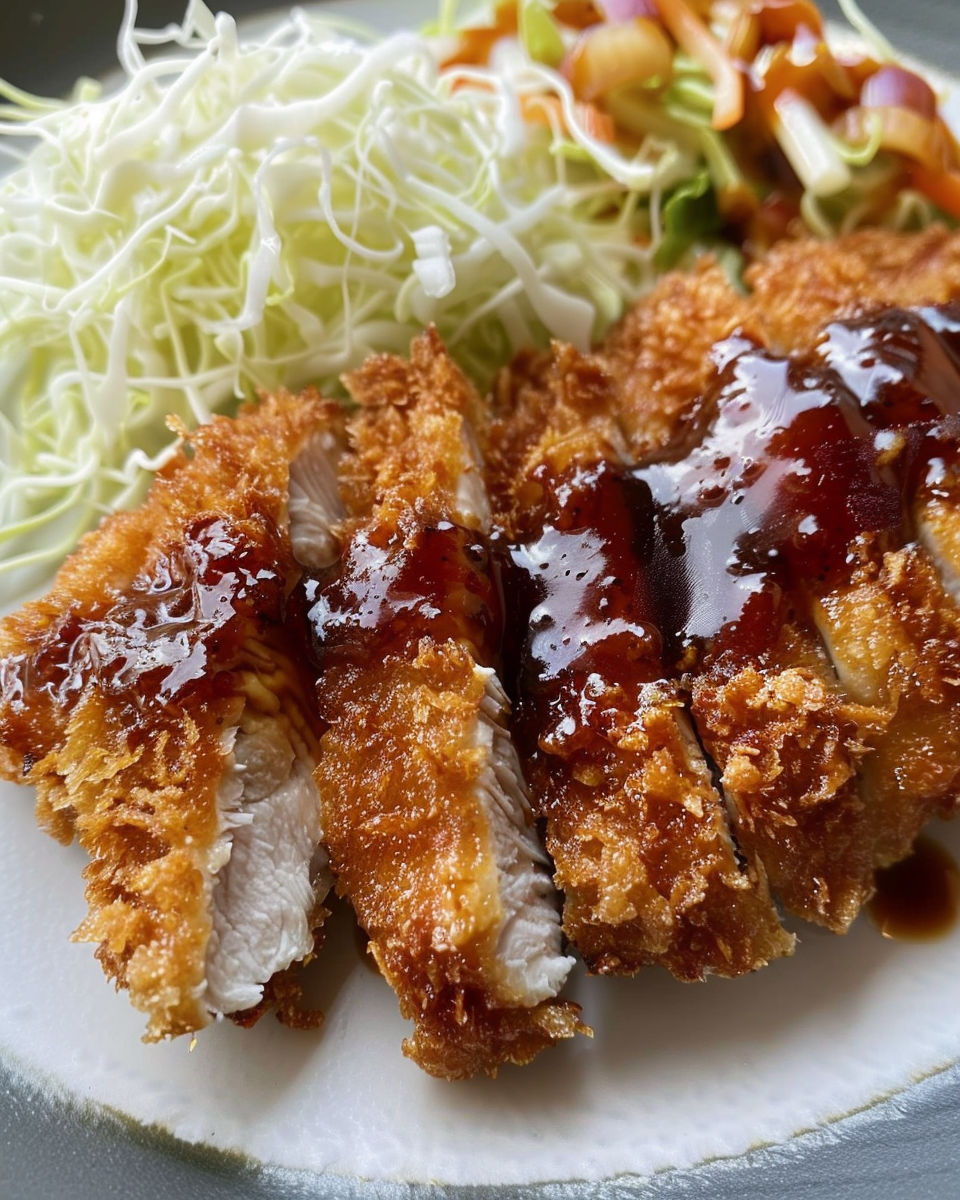
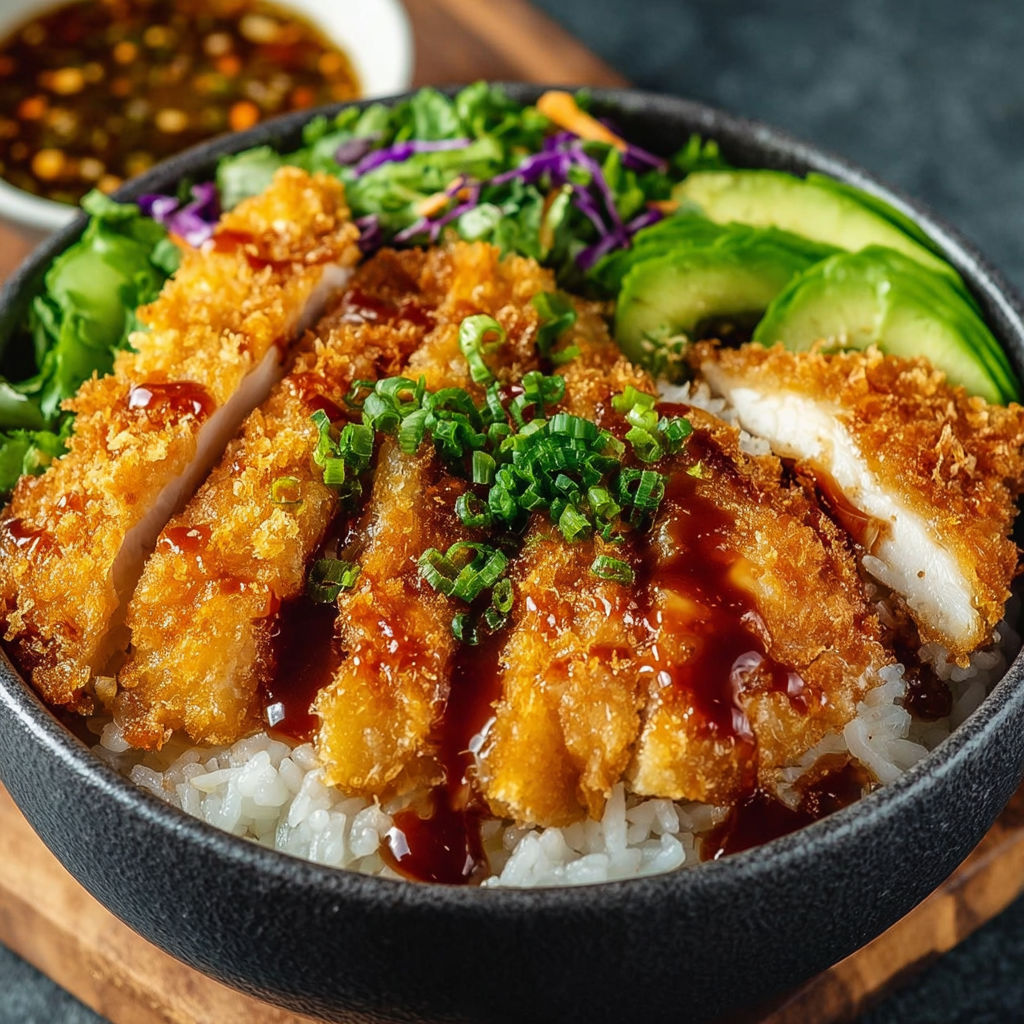
Crispy Chicken Katsu Bowls
There's something deeply satisfying about biting into a golden, crispy chicken katsu bowl after a long day-it's comfort food that feels special without being fussy. Perfect for lazy weeknights or when you want to transport your taste buds to a cozy Tokyo eatery, these bowls are a home cook's dream: easy enough to pull together on weeknights but impressive enough to serve guests. The contrast of crunchy panko-coated chicken, fluffy rice, and fresh veggies makes every bite exciting, while the tangy tonkatsu sauce ties it all together in a way that's hard to resist.
What Makes This Recipe Special
- The secret to *unbelievably* crispy panko lies in pressing the crumbs firmly onto the wet egg-coated chicken-don't skimp on this step, or you'll end up with a flimsy, sad crust.
- Pounding the chicken to an even half-inch thickness ensures it cooks quickly and stays juicy under that thick, crunchy exterior, avoiding the dreaded dry chicken tragedy.
- A teaspoon of salt in the flour dredge isn't just for seasoning-it helps draw out moisture from the chicken's surface, giving the panko something to cling to for maximum crunch.
- The optional cayenne pepper adds a subtle heat that cuts through the richness of the fried chicken and balances the sweetness of the tonkatsu sauce beautifully.
Ingredients
About 1 pound of skinless boneless chicken breasts, 2 pieces
1 cupof panko crumbs
1/2 cupregular flour
2 bigeggs
A teaspoon of salt
Half a teaspoon of black pepper
Half a teaspoon garlic powder
Half a teaspoon onion powder
Optional quarter teaspoon cayenne pepper
1/4 cupvegetable oil for frying
2 cupsof steamed white rice
1 cupcabbage shredded
Half a cup cucumber slices
A quarter cup green onions sliced
1/4 cuptonkatsu sauce or your favorite dipping sauce
Nutrition
600 caloriesCalories
Per serving · Values are estimates
Instructions
1
Put each chicken breast between plastic wrap sheets and gently pound so they’re about half an inch thick.
2
Make one dish with flour, salt, pepper, garlic and onion powders, plus the cayenne if you want some kick. Beat eggs in another bowl. Put the panko in a third container.
3
First coat the chicken in the flour mix and shake off what's extra. Dip it in the eggs, then press into the panko crumbs to cover well.
4
Warm up the oil in a large pan over medium heat. Cook the breaded chicken about 4 to 5 minutes on each side until golden and cooked through to 165°F. Drain on paper towels.
5
Scoop cooked rice into four bowls. On top, pile shredded cabbage, slices of cucumber, and chopped green onions.
Essential Tips
Use room-temp chicken
Take the chicken breasts out of the fridge 20 minutes before cooking to prevent the panko from sliding off due to temperature shock. Cold chicken contracts the surface, making it harder for the crumbs to adhere.
Pat chicken dry
After pounding, blot both sides of the chicken with paper towels to remove excess moisture. This ensures the flour dredge sticks properly and creates a crispier crust.
Medium heat is key
If the oil isn't hot enough, the chicken will absorb too much oil and turn greasy; if it's too hot, the outside will burn before the inside cooks. Aim for 350°F-use a thermometer if possible.
Rest the chicken
Let the fried chicken rest on a wire rack (not a plate) for 5 minutes after cooking. This keeps the crust crispy instead of steaming in its own heat.
Double-dip for extra crunch
For the ultimate texture, dip the floured chicken into the beaten eggs twice, pressing panko into it after each dip. This creates a thicker, more armored crust.
Smart Swaps & Variations
Spicy Sriracha Mayo
Swap tonkatsu sauce for a mix of 2 tbsp mayo, 1 tbsp sriracha, and 1 tsp rice vinegar for a creamy, spicy kick that pairs perfectly with the crispy chicken.
Gluten-free crust
Use gluten-free panko and a mix of almond flour and rice flour for the dredge to keep the texture crisp while accommodating dietary needs.
Vegetarian Katsu
Replace chicken with 1-inch thick slices of pressed and marinated firm tofu (use soy sauce, garlic, and ginger) for a plant-based version that still delivers crunch.
Extra-veggie bowl
Load up bowls with steamed broccoli, shredded carrots, or quick-pickled red onions for added color and a fresh, crunchy contrast to the fried chicken.
What to Serve With This
- Miso soup with silken tofu and scallions for a light, umami-rich start to the meal.
- Ice-cold Japanese barley tea or a crisp Sapporo beer to cut through the richness of the fried chicken.
- Edamame lightly salted and still in their pods for a fun, hands-on snack while cooking.
- Tempura-style sweet potato fries tossed in furikake for a sweet and savory side that complements the katsu.
Storage & Reheating
Storage
Store leftover chicken katsu in an airtight container in the fridge for up to 3 days. Keep the rice and veggies separate until ready to eat to prevent sogginess.
Reheating
Reheat the chicken in a skillet over medium-low heat for 2-3 minutes per side to restore crispiness. If using an oven, bake at 375°F for 10 minutes on a wire rack to avoid steaming.
Expert Chef Tips
- For a deeper flavor, infuse the oil with aromatics like garlic cloves or a strip of kombu before frying the chicken-strain before using to avoid burning.
- Use a Japanese mandoline to shave the cabbage paper-thin for an elegant, restaurant-style texture that blends seamlessly into the rice.
- If you don't have tonkatsu sauce, make a quick substitute by simmering 1/2 cup ketchup with 2 tbsp Worcestershire sauce, 1 tbsp soy sauce, 1 tbsp honey, and 1 tsp Dijon mustard for 5 minutes.
Equipment You’ll Need
- Heavy-bottomed skillet or frying pan (cast iron works beautifully for even heat distribution)
- Meat mallet or rolling pin (for pounding the chicken evenly)
- Wire rack (for resting the chicken post-frying to maintain crispiness)
- Thermometer (instant-read for oil temp and chicken doneness)
Nutritional Benefits
- A balanced meal with 600 calories that includes lean protein from chicken (about 40g per serving) and complex carbs from rice for sustained energy.
- The cabbage and cucumber add fiber (5g per serving) and vitamins A and C without adding significant calories, making this a nutrient-dense dish.
- Panko breading is lower in fat than traditional breadcrumbs due to its airy texture, but frying adds calories-opt for air-frying for a lighter version.
- Tonkatsu sauce contains soy sauce and mirin, providing umami flavor without excessive fat, but it's high in sodium-use sparingly if watching salt intake.
Reviews
No written reviews yet — be the first to cook this and share how it turned out!
Leave a Review
Frequently Asked Questions
Can I bake the chicken instead of frying it?
Yes! Bake at 400°F on a wire rack over a baking sheet for 20-25 minutes, flipping halfway, but the texture won't be as crisp as frying. For best results, broil for the last 2 minutes to mimic the deep-fry crunch.
What's the best way to reheat the whole bowl?
Reheat the chicken and rice separately: microwave the rice with a damp paper towel for 1-2 minutes, then pan-fry the chicken as directed. Assemble the bowl fresh to avoid sogginess.
Can I use chicken thighs instead of breasts?
Absolutely! Chicken thighs are more forgiving and stay juicier, but trim excess fat first to avoid flare-ups. Cook to 175°F internal temp for perfect doneness.
How do I make tonkatsu sauce from scratch?
Simmer 1/2 cup ketchup, 2 tbsp soy sauce, 1 tbsp Worcestershire, 1 tbsp mirin, 1 tsp honey, and 1/2 tsp garlic powder for 5 minutes. Strain and cool before serving.
Why is my panko falling off during frying?
This usually happens if the chicken wasn't dry enough before dredging or if the oil wasn't hot enough. Ensure the chicken is patted dry, and the oil is between 340-350°F before adding the chicken.
Can I prepare the chicken ahead of time?
Yes! Bread the chicken up to the panko step, then freeze on a tray for 30 minutes before transferring to a bag. Fry from frozen, adding 1-2 extra minutes per side.
What's the best rice to use?
Use short-grain Japanese rice like Koshihikari or Calrose for the stickiest, fluffiest texture. Rinse the rice 3-4 times until the water runs clear to avoid gummy results.
How do I make this dairy-free?
The recipe is already dairy-free, but check your tonkatsu sauce for hidden dairy. For extra richness, drizzle with toasted sesame oil or a sprinkle of furikake after assembly.
More Dinner Victories
🔒 From the Vault — 43,000+ premium recipes

Cook This Next