
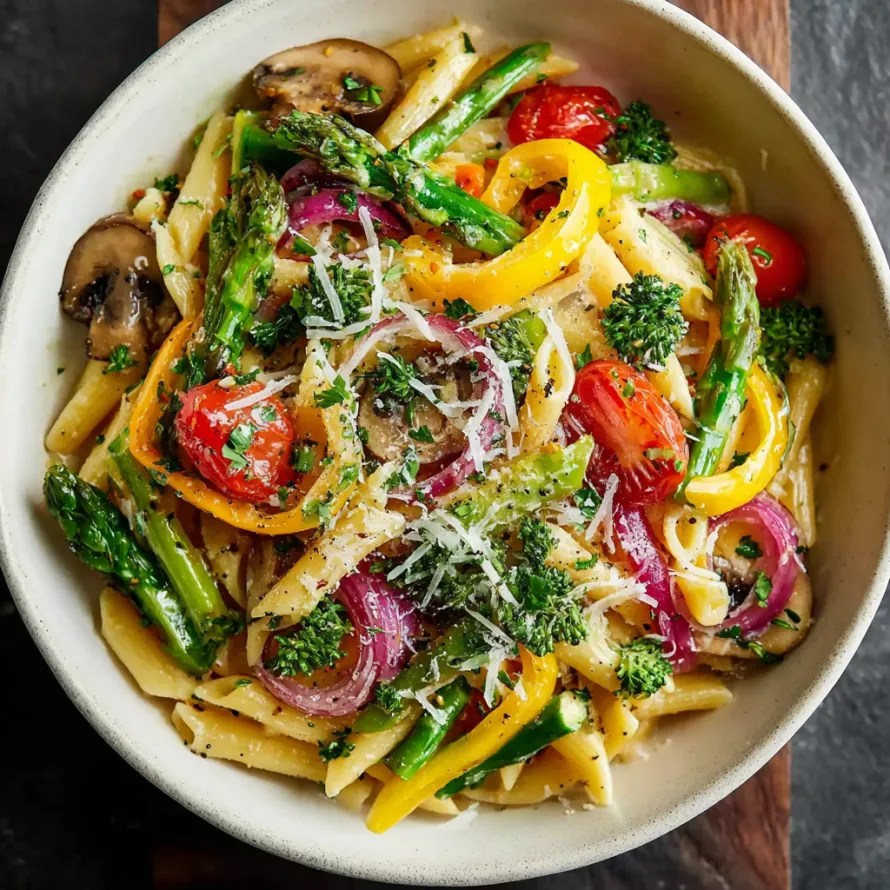
Delicious Pasta Primavera Dish
There's something magical about Pasta Primavera-it's the kind of dish that makes home cooks feel like they've stepped into a sunlit Italian kitchen without leaving their own home. With vibrant vegetables hugged by a zesty lemon-olive oil sauce and tender pasta, it's a refreshing escape from heavy weeknight meals. Perfect for busy evenings when you crave something light yet satisfying, this dish is as beautiful on the plate as it is on the palate. The bright colors and fresh flavors make it a crowd-pleaser for both family dinners and casual gatherings.
What Makes This Recipe Special
- Lemon-olive oil sauce is emulsified right in the pan for a silky, restaurant-style finish without heavy cream or butter.
- Vegetables are sautéed in stages to ensure each maintains its perfect texture-bell peppers stay crisp, broccoli stays bright green, and tomatoes burst with sweetness.
- Fresh herbs and Parmesan are added at the end for maximum aromatic impact, keeping the dish fresh and vibrant.
- Uses a minimalist ingredient list but delivers maximum flavor complexity through careful technique and timing.
Ingredients
300 gramspenne pasta, cooked al dente
1 mediumred bell pepper, sliced
1 mediumzucchini, diced
200 gramsbroccoli florets
200 gramscherry tomatoes, halved
3 tablespoonsolive oil
2 tablespoonsfresh lemon juice
1 teaspoonItalian herb blend
Salt and black pepper, to taste
30 gramsgrated Parmesan cheese
2 tablespoonsfresh parsley, chopped
Nutrition
420 caloriesCalories
Per serving · Values are estimates
Instructions
1
Boil the penne pasta in salted water until al dente, according to package instructions. Drain and set aside.
2
While the pasta cooks, slice the bell pepper, dice the zucchini, and halve the cherry tomatoes. Prepare the broccoli by trimming into small florets.
3
In a large skillet, heat olive oil over medium-high heat. Add the bell pepper, zucchini, and broccoli. Sauté for 5-7 minutes until they begin to soften.
4
Add the cherry tomatoes to the skillet and continue cooking for another 2-3 minutes. Stir in the Italian herb blend, lemon juice, salt, and black pepper.
5
Reduce the heat to low. Add the cooked pasta to the skillet and toss until evenly coated with the vegetable mixture and sauce.
6
Plate the pasta primavera. Sprinkle with grated Parmesan cheese and fresh parsley before serving.
Essential Tips
Prep veggies first
Chop all vegetables before you start cooking pasta. Once the water boils, timing is tight-prep ensures you can sauté the veggies immediately after draining the pasta without burning them.
Keep pasta al dente
Overcooking pasta will make it mushy when tossed with vegetables. Taste it 1 minute before the package recommends-it should still have a slight bite.
High heat for veggies
Use medium-high heat when sautéing vegetables to get a light char on the bell peppers and zucchini. This adds depth of flavor and prevents the dish from tasting watery.
Emulsify the sauce
After adding lemon juice and herbs, let the mixture simmer for 30 seconds. Then toss the pasta in the skillet off the heat-this helps the sauce cling to the pasta instead of pooling at the bottom.
Fresh herbs last
Add fresh parsley just before serving to preserve its bright green color and fresh flavor. If you add it earlier, it'll wilt and turn dull.
Smart Swaps & Variations
Creamy version
Stir in ¼ cup heavy cream or ½ cup ricotta at the end for a richer, more indulgent sauce. Reduce lemon juice slightly to balance the creaminess.
Protein boost
Add 150 grams of grilled chicken, shrimp, or crispy pancetta sautéed separately. Toss them in with the pasta at the end for extra heartiness.
Gluten-free
Use gluten-free penne and ensure all other ingredients are certified gluten-free. Cook the pasta 1-2 minutes less than package instructions to prevent mushiness.
Vegan
Omit Parmesan and use nutritional yeast for a cheesy flavor. Swap olive oil for vegan butter if preferred, and ensure no animal products are used.
What to Serve With This
- Garlic bread and a crisp white wine like Pinot Grigio to complement the lemon and herbs.
- A simple arugula salad with shaved fennel and a light lemon vinaigrette for extra freshness.
- Grilled shrimp skewers for a seafood twist, served on the side.
- A sprinkle of chili flakes for heat lovers, paired with iced tea or sparkling water.
Storage & Reheating
Storage
Store leftovers in an airtight container in the refrigerator for up to 3 days. The vegetables will soften further and the sauce may thicken, so give it a stir with a splash of water when reheating.
Reheating
Reheat gently in a skillet over low heat, adding a tablespoon of water or broth to loosen the sauce. Microwaving in 30-second intervals works too, but stir well to redistribute the sauce and avoid drying out the pasta.
Expert Chef Tips
- Toast your herbs: Warm the Italian herb blend in the skillet for 10 seconds before adding vegetables to bloom their flavors, making the dish taste more complex.
- Use pasta water wisely: Save ¼ cup of the cooking water. If the sauce is too thick when tossing with pasta, use a splash to create a silky, cohesive coating without diluting flavor.
- Char the tomatoes: Let the cherry tomatoes cook undisturbed for 1 minute after adding to the skillet to caramelize slightly. This intensifies their sweetness and adds depth to the sauce.
Equipment You’ll Need
- Large pot for boiling pasta
- Large skillet with high sides (12-inch or larger)
- Chef's knife and cutting board
- Tongs or wooden spoon for tossing pasta
Nutritional Benefits
- This dish is naturally high in fiber from vegetables and whole-grain pasta (if using whole wheat), promoting digestive health and satiety.
- Olive oil provides heart-healthy monounsaturated fats, which support cardiovascular health when consumed in moderation.
- Low in saturated fat since it avoids heavy cream or butter, making it lighter than many creamy pasta dishes.
- Rich in vitamins A and C from bell peppers, broccoli, and tomatoes, which support immune function and skin health.
Reviews
No written reviews yet — be the first to cook this and share how it turned out!
Leave a Review
Frequently Asked Questions
Can I use frozen vegetables instead of fresh?
Frozen vegetables work in a pinch, but thaw and pat them dry first to avoid excess moisture in the skillet. Expect a slight texture difference-fresh is always best for this dish. If using frozen broccoli, choose small florets to cook quickly and evenly.
What's the best way to chop the vegetables evenly?
Use a chef's knife and cut vegetables into uniform sizes-about ½-inch pieces for zucchini and bell pepper, and halved cherry tomatoes. For broccoli, trim into small, even florets. This ensures even cooking and prevents some pieces from burning while others stay raw.
Can I make this ahead?
Yes, but cook the vegetables just until tender-crisp (about 3 minutes less than the recipe suggests). Cool them quickly in an ice bath to stop cooking, then store in the fridge. Reheat in the skillet with a splash of water, then toss with freshly cooked pasta before serving.
What if I don't have Italian herb blend?
Make your own with 1 teaspoon each of dried oregano, basil, and thyme, plus ½ teaspoon of dried rosemary. Alternatively, use 1 tablespoon of fresh basil or parsley if you have it on hand-just add it at the end with the lemon juice.
Why does my pasta taste dry when I reheat it?
Reheated pasta loses moisture and can taste dry because the sauce absorbs into the pasta over time. To fix this, toss the leftovers with a splash of water, broth, or extra lemon juice and olive oil before reheating to revive the moisture and brightness.
Can I substitute the penne with another pasta shape?
Yes! Use any short pasta like fusilli, farfalle, or rigatoni. Long pasta like spaghetti or linguine works too, but break it in half before cooking to fit in the skillet. The key is to match the pasta's surface area to how well it holds the sauce and veggies.
Is there a way to reduce the acidity from the lemon?
If you find the lemon too sharp, add ½ teaspoon of honey or a pinch of sugar to balance the acidity. Alternatively, zest the lemon and use only the juice to mellow the flavor slightly while keeping the freshness.
Can I use dried herbs instead of fresh?
Yes, but reduce the amount by half and add them when you sauté the vegetables to allow their flavors to bloom. Fresh herbs are preferred for their bright, vibrant flavor, but dried work in a pinch if that's what you have.
More Dinner Victories

🔒 From the Vault — 43,000+ premium recipes

Cook This Next