
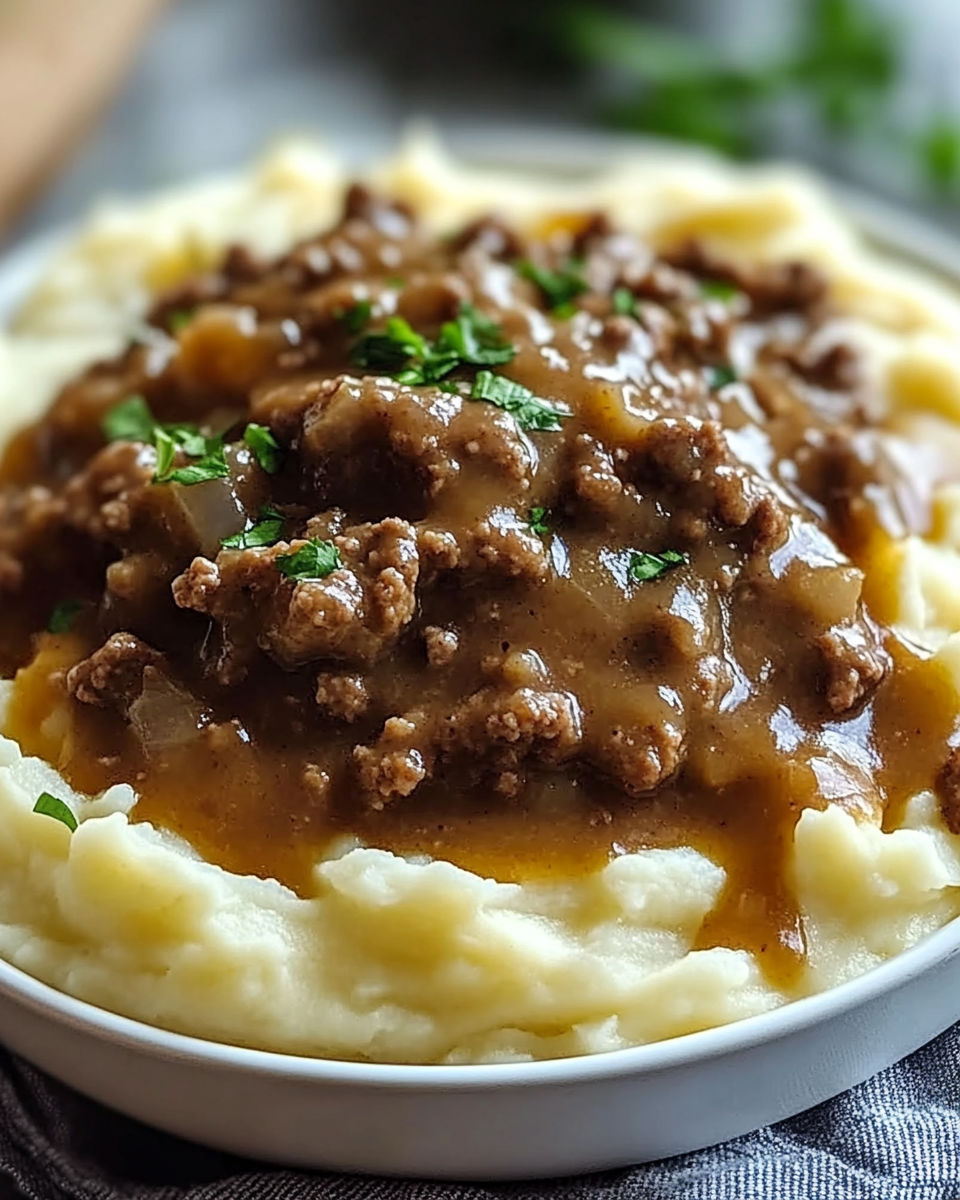
Ground Beef Gravy Mashed Potatoes
There's something deeply comforting about a plate of creamy mashed potatoes blanketed in savory ground beef gravy-a dish that turns simple ingredients into a hug on a plate. Home cooks love this meal for weeknight dinners, Sunday suppers, or when the weather turns chilly and only a hearty, warming dish will do. What makes it irresistible is the contrast of fluffy, buttery potatoes with the rich, peppery gravy, creating a symphony of textures and flavors every time. Plus, it's endlessly customizable, so you can tweak it to suit your family's tastes.
What Makes This Recipe Special
- The gravy is thickened with a cornstarch slurry, which gives it a glossy, restaurant-quality finish that clings beautifully to the mashed potatoes-no lumps here!
- Gently heating the butter and milk before blending it into the potatoes ensures a silky, lump-free mash that's creamy from the first bite to the last.
- Using low-sodium beef broth lets you control the saltiness of the gravy, so you can adjust it to your preference without overpowering the dish.
- Freshly cracked black pepper is the star of both the gravy and the potatoes, adding a bright, aromatic finish that elevates the entire dish.
Ingredients
Water, sufficient to cover potatoes in pot
1 tablespoonsalt, plus additional to taste
2 poundsrusset potatoes, peeled and cut into 1-inch pieces
3 tablespoonsunsalted butter, at room temperature
1/2 cupwhole milk, at room temperature
Freshly cracked black pepper, to taste
2 tablespoonscornstarch
1 poundground beef
1 1/2 cupsbeef broth, low-sodium if preferred
1 teaspoongarlic powder
1 teaspoonsalt, or to taste
1/4 to1/2 teaspoon freshly cracked black pepper
Nutrition
507 caloriesCalories
Per serving · Values are estimates
Instructions
1
Fill a medium pot with water and add 1 tablespoon of salt. Stir well, then add the peeled and cut russet potatoes. Place the pot over medium-high heat.
2
Bring the water to a rapid boil, then continue boiling the potatoes for 5 to 8 minutes, or until they can be easily pierced with a fork.
3
While the potatoes cook, combine the butter and whole milk in a small saucepan. Heat gently over medium heat, whisking occasionally, until the butter has melted completely.
4
Once potatoes are fork-tender, carefully drain the water. Return the potatoes to the pot on a cool burner. Mash the potatoes to your preferred consistency.
5
Gradually add the butter and milk mixture to the mashed potatoes, stirring thoroughly to blend until all liquid is absorbed.
6
Season the potatoes with salt and freshly cracked black pepper to taste. Stir well, then set aside until serving.
7
Heat a large skillet over medium-high heat. Add ground beef and cook, breaking up with a spoon, until browned and cooked through. Drain excess fat if necessary.
8
In a small bowl, whisk together cornstarch and a few tablespoons of beef broth to create a smooth slurry.
9
Reduce the skillet heat to medium. Add remaining beef broth, garlic powder, salt, and black pepper to the browned beef. Stir to combine and bring to a gentle simmer.
10
Gradually pour in the cornstarch slurry while stirring. Continue simmering until the gravy thickens, about 2 to 3 minutes.
11
Portion mashed potatoes onto a plate and top generously with ground beef and gravy. Serve immediately.
Essential Tips
Potato cut size
Cut your russet potatoes into even 1-inch chunks so they cook at the same rate. If some pieces are smaller, they'll turn mushy before the larger ones are tender.
Drain potatoes well
After boiling, make sure to drain the potatoes thoroughly and return them to the pot to sit over low heat for a minute. This evaporates any excess moisture that could thin your mashed potatoes.
Butter temperature
Let your butter and milk come to room temperature before heating them together. Cold ingredients will seize up the potatoes, making them gummy instead of fluffy.
Gravy simmering
Once you add the cornstarch slurry to the gravy, resist the urge to crank up the heat. A gentle simmer ensures the gravy thickens evenly without becoming starchy or stringy.
Season in layers
Season the mashed potatoes lightly before mixing in the butter and milk, then taste and adjust again after. This layered approach ensures balanced flavor without over-salting.
Smart Swaps & Variations
Creamy variation
Swap the whole milk for heavy cream to make the mashed potatoes extra decadent, or add 1/4 cup of sour cream for tangy richness.
Herb gravy
Stir in 1 tablespoon of fresh thyme or rosemary leaves into the gravy for a bright, earthy note that pairs beautifully with the beef.
Cheesy mash
Mix 1 cup of shredded sharp cheddar into the mashed potatoes right after adding the butter and milk mixture for a gooey, savory twist.
Spiced beef
Add 1/2 teaspoon of smoked paprika or a pinch of cayenne to the ground beef while browning for a subtle heat and smoky depth.
What to Serve With This
- Garlic green beans sautéed in olive oil and garlic for a fresh, crisp contrast to the creamy potatoes.
- A crisp green salad with a tangy vinaigrette to cut through the richness of the dish.
- Warm dinner rolls or cornbread on the side for soaking up any extra gravy.
- Iced tea or a cold glass of milk to balance the savory flavors.
Storage & Reheating
Storage
Store leftovers in an airtight container in the fridge for up to 3 days. Keep the mashed potatoes and gravy separate to prevent the potatoes from absorbing too much moisture from the gravy.
Reheating
Reheat the mashed potatoes gently in a skillet over low heat with a splash of milk or broth to restore creaminess. For the gravy, warm it slowly in a saucepan, stirring frequently to maintain its smooth texture.
Expert Chef Tips
- For ultra-fluffy mashed potatoes, use a potato ricer instead of a masher or ricer. This breaks down the potatoes into silky strands without activating too much starch, which can make them gluey.
- Deglaze the skillet after browning the beef with a splash of red wine or beer before adding the broth. This adds a subtle depth of flavor to the gravy that's hard to replicate otherwise.
- For a thicker gravy, use 1 tablespoon of cornstarch for every 2 cups of liquid. If you're unsure, start with half the amount and add more slurry if needed-it's easier to thicken than to fix an over-thickened gravy.
Equipment You’ll Need
- Medium pot for boiling potatoes
- Potato ricer or masher for creamy texture
- Large skillet for browning beef and making gravy
- Small saucepan for heating butter and milk mixture
Nutritional Benefits
- A single serving clocks in at around 507 calories, with 30g of protein from the ground beef, making it a satisfying and balanced meal.
- The mashed potatoes provide complex carbohydrates for sustained energy, while the beef contributes iron and B vitamins for a nutrient boost.
- Using low-sodium beef broth helps control sodium intake, but you can further reduce salt by seasoning to taste at the end.
- The dish is naturally gluten-free if you use a gluten-free beef broth, making it a great option for those with dietary restrictions.
Reviews
No written reviews yet — be the first to cook this and share how it turned out!
Leave a Review
Frequently Asked Questions
Can I use pre-cooked ground beef?
Yes! Brown the beef ahead of time, then store it in the fridge for up to 3 days or freeze it for up to 3 months. When ready to use, skip the browning step and simmer the beef directly in the gravy with the broth and seasonings.
What's the best way to thicken the gravy if it's too thin?
Make a quick slurry with 1 tablespoon of cornstarch mixed with 2 tablespoons of cold water. Whisk it into the simmering gravy and cook for 1-2 minutes until thickened. Avoid adding more cornstarch directly to the pot, as it can create lumps.
Can I make this ahead for a potluck?
Absolutely! Prepare the mashed potatoes and gravy separately, then store them in airtight containers in the fridge for up to 2 days. Reheat the potatoes and gravy separately before serving, and give the mashed potatoes a quick stir with a splash of milk to refresh them.
What's a good substitute for russet potatoes?
Yukon Gold potatoes work beautifully here-they're naturally creamier and hold their shape well. Avoid waxy potatoes like red or new potatoes, as they'll turn gummy when mashed.
How can I make this dish lower in fat?
Use low-fat milk or unsweetened almond milk in the mashed potatoes, and replace half the butter with olive oil or a butter substitute. For the gravy, lean ground turkey or chicken can stand in for beef, though the flavor will be milder.
Why did my gravy turn lumpy?
Lumpy gravy is usually the result of adding the cornstarch slurry too quickly or not whisking it enough before adding it to the skillet. To fix it, strain the gravy through a fine-mesh sieve to remove lumps, then whisk vigorously to smooth it out.
Can I freeze this dish?
Yes, but freeze the components separately. Mashed potatoes can become grainy when frozen, so it's best to make them fresh. The gravy freezes well for up to 3 months-thaw it overnight in the fridge and reheat gently on the stove.
What's the secret to perfectly seasoned gravy?
Taste as you go! Start with a light hand on the salt and pepper, then adjust after the gravy has simmered for a few minutes. Remember, the potatoes will also need seasoning, so keep the gravy slightly under-seasoned if you're unsure.
More Dinner Victories


🔒 From the Vault — 43,000+ premium recipes



Cook This Next