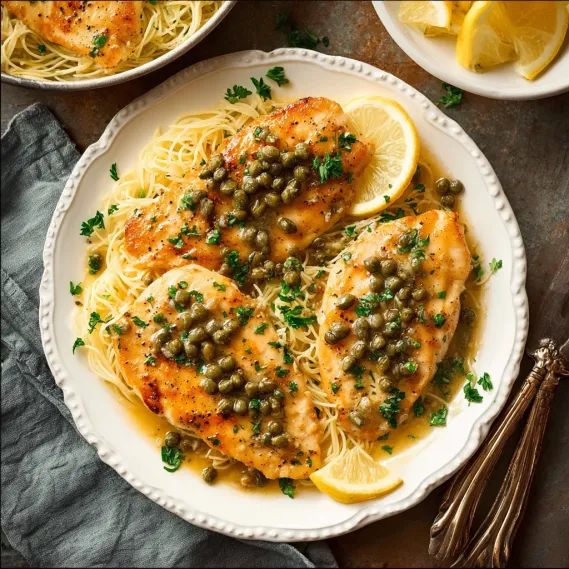
Healthy Chicken Piccata Lemon
There's something magical about the bright, tangy pop of lemon and the briny punch of capers dancing together in a silky sauce. This Healthy Chicken Piccata comes together in under 35 minutes, making it a weeknight hero without sacrificing depth or soul. The crisp-tender chicken soaks up every drop of the lemon-caper sauce, leaving you with a dish that feels indulgent but is light enough to savor guilt-free. Perfect for a cozy dinner when you crave comfort with a Mediterranean twist.
What Makes This Recipe Special
- The double-coat technique-first a light dredge in flour, then a second sear-creates a delicate, lace-like crust that clings to the sauce without tasting heavy.
- Deglazing the pan with white wine (or broth) dissolves fond for a richer sauce base, a trick borrowed from French technique but adapted for Italian brightness.
- Fresh lemon zest is added at the end to preserve its vibrant aroma, a small but game-changing step that elevates flavor over time.
- Capers are chopped small and added early in the sauce, allowing their flavor to infuse the broth instead of just sitting on top like a garnish.
Ingredients
1½ poundsboneless, skinless chicken breasts (4 small chicken breasts)
¼ teaspoonsalt
¼ teaspoonblack pepper
½ cupall-purpose flour, divided
1 tablespoonolive oil
¼ cupfinely minced shallots (2-3 large shallots)
1 tablespoonminced garlic
¼ cupdry white wine (optional)
¾ cuplow sodium chicken broth
3 tablespoonscapers, chopped if desired
2 tablespoonslemon juice (1 large lemon)
½ tablespoonlemon zest (1 large lemon)
Cooked orzo, angel hair pasta, or cauliflower rice
Minced fresh parsley for garnish
Lemon slices
Nutrition
313 caloriesCalories
Per serving · Values are estimates
Instructions
1
Trim chicken breast of excess fat. Slice the chicken breast in half horizontally to create two filets, or pound chicken breast between two sheets of plastic wrap until ¼ inch thick. Season with salt and pepper.
2
Place all but 1 tablespoon of flour in a shallow dish or disposable plastic bag. Lightly dredge the chicken in the flour, tapping off excess. Discard leftover flour.
3
Heat a large skillet over medium-high heat. Once heated, add enough olive oil to coat the bottom of the pan, about 2 tablespoons. Working in batches, sauté the chicken on the first side until golden brown (about 3 minutes). Flip and sauté the other side for about 2 minutes. Remove chicken to a plate. Repeat with remaining chicken.
4
Lower heat to medium. If the pan is dry, add another drizzle of oil, along with the shallots and garlic. Sauté for 1-2 minutes, until shallots are translucent. Add reserved 1 tablespoon flour and cook for about 2 minutes.
5
Add the wine to deglaze the pan, scraping up any brown bits with a wooden spoon. Add the chicken broth, capers, lemon juice, and zest. Whisk vigorously and bring to a simmer.
6
Add the chicken to the sauce, basting the filets with the sauce. Simmer until the chicken is cooked through and the sauce has thickened slightly (about 2 minutes). Add more broth if the sauce gets too thick. Taste the sauce and adjust seasoning with salt and pepper. Serve immediately, garnished with parsley and lemon wedges.
Essential Tips
Dry the chicken
Pat the chicken breasts dry with paper towels before dredging-moisture causes the flour to clump and prevents a crisp crust. For extra insurance, chill the floured chicken for 5 minutes before searing to help the coating set.
Medium-high heat
Sear the chicken over medium-high heat to develop a golden crust without overcooking. If the pan smokes, lower the heat slightly and add a splash of oil. The goal is a deep sear, not a burnt exterior.
Low-sodium broth
Use low-sodium broth to control saltiness, especially since capers and lemon juice already add briny and tart notes. Taste the sauce before serving and adjust with a pinch of salt or a squeeze of lemon if needed.
Sauce consistency
Simmer the sauce until it's slightly thickened but still pourable. If it reduces too quickly, add a splash of water or broth to loosen. The sauce should coat the back of a spoon but not glisten like oil.
Garnish last
Add fresh parsley just before serving to preserve its color and freshness. Lemon slices can be placed on top for serving, but avoid adding them to the sauce while cooking-unlike preserved lemons, fresh citrus will turn bitter when heated.
Smart Swaps & Variations
Dairy-free
Swap butter in the traditional recipe with olive oil and use a splash of unsweetened almond milk to finish the sauce for a richer texture without dairy.
Gluten-free
Replace all-purpose flour with a 1:1 gluten-free flour blend (like King Arthur or Bob's Red Mill) and ensure your broth and wine are gluten-free.
Herb-infused
Add 1 tablespoon fresh thyme or tarragon to the sauce while it simmers for an aromatic twist that complements the lemon.
Vegetarian
Use thick-cut portobello mushroom caps or cauliflower steaks in place of chicken. Dredge and sear as directed, then simmer in the sauce for 4-5 minutes until tender.
What to Serve With This
- Creamy polenta or orzo pasta to soak up the sauce, topped with extra lemon zest and parsley.
- Garlic-roasted green beans or asparagus for a crisp contrast to the silky chicken.
- A crisp white wine like Pinot Grigio or Sauvignon Blanc to mirror the dish's acidity.
- Garlic bread or a simple arugula salad with a drizzle of balsamic glaze for a rustic Italian spread.
Storage & Reheating
Storage
Store leftover chicken and sauce separately in airtight containers in the fridge for up to 3 days. The chicken will keep its texture better if reheated gently.
Reheating
Reheat the chicken and sauce together in a skillet over low heat, stirring occasionally, until warmed through (2-3 minutes). Avoid microwaving, as it can make the chicken rubbery and the sauce grainy.
Expert Chef Tips
- Use a mix of lemon juice and zest early in the sauce (half the juice at the start, half at the end) to layer brightness throughout the dish.
- For a richer sauce, finish with 1 teaspoon of cold butter whisked in off-heat-this adds a velvety sheen without dairy overload.
- If the sauce breaks or looks oily, whisk in 1 teaspoon of cornstarch mixed with 1 tablespoon of cold water to emulsify it quickly.
Equipment You’ll Need
- Large stainless steel or cast-iron skillet for even heat distribution
- Sharp chef's knife for slicing chicken and shallots
- Measuring cups and spoons for precise seasoning
- Instant-read thermometer to ensure chicken is perfectly cooked
Nutritional Benefits
- Low in saturated fat due to skinless chicken and olive oil, with 313 calories per serving.
- Rich in vitamin C from fresh lemon juice and zest, supporting immune function and collagen production.
- Contains heart-healthy monounsaturated fats from olive oil, which may reduce inflammation.
- High in lean protein (about 35g per serving) to support muscle repair and satiety without excess calories.
Reviews
No written reviews yet — be the first to cook this and share how it turned out!
Leave a Review
Frequently Asked Questions
Can I skip the wine?
Absolutely! Replace the wine with an extra ¼ cup of low-sodium chicken broth. The dish will still taste bright and flavorful, though slightly less complex. If you're avoiding alcohol entirely, use broth or a splash of apple cider vinegar for acidity.
Why is my chicken dry or tough?
Overcooking is the most likely culprit. Chicken breasts are lean and cook quickly-aim for an internal temperature of 165°F (74°C) and remove from heat as soon as it's reached. Pounding to an even thickness ensures even cooking, especially if your breasts vary in size.
Can I make this ahead?
Yes, but reheat gently to preserve texture. Prepare the sauce up to 2 days ahead and store it separately. Cook the chicken fresh, then reheat both components together in a skillet. The sauce will thicken more upon cooling, so loosen with a splash of water or broth when reheating.
What's the best way to slice chicken breasts evenly?
Place the breast on a cutting board and, holding your knife parallel to the board, slice horizontally through the thickest part. If one side is thicker, open the breast like a book and press down gently to even out the thickness before slicing.
Can I use chicken thighs instead?
Yes! Chicken thighs stay juicier and handle the sauce well. Trim excess fat, then slice into cutlets or pound to ½-inch thickness. Cook over slightly lower heat to render fat and prevent burning.
Why is my sauce separating?
Sauces can split if the heat is too high or if ingredients are added too quickly. Keep the heat medium-low when simmering, and whisk constantly as you add the broth and lemon juice. If it does separate, whisk vigorously or blend with an immersion blender for 10 seconds.
Can I freeze this dish?
Freeze the sauce and chicken separately for up to 3 months. Thaw overnight in the fridge, then reheat in a skillet, adding a splash of water to loosen the sauce. Avoid freezing with the lemon zest, as it can turn bitter over time.
How do I know when the chicken is done?
Use an instant-read thermometer inserted into the thickest part of the breast-it should read 165°F (74°C). If you don't have one, slice into the thickest part: the juices should run clear with no pink. Overcooking will dry it out, so check early!
More Dinner Victories
🔒 From the Vault — 43,000+ premium recipes
Cook This Next