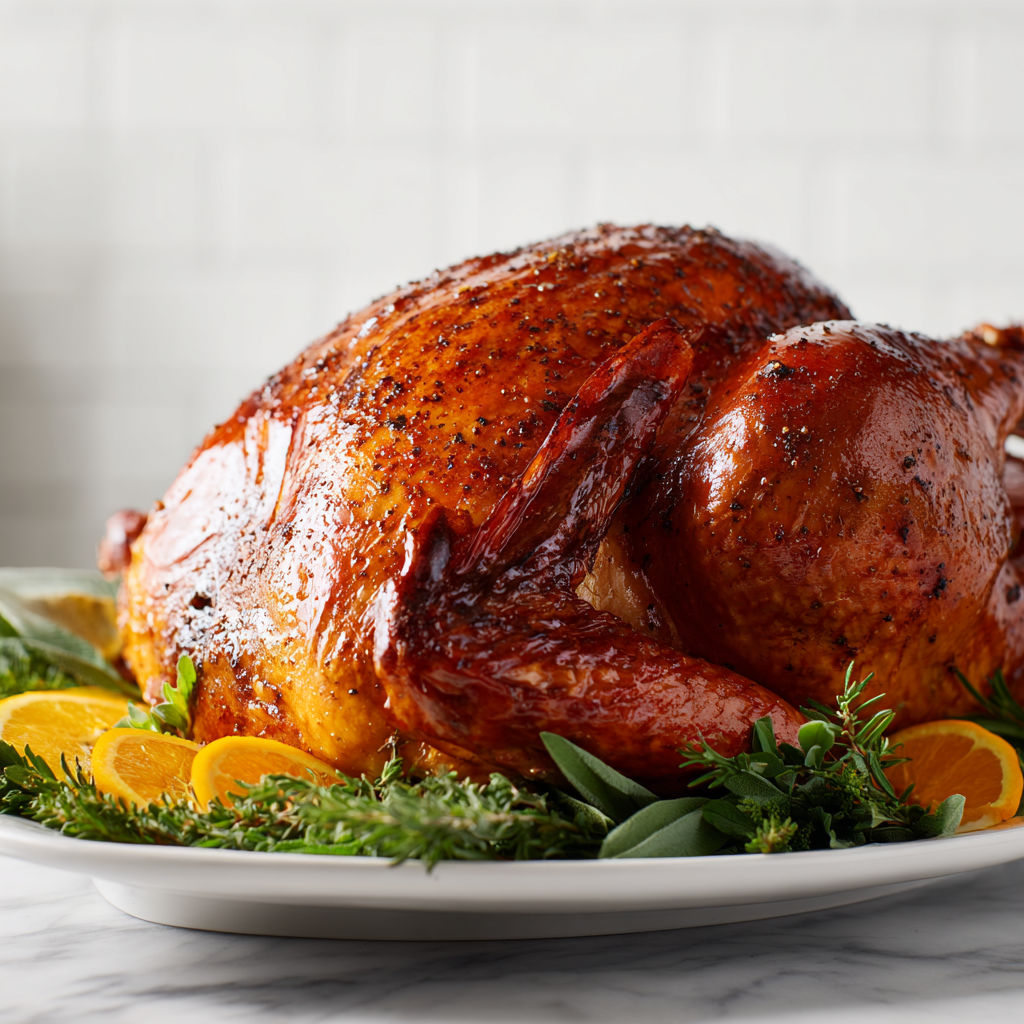
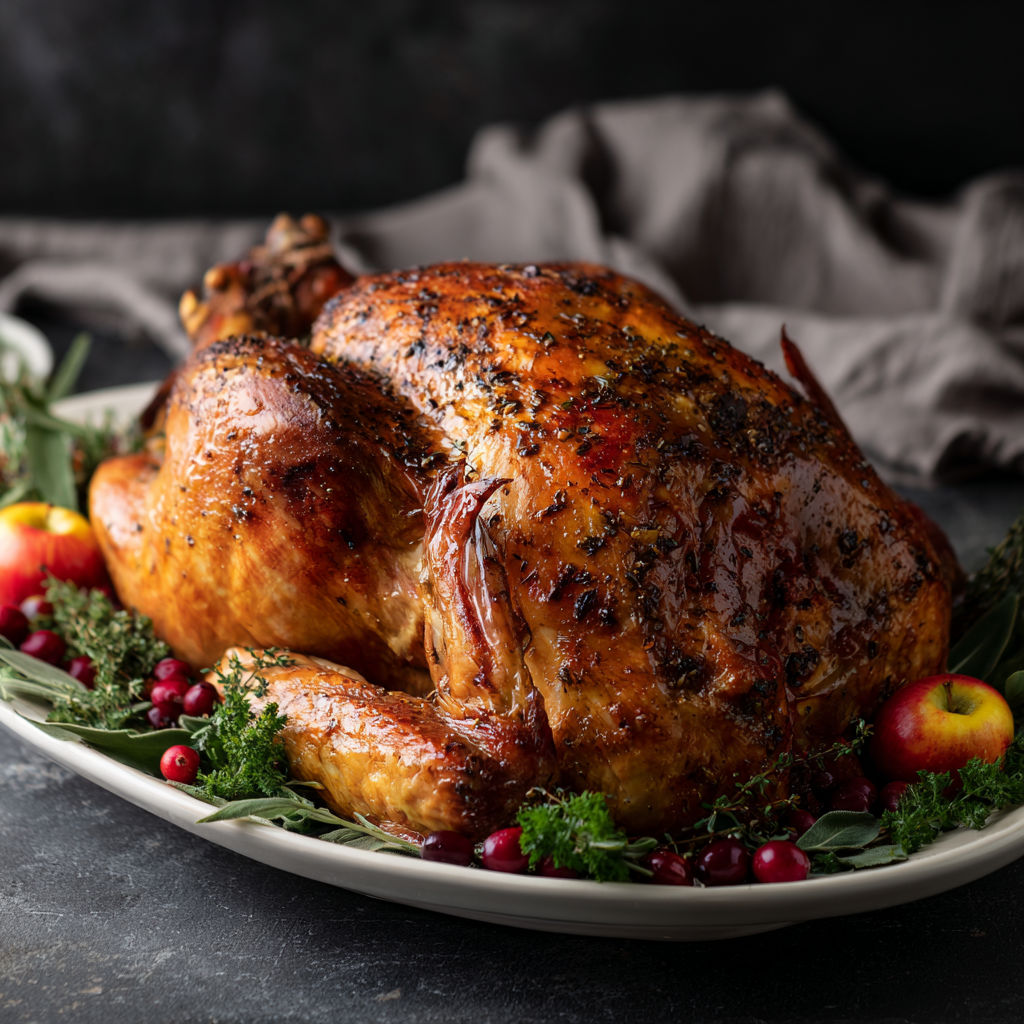
Herb Butter Thanksgiving Turkey
There's something magical about pulling a golden-brown, herb-kissed turkey from the oven on Thanksgiving morning-the aroma alone sets the tone for the whole feast. This herb butter turkey isn't just another dry bird; it's a showstopper with juicy meat, crisp skin, and layers of flavor from fresh herbs, garlic, lemon, and a touch of wine. Home cooks adore it because it's practically foolproof yet feels gourmet, making every holiday table shine. Plus, the basting technique keeps the meat succulent and the skin gloriously crackly.
What Makes This Recipe Special
- The cheesecloth basting method ensures even moisture and flavor penetration without drying out the turkey-like giving it a spa day in the oven.
- A blend of wine and stock in the basting liquid adds depth and complexity, infusing the meat with subtle tangy richness.
- Fresh herbs are rubbed under the skin *and* into the cavity, creating a double hit of aroma in every bite.
- The three-stage cooking process-low and slow roast, cheesecloth basting, then uncovered browning-guarantees perfect texture: tender meat and crisp skin in one bird.
Ingredients
1 wholeturkey, preferably fresh and natural (not injected with solution)
1/2 cupunsalted butter, melted
2 cupsdry white wine
2 cupschicken or turkey stock
1 cupunsalted butter, softened
2 tablespoonsfresh sage, stems removed and chopped
2 tablespoonsfresh rosemary, stems removed and chopped
1 tablespoonfresh thyme, stems removed and chopped
1 wholelemon, zested (preferably organic)
4 clovesgarlic, minced
3 teaspoonssea salt
1 yellowonion, quartered
2 clovesgarlic
1 lemon, halved
2 carrots, cut into large pieces
3 celerystalks, cut into large pieces
Nutrition
500 caloriesCalories
Per serving · Values are estimates
Instructions
1
Preheat oven to 300°F (149°C).
2
Pour 2 cups water into the bottom of the roasting pan to maintain moisture during cooking.
3
Combine melted butter, dry white wine, and chicken or turkey stock in a medium saucepan; set aside.
4
Mix softened butter with chopped sage, rosemary, thyme, lemon zest, minced garlic, and sea salt until evenly combined.
5
Carefully loosen the skin over the turkey breast and drumsticks, then rub two-thirds of the herb butter mixture under the skin. Spread the remaining herb butter evenly over the skin.
6
If not stuffing, fill the turkey cavity with onion, whole garlic cloves, halved lemon, carrots, and celery for enhanced flavor. Tie the legs together, secure the skin flap at the back, and tuck the wings under.
7
Fold cheesecloth large enough to drape over the top and sides of the turkey.
8
Dip the prepared cheesecloth into the wine and butter mixture, ensuring it is thoroughly saturated, then cover the top and sides of the turkey.
9
Warm the butter and wine mixture gently over low heat and use it to baste the turkey. When mixture runs low, use accumulated pan juices for continued basting.
10
Transfer turkey to oven and baste every 20 to 30 minutes. Roast until the thigh meat reaches 180–185°F and, if stuffed, internal stuffing temperature is 165°F. Plan for 15–20 minutes per pound if stuffed, and a slightly shorter time if unstuffed.
11
Remove cheesecloth 30–45 minutes before the turkey is done to allow skin to brown. If cheesecloth sticks, baste thoroughly to loosen.
12
Let the turkey rest for at least 15 minutes before carving to allow juices to redistribute. Use resting time to prepare gravy from pan juices.
Essential Tips
Butter temperature
Use softened butter for the herb paste so it spreads easily under the skin without tearing. If it's too cold, warm it slightly to make it pliable, but don't melt it-you want it to stay in place.
Cheesecloth prep
Choose unbleached, undyed cheesecloth for this recipe. Soak it thoroughly in the wine-butter mixture to maximize flavor transfer and prevent sticking. If your cloth is thin, double it up for better coverage.
Wine choice matters
Use a dry white wine like Sauvignon Blanc or Pinot Grigio for the basting liquid-it balances the richness of the turkey without adding sweetness. Avoid cooking wines; they can be overly salty.
Resting is non-negotiable
Let the turkey rest for 15-20 minutes before carving to prevent dryness. Tent it loosely with foil to keep it warm, but not so tight that steam builds up and softens the skin.
Gravy shortcut
Skim the fat from the pan juices before making gravy to avoid a greasy sauce. For extra richness, whisk in a pat of cold butter at the end to give it a velvety finish.
Smart Swaps & Variations
Herb swap
Replace sage and rosemary with 2 tbsp fresh tarragon and 1 tbsp fresh oregano for a brighter, slightly anise-like flavor.
Citrus twist
Use blood orange zest instead of lemon for a deeper, slightly floral note that pairs beautifully with the wine basting.
Spiced version
Add 1 tsp ground coriander and ½ tsp smoked paprika to the herb butter for a warm, smoky depth.
Herb butter paste
For a firmer texture, chill the herb butter mixture before rubbing it under the skin to prevent melting too quickly.
What to Serve With This
- Classic sage and onion stuffing, using leftover turkey for a post-feast sandwich.
- Creamy mashed potatoes drizzled with the pan gravy for ultimate comfort.
- Roasted Brussels sprouts with pancetta and a splash of balsamic glaze.
- A dry Riesling or buttery Chardonnay to complement the herbs and wine notes.
Storage & Reheating
Storage
Store leftovers in an airtight container in the fridge for up to 4 days. Separate the meat from the bones and store them separately to preserve texture.
Reheating
Reheat slices in a skillet with a splash of broth or gravy over low heat to prevent drying. Avoid microwaving, as it can make the skin rubbery.
Expert Chef Tips
- For ultra-crisp skin, pat the turkey *very* dry before seasoning-even a little moisture can steam the skin and prevent browning.
- Use a probe thermometer in the thickest part of the thigh to monitor doneness; 180-185°F is ideal for juicy meat, but over 190°F risks drying out.
- Save the turkey neck and giblets to make a quick stock for gravy or soup while the bird roasts-it adds depth without extra effort.
Equipment You’ll Need
- Roasting pan with a rack (or a sturdy metal rack set inside a deep tray)
- Cheesecloth (or heavy-duty aluminum foil as a substitute)
- Instant-read meat thermometer
- Pastry brush for basting and herb butter application
Nutritional Benefits
- A 3.5 oz serving (about 1/4 of a 12-14 lb turkey) provides ~250 calories, primarily from lean protein and healthy fats from the herb butter.
- High in selenium (36% DV per serving), which supports immune function and acts as a powerful antioxidant.
- Contains no added sugars or processed ingredients, making it a naturally nutrient-dense centerpiece for holiday meals.
- The white wine basting adds resveratrol, a compound linked to heart health, though the amount is minimal compared to drinking wine.
Reviews
No written reviews yet — be the first to cook this and share how it turned out!
Leave a Review
Frequently Asked Questions
Can I use a frozen turkey?
Yes, but thaw it completely in the fridge (about 24 hours per 4-5 lbs) before seasoning. A partially frozen turkey won't cook evenly and may leave parts underseasoned.
What if I don't have cheesecloth?
Use heavy-duty aluminum foil instead, cut into a large rectangle and lightly oiled to prevent sticking. Baste frequently to mimic the cheesecloth's moisture retention.
How do I prevent the turkey from browning too fast?
If the skin darkens before the turkey is done, tent it loosely with foil. Avoid covering too early, as it can trap steam and soften the skin.
Can I make this recipe ahead?
Yes! Season the turkey up to 24 hours ahead and refrigerate uncovered on a wire rack to dry the skin. Roast it the next day for optimal texture.
What's the best way to carve?
Remove the legs and thighs first by cutting through the joint, then slice the breast against the grain. Serve the dark meat and white meat separately for variety.
Can I use this method for a smaller turkey?
Absolutely. Adjust the cooking time to 13-15 minutes per pound, and monitor the temperature closely-smaller turkeys cook faster and can dry out if over-roasted.
How do I know if the turkey is done?
Check the thickest part of the thigh with a meat thermometer; it should reach 180-185°F. If you don't have a thermometer, pierce the thigh-juices should run clear, not pink.
Can I use this recipe for other poultry?
Yes! Adjust the cooking time to 12-15 minutes per pound for chicken (165°F internal temp) or 18-20 minutes per pound for a duck (175°F internal temp).
More Thanksgiving
🔒 From the Vault — 43,000+ premium recipes
Cook This Next