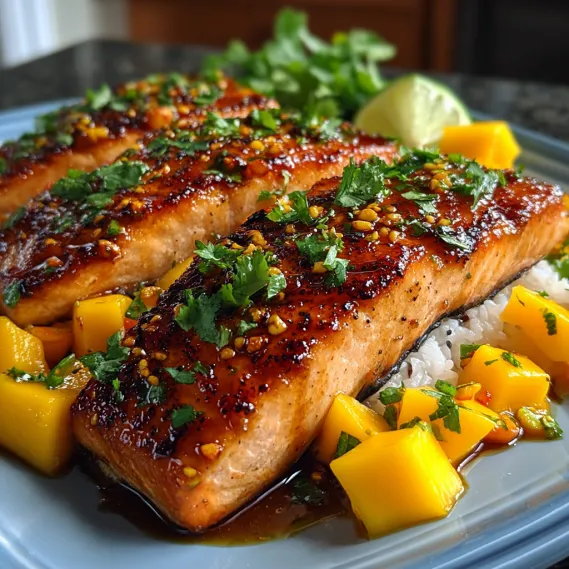
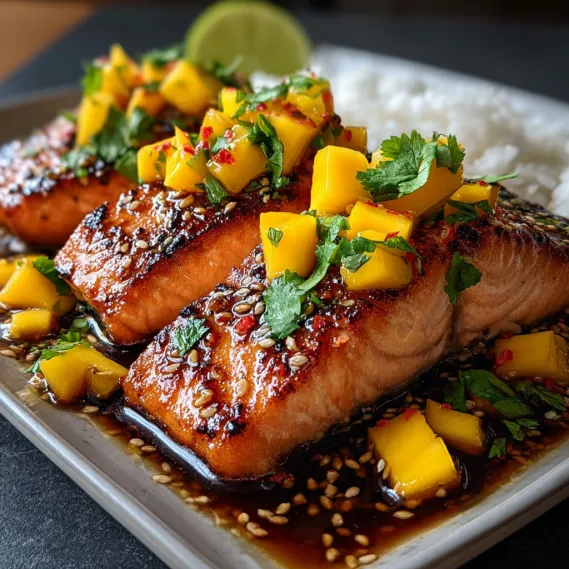
Mango Teriyaki Salmon Glazed
There's something magical about the way sweet mango and savory teriyaki dance together, especially when they cloak a perfectly flaky salmon fillet. Home cooks adore this dish for its vibrant colors and balanced flavors-it feels gourmet but comes together in under 30 minutes, making weeknights feel special. Whether you're treating your family to a quick weeknight dinner or impressing guests at a dinner party, this recipe delivers restaurant-quality results with minimal effort. The bright lemon finish and nutty sesame seeds add the perfect finishing touches to make every bite irresistible.
What Makes This Recipe Special
- The mango teriyaki sauce is thickened just before serving with a cornstarch slurry to preserve the fresh, fruity flavor of the mango puree, unlike traditional sauces that often reduce the fruit's brightness.
- Sesame oil is added to the marinade for depth but is not cooked beyond its smoke point, ensuring its nutty aroma infuses the salmon without turning bitter.
- Salmon is baked on parchment paper to prevent sticking and to catch all the drippings, which are then used to baste the fish halfway through cooking for maximum flavor penetration.
- A final drizzle of fresh lemon juice right before serving cuts through the sweetness and brightens the dish, a trick often overlooked in Asian-inspired salmon recipes.
Ingredients
4 salmonfillets
1 cupmango puree
1/4 cupsoy sauce
2 tablespoonsrice vinegar
2 tablespoonshoney or maple syrup
1 tablespoonsesame oil
2 garliccloves, minced
1 teaspoonfresh ginger, grated
1 tablespooncornstarch mixed with 2 tablespoons cold water (slurry)
Juice of 1/2 lemon
sesame seeds
chopped green onions
Nutrition
350 caloriesCalories
Per serving · Values are estimates
Instructions
1
In a saucepan over medium heat, combine mango puree, soy sauce, vinegar, honey, sesame oil, garlic, and ginger. Bring to a simmer and stir in the cornstarch slurry. Cook until thickened, about 2–3 minutes. Remove from heat.
2
Preheat oven to 200°C (400°F). Place salmon fillets on a parchment-lined baking dish. Brush with the mango teriyaki sauce.
3
Bake for 12–15 minutes or until the salmon flakes easily with a fork.
4
Drizzle with extra sauce, squeeze lemon juice on top, and garnish with sesame seeds and chopped green onions.
Essential Tips
Use ripe mangoes
For the best flavor, choose fully ripe mangoes like Ataulfo or Tommy Atkins. Their natural sweetness and smooth texture make the sauce luxurious. Avoid canned mango puree-it often contains additives that dull the fresh fruit flavor.
Don't overcook the salmon
Salmon continues to cook slightly after removing it from the oven. Pull it out when it's just beginning to flake but still looks slightly translucent in the center. The internal temperature should reach 125°F (52°C) for perfect medium doneness.
Make the sauce ahead
Prepare the mango teriyaki sauce up to 2 days in advance and store it in the fridge. Reheat gently over low heat before using, stirring constantly to prevent scorching. The flavors meld beautifully overnight.
Pat salmon dry
Before baking, thoroughly pat the salmon fillets dry with paper towels. This ensures the sauce adheres better and creates a slight crust on the fish during baking, enhancing texture.
Use high-quality soy sauce
Avoid low-sodium versions unless you adjust for saltiness. A rich, aged soy sauce like Japanese shoyu or tamari adds umami depth that balances the sweet mango and honey in the glaze.
Smart Swaps & Variations
Spicy Mango Teriyaki
Add 1 teaspoon of sriracha or 1/2 teaspoon of red pepper flakes to the sauce for a subtle heat that complements the sweetness without overpowering it.
Ginger-Sesame Crust
Mix 1/4 cup panko breadcrumbs with 1 tablespoon toasted sesame seeds and 1 teaspoon grated ginger. Press onto the salmon before baking for added texture and aromatic warmth.
Maple-Syrup Vegan
Replace honey with pure maple syrup to make the dish vegan while maintaining the rich, caramelized sweetness that pairs so well with the salmon.
What to Serve With This
- Steamed jasmine rice or cauliflower rice for a lighter option, which soaks up the sauce beautifully.
- Quick-pickled cucumber ribbons tossed with rice vinegar, sugar, and a pinch of salt to cut through the richness.
- Blistered bok choy or broccolini sautéed in garlic and sesame oil for a vibrant green side.
- Iced green tea or a crisp Sauvignon Blanc to complement the sweet and savory flavors.
Storage & Reheating
Storage
Store leftover salmon and sauce separately in airtight containers in the refrigerator for up to 3 days. The salmon will keep its texture best when reheated gently.
Reheating
Reheat the salmon gently in a covered skillet over low heat for 2-3 minutes, adding a splash of water or sauce to keep it moist. Avoid the microwave, which can make the fish rubbery and the sauce split.
Expert Chef Tips
- For a restaurant-style finish, torch the salmon skin briefly after baking to create a crispy, slightly charred exterior that contrasts with the tender flesh.
- Infuse the mango puree by simmering 1-inch chunks of ripe mango with a strip of lemon zest and a pinch of salt for 10 minutes, then strain and puree for a deeper, more complex fruit flavor.
- Brush the salmon with sauce twice: once before baking and again halfway through cooking. This builds layers of flavor and ensures every bite is coated in that irresistible glaze.
Equipment You’ll Need
- Medium saucepan for making the teriyaki sauce
- Baking sheet lined with parchment paper for even cooking
- Pastry brush for coating the salmon with sauce
- Small saucepan or skillet for reducing the sauce if needed
Nutritional Benefits
- High in omega-3 fatty acids from salmon, which support heart and brain health, with about 2,500 mg per 4 oz serving.
- Mango puree provides vitamin C and vitamin A, contributing to immune function and skin health, while adding natural sweetness without refined sugars.
- Soy sauce offers plant-based protein and essential amino acids, though it's high in sodium-opt for low-sodium versions or use tamari to reduce salt content.
- Honey or maple syrup adds antioxidants and trace minerals, though it's still a source of natural sugars-use sparingly if watching sugar intake.
Reviews
No written reviews yet — be the first to cook this and share how it turned out!
Leave a Review
Frequently Asked Questions
Can I use frozen salmon fillets for this recipe?
Yes, but thaw them completely in the fridge overnight and pat them very dry before baking. Frozen salmon can release more moisture, so avoid overcrowding the baking dish to ensure even cooking and proper browning.
What's the best way to thicken the sauce if I don't have cornstarch?
You can use arrowroot powder or tapioca starch in a 1:1 ratio with water for the slurry. Alternatively, simmer the sauce uncovered for 5-7 minutes to reduce it naturally, though this may intensify the mango flavor slightly.
Can I make this dish ahead for meal prep?
Yes! Prepare the sauce and bake the salmon up to 1 day ahead. Store them separately in the fridge. Reheat the salmon gently in a skillet with a splash of water or sauce, and rewarm the sauce over low heat before serving.
Is this recipe gluten-free if I use tamari instead of soy sauce?
Yes, tamari is a gluten-free alternative to soy sauce and works perfectly in this recipe. Just ensure it's labeled gluten-free, as some brands may contain wheat. Check the label to confirm.
My sauce turned out too thin. How can I fix it?
If the sauce is too thin after baking, return it to the saucepan and simmer over medium-low heat for 3-5 minutes, stirring constantly. If it's too thick or clumpy, whisk in 1-2 tablespoons of warm water to loosen it.
Can I substitute another fruit for the mango?
Peach or pineapple work well for a similar sweet-tart profile. Use 1 cup of puree or finely blended fruit and adjust the sweetness with honey or maple syrup to taste, as some fruits are less sweet than mango.
Why does my salmon skin stick to the parchment paper?
This usually happens if the salmon is not fully thawed or if the parchment paper isn't non-stick. Use parchment paper labeled for baking, and ensure the salmon is completely dry before baking. A light spray of oil on the paper can also help.
How can I tell when the salmon is done without a thermometer?
The salmon is done when it reaches an internal temperature of 125°F (52°C) and flakes easily with a fork. The flesh should still look slightly translucent in the center. If you press gently with a finger, it should spring back lightly, not feel mushy.
More Dinner Victories


🔒 From the Vault — 43,000+ premium recipes

Cook This Next