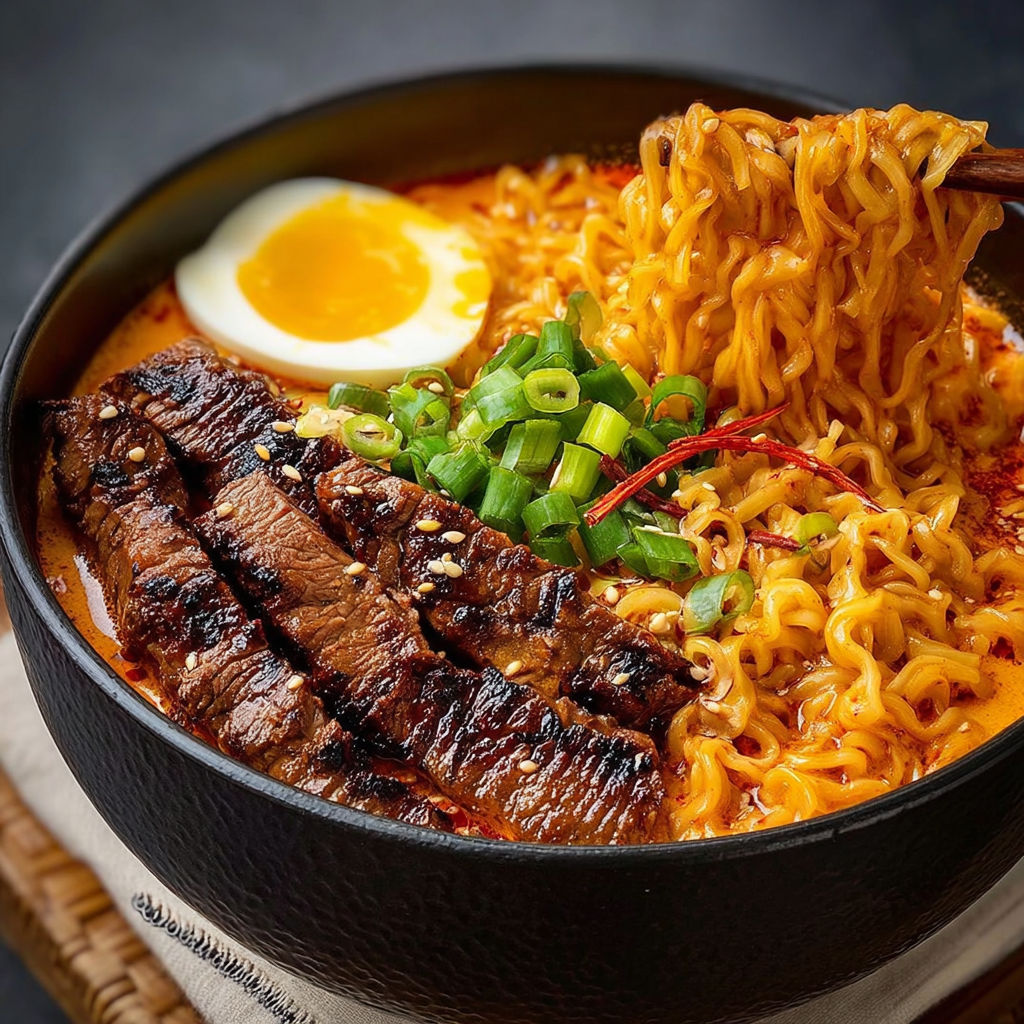
Spicy Korean Ramen Grilled Beef
There's something deeply comforting about a steaming bowl of noodles kissed by smoky, spicy Korean flavors, especially when it's anchored by tender, marinated ribeye slices. This dish turns a humble instant ramen into a restaurant-worthy meal that feels like a hug on a chilly evening. It's the kind of recipe that makes home cooks feel like culinary magicians, transforming simple ingredients into something irresistibly rich and layered. Perfect for date night, a laid-back family dinner, or when you crave a flavor explosion without spending hours in the kitchen.
What Makes This Recipe Special
- The marinade combines gochujang, soy sauce, and sesame oil for a deeply savory base that tenderizes the steak while infusing it with Korean barbecue vibes.
- A creamy, spicy mayo drizzle made with Kewpie mayo and gochugaru adds a velvety contrast to the fiery ramen broth and charred beef.
- The broth is elevated with gochugaru and rice vinegar, creating a balanced heat that's smoky, tangy, and just a little sweet-no instant noodle fatigue here.
- Thinly sliced steak cooks in under 2 minutes on a hot grill pan, ensuring maximum tenderness and a delicious sear without overcooking.
Ingredients
10.5 ouncesribeye or sirloin steak, sliced
2 tablespoonssoy sauce
1 tablespoongochujang (Korean chili paste)
1 tablespoonsesame oil
1 teaspoonbrown sugar
2 garliccloves, minced
1/2 teaspoonground black pepper
2 packsinstant ramen noodles, seasoning packets discarded
2 cupschicken broth or beef broth
1 tablespoongochugaru (Korean red pepper flakes)
1 teaspoonsoy sauce
1 teaspoonrice vinegar
1 teaspoonsesame oil
Salt, to taste
3 tablespoonsmayonnaise (preferably Kewpie)
1 tablespoonsriracha or Korean chili sauce
1 teaspoonsesame oil
1/2 teaspoongarlic powder
Pinch sugar, optional
2 tablespoonschopped green onions
1 teaspoontoasted black sesame seeds
Extra chili oil or gochugaru, optional
Nutrition
680 caloriesCalories
Per serving · Values are estimates
Instructions
1
Combine 2 tablespoons soy sauce, 1 tablespoon gochujang, 1 tablespoon sesame oil, 1 teaspoon brown sugar, 2 minced garlic cloves, and 1/2 teaspoon ground black pepper in a bowl.
2
Add sliced ribeye or sirloin steak to the marinade. Mix well to coat evenly, cover, and refrigerate for 30 minutes or overnight for maximum flavor.
3
In a small bowl, whisk together 3 tablespoons mayonnaise, 1 tablespoon sriracha or Korean chili sauce, 1 teaspoon sesame oil, 1/2 teaspoon garlic powder, and a pinch of sugar if using. Set aside.
4
In a large pot, bring 2 cups chicken or beef broth to a simmer over medium heat. Stir in 1 tablespoon gochugaru, 1 teaspoon soy sauce, 1 teaspoon rice vinegar, 1 teaspoon sesame oil, and salt to taste.
5
Add ramen noodles to the simmering broth and cook until just al dente, about 3 minutes.
6
Heat a grill pan or skillet over high heat. Sear marinated steak slices for 1–2 minutes on each side until charred and cooked to your preferred doneness. Slice if needed.
7
Divide noodles and broth among serving bowls. Arrange grilled beef over noodles. Drizzle with creamy sauce.
8
Top bowls with chopped green onions, toasted black sesame seeds, and extra chili oil or gochugaru if desired. Serve immediately while hot.
Essential Tips
Slice steak thinly
Partially freezing the steak for 15-20 minutes before slicing makes it easier to cut into thin, even strips. This ensures quick, even cooking and a better texture in every bite.
Don't skip the marinade time
While 30 minutes works, marinating overnight allows the gochujang and soy sauce to deeply penetrate the beef, creating layers of flavor. If short on time, even 15 minutes makes a noticeable difference compared to no marinade.
Use high heat for the steak
A screaming-hot grill pan or cast-iron skillet is key to achieving a caramelized sear without steaming the meat. Let the pan preheat for a full 3 minutes before adding the beef.
Noodle timing matters
Ramen noodles cook fast-aim for just 2-3 minutes in the simmering broth to keep them al dente. Overcooking turns them mushy and releases too much starch, clouding the broth.
Toast sesame seeds fresh
Lightly toast sesame seeds in a dry pan for 1-2 minutes until fragrant to enhance their nutty flavor. This small step makes a huge difference in the final dish's aroma and taste.
Smart Swaps & Variations
Spicy Mushroom Boost
Sauté 1 cup sliced shiitake or cremini mushrooms with the garlic in the marinade, then add them to the noodle broth for an umami-rich, earthy twist.
Vegetarian
Swap the steak for thick slices of portobello mushrooms or tofu pressed and marinated in the same sauce. Grill or pan-fry until crispy before adding to the noodles.
Extra Creamy
Blend 1 tablespoon cream cheese into the mayo sauce for a richer, more decadent drizzle that adds body and a subtle tang.
What to Serve With This
- Quick-pickled cucumbers (thinly sliced cucumbers tossed with rice vinegar, sugar, and salt)
- Korean corn cheese (grilled corn mixed with melted mozzarella and a drizzle of mayo)
- Cold beer or soju for a refreshing contrast to the heat
- Kimchi pancakes or mandu (dumplings) for a full Korean feast
Storage & Reheating
Storage
Store leftovers in an airtight container in the fridge for up to 2 days. The noodles may absorb broth over time, so add a splash of water when reheating to restore the texture.
Reheating
Reheat gently in a pot over low heat, stirring frequently to prevent the noodles from sticking. For the best texture, warm the beef separately in a skillet to revive its crispy edges before adding it back to the noodles.
Expert Chef Tips
- Use a small amount of baking soda (¼ teaspoon) in the steak marinade to help tenderize the meat further-especially useful for lean cuts like sirloin.
- Add a splash of mirin to the broth for a subtle sweetness that rounds out the spiciness and enhances the overall harmony of flavors.
- For extra depth, char a few slices of leek or scallion over an open flame and blend them into the mayo sauce for a smoky, charred note.
Equipment You’ll Need
- Heavy-bottomed pot or Dutch oven for the broth
- Grill pan or cast-iron skillet for the steak
- Sharp knife for thinly slicing the beef
- Small bowl for whisking the mayo sauce
Nutritional Benefits
- High in protein from the ribeye steak, providing essential amino acids for muscle repair and satiety.
- Kewpie mayo adds healthy fats, but the portion is small enough to keep saturated fat in check compared to traditional mayo alternatives.
- Gochugaru and gochujang provide capsaicin, which may boost metabolism and offer anti-inflammatory benefits.
- Ramen noodles are low in fiber, so pairing with pickled veggies or a side salad can help balance the meal's glycemic load.
Reviews
No written reviews yet — be the first to cook this and share how it turned out!
Leave a Review
Frequently Asked Questions
Can I use a different cut of beef?
Yes! Flank steak or flap meat works well too. Slice against the grain for maximum tenderness. Avoid overly fatty cuts like ribeye if you're watching calories, as they can make the broth greasy.
What's a good substitute for gochujang?
If you can't find gochujang, mix 1 tablespoon sriracha with 1 teaspoon soy sauce and ½ teaspoon miso paste for a similar depth. It won't be identical, but it'll get you close.
Can I make this ahead?
Absolutely! Marinate the beef up to 2 days ahead and store it in the fridge. Cook the noodles fresh to avoid sogginess, but you can prep the broth and mayo sauce ahead and reheat gently before serving.
How do I adjust the spice level?
For less heat, reduce the gochugaru in the broth to ½ teaspoon or omit it entirely. For more heat, add a teaspoon of gochugaru to the mayo drizzle or a dash of cayenne pepper to the steak marinade.
Why discard the ramen seasoning packets?
The packets are usually high in sodium and MSG, which can overpower the dish's delicate balance. Using just the noodles lets you control the flavor and saltiness to your preference.
Can I use fresh noodles instead of instant?
Fresh wheat noodles work if you adjust the cooking time to 1-2 minutes in the simmering broth. They're more delicate, so watch them closely to avoid mushiness.
What if my broth is too salty?
Dilute it with a splash of water or unsalted broth. If the saltiness is from the steak marinade, balance it with extra rice vinegar or a drizzle of honey in the broth.
How can I make the dish less greasy?
After searing the steak, blot it with a paper towel to remove excess fat. Use a lean cut like sirloin or trim visible fat before marinating. Skim any rendered fat from the broth before serving.
More Dinner Victories

🔒 From the Vault — 43,000+ premium recipes

Cook This Next