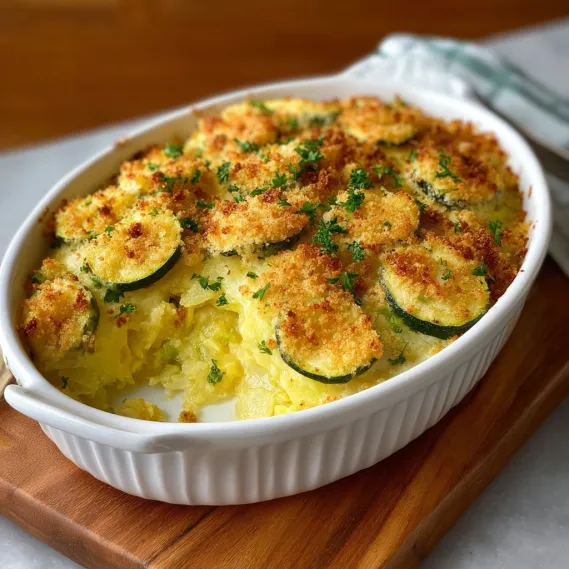
Summer Squash Casserole Bake
There's something magical about summer squash casserole bake-it captures the essence of the season in a single dish. Home cooks love it for its creamy texture, sharp cheddar tang, and golden breadcrumb top that's irresistibly crunchy. Perfect for potlucks, Sunday suppers, or a cozy weeknight dinner, this bake feels like a warm hug on a plate. The way the squash melts into the cheesy custard while the topping stays perfectly crisp is pure summer comfort.
What Makes This Recipe Special
- The squash is sautéed first to concentrate its natural sweetness and remove excess moisture, ensuring the casserole isn't watery.
- Sharp cheddar is used instead of mild for a bold, tangy flavor that cuts through the creamy custard.
- The breadcrumbs are layered both inside and on top, creating a triple-textured delight-creamy, crunchy, and crisp.
- A touch of garlic and onion powder in the custard base adds depth without overpowering the delicate squash.
Ingredients
4 mediumsummer squash, sliced
1 cupshredded sharp cheddar cheese
1/2 cupmilk
2 eggs, beaten
1 cupbreadcrumbs
2 tablespoonsbutter, melted
1 teaspoongarlic powder
1/2 teaspoononion powder
Salt and pepper, to taste
Nutrition
210 caloriesCalories
Per serving · Values are estimates
Instructions
1
Preheat the oven to 350°F (175°C).
2
In a large skillet, melt butter over medium heat and sauté the squash for 5-7 minutes, until softened.
3
In a large bowl, combine the eggs, milk, garlic powder, onion powder, salt, and pepper. Stir in the sautéed squash.
4
Add half of the breadcrumbs and cheese to the mixture, then pour everything into a greased casserole dish.
5
Top with the remaining breadcrumbs and a few pats of butter.
6
Bake for 25-30 minutes, until the top is golden brown and the casserole is bubbling.
7
Let it cool for a few minutes before serving.
Essential Tips
Prevent watery casserole
After sautéing the squash, spread it on a paper towel-lined plate for 5 minutes to drain excess liquid before mixing with other ingredients. This ensures a firm, sliceable bake rather than a soupy one.
Toast breadcrumbs for extra crunch
Heat the breadcrumbs in a dry skillet over medium heat for 2-3 minutes, stirring often, before using. This step deepens their flavor and guarantees a golden, crispy top every time.
Use room-temperature eggs
Beat the eggs at room temperature for a smoother custard that blends seamlessly with the milk and squash. Cold eggs can create tiny lumps in the mixture.
Grease the dish thoroughly
Use butter or nonstick spray generously on the casserole dish to prevent sticking, especially around the edges where the crust forms. A well-greased dish makes serving effortless.
Let it rest before serving
Allowing the casserole to cool for 5-10 minutes after baking firms up the custard, making it easier to slice and serve without falling apart.
Smart Swaps & Variations
Herbed Variation
Add 1 tablespoon of fresh chopped thyme or basil to the squash mixture along with the cheese for a bright, aromatic twist.
Vegetarian Pesto
Blend 1/4 cup basil pesto into the egg and milk mixture for a herby, garlicky depth that pairs beautifully with the squash.
Gluten-Free
Swap regular breadcrumbs for gluten-free panko or crushed gluten-free crackers to keep the crunch while accommodating dietary needs.
Spicy Kick
Mix 1/4 teaspoon of smoked paprika or a pinch of cayenne into the squash as it sautés for a subtle heat that balances the creaminess.
What to Serve With This
- A crisp green salad with a lemon vinaigrette to cut through the richness.
- Grilled lemon-herb chicken or a simple grilled steak for a hearty meal.
- Iced sweet tea or a chilled white wine like Sauvignon Blanc for a refreshing pairing.
- Buttered cornbread or warm dinner rolls to soak up any leftover custard.
Storage & Reheating
Storage
Store leftovers in an airtight container in the refrigerator for up to 4 days. The casserole will firm up as it chills, so let it sit at room temperature for 15 minutes before reheating.
Reheating
Reheat in the oven at 350°F (175°C) for 10-15 minutes, covered with foil to prevent the top from over-browning. For a quicker option, microwave individual portions for 1-2 minutes, but avoid overdoing it to keep the texture intact.
Expert Chef Tips
- For an ultra-smooth custard, strain the egg-milk mixture through a fine-mesh sieve before combining with the squash. This removes any stray bits for a velvety texture.
- Press the squash slices lightly with a paper towel while sautéing to remove even more moisture, especially if using zucchini, which tends to be waterier than yellow squash.
- For a deeper flavor in the breadcrumb topping, toss the breadcrumbs with 1 tablespoon of melted butter and a pinch of salt before adding them to the dish. This buttery coating ensures every bite is rich and crisp.
Equipment You’ll Need
- 9x13-inch glass or ceramic casserole dish
- Large skillet for sautéing squash
- Mixing bowls (one large, one medium)
- Fine-mesh sieve (for straining custard)
Nutritional Benefits
- At 210 calories per serving, this dish is a lighter summer option compared to heavy casseroles, thanks to the lean protein from eggs and the low-calorie density of summer squash.
- Summer squash is rich in vitamin C and antioxidants like beta-carotene, which support immune health and skin vitality.
- Using 2% milk instead of whole milk reduces saturated fat while maintaining creaminess, making this a balanced choice for a side dish.
- The dish provides a good amount of calcium from the cheese, which is essential for bone health, especially when paired with vitamin D from sunlight exposure in summer.
Reviews
No written reviews yet — be the first to cook this and share how it turned out!
Leave a Review
Frequently Asked Questions
Can I use zucchini instead of summer squash?
Yes, zucchini works well, but it's often waterier. To compensate, sauté it longer to evaporate moisture, or mix in 1 tablespoon of cornstarch with the breadcrumbs to absorb excess liquid. Yellow squash is naturally sweeter and firmer, making it ideal for this recipe.
What's the best way to prep the squash ahead of time?
Slice the squash up to a day in advance and store it in a colander in the fridge, lightly salted to draw out moisture. Rinse and pat dry before sautéing. This prep step saves time and ensures the squash doesn't release too much liquid during baking.
Can I make this casserole ahead of time?
Absolutely! Assemble the casserole up to the baking step, cover tightly with foil, and refrigerate for up to 24 hours. When ready to bake, add 5-10 minutes to the baking time to account for the cold start. Avoid freezing fully baked casserole, as the texture can become mushy upon thawing.
How can I make this dish lower in calories?
Use 2% milk instead of whole milk, reduce the cheese to 3/4 cup, and swap half the breadcrumbs for almond flour or crushed whole-grain crackers. These swaps cut calories while maintaining flavor and texture. For an even lighter option, try a sprinkle of nutritional yeast in place of some cheese.
Why is my casserole soggy instead of crispy?
Sogginess usually comes from excess moisture in the squash or under-toasting the breadcrumbs. Ensure the squash is well-drained after sautéing, and toast the breadcrumbs (even the ones mixed into the custard) for 2-3 minutes in a dry pan before adding them to the dish.
Can I use a different cheese?
Yes, but sharp cheddar is key for balance. Gruyère or pepper jack can add complexity, but avoid melty cheeses like mozzarella, as they can make the dish too soft. For a vegetarian option, try a blend of cheddar and Parmesan for a sharper, nuttier flavor.
What's the best dish to bake this in?
A 9x13-inch glass or ceramic baking dish is ideal for even heat distribution. If using metal, grease it extra well to prevent sticking. Avoid dark-colored pans, as they can cause the top to brown too quickly before the center is fully cooked.
How do I know when the casserole is done?
The casserole is done when the top is deeply golden brown and the center is set with a slight jiggle (it will firm up as it cools). Insert a knife into the center-if it comes out clean, it's ready. If the top browns too quickly, tent the dish with foil for the last 10 minutes of baking.
More Peak-Season Cooking

🔒 From the Vault — 43,000+ premium recipes


Cook This Next