Home Bakers: 6 Tested Buttermilk Substitutes That Actually Work
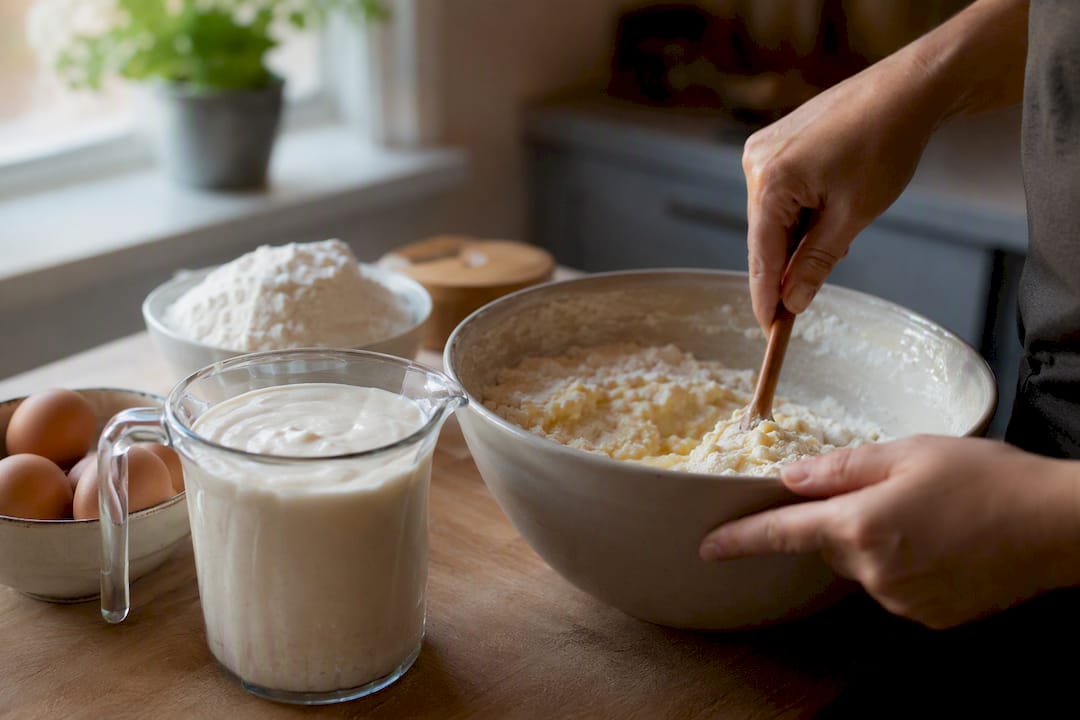
The best buttermilk substitutes are kefir or thinned plain yogurt, both reliable 1:1 swaps that match real buttermilk’s acidity and body, followed closely by milk mixed with a tablespoon of lemon juice or vinegar for a faster, pantry-friendly fix. The catch: recipes leaning on buttermilk’s thickness or gentle tang, like drop biscuits and scones, punish shortcuts more than cakes or pancakes do. A few small tweaks to liquid and leavening usually close the gap.
TL;DR:
- Kefir and thinned plain yogurt are the most effective cultured dairy substitutes, providing similar acidity and thickness necessary for delicate baked goods.
- Milk combined with lemon juice or vinegar creates a fast, pantry-friendly but thinner substitute, suitable for pancakes and quick breads but less ideal for thicker doughs.
- Dairy-free options like plant milks with acid work in recipes with higher ingredient tolerance, but lack the structural benefits of cultured dairy, especially in biscuits or scones.
- Thicker, less acidic substitutes such as kefir and yogurt better support leavening and crust browning, making them ideal for biscuits, scones, and tender pastries.
- Adjustments in liquid volume and leavening are crucial when substituting, as recipe sensitivity varies with the ingredient’s acidity and viscosity.
Table of Contents
- What Is the Best Buttermilk Substitute?
- How Do You Make Quick Soured Milk?
- Which Cultured Dairy Substitutes Work Best?
- Why Does Buttermilk Matter So Much in Baking?
- What About Dairy-Free Buttermilk Substitutes?
- How Do You Adjust a Recipe for a Buttermilk Substitute?
- Can You Freeze Buttermilk or Its Substitutes?
- Our Take on the Everyday Buttermilk Swap
- Put Your Substitute to Work in a Tested Recipe
- Sources
- FAQ
What Is the Best Buttermilk Substitute?
Not every substitute earns its place equally, and the right one depends on what you’re making. Here’s the shortlist worth keeping taped inside a cabinet door.
- Kefir (1:1) — the closest match to real buttermilk in acidity and mouthfeel, and the safest pick for delicate bakes like biscuits or scones.
- Plain yogurt, thinned — mix 3/4 cup yogurt with 1/4 cup water or milk to make 1 cup; watch for a gummy texture in bread-style bakes.
- Sour cream + milk — 3/4 cup sour cream plus 1/4 cup milk gives a thicker, richer swap for cakes and quick breads.
- Milk + lemon juice or vinegar — 1 cup milk plus 1 tablespoon acid, stirred and rested; fast, but thinner and sharper than cultured buttermilk.
- Powdered buttermilk — reconstitute per the package directions; a smart pantry staple for pancakes and dressings.
- Plant milk + acid — works for vegan cooking, though it lacks the milk proteins that give real buttermilk its structure.
Kitchen comparisons back this ranking up. Testers at Serious Eats found milk-plus-acid produces a noticeably thinner, sharper result than cultured dairy, which matters most in recipes with little else to mask the difference.
How Do You Make Quick Soured Milk?
This is the method most people already know, even if they’ve never measured it precisely. It’s fast, forgiving for most recipes, and needs nothing you don’t already have.
- Pour 1 cup of whole milk into a measuring cup.
- Add 1 tablespoon of lemon juice or white vinegar.
- Stir once and let it sit for 5 to 10 minutes until it thickens slightly and small curds appear.
- Use it exactly as you would buttermilk, measure for measure.
Scaling down works the same way proportionally. For smaller volumes of milk, use a corresponding proportional amount of acid so the acidity level matches the substitution. If you don’t have lemon juice or vinegar on hand, cream of tartar is a solid stand-in: whisk 1 3/4 teaspoons into 1 cup of milk instead.
This method shines in pancakes, muffins, quick breads, and salad dressings, where a little extra tang and thinner consistency barely register. It’s a weaker choice for drop-biscuit dough or anything where buttermilk is doing heavy structural lifting, since the thinner texture and sharper acetic flavor that can throw off both rise and taste.
Pro Tip: If your soured milk tastes too sharp after resting, stir in a small splash of plain milk to mellow it, or add a pinch of sugar to the recipe to balance the acidity. Both fixes work without changing the chemistry that makes the substitute function.
Which Cultured Dairy Substitutes Work Best?
Cultured dairy substitutes consistently outperform milk-and-acid mixtures in side-by-side kitchen tests, and the reason comes down to chemistry, not preference. Kefir, yogurt, and sour cream are all fermented, which means they already carry the same gentle lactic acidity that real buttermilk has, rather than the sharper acetic acid you get from vinegar or lemon juice.

Kefir is the standout. Used straight, 1:1, it’s thick enough to support structure in biscuits and scones and mild enough not to throw off flavor balance. Bakers reaching for a substitute in a recipe where buttermilk carries real weight, biscuits, scones, tender pancakes, should start here.
Plain yogurt needs thinning before it works as a swap. Combine 3/4 cup yogurt with 1/4 cup water or milk to build 1 cup of substitute. Skip this step and you risk a gummy, dense crumb, since straight yogurt is considerably thicker than buttermilk. Testers have noted that yogurt keeps dough thick and browns well but can push bread-style bakes toward a gummy mouthfeel if left unthinned, so it fits pancakes and muffins more comfortably than sandwich loaves.
Sour cream goes the other direction. Mix 3/4 cup sour cream with 1/4 cup milk for a substitute that leans rich rather than light, ideal for moist cakes, banana bread, and quick breads where a dense, tender crumb is the goal rather than height.
Powdered buttermilk deserves more credit than it usually gets. Comparative taste tests have rated it and cultured dairy above milk-and-acid combinations when both flavor and structure are being judged.
Plain kefir or thinned Greek yogurt land at the top of most kitchen comparisons for a simple reason: their cultured base delivers acidity, complex flavor, and thickness that plain milk, even acidified, can’t fully replicate.
Here’s how that plays out by recipe:
| Recipe | Best cultured swap | Why |
|---|---|---|
| Biscuits | Kefir (1:1) | Needs thickness and lift |
| Pancakes | Thinned yogurt or kefir | Tolerates thinner batter |
| Muffins | Thinned yogurt | Complex batter forgives minor texture shifts |
| Fried chicken brine | Kefir or buttermilk powder | Acidity tenderizes meat without over thinning |
If you want to see cultured dairy in action rather than just read about it, the old-fashioned buttermilk pie is a useful benchmark. Bake it once with real buttermilk, then try a kefir swap next time, and the difference (or lack of one) tells you everything about how forgiving that particular recipe is.
Why Does Buttermilk Matter So Much in Baking?
Buttermilk isn’t just a flavor ingredient. It’s doing chemical work that plain milk simply can’t replicate, which is exactly why some substitutes fail quietly while others fail loudly.
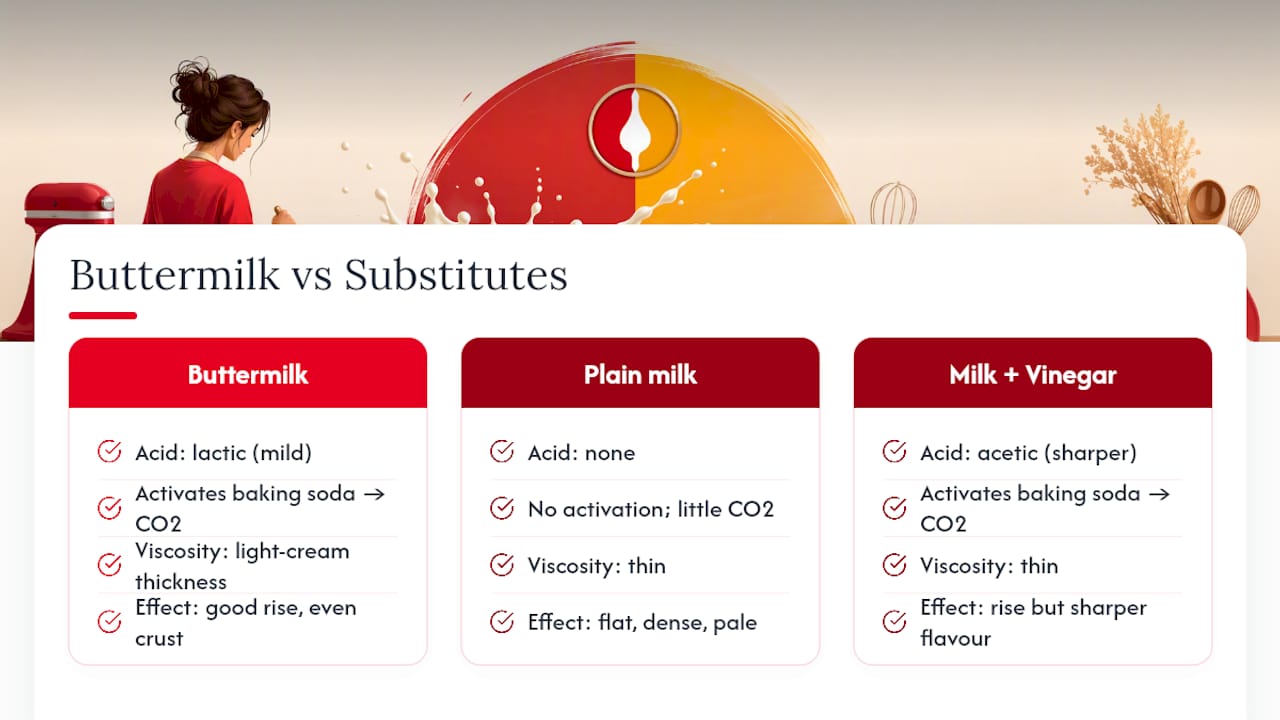
Baking soda needs an acid to activate. It’s a base, and without something acidic to react with, it won’t produce the carbon dioxide that makes batter rise. Real buttermilk supplies that acid in the form of lactic acid, produced by the bacterial culture during fermentation. Swap in plain milk without adjusting anything else, and that acid-base reaction simply doesn’t happen, leaving you with flat, dense, pale baked goods that never quite brown the way they should.
This is where the acid you choose actually matters, not just whether an acid is present. Lactic acid, the kind in cultured dairy, is milder and rounder in flavor than acetic acid, the kind in vinegar. That difference explains why milk-and-vinegar substitutes taste noticeably sharper in the finished product, even when the acidity level is technically similar on paper.
Viscosity is the second half of the story, and it gets overlooked constantly. Buttermilk is thick, roughly the consistency of a light cream, and that thickness does real structural work in a batter or dough. It slows down gluten development slightly, holds air bubbles created by leavening more effectively during the initial rise, and contributes to a more even, golden crust as the sugars in the thicker liquid caramelize during baking. Thin milk-and-acid mixtures don’t carry that same weight. Batter made with them tends to spread more before it sets, and the surface often browns less evenly.
This is exactly why simple recipes expose substitution problems that complex recipes hide. A drop biscuit is basically flour, fat, buttermilk, and leavening, four ingredients with nowhere to hide a texture shift. Change the liquid’s thickness and acidity even slightly, and the dough spreads differently, rises less, and bakes up denser. A layer cake, on the other hand, usually has eggs, sugar, extra fat, and sometimes additional liquid all contributing to structure, so a slightly thinner or sharper substitute gets buffered by everything else in the formula.
That’s the practical rule worth remembering: the fewer ingredients in a recipe, the more precisely your substitute needs to match real buttermilk’s thickness and acidity. Cakes and muffins are forgiving. Biscuits and scones are not.
What About Dairy-Free Buttermilk Substitutes?
Vegan buttermilk follows the same basic formula as the dairy version, but the results behave a little differently, and it’s worth knowing why before you commit a whole batch of biscuits to the experiment.
The base method: combine 1 cup of unsweetened plant milk with 1 tablespoon of white vinegar or lemon juice, stir, and let it rest for 5 to 10 minutes just like the dairy version.
- Oat milk or soy milk work best when you need thickness closer to real buttermilk, since both are naturally creamier than other plant milks.
- Almond milk gives a lighter, thinner result, fine for pancakes or waffles but weaker in recipes that need body.
- Canned coconut milk, thinned with water, can substitute in richer recipes but adds a distinct flavor that won’t suit every dish.
The limitation is structural, not just a matter of taste. Plant milks don’t contain casein or whey, the proteins that let dairy curdle and thicken when acid is added. Vegan buttermilk still drops in pH enough to activate baking soda, so leavening works fine, but you won’t get the same thickening or the visual curdling that tells you a dairy substitute is ready. Don’t wait for it to look like buttermilk; it won’t.
For recipes where buttermilk is doing serious structural work, tender biscuits, a custardy pie, a dairy version or a cultured dairy substitute is usually the safer bet than a vegan swap. If dairy-free is non-negotiable, a few adjustments help close the gap: stir a spoonful of plain vegan yogurt into the mixture for extra body, trim back other liquids in the recipe by a tablespoon or two, or reach for buttermilk powder if a vegan-friendly version is available in your pantry.
How Do You Adjust a Recipe for a Buttermilk Substitute?
Substituting isn’t usually a straight swap-and-bake situation. A few small adjustments make the difference between a passable result and one that tastes like you meant to do it this way.
- Adjust hydration first. If you’re using a thinner substitute like milk-and-acid, cut other liquids in the recipe by 1 to 2 tablespoons to compensate. If you’re using yogurt or sour cream and it feels too thick, thin it slightly with milk or water before measuring.
- Check your leavening. If your substitute doesn’t supply enough acid, plain milk with no acid added, for instance, add 1/4 to 1/2 teaspoon of baking powder to help pick up the slack. If your substitute is properly acidified (kefir, yogurt, milk-and-vinegar), leave the baking soda amount as written since it’s already built around that acidity.
- Balance the flavor. Milk-and-vinegar substitutes taste sharper than cultured dairy. A pinch of sugar or an extra teaspoon of butter or oil softens that edge without changing the recipe’s structure.
- Run a small test batch first. Before committing an entire recipe to an unfamiliar substitute, especially in something finicky like biscuits, replace only half the buttermilk called for and see how it performs. It’s a fast way to gauge whether the swap will hold up before you’ve used your last cup of flour.
Pro Tip: Keep a small notebook or note on your phone tracking which substitute worked in which recipe. Buttermilk substitutes aren’t universal, what works beautifully in your pancake recipe might fall flat in your biscuit recipe, and there’s no substitute for your own kitchen’s track record.
If you want a low-stakes recipe to practice these adjustments on, banana bread made with sour cream is a forgiving place to start since the batter already tolerates a range of moisture levels.
Can You Freeze Buttermilk or Its Substitutes?
Buttermilk freezes better than most people expect, and knowing how to store it properly means you’ll never toss out half a carton again.
- Freeze in measured portions. Pour buttermilk into ice-cube trays for tablespoon-sized portions, or into freezer bags in 1/2-cup increments for baking-ready amounts.
- Expect some separation after thawing. Frozen and thawed buttermilk often looks slightly grainy or separated; a quick whisk or a few seconds in the blender restores a smooth consistency before use.
- Store-bought buttermilk keeps its performance well after freezing, and tests confirm it bakes up nearly the same as fresh, so freezing leftovers is a smart habit rather than a compromise.
- Homemade soured milk doesn’t freeze as well and is better made fresh each time, since it’s already a quick fix rather than a long-term ingredient.
- Kefir and yogurt can be frozen but expect more noticeable texture changes; they work best thawed and used in baked goods rather than served plain.
- Powdered buttermilk stores at room temperature for months unopened; once reconstituted, treat it like fresh buttermilk and use within a few days.
Our Take on the Everyday Buttermilk Swap
After running these substitutions across enough test batches, a clear pattern emerges: kefir and thinned plain yogurt do the most consistent work across the widest range of recipes. They’re the ones we reach for first in the Hearthlyrecipes kitchen, whether the goal is a tender biscuit or a rich quick bread, simply because they match buttermilk’s chemistry instead of approximating it.
Milk-and-acid still earns its spot in the rotation. It’s the right call for pancakes, muffins, and dressings, anything where a slightly sharper flavor and thinner batter won’t be noticed. But treating it as a universal 1:1 replacement is where home bakers run into trouble, especially with biscuits and scones, where the recipe has nowhere to hide a substitution that doesn’t quite match.
The honest advice: match the substitute to the recipe’s tolerance, not the other way around. A cake batter with eggs, sugar, and fat buffers a lot of substitution error. A four-ingredient biscuit dough doesn’t. Once you internalize that distinction, you stop guessing and start substituting with intention.
If you’re testing this out yourself, the old-fashioned buttermilk pie or a batch of fluffy pancakes are both good baselines. Bake one version with real buttermilk and one with your substitute of choice, and you’ll learn more about your own kitchen’s behavior than any chart could tell you.
— Susan Scortberg
Put Your Substitute to Work in a Tested Recipe
Reading about ratios only gets you so far. The real test is putting a substitute into a recipe that’s already been baked, timed, and adjusted so you’re not guessing at anything except the swap itself.

That’s where Hearthlyrecipes earns its keep: every recipe on the site has already been tested for exact measurements and timing, so when you swap in kefir, thinned yogurt, or a quick milk-and-vinegar mix, you’re only changing one variable instead of troubleshooting a recipe you’re not sure works in the first place. A few good places to try it out:
- Blueberry Butter Swim Biscuits, a good test case for cultured dairy substitutes since biscuits show substitution effects clearly.
- Blueberry Lemon Pancake Bites, forgiving enough for a quick milk-and-acid swap.
- The full cake recipe collection, where richer batters buffer substitution differences and give you room to experiment.
Pick one, make your substitute, and bake it this weekend. You’ll know within one batch which swap belongs in your regular rotation.
Sources
- Buttermilk substitute: What to use | King Arthur Baking
- Do Buttermilk Substitutes Work In Baking? | Serious Eats
- How to make a quick, easy buttermilk substitute | The Kitchn
FAQ
What Can I Use if I Don’t Have Buttermilk?
Kefir or plain yogurt thinned with a little milk or water are the most reliable 1:1 substitutes, while milk mixed with a tablespoon of lemon juice or vinegar is the fastest pantry fix for most recipes.
How Do I Make 1 Cup of Buttermilk at Home?
Stir 1 tablespoon of lemon juice or white vinegar into 1 cup of whole milk and let it sit for 5 to 10 minutes until it thickens slightly and small curds form.
What Happens if I Use Regular Milk Instead of Buttermilk?
Baking soda needs an acid to activate, so plain milk without added acid won’t trigger the same rise, often leaving baked goods flatter, denser, and paler than intended.
Is There a Good Substitute for Buttermilk in Baking?
Yes. Kefir and thinned plain yogurt are the closest chemical and textural matches, and powdered buttermilk reconstituted per package directions is a strong pantry option, especially for pancakes and dressings.