Butternut Squash Soup: Roasted, Creamy, and Easy

This butternut squash soup gets its flavor from roasting, not from cream. Cubed squash goes into a hot oven until the edges caramelize, then it gets blended with sautéed onion, garlic, and just enough broth to make it silky. That roasting step is the difference between a soup that tastes like baby food and one that tastes like something worth making twice.
The recipe yields 6 to 8 servings in about 1 hour 15 minutes total (20 minutes prep, 40 minutes roast, 15 minutes simmer and blend). Roasting concentrates the squash’s natural sugars, and a small hit of acid at the end keeps that sweetness from tipping into cloying. Salt does the rest of the work.
- Roast method delivers deeper flavor; a stovetop shortcut cuts total time by roughly 20 minutes.
- Works vegan with olive oil and vegetable broth swapped for butter and stock.
- Blends smooth with an immersion blender, countertop blender, or high-speed machine.
Key Takeaways
Roasting the squash before blending, then correcting sweetness with a small hit of acid, is what separates good butternut squash soup from average.
| Point | Details |
|---|---|
| Roast before blending | Roasting at 425°F for 35 to 40 minutes caramelizes sugars that boiling never develops. |
| Deglaze both pans | Scraping browned bits from the roasting pan and the pot adds flavor that otherwise gets discarded. |
| Balance sweetness with acid | A small splash of rice vinegar or lemon juice, added after salting, prevents a one-note sweet finish. |
| Choose blending tools by texture goal | Immersion blenders are safest and easiest; high-speed blenders give the silkiest result. |
| Freeze without dairy | Cream or coconut milk goes in after reheating, not before freezing, to protect texture. |
| Fix flavor in order | Correct salt first, then acid, then umami, before ever reaching for a sweetener. |
Table of Contents
- Butternut Squash Soup Recipe: Ingredients and Instructions
- How Do You Blend Squash Soup Until It’s Smooth?
- Vegan, Curry, and Apple-Ginger Variations to Try
- What Should You Garnish Butternut Squash Soup With?
- How Long Does Butternut Squash Soup Last in the Fridge?
- How Do You Fix Bland or Overly Sweet Squash Soup?
- Tips for Choosing and Prepping Butternut Squash
- Why I Trust This Roasted Method Over Boiling
- Sources
- FAQ
Butternut Squash Soup Recipe: Ingredients and Instructions
Good butternut squash soup starts with a short ingredient list and one non-negotiable step: roasting. Everything else is adjustable.
What you need
For the soup base:
- 1 large butternut squash (about 3 pounds), peeled and cubed
- 2 tablespoons butter or olive oil, plus 1 tablespoon for roasting
- 1 medium yellow onion, diced
- 3 cloves garlic, minced
- 4 cups vegetable or chicken broth (more for thinning)
- 1 teaspoon fresh thyme or a pinch of dried
- ½ teaspoon ground cinnamon or grated fresh ginger
- Salt and black pepper to taste
Optional finishing ingredients:
- ½ cup heavy cream, coconut milk, or a dollop of crème fraîche
- 1 to 2 teaspoons rice vinegar or fresh lemon juice
- 1 tablespoon honey or brown sugar (only if the squash is under-ripe)
- A splash of medium-dry sherry for depth
Equipment
- A rimmed roasting pan or sheet pan, large enough to hold the squash in a single layer
- A Dutch oven or heavy soup pot
- An immersion blender, standard countertop blender, or high-speed blender
- A fine-mesh strainer (optional, for restaurant-smooth texture)
Timing and yield
| Stage | Time |
|---|---|
| Prep (peel, cube, chop) | 20 minutes |
| Roast squash | 35–40 minutes |
| Sauté aromatics and simmer | 15 minutes |
| Blend and finish | 5–10 minutes |
| Total time | About 1 hour 15 minutes |
| Yield | 6 to 8 servings |
Step-by-step: the roasted method
- Heat the oven to 425°F. Toss the cubed squash with 1 tablespoon butter or oil, salt, and pepper. Spread it in a single layer on the roasting pan so the pieces caramelize instead of steam.
- Roast 35 to 40 minutes, flipping once at the halfway mark, until the edges are deeply browned. Serious Eats notes that this caramelization step on both squash and carrots is what builds real depth without adding sugar.
- While the squash roasts, melt the remaining butter in the Dutch oven over medium heat until it turns golden and smells nutty, then add the diced onion. Cook slowly, 8 to 10 minutes, until soft and translucent.
- Add the garlic and cook 1 minute more, then pour in a splash of broth to deglaze the pot, scraping up any browned bits.
- Once the squash is done, deglaze the roasting pan itself with a few tablespoons of broth, scraping the caramelized bits into the soup pot. This one move captures flavor that otherwise gets thrown out with the pan.
- Add the roasted squash, thyme, cinnamon or ginger, and the remaining broth to the pot. Bring to a simmer and cook 10 to 15 minutes so the flavors meld.
- Blend until completely smooth (see the next section for method and safety notes).
- Return the soup to low heat, stir in cream or coconut milk if using, and taste. Adjust salt, then finish with a small splash of rice vinegar or lemon juice.
The stovetop shortcut
Short on time or oven space? Skip roasting entirely. Sauté the onion and garlic as above, add cubed raw squash directly to the pot along with the broth, and simmer covered for 20 to 25 minutes until fork-tender. You lose some of the caramelized depth, but you save close to 20 minutes, and a splash of sherry or a spoonful of browned butter stirred in at the end helps close the flavor gap. The New York Times method uses this slow-sauté, simmer-and-blend approach and yields about 8 servings from a similar ingredient list.

Scaling up? Double the squash and broth, but add salt gradually and taste as you go. A larger batch takes longer to come to a full simmer, so budget an extra 5 to 10 minutes.
How Do You Blend Squash Soup Until It’s Smooth?
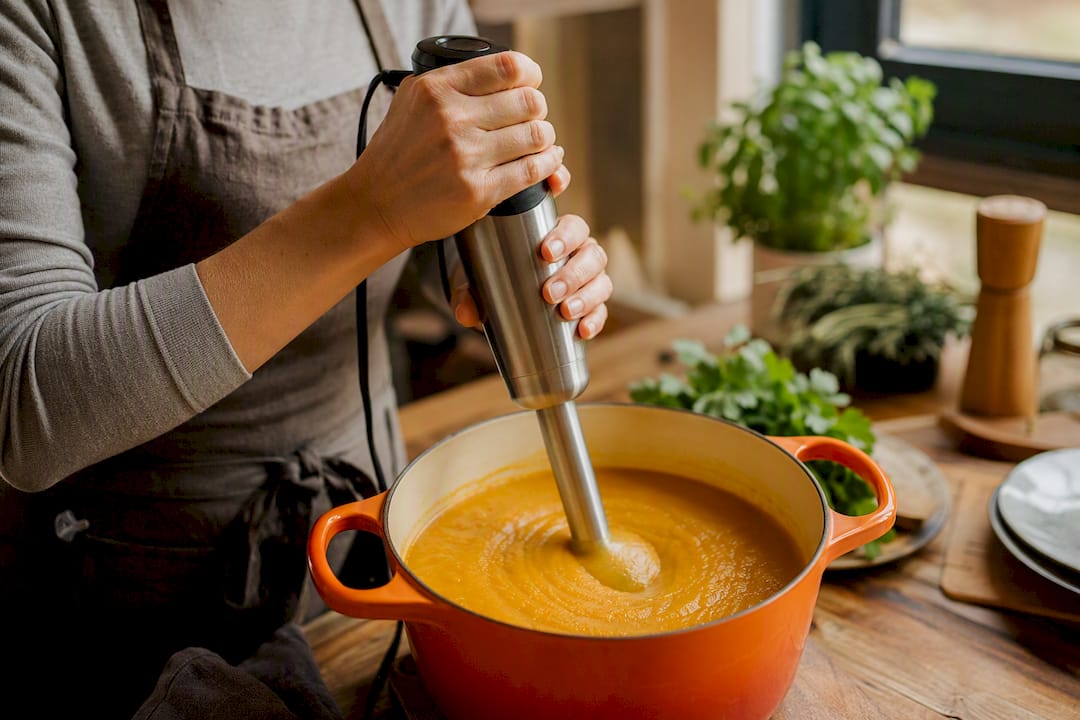
The blending method affects texture more than any other single step. An immersion blender is the easiest and safest option: it blends right in the pot, no transferring hot liquid, and cleanup is minimal. It won’t always get the soup fully silky, though, especially with fibrous squash strings.
A standard countertop blender produces a smoother result but demands care. Blend in small batches (never more than half full), and always vent the lid, since a sealed blender full of hot soup builds pressure fast. A high-speed blender like a Vitamix gives the silkiest texture of the three and can handle slightly larger batches, but the same venting and small-batch rules still apply.
Safety checklist for hot liquids:
- Vent the blender lid or remove the center cap and cover the hole loosely with a folded kitchen towel.
- Blend in batches no more than half full.
- Hold the lid down firmly with a towel, not bare hands, while starting on low speed.
- Let the soup cool for a few minutes before blending if you’re at all nervous about splatter.
If the soup comes out grainy, pass it through a fine-mesh strainer. If it’s too thick, thin it with warm broth a quarter cup at a time. Too thin? Simmer uncovered for a few extra minutes to reduce it.
Pro Tip: If you only own an immersion blender and want a truly silky finish, blend as long as you can stand it, then push the soup through a fine-mesh strainer. It takes an extra five minutes but closes most of the texture gap with a high-speed machine.
Vegan, Curry, and Apple-Ginger Variations to Try
This soup takes flavor changes well because the squash base is mild and creamy on its own. The trick is adjusting fat, acid, and salt together whenever you add something new, not just tossing in an extra ingredient.
Vegan and dairy-free: Swap the butter for olive oil and use vegetable broth instead of chicken stock. For richness without dairy, stir in a quarter cup of coconut milk or a spoonful of cashew purée at the end. Love and Lemons’ all-vegetable version leans on fresh sage and rosemary plus grated ginger, using 3 pounds of squash with 3 to 4 cups of vegetable broth, and finishes with toasted pepitas for texture.
Curry and coconut: Bloom 1 to 2 tablespoons of curry powder or paste in the fat before adding onions, then finish with a full can of coconut milk instead of cream. The coconut fat balances the curry’s heat nicely.
Apple and ginger: Add one peeled, chopped apple to the pot along with the squash before simmering, plus an extra teaspoon of fresh grated ginger. The apple adds brightness that reduces how much acid you’ll need at the end.
Umami-forward: A splash of dry sherry stirred in with the broth, as recommended in the classic NYT recipe, adds savory complexity that plain broth can’t.
When you add rich ingredients like coconut milk or cream, cut back slightly on added fat elsewhere, since two rich elements together can make the soup feel heavy instead of luxurious. Only reach for honey or brown sugar if your squash tastes bland or under-ripe. Riper squash rarely needs added sugar, and reaching for it too early can mask problems that a pinch of salt or splash of acid would fix instead.
Pro Tip: Taste your squash raw before cooking. If a small cube tastes bland, plan on a splash of maple syrup at the end. If it tastes naturally sweet, skip sugar entirely and lean on acid instead.
What Should You Garnish Butternut Squash Soup With?
A bowl of solid-colored orange soup benefits from anything that adds texture or contrast. Keep garnishes simple and add them right before serving so they stay crisp.
- Toasted pepitas or pumpkin seeds for crunch, as suggested in the Love and Lemons version.
- Frizzled sage leaves, fried in butter for 30 seconds until crisp.
- A drizzle of herb oil (blitzed olive oil and parsley or chives).
- A swirl of yogurt, sour cream, or coconut cream for a tangy contrast.
- A dusting of smoked paprika or a spiced whipped cream for a fall dinner party.
For sides, crusty bread or a simple green salad rounds out a light meal. For something heartier, pair the soup as a starter before a dish like bacon-stuffed butternut squash or a creamy butternut squash risotto.
Pro Tip: Serve soup slightly hotter than you think necessary. Squash soup cools fast in a wide bowl, and a lukewarm serving tastes flatter than a properly hot one, even with identical seasoning.
How Long Does Butternut Squash Soup Last in the Fridge?
Refrigerated in an airtight container, this soup keeps for several days, based on guidance from Once Upon a Chef, which recommends fresh squash over frozen for the best final texture.
To freeze, leave out any cream or coconut milk before freezing and stir it in fresh after reheating. Frozen without dairy, the soup can keep for a few months.
- Cool the soup completely before transferring to freezer-safe containers or bags.
- Leave an inch of headspace since liquid expands as it freezes.
- Thaw overnight in the refrigerator, then reheat gently on the stovetop over low heat.
- Add broth or cream to loosen the texture, and re-blend briefly if it separates.
For make-ahead planning, roast the squash a day in advance and refrigerate it. Finish the soup (sauté, simmer, blend) the day you plan to serve it for the freshest flavor.
How Do You Fix Bland or Overly Sweet Squash Soup?
Squash soup that tastes flat or one-note almost always needs one of three things: salt, acid, or umami, added in that order.
Taste first for salt. Under-salted soup tastes muddy no matter what else you add. Once it’s properly seasoned, taste again. If it still leans too sweet, that’s the moment for acid, not sugar correction in the other direction.
Roasting the squash concentrates its natural sugars, which is exactly why a small splash of rice vinegar at the end matters. Add it after seasoning and taste in small increments. It cuts through sweetness and keeps the finished soup from tasting one-dimensional.
Fix-it checklist, no re-cooking required:
- Bland or flat: add ¼ teaspoon salt at a time, tasting between additions.
- Too sweet: stir in ½ teaspoon rice vinegar or fresh lemon juice, tasting before adding more.
- Missing depth: a splash of dry sherry or a small spoonful of soy sauce adds savory complexity.
- Still flat after salt and acid: a tablespoon of grated Parmesan stirred in adds umami without changing the flavor direction.
Only reach for a sweetener if the soup tastes genuinely under-ripe after these fixes, not just mildly sweet. Most squash soup problems are salt and acid problems wearing a sugar disguise.
Tips for Choosing and Prepping Butternut Squash
A good squash feels heavy for its size, has matte tan skin with no soft spots, and a stem that’s still firmly attached. Skip anything with shiny skin or soft patches near the base, both signs it’s past its prime.
To peel and cut safely, slice off both ends first to create flat, stable surfaces, then stand the squash upright and peel downward with a sturdy vegetable peeler. Cut it in half where the neck meets the bulb, scoop the seeds, then cube each half separately. Pre-cut squash from the grocery store is a legitimate shortcut on a weeknight.
Cut cubes to roughly ¾ inch for the best caramelization: smaller pieces burn before browning, larger ones stay soft. Roast in a single layer with space between pieces, since crowding steams the squash instead of browning it. Buy squash between October and December for the sweetest flavor, when it’s at peak season.
Pro Tip: If your knife slips through winter squash unevenly, microwave the whole squash for 3 minutes first. It softens the skin just enough to make peeling and cutting dramatically easier.
Why I Trust This Roasted Method Over Boiling
Every version of this soup Hearthlyrecipes tested started with boiled squash, and every one tasted thinner and less interesting than the roasted version. Roasting isn’t an optional flourish, it’s the step that separates forgettable soup from soup people ask for the recipe after eating. Susan Scortberg and the Hearthlyrecipes team built this version around that one principle, along with the same tested-recipe standard and reader ratings the site is known for. Swap the dairy, the spice profile, or the blending tool freely. The roasting and the final acid adjustment are the two things worth protecting.
If you’re building out a full fall menu around this soup, Hearthlyrecipes’ seasonal recipe collection has pairing ideas from roasted vegetable sides to spiced desserts. For a spice blend that works well stirred straight into the pot, Qahwat Al’Ard’s pumpkin spice is worth keeping on hand for this and other fall recipes. And if this soup becomes a regular in your rotation, browse the full recipe library for more cozy, tested options to round out your week.
Sources
- Butternut Squash Soup Recipe
- Classic Butternut Squash Soup
- Best Butternut Squash Soup – Creamy, Cozy & Easy
FAQ
What makes butternut squash soup taste better?
Roasting the squash instead of boiling it concentrates natural sugars, and a small splash of acid like rice vinegar or lemon juice at the end keeps that sweetness balanced instead of cloying.
What are the three main ingredients in butternut squash soup?
At its simplest, the soup needs butternut squash, an aromatic like onion or garlic, and broth. Everything else, including cream, spices, and garnishes, is optional flavor building.
What goes into a simple four-ingredient butternut squash soup?
A minimal version uses squash, onion, broth, and butter or olive oil, blended smooth after simmering. Salt and pepper are assumed staples rather than counted ingredients.
How do you make a simple butternut squash soup at home?
Sauté onion and garlic, add cubed squash and broth, simmer until tender, then blend smooth with an immersion or countertop blender. For deeper flavor, roast the squash first instead of simmering it raw.