This Lentil Soup Recipe Is the One You’ll Actually Make Again
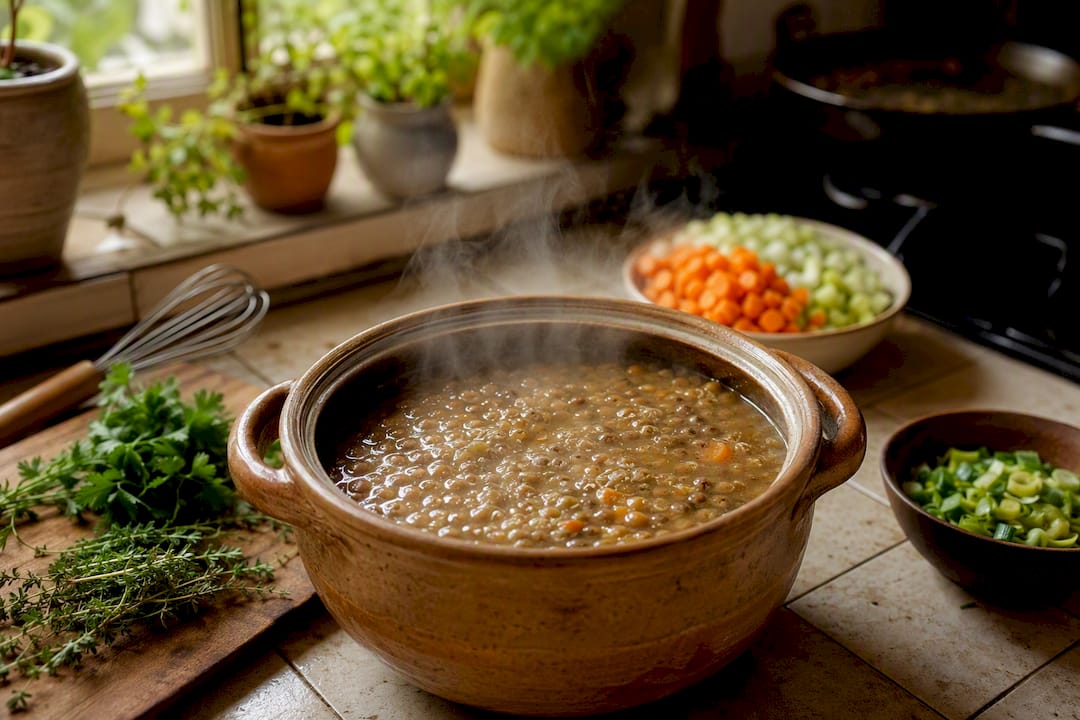
This hearty lentil soup builds deep flavor from caramelized onions, toasted tomato paste, and a partial puree that thickens the broth without a drop of cream. It makes about 6 servings (roughly 8 cups) in 50 minutes total, 15 minutes of prep and 35 minutes of simmering. Brown or green lentils are the move here since they hold their shape while a portion of the pot gets blitzed smooth.
- Sweat onion, carrot, and celery, then caramelize the onion slightly for depth
- Toast tomato paste and garlic for a minute to concentrate flavor
- Add lentils, broth, and seasonings, then simmer until tender
- Puree about a third of the soup and stir it back in for body
- Finish with lemon juice and stirred-in greens
Key Takeaways
A great lentil soup comes down to three moves: toasting your aromatics, choosing the right lentil for your texture goal, and partially pureeing the pot before serving.
| Point | Details |
|---|---|
| Choose lentils by texture | Brown and green hold their shape; red and yellow break down into a creamy consistency. |
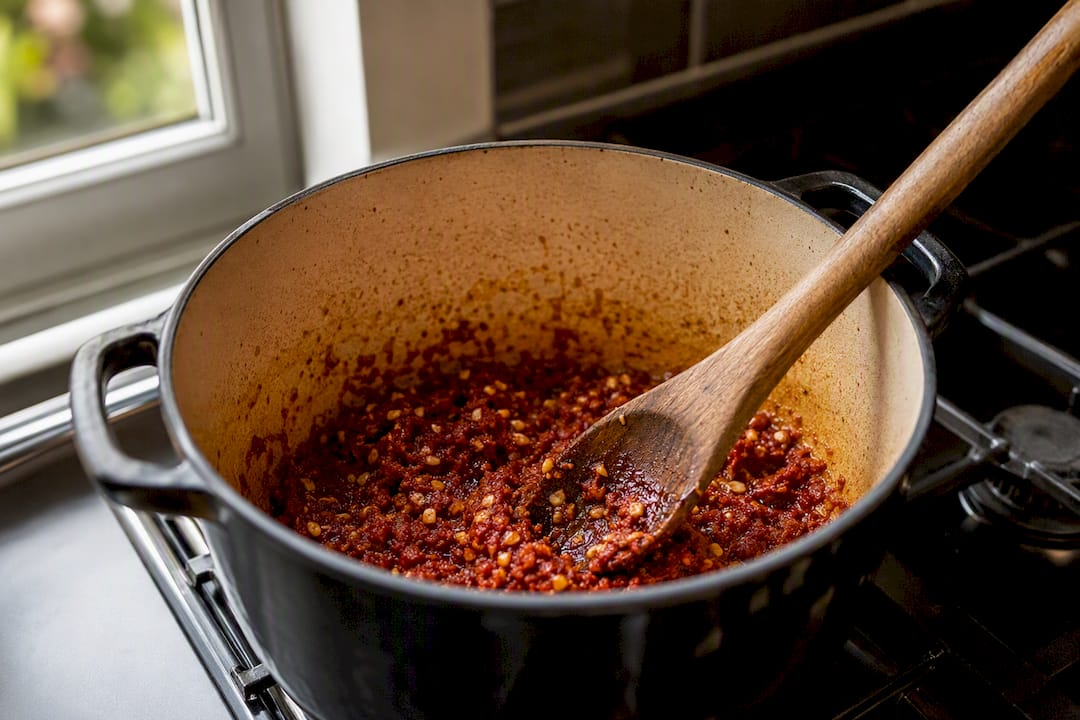
| Toast before you simmer | Toasting tomato paste and garlic for a minute deepens flavor before the broth goes in. |
| Puree part, not all | Blending about a third of the soup thickens the broth while keeping some texture intact. |
| Finish with acid | A splash of lemon juice or vinegar at the end brightens flavor more effectively than extra salt. |
| Store and reheat smart | Keep leftovers refrigerated for 3 to 4 days or frozen up to 3 months, thinning with broth when reheating. |
| Explore more tested recipes | Hearthly Recipes’ vault offers additional tested soup and one-pot recipes for weeknight cooking. |
Table of Contents
- Lentil Soup Ingredients and Smart Substitutions
- How to Make Lentil Soup Step by Step
- Which Lentils Work Best in Soup?
- Lentil Soup Variations Worth Trying
- Common Lentil Soup Mistakes and How to Fix Them
- How to Store and Reheat Lentil Soup
- Is Lentil Soup Healthy? What’s in a Bowl
- Why Hearthly Recipes Builds Lentil Soup This Way
- A Note From the Kitchen
- Find More Tested Soups in the Hearthly Recipes Vault
- Sources
- FAQ
Lentil Soup Ingredients and Smart Substitutions
You need surprisingly few ingredients for a pot this satisfying. Here’s what goes into a standard batch that feeds a family with leftovers to spare.
- 2 tablespoons olive oil
- 1 large yellow onion, diced
- 2 medium carrots, diced
- 2 celery ribs, diced
- 4 garlic cloves, minced
- 2 tablespoons tomato paste
- 1½ cups brown or green lentils, rinsed and picked over
- 6 cups vegetable or chicken broth, plus more as needed
- 1 teaspoon ground cumin
- 1 bay leaf
- Salt and black pepper to taste
- 2 tablespoons lemon juice or red wine vinegar
- 2 cups chopped kale or spinach
Broth swaps are easy: low-sodium chicken stock, vegetable stock, or even water with a bouillon cube all work fine, though water alone will taste flat. If you’re out of brown lentils, green lentils or French Le Puy lentils substitute directly with only minor timing changes, while red lentils change the whole texture (more on that below). For a heartier version, brown a half pound of Italian sausage or diced smoked ham before adding the vegetables.
On equipment, a Dutch oven distributes heat evenly and holds enough volume for a full batch without splashing over. An immersion blender is the one tool worth owning for this recipe. It lets you thicken part of the pot right in the pan instead of transferring hot liquid to a countertop blender.
Pro Tip: Salt lentils lightly at the start and adjust at the end, since broth concentrates as it reduces and can turn a soup surprisingly salty by the last 10 minutes of cooking.
How to Make Lentil Soup Step by Step
Getting a great pot of lentil soup down to a science is mostly about patience in the first 10 minutes and restraint in the last 5. Here’s the full method.
-
Sweat the vegetables. Heat olive oil in a Dutch oven over medium heat. Add onion, carrot, and celery, stirring occasionally for 6 to 8 minutes until the onion turns translucent and starts to pick up light golden color at the edges. You’re not fully caramelizing here, just building a sweet, savory base.
-
Toast the tomato paste and garlic. Push the vegetables to one side, drop in the tomato paste and garlic, and let them cook alone for about 60 to 90 seconds until the paste darkens slightly and smells nutty rather than raw. Caramelizing onions and toasting tomato paste is a small step that pays off disproportionately in the final flavor, and skipping it is the single biggest reason home versions taste thin.
-
Add lentils, broth, and seasoning. Stir everything together, then pour in the broth, cumin, and bay leaf. Bring to a boil, then reduce to a simmer.
-
Simmer until tender. Brown and green lentils typically need 25 to 35 minutes of simmering. French lentils run closer to 20 to 25 minutes since they’re smaller and firmer. Red lentils break down in as little as 15 to 20 minutes. Check doneness by tasting a spoonful. It should be tender with a slight bite, not chalky in the center.
-
Partially puree for body. Once the lentils are tender, ladle out about a third of the soup, or simply tip an immersion blender into the pot and pulse for a few seconds without blending everything smooth. This partial puree technique thickens the broth while leaving whole lentils and vegetable pieces for texture, which is the difference between a soup that feels rustic versus one that feels unfinished. If you’re using a countertop blender instead, let the soup cool for a few minutes first and vent the lid to avoid a hot splatter.
-
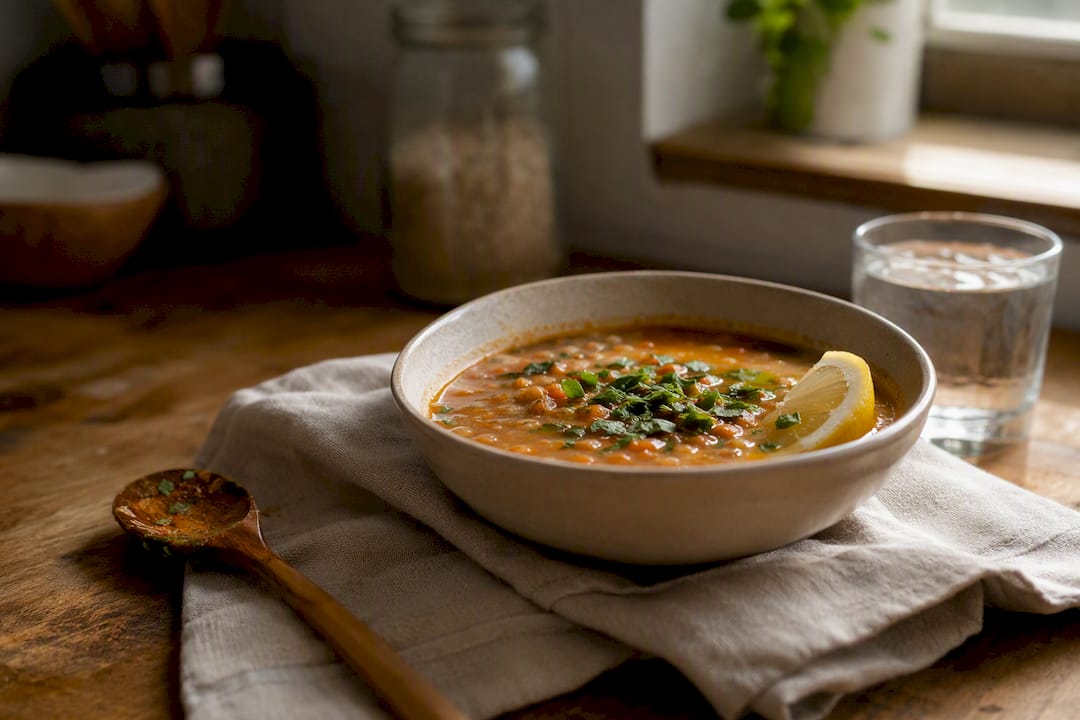
Finish with acid and greens. Remove the bay leaf, stir in the kale or spinach, and let it wilt for 2 to 3 minutes. Finishing with lemon juice or vinegar at the very end brightens every other flavor in the pot, cutting through the earthiness of the lentils in a way salt alone can’t do. Taste again here. This is your last chance to adjust salt, pepper, or acid before serving.
Pro Tip: Add the acid off heat. Simmering lemon juice or vinegar for too long mutes its brightness, so stir it in right before you ladle out bowls.
Which Lentils Work Best in Soup?
The lentil you choose decides the texture of your finished pot more than any other ingredient.
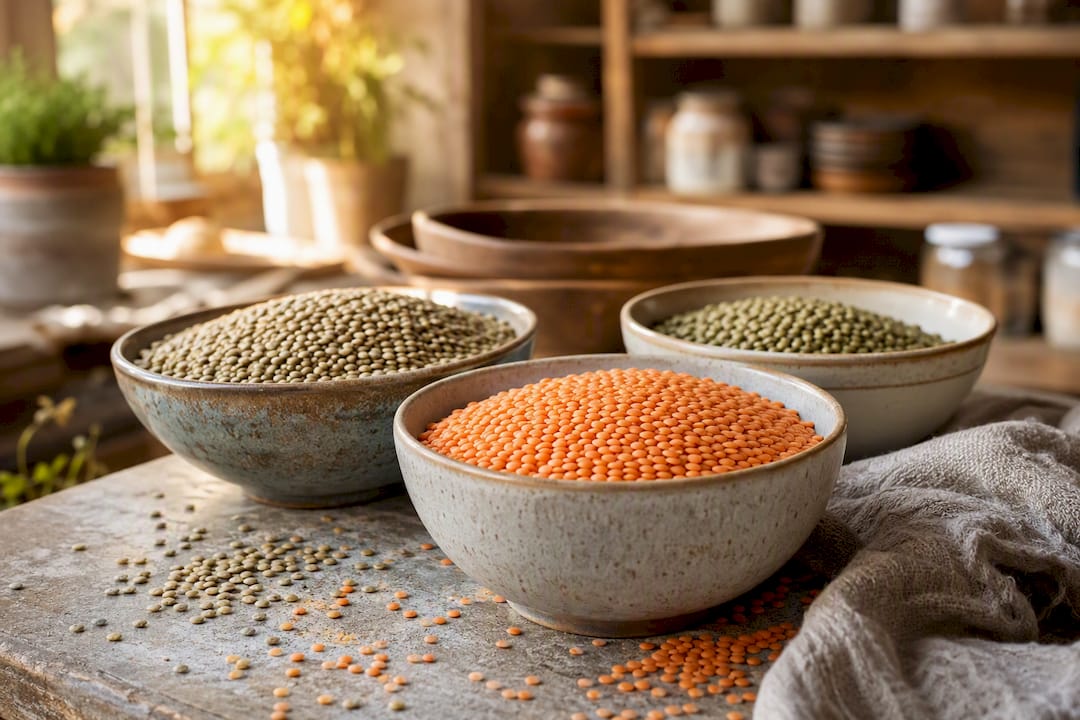
- Brown and green lentils hold their shape through a full simmer, which is why they’re the standard choice for a hearty, chunky soup. Expect 25 to 35 minutes of simmering.
- French green (Le Puy) lentils are the choice chefs reach for when they want a firmer bite and a slightly peppery flavor. They cook faster, usually 20 to 25 minutes, and are worth the higher price if your grocery store carries them.
- Red and yellow lentils break down almost entirely, turning the pot creamy and smooth in as little as 15 to 20 minutes. Use them on purpose when you want a velvety soup, not as a swap in a recipe built around brown lentils.
Test doneness by pressing a lentil against the side of the pot with a spoon. It should mash easily but still have a bit of structure unless you’re using red lentils, which are supposed to fall apart completely.
Lentil Soup Variations Worth Trying
Once you’ve got the base method down, this soup adapts easily to whatever you’re craving or have on hand.
- Vegetarian and vegan: Add a Parmesan rind while simmering for umami depth, or finish with nutritional yeast if you’re keeping it fully plant-based.
- Smoky and meaty: Brown Italian sausage or diced bacon before the vegetables, or simmer a ham hock in the broth for the full cook time and shred the meat in at the end.
- Mediterranean: Add smoked paprika, a splash of white wine, and finish with a drizzle of good olive oil.
- Middle Eastern: Swap cumin for a blend of coriander, turmeric, and a pinch of cinnamon, then top with a spoonful of yogurt.
- Curry-style: Stir in curry powder and a spoonful of coconut milk near the end. For a more dramatic take on this idea, a vegan lentil curry built on red lentils gets you a thicker, stew-like result.
Serve with crusty bread, a sprinkle of grated Parmesan, or a swirl of plain yogurt for tang.
Common Lentil Soup Mistakes and How to Fix Them
Most lentil soup problems trace back to timing or salt, and both are fixable mid-cook.
- Mushy lentils: Once they’ve gone past tender into mush, you can’t reverse it, but you can lean into it. Puree the whole pot and call it a creamy lentil soup instead.
- Undercooked lentils: Simmer longer and add a splash more broth if the pot looks dry. Old, long-stored lentils take noticeably longer to soften, sometimes an extra 15 minutes, so don’t assume something’s wrong with your pot.
- Bland flavor: Salt first, then taste. If it’s still flat after salting, the fix is almost always acid, not more salt.
- Too thick or too thin: Thin it with a splash of hot broth or water. Thicken it by simmering uncovered a bit longer or pureeing more of the pot.
Pro Tip: If your soup tastes flat and you’ve already salted it, reach for lemon juice before you reach for more salt. Acid fixes what salt can’t.
How to Store and Reheat Lentil Soup
Lentil soup is one of those dishes that tastes even better the next day, which makes it a smart make-ahead option for busy weeks.
- Refrigerator: Store in an airtight container for 3 to 4 days.
- Freezer: Cool completely, then freeze in portioned containers or freezer bags for up to 3 months.
- Reheating: Warm gently on the stovetop over medium low heat, stirring occasionally.
- Thickness fix: The soup thickens considerably as it sits, since lentils keep absorbing liquid, so stir in a splash of broth or water while reheating to loosen it back up.
- Meal prep: Portion into individual containers right after cooking so lunches are grab-and-go for the week.
Is Lentil Soup Healthy? What’s in a Bowl
Lentils pack a nutritional punch that’s hard to match for the price. They’re a good source of plant protein, fiber, iron, folate, and other micronutrients, which is a big part of why lentil soup shows up so often in budget-friendly, nutrition-focused meal plans.
- A typical bowl delivers plant protein and fiber that help you stay full longer than a broth-based soup would.
- Iron from lentils is non-heme iron, which your body absorbs less efficiently than the iron in meat. Adding lemon juice or another vitamin C source, exactly like the finishing step in this recipe, helps your body absorb more of it.
- To make it lower sodium, use low-sodium broth and salt to taste at the end rather than relying on a bouillon cube for seasoning.
- To boost protein further, stir in cooked chicken, a spoonful of Greek yogurt, or extra lentils.
Why Hearthly Recipes Builds Lentil Soup This Way
Every step in this recipe earns its place. Toasting the tomato paste before the liquid goes in isn’t a fussy extra step. It’s the difference between a soup that tastes like canned tomatoes and one that tastes cooked down and rich. Browning the onion just slightly past translucent does something similar for sweetness.
The partial puree is the technique home cooks skip most often, and it’s the one that separates a forgettable pot from one people ask for the recipe of.
Good lentil soup isn’t about a long ingredient list. It’s about three or four moments where you let something cook a little longer than feels necessary, and that patience is what turns simple pantry staples into a bowl that tastes like it simmered all day.
For another example of how small technique choices build big flavor, the lasagna soup from Hearthly Recipes uses a similar layering approach in a completely different direction.
A Note From the Kitchen
I’ve made this soup with red lentils when I wanted something silkier and with green lentils when I wanted more bite, and both versions earn a spot in regular rotation. It’s especially good ladled over a piece of French onion soup-style toasted bread. Pro Tip: keep a bag of lentils in your pantry at all times. It’s the fastest route to a real dinner on a night you didn’t plan one.
Find More Tested Soups in the Hearthly Recipes Vault
If this lentil soup earned a permanent spot in your dinner rotation, you’ll find a lot more to love in the Hearthly Recipes vault. Every soup, stew, and one-pot meal in the collection goes through the same testing process this recipe did: real kitchens, real timing notes, and adjustments made until the instructions actually hold up on a weeknight.

Browsing by category makes it easy to find your next pot. The soup and stew collection alone covers everything from vegetable-forward bowls like ratatouille soup to heartier, meat-based options for colder nights. Start with the recipe vault and bookmark whatever catches your eye. Your next favorite weeknight dinner is probably one click away.
Sources
FAQ
What is the secret ingredient in lentil soup?
There’s no single secret ingredient, but toasting tomato paste with garlic before adding broth is the technique that adds the most unexpected depth. A finishing splash of lemon juice or vinegar comes in close behind.
What are common mistakes when making lentil soup?
The biggest ones are skipping the tomato paste toasting step, oversalting before tasting at the end, and using old lentils without accounting for their longer cook time. Undercooked or mushy lentils are usually fixable by adjusting simmer time or pureeing the whole pot.
Is lentil soup really healthy?
Yes. Lentils are a strong source of plant protein, fiber, iron, and folate, making this soup filling and nutrient-dense for relatively few calories per bowl. Pairing it with a vitamin C source like lemon juice also helps your body absorb more of the iron.
What is the most popular recipe for lentil soup?
The most common version home cooks search for uses brown or green lentils, a sautéed vegetable base, and a partial puree for a hearty, brothy texture, which is exactly the structure of this recipe from Hearthly Recipes.
Can I make lentil soup spicier?
Yes. Add a pinch of red pepper flakes with the cumin, or stir in curry powder near the end for a warmer, more complex heat that builds without overwhelming the broth.