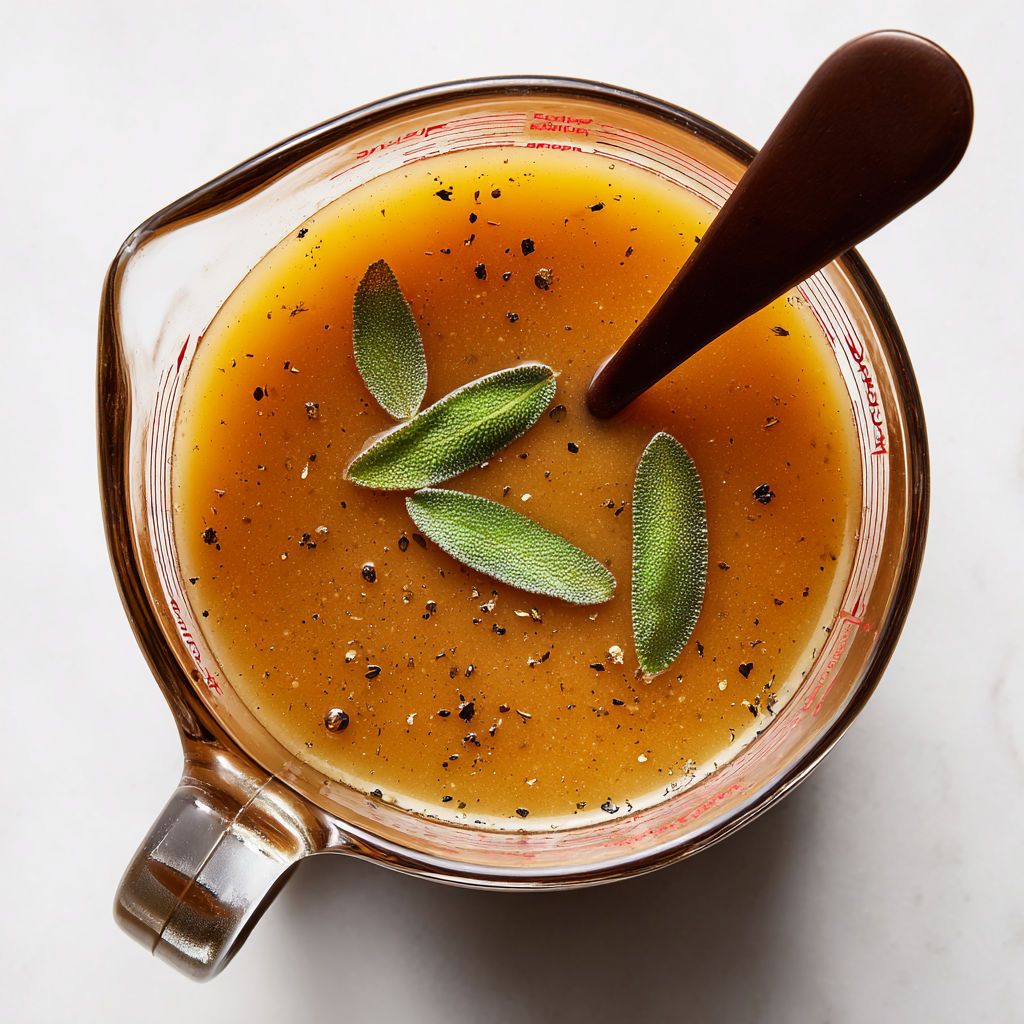
Cider and Sage Gravy
There's something magical about a gravy that sings with the deep, fruity notes of apple cider and the earthy warmth of fresh sage. Home cooks reach for this recipe year after year because it transforms even the simplest roasted proteins into a festive centerpiece. Whether you're drizzling it over a golden turkey, smothering it on mashed potatoes, or spooning it onto a crispy chicken cutlet, this gravy makes every bite feel like a celebration. The slow-cooked onions and caramelized roux give it a depth that store-bought versions can only dream of.
What Makes This Recipe Special
- The roux is cooked low and slow for 10-15 minutes to achieve a deep amber color, ensuring a rich, nutty base without any raw flour taste.
- Apple cider is added gradually to prevent splattering while building layers of flavor with the caramelized onions and sage.
- Using a sage bundle (instead of chopped) infuses the gravy with clean, herbal notes that you can easily remove for a smoother texture.
- Worcestershire sauce adds a subtle umami backbone, balancing the sweetness of the cider and rounding out the gravy's complexity.
Ingredients
4 tablespoonsunsalted butter, divided
1 1/2 cupsfinely diced onion (about 1 medium onion)
1 largeclove garlic, finely minced
1/3 cupall-purpose flour
1 cupapple cider
1 teaspoonWorcestershire sauce
Salt, to taste
3 cupschicken stock (or vegetable stock for a vegetarian option)
1 largehandful sage leaves tied in a bundle or approximately 1/4 cup loosely packed fresh sage, chopped
Fresh ground black pepper, to taste
Nutrition
500 caloriesCalories
Per serving · Values are estimates
Instructions
1
Melt 1 tablespoon unsalted butter in a heavy-bottomed pan over low to medium heat. Add finely diced onion and sauté for 30 to 40 minutes until deeply browned and soft, stirring occasionally to promote even caramelization.
2
Add minced garlic to the pan and cook for 1 to 2 minutes, stirring until just fragrant.
3
Add remaining unsalted butter to the pan. Once melted, sprinkle in all-purpose flour, stirring constantly to avoid lumps.
4
Continue stirring the mixture for 10 to 15 minutes until the roux achieves a deep amber color without burning.
5
Gradually add apple cider, Worcestershire sauce, and desired amount of salt, stirring to maintain a smooth texture.
6
Pour in chicken stock and add the sage bundle or chopped sage. Stir thoroughly to combine all components.
7
Bring to a gentle simmer and cook for approximately 10 minutes, stirring frequently, until the gravy thickens to coat the back of a spoon. Season with freshly ground black pepper and additional salt as needed.
8
If preparing ahead, refrigerate once cooled and reheat gently before serving. Yield is approximately 1 quart.
Essential Tips
Don't rush the onions
Low and slow sautéing (30-40 minutes) caramelizes the onions fully, adding a sweet depth that's essential to the gravy's character. High heat will scorch them before they develop flavor.
Stir the roux constantly
A heavy-bottomed pan prevents hot spots, and constant stirring ensures the flour cooks evenly without burning. The color change from pale to deep amber signals a fully developed roux.
Use cold cider
Adding cold cider to the hot roux helps deglaze without seizing the butter. Let it come to a gentle simmer before adding stock to avoid curdling.
Taste as you go
The salt balance shifts as the gravy reduces. Start with a pinch, taste after each addition, and adjust gradually-it's easier to add more than to fix an over-salted sauce.
Strain for elegance
If you prefer a silky texture, strain the finished gravy through a fine-mesh sieve to remove any bits of sage or onion. Press lightly to extract all the flavor.
Smart Swaps & Variations
Smoky Maple Gravy
Replace Worcestershire sauce with 1 tablespoon maple syrup and add 1/2 teaspoon smoked paprika for a sweet, smoky twist.
Mushroom Cider Gravy
Sauté 1 cup finely chopped cremini mushrooms with the onions for an earthy, umami-rich variation.
Spiced Apple Gravy
Add 1 cinnamon stick and 2 whole cloves to the simmering gravy for a warmly spiced flavor that pairs perfectly with pork.
Dairy-Free Option
Use vegan butter or olive oil instead of butter, and ensure the stock is vegetable-based for a fully plant-based gravy.
What to Serve With This
- Herb-roasted turkey or chicken, especially for holiday feasts
- Creamy mashed potatoes or buttery biscuits for dipping
- Pork chops or roasted root vegetables for a hearty weeknight meal
- Aged cheddar and sharp mustard on a charcuterie board
Storage & Reheating
Storage
Cool the gravy completely, then transfer to an airtight container. Store in the refrigerator for up to 5 days. The flavors will deepen over time, making it even more delicious the next day.
Reheating
Gently warm the gravy in a saucepan over low heat, stirring frequently to prevent scorching. Add a splash of stock or water if it thickens too much during storage.
Expert Chef Tips
- Use a wooden spoon to stir the roux-it's less likely to slip and can press against the pan's edges to check for even browning.
- For a glossier finish, finish the gravy with a pat of cold butter off the heat. It will melt slightly and add shine without thinning the sauce.
- Save the sage stems from your bundle to infuse flavor into stocks or soups later. Nothing goes to waste in the kitchen!
Equipment You’ll Need
- Heavy-bottomed saucepan or Dutch oven (3-4 quarts) for even heat distribution
- Wooden spoon for stirring the roux and scraping the pan
- Fine-mesh sieve for straining (optional, for a smoother texture)
- Ladle for serving and portion control
Nutritional Benefits
- Each 1/4-cup serving (about 60ml) contains approximately 100 calories, making it a flavorful addition without overwhelming a meal.
- The gravy is a good source of protein from the chicken stock, providing about 3 grams per serving.
- Apple cider adds natural sweetness and antioxidants, while sage contributes anti-inflammatory compounds like rosmarinic acid.
- Using unsalted butter allows you to control sodium levels, making it easier to fit into heart-healthy diets when consumed in moderation.
Reviews
No written reviews yet — be the first to cook this and share how it turned out!
Leave a Review
Frequently Asked Questions
Can I use bottled apple cider instead of fresh?
Yes, but opt for a high-quality, unfiltered cider with no added sugars. Avoid overly sweet or spiced versions, as they can overpower the gravy. Dilute slightly with water if the cider is very concentrated.
What's the best way to thicken the gravy if it's too thin?
Make a quick slurry with 1 tablespoon cornstarch mixed with 1 tablespoon cold water. Whisk it into the simmering gravy and cook for 2-3 minutes until thickened. Avoid adding flour directly, as it can create lumps.
Can I make this gravy ahead of time?
Absolutely. Prepare the gravy up to 3 days ahead, then cool and refrigerate. Reheat gently over low heat, stirring often. The flavors will meld and intensify, making it taste even better.
How do I adjust the recipe for a smaller or larger batch?
Scale the ingredients proportionally, but keep the roux-to-liquid ratio consistent. For half the recipe, use 2 tablespoons butter, 1/6 cup flour, 1/2 cup cider, and 1.5 cups stock. Maintain the 10-15 minute roux cook time.
What's the best stock to use for this gravy?
Homemade stock is ideal, but a high-quality store-bought version works too. Avoid overly salty stocks-taste before adding extra salt. For a richer flavor, use a mix of chicken and turkey stock.
Can I freeze this gravy?
Yes, freeze it in airtight containers for up to 3 months. Thaw overnight in the refrigerator and reheat gently on the stove, stirring frequently. Freezing may cause slight separation, but a quick whisk will restore the texture.
The onions aren't caramelizing well. What am I doing wrong?
Ensure your heat is low to medium-too high will scorch the onions before they caramelize. Add a splash of water or stock if they start to stick, then scrape up the fond to build flavor.
Can I use dried sage instead of fresh?
Yes, but use only 1 teaspoon dried sage for the same flavor impact. Add it when you incorporate the stock, as dried herbs release flavor more quickly. Fresh sage is preferred for its bright, clean notes.
More Thanksgiving

🔒 From the Vault — 43,000+ premium recipes





Cook This Next