
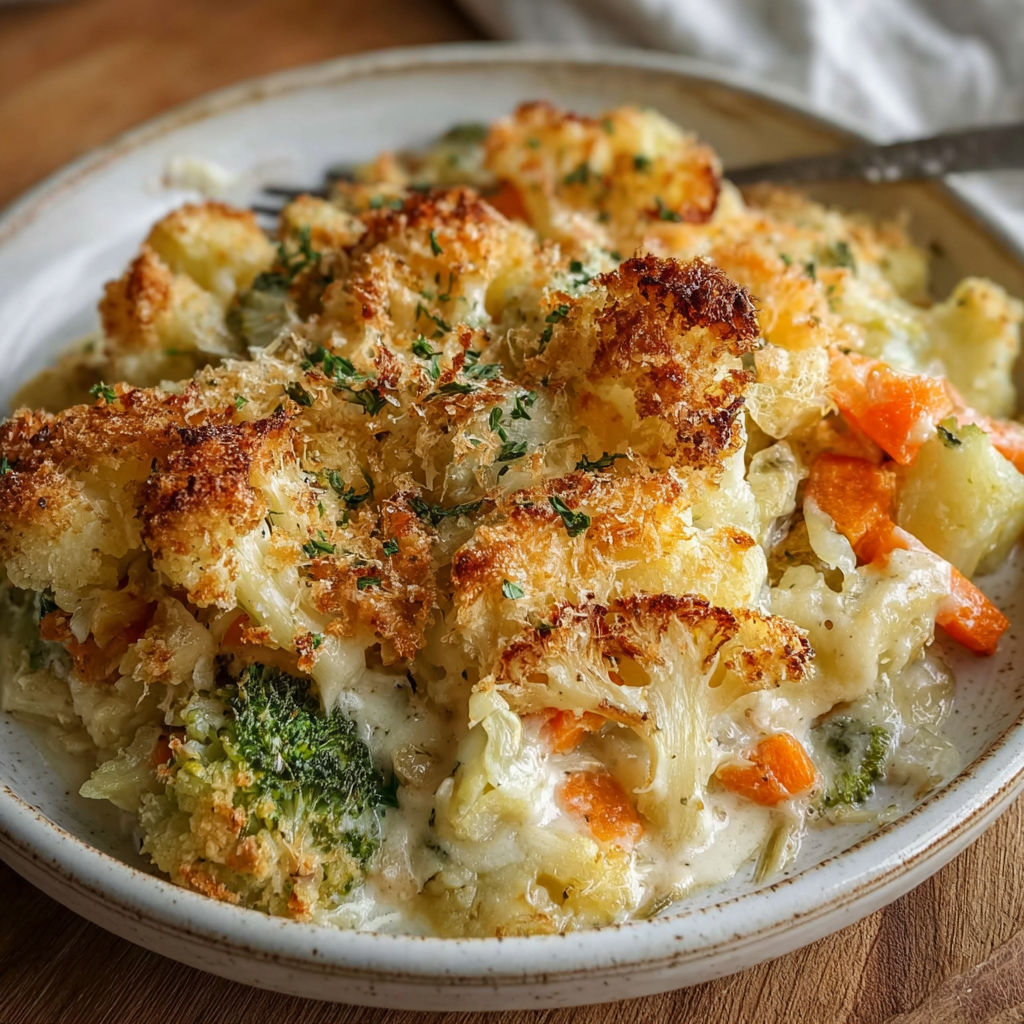
Creamy Winter Vegetable Casserole
There's nothing like a warm, creamy casserole to chase away winter chills, and this Creamy Winter Vegetable Casserole does just that with hearty root and cruciferous vegetables blanketed in a velvety sauce and crowned with a crispy golden topping. Home cooks adore it for its ease and versatility-whether you're feeding a crowd after a snowy hike or adding a vegetarian main to your holiday spread. The Gruyère lends a subtle nuttiness that elevates every bite, making even the simplest ingredients taste luxurious. Plus, it's one of those dishes that tastes even better the next day, so leftovers are never a problem.
What Makes This Recipe Special
- Root and cruciferous blend-carrots, parsnips, Brussels sprouts, and cauliflower create a colorful medley with varied textures and deep earthy flavors.
- Double-cream sauce-combines cream of mushroom soup for body and whole milk for silkiness, ensuring a rich yet balanced consistency.
- Gruyère cheese layer-melts into the sauce for depth and is topped with extra for a golden, bubbly crust.
- Quinoa or white beans swirl-in-boosts protein without altering the classic casserole vibe, making it a complete vegetarian meal.
Ingredients
2 cupswhole milk or unsweetened plant-based milk
2 tablespoonsbutter or plant-based butter, melted
4 cupsmixed winter vegetables, such as broccoli, cauliflower, carrots, parsnips, or Brussels sprouts, cut into uniform pieces
1 can(10.5 ounces) cream of mushroom soup or cream of celery soup
1 cupshredded Gruyère cheese or Cheddar cheese
1 teaspoondried thyme
1 teaspoongarlic powder
1 teaspoonsalt, or to taste
1/2 teaspoonfreshly ground black pepper, or to taste
1 cupbreadcrumbs (use gluten-free if desired)
2 tablespoonsmelted butter or plant-based butter
1 cupcooked quinoa or canned white beans, drained (for extra protein)
Nutrition
450 caloriesCalories
Per serving · Values are estimates
Instructions
1
Preheat oven to 375°F (190°C) and lightly grease a medium-sized baking dish to prevent sticking and encourage a crisp crust.
2
Cut fresh vegetables into even pieces and steam or blanch for 3 to 4 minutes until just fork-tender, then drain thoroughly. If using frozen vegetables, thaw and pat dry with a paper towel.
3
In a large mixing bowl, combine prepped vegetables, cream of mushroom soup, milk, shredded cheese, dried thyme, garlic powder, salt, and black pepper. Mix until all vegetables are evenly coated and no dry spots remain.
4
Transfer the vegetable mixture to the prepared baking dish and spread evenly with a spoon or spatula.
5
In a separate bowl, mix breadcrumbs with melted butter until thoroughly coated.
6
Scatter breadcrumb mixture evenly over the surface to ensure a uniform golden crust upon baking.
7
Bake casserole uncovered for 25 to 30 minutes or until the top is crispy and golden and the sauce is bubbling at the edges.
8
Allow casserole to rest for 5 minutes before serving to set the sauce and preserve texture.
Essential Tips
Steam vegetables evenly
Steam or blanch your vegetables in batches to avoid overcrowding the pot. Cut them into uniform 1-inch pieces so they cook at the same rate and retain their vibrant color in the final dish.
Drain vegetables well
After steaming or blanching, pat the vegetables dry with a clean kitchen towel or let them drain in a colander for 5 minutes. Excess moisture will thin the sauce and prevent the top from crisping properly during baking.
Toast spices lightly
Warm your dried thyme and garlic powder in the melted butter for 30 seconds before combining with the milk. This step awakens their aromas and layers subtle depth into the sauce.
Use coarse breadcrumbs
Opt for coarse panko or homemade breadcrumbs for a sturdy, crunchy topping. Avoid fine crumbs, which can turn gummy under the sauce during baking.
Check quinoa or beans
If using quinoa, cook it ahead and cool it completely to avoid releasing starch into the casserole. For beans, rinse canned varieties well to prevent a beany aftertaste.
Smart Swaps & Variations
Root-only version
Swap cruciferous veggies for turnips, rutabagas, and sweet potatoes for a sweeter, denser casserole with an earthier profile.
Spiced kick
Add a pinch of smoked paprika or a dash of cayenne to the breadcrumb mixture for a subtle warmth without overpowering the creamy base.
Dairy-free upgrade
Use full-fat coconut milk and plant-based butter, and swap Gruyère for a dairy-free melty cheese like Miyoko's or Violife aged block.
Grain-free option
Replace quinoa or beans with finely chopped roasted mushrooms or sun-dried tomatoes for an umami-rich, grain-free protein boost.
Herb garden twist
Stir in 1 tablespoon fresh thyme leaves or 1 teaspoon dried rosemary with the thyme for a brighter, more aromatic finish.
What to Serve With This
- Warm crusty sourdough bread or dinner rolls to soak up the creamy sauce.
- Simple green salad with a lemon-Dijon vinaigrette to cut through the richness.
- Glass of buttery Chardonnay or a hoppy amber ale to complement the earthy flavors.
- Roasted apple slices with a sprinkle of cinnamon for a sweet seasonal side.
Storage & Reheating
Storage
Cool completely, cover tightly with foil or a lid, and refrigerate for up to 4 days. The flavors meld beautifully overnight, often tasting even better the next day.
Reheating
Cover the dish with foil and warm in a 350°F (175°C) oven for 15-20 minutes, until heated through. Avoid microwaving, as it can make the vegetables mushy and the sauce grainy.
Expert Chef Tips
- Make a roux base for a smoother sauce: Melt butter, whisk in 2 tablespoons flour, cook 2 minutes, then slowly add milk for a silky, lump-free texture before combining with soup.
- Blanch cruciferous vegetables first, then shock in ice water to preserve their bright green color and crisp texture before adding to the casserole.
- Layer the cheese in two stages: mix half into the sauce for flavor and melt, then sprinkle the rest on top before baking for a golden, bubbly crust that holds its shape.
Equipment You’ll Need
- Medium-sized baking dish (9x13 inches or similar)
- Large pot with steamer basket or large pot for blanching
- Mixing bowls (large and medium)
- Whisk and spatula for stirring
Nutritional Benefits
- Provides 15-18g plant-based protein per serving when quinoa or white beans are used, supporting muscle repair and satiety.
- Rich in vitamin C and folate from winter vegetables like Brussels sprouts and cauliflower, supporting immune function and cell health.
- Contains calcium and vitamin D from dairy or fortified plant-based milk, contributing to bone strength and overall nutrient balance.
- Lower in saturated fat when using plant-based milk and butter, making it a heart-smart option for everyday meals.
Reviews
No written reviews yet — be the first to cook this and share how it turned out!
Leave a Review
Frequently Asked Questions
Can I use frozen vegetables instead of fresh?
Absolutely! Use frozen winter vegetable medleys for convenience. Skip the blanching step and thaw them in a colander under cold water for 2-3 minutes, then pat dry thoroughly. Frozen veggies can release more moisture, so extra draining is key to prevent a watery casserole.
What's the best way to cut Brussels sprouts for this dish?
Trim the stem and quarter each sprout through the core. This exposes more surface area to the sauce and ensures even cooking without the woody texture of whole sprouts.
Can I make this casserole ahead of time?
Yes! Assemble the casserole up to the breadcrumb topping and refrigerate, covered, for up to 24 hours. Add 5-10 minutes to the baking time if starting from cold. Top with crumbs just before baking for best texture.
Is there a gluten-free substitute for the breadcrumbs?
Yes. Use gluten-free panko, crushed gluten-free cornflakes, or even crushed potato chips for a salty crunch. Ensure all other ingredients, like the soup and butter, are also gluten-free to avoid cross-contamination.
Can I use a different cheese blend?
Certainly. Try sharp cheddar for tang, or mix in some Parmesan for saltiness. Avoid pre-shredded cheeses with anti-caking agents, as they can make the sauce grainy. Freshly grate your cheese for the best melt.
Why does my sauce sometimes separate after baking?
Separation often happens if the casserole isn't rested after baking. Let it sit for 5-10 minutes off the heat to allow the sauce to re-emulsify. A slight thinning of the sauce with a splash of milk before baking can also help stabilize it.
Can I add meat to this casserole?
Absolutely! Brown 1/2 pound of ground turkey, chicken sausage, or diced ham and fold it into the vegetable mixture before baking. This adds protein and heartiness, perfect for a family dinner or potluck.
How do I reheat individual portions without drying them out?
Place a portion in a small baking dish, cover with foil, and warm in a 325°F (163°C) oven for 10 minutes. Add a splash of milk or broth to the dish before reheating to restore moisture if needed.
More Winter Comfort




🔒 From the Vault — 43,000+ premium recipes


Cook This Next