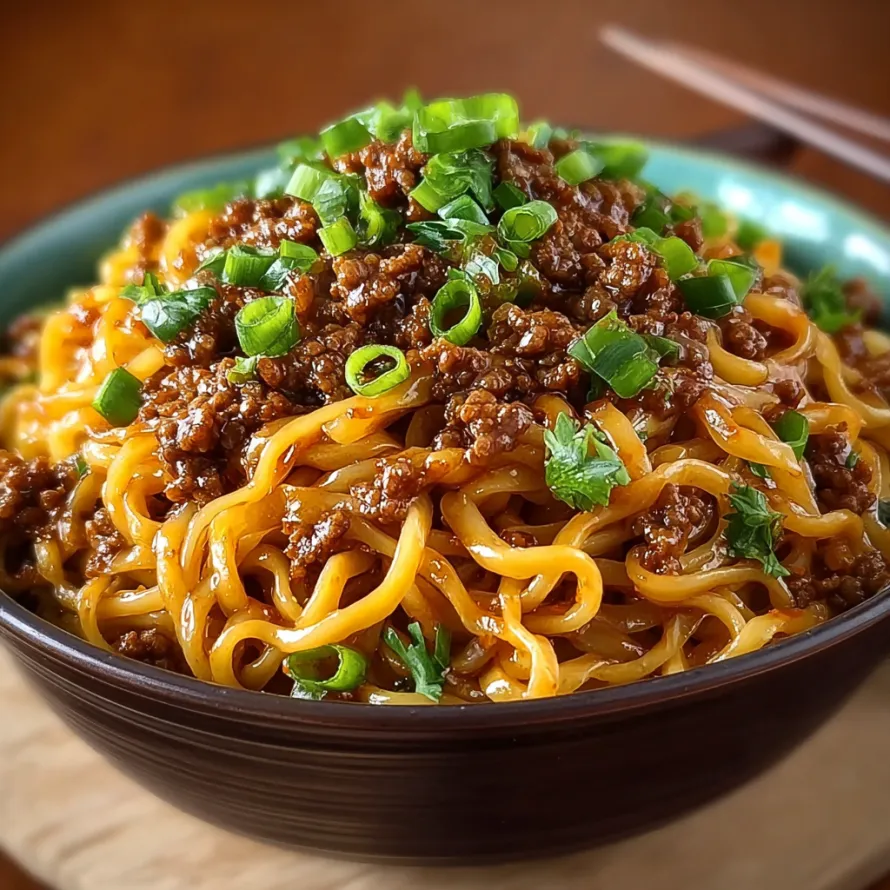
Mongolian Ground Beef Noodles
There's something magical about a bowl of Mongolian Ground Beef Noodles that makes weeknight dinners feel like a takeout treat. The dish is a symphony of sweet and savory flavors with tender ground beef and chewy noodles, all coated in a glossy, umami-packed sauce that clings beautifully. It's the kind of meal that disappears from the table faster than you can say 'seconds, please,' and it's perfect for those evenings when you want comfort food without the fuss. Plus, it's ready in under 30 minutes, making it a weeknight warrior you'll rely on time and again.
What Makes This Recipe Special
- The sauce is a harmonious blend of hoisin and soy sauces, balanced with brown sugar and beef broth, creating a depth of flavor that's far more complex than typical takeout versions.
- Cornstarch slurry is used to thicken the sauce just before tossing with noodles, ensuring it clings perfectly without becoming gummy or overly starchy.
- Ground beef is browned with garlic right in the skillet, infusing the sauce with rich, meaty notes while keeping the dish fast and one-pan friendly.
- Green onions aren't just a garnish here-they're stirred in at the end to add a bright, fresh contrast that cuts through the richness of the sauce.
Ingredients
1 lblean ground beef
5 clovesgarlic, minced
1/3 cupbrown sugar
1/4 cupbeef broth
1/3 cuplow-sodium soy sauce
3 tablespoonshoisin sauce
1/2 teaspoonground ginger
1/2 teaspoonground black pepper
Pinch of red pepper flakes (optional)
10 ozlinguine (or gluten-free alternative like rice noodles)
1 tablespooncornstarch
2 tablespoonswater
4 greenonions, sliced
Nutrition
520 caloriesCalories
Per serving · Values are estimates
Instructions
1
Cook linguine or preferred pasta in a large pot of salted, boiling water until al dente. Drain and set aside.
2
Heat a large skillet over medium-high heat, add ground beef and cook until browned, breaking it into small pieces. Drain excess fat and reduce heat to medium.
3
Add minced garlic to the beef and sauté for 1 minute until fragrant. Stir in soy sauce, beef broth, brown sugar, hoisin sauce, ground ginger, black pepper, and red pepper flakes (if using). Mix well to combine.
4
In a small bowl, whisk together cornstarch and water. Add the mixture to the skillet and stir until the sauce thickens. Simmer for a few minutes.
5
Add cooked noodles to the skillet and toss until coated in the sauce. Let simmer for 2-3 minutes to absorb flavors.
6
Sprinkle sliced green onions over the top and serve hot.
Essential Tips
Don't skip the draining
After browning the beef, make sure to drain excess fat to prevent the dish from becoming greasy. A paper towel can help soak up any lingering fat if needed.
Use room-temp broth
Cold beef broth can shock the skillet and slow down the cooking process. Let it sit at room temperature for 5-10 minutes before adding it to the sauce.
Al dente is key
Undercook your noodles by 1-2 minutes when boiling, as they'll finish cooking in the sauce. Overcooked noodles will turn mushy when tossed with the sauce.
Simmer to absorb
After adding the noodles to the sauce, let them simmer for 2-3 minutes uncovered. This gives the noodles time to soak up the flavors rather than just sit in the sauce.
Adjust spice levels
If you prefer a milder dish, reduce the red pepper flakes or omit them entirely. For extra heat, add a dash of sriracha or chili oil at the end.
Smart Swaps & Variations
Spicy Mongolian Beef
Add 1-2 teaspoons of chili garlic sauce or sambal oelek to the sauce for a fiery kick that pairs well with the sweetness.
Vegetable-Packed
Sauté 1 cup of sliced bell peppers, mushrooms, or broccoli florets with the garlic for a heartier, veggie-forward version.
Turkey or Chicken Swap
Replace the ground beef with 93% lean ground turkey or chicken for a lighter protein option without sacrificing flavor.
Coconut Aminos for Soy-Free
Use coconut aminos instead of soy sauce to make this dish soy-free while maintaining a similar savory depth.
What to Serve With This
- Steamed jasmine rice or fried rice for a double-carb delight that soaks up every last drop of sauce.
- Quick-pickled cucumbers or daikon radish to add a refreshing crunch and balance the richness.
- A cold glass of Tsingtao beer or a crisp Chardonnay to cut through the sweetness and cleanse the palate.
- Egg rolls or potstickers for a fun appetizer that complements the hearty noodle dish.
Storage & Reheating
Storage
Store leftovers in an airtight container in the refrigerator for up to 3 days. The sauce will thicken as it cools, so add a splash of water or broth when reheating to restore its glossy texture.
Reheating
Reheat gently in a skillet over medium-low heat, stirring frequently to prevent sticking. Microwaving is an option but can make the noodles rubbery-cover with a damp paper towel to mitigate this.
Expert Chef Tips
- Toast the garlic slightly in the skillet before adding the beef to deepen its flavor without burning it. Simply press the garlic into the hot skillet and let it sizzle for 30 seconds before adding the beef.
- Use a mix of hoisin and oyster sauce for extra umami if you have it on hand. The oyster sauce adds a briny depth that pairs beautifully with the brown sugar.
- For a restaurant-style finish, finish the dish with a drizzle of toasted sesame oil and a sprinkle of toasted sesame seeds. This adds a nutty aroma and visual appeal that elevates the dish instantly.
Equipment You’ll Need
- Large skillet or wok for browning beef and reducing the sauce
- Large pot for boiling pasta
- Small bowl for mixing cornstarch slurry
- Tongs or pasta fork for tossing noodles in the sauce
Nutritional Benefits
- This dish provides a good source of protein from the lean ground beef, with approximately 30g per serving, supporting muscle maintenance and satiety.
- The brown sugar adds quick-digesting carbohydrates for energy, while the noodles provide complex carbs for sustained fuel, making it a balanced meal.
- Using low-sodium soy sauce helps control sodium intake, with the dish containing roughly 800mg of sodium per serving, which is lower than many takeout versions.
- The dish is naturally high in iron from the beef and B vitamins, which are essential for energy metabolism and overall vitality.
Reviews
No written reviews yet — be the first to cook this and share how it turned out!
Leave a Review
Frequently Asked Questions
Can I use a different type of pasta?
Yes! Swap linguine for spaghetti, udon, or even ramen noodles. For gluten-free, rice noodles or gluten-free linguine work well, but note that cooking times may vary.
What's the best way to brown the beef evenly?
Break the beef into small, pea-sized pieces as it cooks to ensure even browning. Avoid overcrowding the skillet-cook in two batches if needed to prevent steaming.
Can I make this ahead of time?
Yes, but assemble the dish just before serving. Cook the beef and sauce ahead, then reheat gently before tossing with fresh, cooked noodles. This prevents the noodles from absorbing too much sauce and becoming soggy.
Is there a way to reduce the sugar content?
Absolutely. Reduce the brown sugar to 2 tablespoons and add 1 teaspoon of honey or maple syrup for sweetness. Alternatively, use monk fruit sweetener for a sugar-free option.
Why does my sauce sometimes split?
A split sauce can happen if the heat is too high or the cornstarch slurry isn't fully incorporated. Always whisk the slurry vigorously before adding it, and simmer the sauce gently after adding it.
Can I freeze this dish?
Freezing is possible but not ideal. The noodles will absorb too much liquid and become mushy upon thawing. If you must freeze, do so without the noodles and cook fresh noodles when ready to serve.
What's the best way to slice green onions?
Slice them thinly on a bias for the most visually appealing presentation. Use both the white and green parts-just trim off any overly tough root ends.
Can I add vegetables to the sauce?
Yes, but add them after browning the beef and before adding the sauce ingredients. Vegetables like bell peppers, snap peas, or carrots benefit from a quick sauté to soften slightly before simmering in the sauce.
More Dinner Victories
🔒 From the Vault — 43,000+ premium recipes



Cook This Next