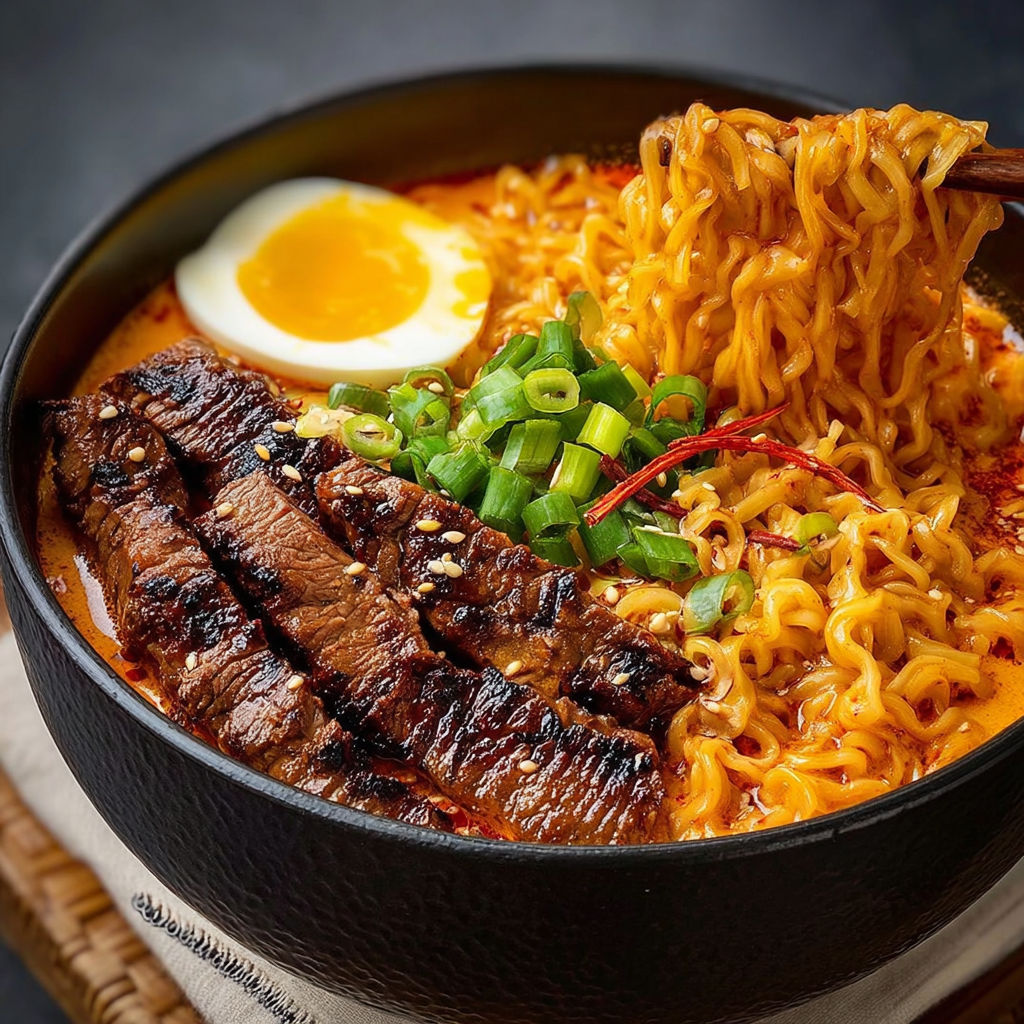
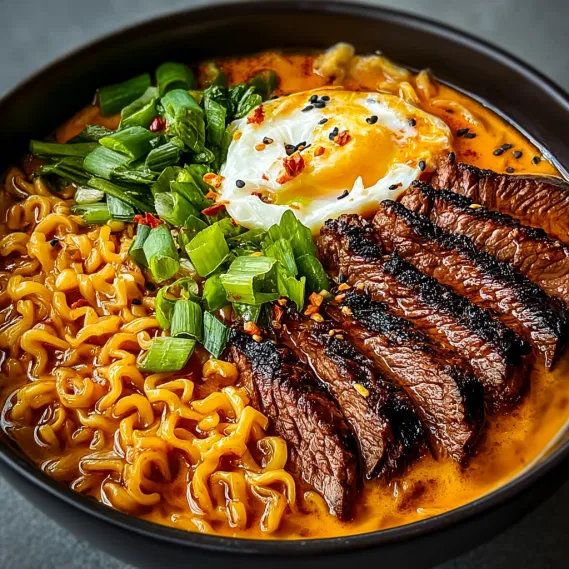
Spicy Korean Ramen Grilled Beef
There's something deeply comforting about a bowl of Spicy Korean Ramen Grilled Beef-it's the kind of meal that makes weeknights feel like a treat. The sizzling beef, tangled in gochujang-kissed noodles and drizzled with a creamy, spicy sauce, brings the bold flavors of Korean cuisine right to your kitchen. Home cooks love it for its balance of heat, umami, and ease, making it perfect for busy weeknights or when you need to impress without stress. The charred edges of the beef and the glossy, spice-coated noodles create a dish that's as visually stunning as it is irresistible.
What Makes This Recipe Special
- The double gochujang hit-one in the marinade for the beef and another in the sauce-creates layers of spicy depth that most recipes miss.
- Grilling the beef instead of pan-frying adds smoky charred notes that elevate the dish beyond a typical stir-fry.
- The creamy sauce is a game-changer, balancing the heat with rich, tangy mayo and a touch of honey for subtle sweetness.
- Reserving noodle water and rinsing the noodles under cold water ensures they're perfectly chewy, not gummy, even after mixing with the sauce.
Ingredients
300g flank steak or sirloin, thinly sliced
2 tablespoonssoy sauce
1 tablespoonsesame oil
1 tablespoonbrown sugar
1 tablespoongochujang
2 garliccloves, minced
1 teaspoongrated ginger
1 teaspoonrice vinegar
½ teaspoonground black pepper
2 packsKorean instant ramen, seasoning packets discarded
1 tablespoongochujang
1 tablespoonsoy sauce
1 teaspoonsesame oil
1 teaspoonchili flakes
½ teaspoonsugar
¼ cupreserved noodle water
2 tablespoonsmayonnaise
1 teaspoongochujang
1 teaspoonsoy sauce
1 teaspoonhoney
1 tablespoonwarm water
2 tablespoonschopped scallions
1 teaspoontoasted sesame seeds
Optional: shredded nori
Optional: pickled radish
Optional: soft-boiled egg
Nutrition
720 caloriesCalories
Per serving · Values are estimates
Instructions
1
In a bowl, combine soy sauce, sesame oil, brown sugar, gochujang, garlic, ginger, vinegar, and black pepper. Add the beef, toss to coat, and marinate for 30 minutes.
2
Mix mayonnaise, gochujang, soy sauce, honey, and warm water in a bowl until smooth. Set aside.
3
Boil ramen noodles until al dente. Reserve ¼ cup of the cooking water, then drain and rinse the noodles under cold water.
4
In a pan over low heat, mix gochujang, soy sauce, sesame oil, chili flakes, sugar, and reserved noodle water. Add the noodles, stir until fully coated, and remove from heat.
5
Heat a grill pan over medium-high heat. Grill the beef slices for 2–3 minutes per side until charred and cooked through. Work in batches if necessary.
6
Plate the noodles, top with grilled beef, drizzle the creamy sauce over the top, and garnish with scallions and sesame seeds. Add optional toppings like shredded nori, pickled radish, or a soft-boiled egg if desired.
Essential Tips
Slice beef thinly
Freeze the beef for 20 minutes before slicing to get paper-thin strips that cook quickly and evenly. Thicker cuts will toughen and overcook before they char.
Char in batches
Overcrowding the grill pan lowers the temperature, steaming the beef instead of searing it. Work in two batches for that perfect smoky crust. Keep cooked beef warm in a low oven (95°C/200°F) while you finish the rest.
Sauce texture matters
If the creamy sauce is too thick, thin it with a splash of warm water or a teaspoon of rice vinegar. Too thin? Add a bit more mayo or a pinch of sugar to balance the flavors.
Noodle al dente timing
Boil ramen noodles for 30 seconds less than package instructions-they'll finish cooking in the hot sauce. Overcooked noodles turn mushy when mixed with the sauce and toppings.
Garnish last minute
Add scallions and sesame seeds just before serving to preserve their fresh crunch. Sprinkling them ahead of time can make them wilt and lose their vibrant color.
Smart Swaps & Variations
Mild version
Reduce gochujang in both the marinade and sauce to ½ tablespoon each, and omit the chili flakes entirely for a gentle but flavorful dish.
Vegetarian swap
Replace beef with thick slices of king oyster mushrooms or extra-firm tofu pressed and marinated the same way for a hearty, meaty texture.
Extra creamy
Stir 2 tablespoons of heavy cream or coconut milk into the creamy sauce for a richer, more decadent finish that tempers the spice.
Low-carb
Swap ramen noodles for shirataki noodles or zucchini noodles, and use the same sauce and beef for a lighter but equally satisfying meal.
What to Serve With This
- Quick-pickled cucumbers (thinly sliced cucumbers tossed with rice vinegar, sugar, and salt) to cut through the richness.
- Cold Korean barley tea (boricha) to balance the heat and refresh the palate.
- Crispy Korean pancakes (kimchijeon) for an indulgent side that soaks up any leftover sauce.
- Steamed jasmine rice on the side if you want a neutral base to dilute the spice for less heat-tolerant diners.
Storage & Reheating
Storage
Store leftovers in an airtight container in the fridge for up to 3 days. Keep the beef and noodles separate to prevent the noodles from absorbing moisture and turning soggy.
Reheating
Reheat beef and noodles separately in a skillet over medium heat. Add a splash of water or broth to the noodles to revive their texture. Avoid microwaving, as it can make the beef rubbery and the noodles mushy.
Expert Chef Tips
- Use a mix of flank steak and sirloin for the best texture-flank for chew and sirloin for tenderness. Ask your butcher to slice it paper-thin against the grain for maximum tenderness.
- Infuse the marinade with depth by adding ½ teaspoon of fish sauce or 1 teaspoon of doenjang (Korean soybean paste) for an umami boost that rounds out the spice.
- For a restaurant-style presentation, plate the noodles in a well in the center of the bowl, then arrange the beef in a circular pattern on top. Drizzle the sauce in a zigzag pattern for visual appeal.
Equipment You’ll Need
- Grill pan or cast-iron skillet for charring the beef
- Sharp chef's knife for thinly slicing the beef
- Medium saucepan for boiling noodles
- Mixing bowls for marinating and sauce preparation
Nutritional Benefits
- High in protein (35g per serving) from lean flank steak, supporting muscle repair and satiety.
- Rich in capsaicin from gochujang and chili flakes, which may boost metabolism and reduce inflammation.
- Contains healthy fats from sesame oil and mayo, providing sustained energy without excessive calories.
- Low in carbohydrates (50g per serving), primarily from the noodles, making it suitable for lower-carb diets when using alternatives like shirataki noodles.
Reviews
No written reviews yet — be the first to cook this and share how it turned out!
Leave a Review
Frequently Asked Questions
Can I use a different cut of beef?
Yes! Ribeye or skirt steak work beautifully here, but adjust cooking times-ribeye may need 1 minute less per side, while skirt steak can take up to 4 minutes per side to reach medium-rare. Always slice against the grain for tenderness, regardless of the cut.
What if I don't have gochujang?
You can substitute 1 tablespoon of sriracha mixed with 1 teaspoon of miso paste for a similar fermented, spicy depth. For a milder version, use 1 tablespoon of sambal oelek with ½ teaspoon of brown sugar.
Can I make this ahead of time?
Absolutely! Marinate the beef up to 24 hours ahead, but grill it just before serving to avoid drying out. Cook the noodles and sauce ahead, then reheat gently and assemble to order for the best texture.
How do I adjust the spice level?
Start with less gochujang and chili flakes, then taste and adjust. For extra heat, add sliced fresh chili or a drizzle of chili oil to the creamy sauce. Remember, the heat mellows slightly once the dish sits.
Why rinse the noodles after boiling?
Rinsing stops the cooking process immediately and removes excess starch, which prevents the noodles from clumping or turning gummy when mixed with the sauce. It's a crucial step for texture.
Can I use regular ramen noodles?
Yes, but avoid instant ramen with strong seasoning packets-they can overpower the dish. Discard the seasoning and use the noodles as-is. For better texture, opt for fresh ramen noodles if available.
What's the best way to slice beef for quick cooking?
Place the beef in the freezer for 15-20 minutes to firm up, then slice against the grain into ⅛-inch thick strips. This ensures even cooking and maximum tenderness, even when working quickly.
How do I prevent the creamy sauce from separating?
Always mix the sauce ingredients in the order listed-start with the mayo, then add gochujang, soy sauce, etc. If it separates, whisk vigorously or blend briefly to emulsify. A pinch of xanthan gum can also stabilize it.
More Dinner Victories
🔒 From the Vault — 43,000+ premium recipes
Cook This Next