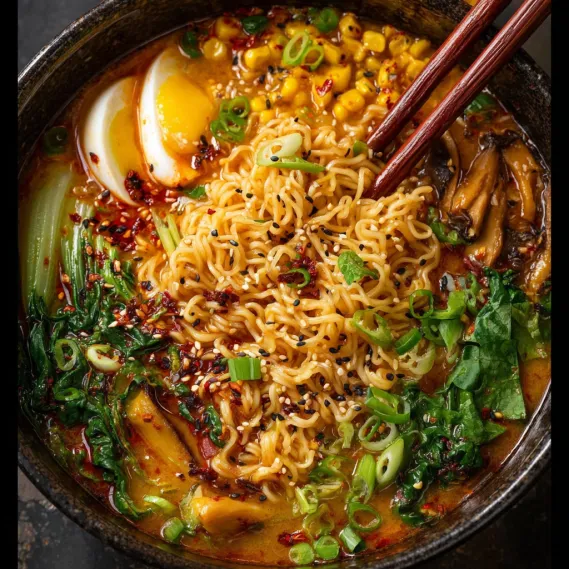
Easy One Pot Spicy Vegan Ramen
This Easy One Pot Spicy Vegan Ramen is a weeknight hero that delivers bold, umami-rich flavors without the fuss. Home cooks adore it for its quick assembly, minimal cleanup, and customizable heat levels-perfect for lazy Sundays or impromptu dinner parties. The secret lies in the layered spice from Sriracha or gochujang, balanced by the earthy depth of oyster mushrooms and the fresh crunch of bok choy. It's comfort food that feels indulgent but keeps your plant-based diet on track.
What Makes This Recipe Special
- One-pot simplicity: Simmering everything together in a single pot intensifies the flavors as the noodles absorb the spicy broth.
- Dual-spice power: Offers both Sriracha's bright heat and gochujang's fermented depth, letting you choose your spice profile.
- Textural contrast: The chewy ramen noodles and tender-crisp bok choy create a satisfying bite in every spoonful.
- Topping flexibility: Garnishes like edamame, nori, and chili garlic sauce turn this into a restaurant-worthy bowl in minutes.
Ingredients
2 tablespoonsneutral oil
3/4-1 cup shredded oyster mushrooms (0.5 oz)
3-4 cloves garlic, minced
1 inchginger, minced
2-3 scallions, thinly sliced (white and green parts separated)
4-5 cups low-salt vegetable broth
2 tablespoonstomato paste
3 tablespoonsSriracha or 1 tablespoon gochujang
2-3 tablespoons low-sodium soy sauce
125 guncooked ramen noodles (4.5 oz)
1 bokchoy, sliced in half
Chopped green onions
Chili garlic sauce
Cooked and shelled edamame
Shredded nori sheets
Sesame seeds
Crispy tofu or tempeh
Nutrition
476 caloriesCalories
Per serving · Values are estimates
Instructions
1
Sauté minced garlic, ginger, and white parts of scallions in 1-2 tablespoons of oil until fragrant (about 1 minute).
2
Add tomato paste and cook for 1 minute. Add shredded oyster mushrooms, stir in Sriracha and soy sauce, and cook for 30 seconds.
3
Pour in vegetable broth and bring to a boil. Reduce heat, add ramen noodles and bok choy, and simmer covered for 7 minutes or follow noodle package instructions.
4
Prepare chosen toppings while the broth is simmering.
5
After cooking, taste and adjust seasoning by adding more Sriracha, soy sauce, or adjusting broth consistency if desired.
6
Dish out ramen, bok choy, mushrooms, and broth into bowls. Drizzle chili oil on top and garnish with your favorite toppings.
7
Enjoy your comforting bowl of Spicy Vegan Ramen!
Essential Tips
Boost umami
For a deeper flavor, add 1 teaspoon of miso paste along with the tomato paste in step 2. This enhances the broth's savory backbone without overpowering the spice.
Noodle timing
Check your noodles 2 minutes early if they're thin or fresh. Overcooked noodles turn mushy-aim for al dente to maintain texture in the finished bowl.
Broth consistency
If the broth reduces too much, splash in 1/4 cup of hot water to loosen it before serving. A slightly brothy soup is ideal for slurping.
Prep toppings first
While the soup simmers, chop all your toppings (bok choy, green onions, nori) and portion out edamame. This ensures everything is ready when the ramen is done.
Spice adjustment
Add Sriracha or soy sauce to taste before serving-never after, as the flavors won't meld. Start with less and build gradually to avoid over-salting.
Smart Swaps & Variations
Miso-Sesame Swap
Replace gochujang with 1 tablespoon white miso and add 1 teaspoon toasted sesame oil with the tomato paste for a nutty, umami twist.
Coconut Creaminess
Stir in 1/4 cup coconut milk with the broth for a richer, slightly sweet contrast to the heat.
Protein Boost
Add 1/2 cup cubed firm tofu or tempeh when simmering the noodles for extra protein without compromising texture.
What to Serve With This
- Steamed jasmine rice or kimchi for a heartier meal.
- Cold Korean barley tea or iced hibiscus tea to balance the spice.
- Crusty sourdough or garlic bread for dipping into the leftover broth.
- Miso soup or a simple cucumber salad on the side for a full Japanese-Korean spread.
Storage & Reheating
Storage
Store leftovers in an airtight container in the fridge for up to 3 days. Separate noodles and broth if possible to prevent them from absorbing too much liquid.
Reheating
Reheat gently in a pot over low heat with a splash of water to prevent sticking. Avoid microwaving-it can make the noodles rubbery. Top with fresh garnishes after reheating.
Expert Chef Tips
- Toast your spices: If using whole spices (like coriander or cumin), lightly toast them in the empty pot before adding oil to release their oils for a fragrant base.
- Layer acidity: A splash of rice vinegar or lime juice at the end brightens the flavors-add it cautiously, 1 teaspoon at a time.
- Garnish last: Always add toppings like nori or green onions after reheating to preserve their texture and color.
Equipment You’ll Need
- Large, deep pot or Dutch oven with a lid
- Sharp chef's knife and cutting board
- Measuring spoons for precise seasoning
- Fine-mesh strainer (optional, for removing ginger/garlic bits if desired)
Nutritional Benefits
- Packed with plant-based protein from edamame and mushrooms, providing essential amino acids.
- Rich in fiber from bok choy and whole-grain ramen (if using), supporting digestive health.
- Contains capsaicin from chili oil and Sriracha, which may boost metabolism and reduce inflammation.
- Low in saturated fat but high in flavor, thanks to umami-rich ingredients like tomato paste and mushrooms.
Reviews
No written reviews yet — be the first to cook this and share how it turned out!
Leave a Review
Frequently Asked Questions
Can I use fresh ramen noodles instead of dried?
Yes! Replace the dried noodles with 150g fresh ramen noodles and reduce the simmering time to 3-4 minutes. Fresh noodles cook faster and stay chewier, so watch them closely to avoid mushiness.
How do I make this gluten-free?
Swap soy sauce for tamari or coconut aminos, ensure your broth is gluten-free, and use gluten-free ramen noodles. Check labels on all ingredients, as some gochujang or chili sauces contain wheat.
Can I make this ahead?
Yes, prep the broth and mushrooms up to 2 days ahead and store in the fridge. Cook the noodles fresh when ready to serve, as they'll absorb too much liquid if stored with the broth.
What's the best way to adjust the spice level?
For mild heat, use 1 tablespoon Sriracha and 1 tablespoon soy sauce. For extreme heat, add 1 tablespoon gochujang and a drizzle of chili oil. Taste before adding all the spice-you can always increase it later.
Can I freeze this ramen?
Freezing isn't ideal for the noodles or bok choy-they'll turn soggy when thawed. Freeze the broth and mushrooms only, then reheat and add fresh noodles and veggies when serving.
Why is my broth too salty?
This usually happens if you over-reduce the broth or use high-sodium broth. Dilute with water or unsalted vegetable broth, and balance with a squeeze of acid (lemon or vinegar) to mellow the saltiness.
Can I use shiitake mushrooms instead of oyster mushrooms?
Absolutely! Shiitakes add a meatier texture and deeper umami. Slice them thinly to ensure they cook evenly in the broth.
What's the best way to slice bok choy for even cooking?
Cut the bok choy lengthwise into halves or quarters, then slice the white stems thinly and the leafy greens coarsely. This way, the stems soften in the broth while the leaves stay bright and crisp.
More 30-Minute Magic




🔒 From the Vault — 43,000+ premium recipes





Cook This Next