
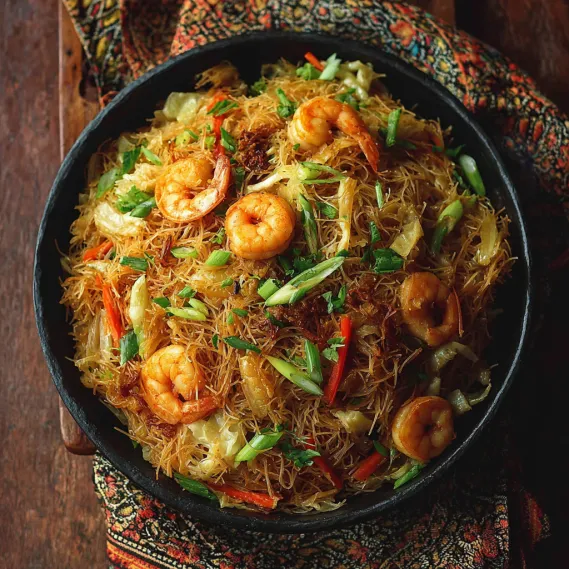
Traditional Pancit Bihon Noodles
There's something deeply comforting about a steaming plate of Pancit Bihon-Filipino rice noodles lovingly tangled with tender chicken, succulent shrimp, and a rainbow of vegetables, all drenched in a savory-sweet sauce. Home cooks swear by this dish for busy weeknights, potlucks, or even as a make-ahead meal for family gatherings. What makes it irresistible? The noodles soak up the rich, umami-packed sauce while staying light enough to feel fresh, yet hearty enough to satisfy. It's a dish that feels like a hug in a bowl, with layers of texture and flavor that keep everyone coming back for more.
What Makes This Recipe Special
- The sauce blend-dark soy, regular soy, and oyster sauce-creates a deep, caramelized flavor profile that's uniquely Filipino, balancing sweet, salty, and umami in every bite.
- The noodles are soaked (not boiled) to ensure they remain tender and separate, avoiding the mushy texture that plagues many stir-fried noodle dishes.
- Shrimp and chicken are cooked separately first to prevent overcooking, then combined with vegetables for a quick sauté that preserves their textures.
- A splash of lime at the end brightens the dish, cutting through the richness of the sauce and adding a refreshing contrast.
Ingredients
8 ozFilipino Bihon Noodles
½ lbChicken Breast, thinly sliced
½ lbSmall Shrimp, deveined and tail-off
8 ozFresh Green Beans, sliced
1 WholeCarrot, diced, cubed, or shredded
½ HeadCabbage, sliced into chunks
1 YellowOnion, finely diced
1 ½ tablespoonMinced Garlic
½ teaspoonBlack Pepper
¼ teaspoonSalt
1 tablespoonChicken Bouillon Powder
3 tablespoonDark Soy Sauce
2 tablespoonSoy Sauce
2 tablespoonOyster Sauce
3 cupsWater
1 teaspoonAccent (optional)
Oil for Sautéing
Nutrition
129 caloriesCalories
Per serving · Values are estimates
Instructions
1
Add rice vermicelli noodles to a cold bowl of water and soak for at least 30 minutes.
2
Heat oil over medium-high in a large wok. Add chicken, season lightly with salt and black pepper, and cook until lightly browned. Then add shrimp and cook until thoroughly cooked.
3
Add onion and garlic to the wok and sauté for a couple of minutes until garlic is aromatic.
4
Add green beans, carrot, and cabbage to the wok. Continue sautéing until vegetables soften and the cabbage cooks down.
5
Whisk together all sauce ingredients, pour over chicken and vegetables, and stir to combine.
6
Drain the noodles, add them to the wok with 2 cups of water. Cover and cook for 5-6 minutes, stirring occasionally until noodles soften and incorporate with other ingredients.
7
Serve the Pancit Bihon hot with lime wedges for squeezing over the dish.
Essential Tips
Noodle soak time
Don't rush the soaking process-30 minutes is the absolute minimum. For best results, soak the noodles for up to 1 hour in room-temperature water to ensure even softening without breaking.
Sauce timing
Mix all sauce ingredients in a bowl first to avoid clumping, especially the bouillon powder. Pour it into the wok only after the vegetables have softened slightly to prevent burning.
High heat matters
Cook the chicken and shrimp over medium-high heat to develop a light sear, which adds depth of flavor. Lower heat will steam them instead, leading to a softer texture.
Veggie order
Add heartier vegetables like carrots and green beans first, followed by softer ones like cabbage. This ensures everything finishes cooking at the same time without wilting into mush.
Water control
Use only 2 cups of water when adding the noodles to avoid a soupy dish. The residual steam from the covered pot is enough to fully cook the noodles in 5-6 minutes.
Smart Swaps & Variations
Vegetarian Pancit
Swap chicken and shrimp for tofu or mushrooms (like oyster or shiitake) and use vegetable bouillon. Add a splash of vegetarian oyster sauce for depth.
Spicy Kick
Add 1-2 tablespoons of chili garlic sauce or a diced red chili pepper when sautéing the onions and garlic for a spicy twist.
Seafood Extravaganza
Replace chicken with squid or scallops, and use a mix of shrimp and mussels. Add a squeeze of calamansi or lemon for brightness.
What to Serve With This
- A chilled glass of Filipino iced tea (tsokolate) or coconut water to balance the rich umami flavors.
- Crispy garlic bits sprinkled on top for an extra layer of crunch and nutty aroma.
- A side of achara (pickled papaya) to cut through the richness with its tangy crunch.
- Steamed jasmine rice for a lighter alternative if you prefer a less noodle-heavy meal.
Storage & Reheating
Storage
Store Pancit Bihon in an airtight container in the refrigerator for up to 3 days. The noodles will absorb more sauce over time, so add a splash of water or broth when reheating to restore moisture.
Reheating
Reheat gently in a wok or skillet over low heat, stirring frequently to prevent sticking. Add a tablespoon of water or chicken broth to loosen the sauce and keep the noodles tender.
Expert Chef Tips
- Toast the garlic separately until golden brown before adding other vegetables to deepen its flavor without burning the rest of the dish.
- Use a mix of dark and light soy sauce for color and balance-dark soy adds richness, while light soy keeps the dish from tasting too heavy.
- For extra glossy noodles, finish cooking with a drizzle of a little sesame oil or a pinch of sugar to caramelize the sauce slightly.
Equipment You’ll Need
- Large wok or deep skillet for even cooking and stir-frying
- Sharp chef's knife for slicing vegetables and protein
- Large bowl for soaking noodles
- Tongs or a wooden spoon for tossing and stirring
Nutritional Benefits
- A balanced dish with lean protein from chicken and shrimp, providing essential amino acids for muscle repair and satiety.
- Rich in vitamins and fiber from the variety of vegetables like green beans, carrots, and cabbage, supporting digestive health.
- Contains complex carbohydrates from rice noodles for sustained energy, though portion size should be moderated for lower-carb diets.
- Sodium content is moderate due to soy sauces and bouillon, so those watching salt intake can reduce added salt or use low-sodium alternatives.
Reviews
No written reviews yet — be the first to cook this and share how it turned out!
Leave a Review
Frequently Asked Questions
Can I use other types of noodles?
Yes! Substitute with angel hair pasta or rice sticks (soaked longer), but avoid egg noodles as they can turn gummy. Stick to rice-based noodles for the authentic texture.
Why are my noodles mushy after cooking?
Over-soaking or using too much water during cooking are common culprits. Soak noodles just until pliable (30-60 minutes), and use only 2 cups of water when adding them to the wok.
Can I make this dish ahead of time?
Absolutely. Assemble the dish up to the point of adding noodles, then refrigerate. Cook the noodles fresh when ready to serve to avoid mushiness.
What's the best way to devein shrimp quickly?
Use a sharp paring knife to make a shallow cut along the shrimp's back, then lift out the vein with the knife tip. Rinse under cold water to remove any residue.
How do I adjust the saltiness?
Taste the sauce before adding it to the wok-bouillon and soy sauces vary in saltiness. Start with less and add more to taste. A squeeze of lime at the end can also balance excess salt.
Can I freeze Pancit Bihon?
Freezing is not recommended as the noodles absorb too much liquid and become gummy when thawed. For best results, store and reheat in the fridge.
What's the difference between dark and light soy sauce?
Dark soy sauce is thicker, sweeter, and adds rich color, while light soy sauce is saltier and thinner. Using both creates a balanced, glossy sauce.
Why do some recipes call for calamansi instead of lime?
Calamansi is a Filipino citrus fruit with a unique tart-sweet flavor. Lime is a close substitute, but if you can find calamansi, its floral notes elevate the dish significantly.
More Dinner Victories




🔒 From the Vault — 43,000+ premium recipes


Cook This Next