Budget-Friendly Dinners: 12 Comforting Ideas and a Game Plan

The best budget-friendly dinners share three traits: they lean on cheap, filling staples (rice, pasta, potatoes, beans, eggs, chicken), they stretch a small amount of meat across many servings, and they turn leftovers into a second meal. Below you will find twelve dinners built on those ideas, a simple way to plan the week, and the shopping habits that save the most money.
TL;DR
- Build dinners around starches and vegetables, and use meat as a flavor and protein boost rather than the main bulk.
- Soups, skillet suppers, casseroles and slow cooker meals stretch the furthest and reheat well.
- Public health sources show that full family dinners can cost under a few dollars per serving when you cook from scratch.
- Portion big packages of meat for the freezer, keep a running leftover list and post a weekly meal plan.
- Start with the twelve dinners below, then browse our recipe collections when you want more.
Table of Contents
- What makes a dinner truly budget-friendly
- Twelve budget-friendly dinners to start with
- A quick comparison: which dinner fits which night
- Quick budget dinners for busy weeknights
- Feeding a crowd without overspending
- How to plan the week so dinner costs less
- Eating well on a small budget
- Our perspective: comfort food is the budget food
- Find more dinners that fit your week
- FAQ
- Sources
What makes a dinner truly budget-friendly
Cheap is not the same as budget-friendly. A $4 dinner that nobody finishes, or that leaves you ordering takeout an hour later, costs more than a $7 dinner that feeds four and produces tomorrow’s lunch. When we test recipes, we look at four things.
Cost per serving, not per recipe. A pot of soup that serves six has to be compared with six takeout portions, not one.
Ingredient overlap. Dinners that share a few ingredients (a bag of rice, a rotisserie-style chicken, a can of tomatoes) waste less than dinners that each need a special jar.
Staying power. Protein, fiber and a little fat keep a family full. That is why beans, eggs, potatoes and pasta show up so often.
Reheating. A meal that tastes as good on day two doubles its value.
There are real numbers behind this approach. The American Heart Association’s 10 Under 10 booklet says each of its entrées lets a family eat healthy for less than $2.50 per serving. University of Missouri Extension’s Two meals for $10 lists Tortilla Soup at $0.66 per serving and Hearty Tex-Mex Skillet Supper at $0.97 per serving, and each recipe serves 6. Those costs were estimated years ago (the publication dates from 2010 and was reviewed in 2014), so today’s grocery receipt will run higher. What still holds is the pattern: soups and skillet suppers built on pantry staples are among the cheapest ways to feed a table.
Twelve budget-friendly dinners to start with
We have grouped these by the kind of night you are having. We do not print a dollar figure for our own recipes because prices differ by store and region; instead, each one is built around inexpensive staples, so you can price it at your own grocery store.
Soups that feed a crowd
Soup is the classic budget move. A little protein, a lot of broth and vegetables, and something starchy to make it a meal.
- Chicken taco soup. Pantry-friendly and fast. Pantry staples like canned beans and tomatoes do much of the work, and toppings such as tortilla chips or shredded cheese can be as generous or as sparing as your week demands.
- Shepherd’s pie soup. All the flavor of the casserole in a bowl, and a smart way to use ground meat, vegetables and potatoes in a way that stretches the pot.
- Chicken noodle soup with Reames noodles. A true comfort dinner, and one of the easiest ways to turn a small amount of chicken into a big pot.
- Creamy chicken noodle soup. The richer version, good when you want something that feels like a treat without a restaurant bill.
Slow cooker dinners for busy days
The slow cooker lets you buy cheaper, tougher cuts and turn them tender, and it cooks while you are at work.
- Crockpot pasta and meatballs. Meatballs stretch ground meat further than a burger patty does, and pasta fills the plate. It is an easy dinner to scale up for a gathering.
- Crockpot scalloped potatoes. Potatoes are one of the cheapest vegetables in the store. Serve as a hearty side, or make it the main with a green salad and a fried egg.
- Crockpot Marry Me chicken. A bold-tasting dinner that works with an affordable pack of chicken thighs or breasts. Spoon it over rice or pasta so a little goes a long way.
Casseroles and bakes
A casserole is a budget tool in disguise: it mixes a small amount of protein with rice, pasta or vegetables and a sauce, and it portions neatly.
- Chicken broccoli rice bake. Chicken, broccoli and rice in one dish, with no side to buy. If fresh broccoli is pricey, frozen is a sensible swap.
- Creamy winter vegetable casserole. Built for cold-weather produce, which is usually at its cheapest when it is in season. A good meatless night.
Fast skillets and one-pot meals
- Chicken ramen stir fry. Instant noodles plus chicken and vegetables for a quick weeknight meal that tastes far better than the packet suggests.
- Cheesy masala beans on toast. Beans, bread and cheese: about as inexpensive as a hot dinner gets, and ready in minutes.
- No-prep rice cooker Japanese curry. Rice, curry and vegetables in one appliance. Add whatever vegetables are on sale.
A quick comparison: which dinner fits which night
| Situation | Good pick | Why it works |
|---|---|---|
| Short on time | Chicken ramen stir fry, masala beans on toast | Minutes at the stove, few ingredients |
| Out all day | Crockpot pasta and meatballs, Marry Me chicken | Set it in the morning, eat when you walk in |
| Feeding a crowd | Taco soup, scalloped potatoes, rice bake | Easy to double, cheap per serving |
| Cooking meatless | Winter vegetable casserole, beans on toast | Vegetables and pantry staples carry the meal |
| Using up leftovers | Shepherd’s pie soup, rice bake | Forgiving recipes that accept substitutions |
Quick budget dinners for busy weeknights
A fast dinner is often the one that drains the budget, because tired parents order in. The fix is to keep a short list of meals that take about 20 to 30 minutes and use ingredients you always have.
- Eggs, rice and vegetables. Fried rice is the standard answer. Cold leftover rice cooks better than fresh.
- Pasta with a pantry sauce. Canned tomatoes, garlic and a handful of any vegetable.
- Quesadillas or crunchwraps. Tortillas, beans, cheese and whatever you have. Our copycat Crunchwrap Supreme shows the folded method, and you can fill it from the fridge.
- Sheet-pan chicken and potatoes. One pan, little cleanup. Our crispy garlic butter potatoes can anchor a plate with any simple protein and a vegetable.
- Breakfast for dinner. Eggs and toast are cheap protein, and nobody complains.
If you have a few more minutes, our cheesy BBQ meatballs are a quick dinner that works over rice, in a roll or on their own.
Feeding a crowd without overspending
Hosting is where budgets break, because people reach for specialty items. Pick dishes that are cheap per serving and easy to multiply.
Choose a base that scales. Soup, chili, pasta, baked potatoes and rice-based casseroles multiply almost linearly. Double the pot, not the effort.
Build a toppings bar. Taco soup, baked potatoes or rice bowls let guests assemble their own meal. Toppings feel generous, and you control the amount of the expensive ones.
Cook in two vessels. A slow cooker for the main and the oven for a side lets you serve a full table without standing at the stove.
Stretch the meat. Meatballs, shredded chicken and ground meat in sauce go further than steaks or chops. Add beans, mushrooms or grated vegetables to bulk it up.
Skip the specialty dessert. A simple baked dessert made from pantry staples looks as good as a purchased one.
For a bigger menu, our dishes such as crockpot pasta and meatballs and crockpot scalloped potatoes are easy to make in larger batches, and both can hold warm for guests who arrive at different times.
How to plan the week so dinner costs less
The recipes matter less than the system behind them. The U.S. Department of Veterans Affairs’ Cost-Friendly Cooking guide (2026) recommends three habits we would also vouch for: separating large packages of meat, poultry and seafood into recipe-sized portions for the freezer, keeping a list of what is in the refrigerator, and posting a meal plan where the household can see it.
A simple five-step routine
- Check what you have. Look through the refrigerator, freezer and pantry before you write a list. Write down anything that needs to be used first.
- Pick four or five dinners, not seven. Leave room for leftovers and one flexible night.
- Choose recipes that overlap. If Monday is a pot of taco soup, Wednesday’s quesadillas can use the same beans and cheese.
- Shop with a list and stick to it. The list is a budget in itself.
- Portion and freeze right away. Divide family packs of chicken or ground meat into recipe-sized bags when you get home. That turns one big purchase into several dinners.
If you want a hand turning the plan into a household budget, these simple family budgeting steps walk through the money conversation at home, which makes it easier to set a realistic weekly grocery number before you plan the menu.
Make leftovers a plan, not an accident
The leftover list on the refrigerator door is a small habit with a big payoff. Write the date next to each item. Then build a night around it: roast chicken becomes soup, soup becomes a pot pie filling, cooked rice becomes fried rice, and extra mashed potatoes top a shepherd’s pie. Our chicken pot pie is a natural home for leftover chicken and vegetables.

Eating well on a small budget
Cheap dinners should still be balanced. The VA guide suggests planning meals so that a quarter of the plate is protein, a quarter is starch, and half is non-starchy vegetables. That is a helpful picture, because it puts the cheapest things (vegetables and starch) in the biggest portions and keeps the pricey item, meat, to a quarter.

If you do buy beef, University of Missouri Extension recommends lean meats, trimming extra fat, and choosing cuts such as round, chuck or loin to reduce fat, saturated fat and cholesterol and support heart health. Chuck is also a classic slow cooker cut, which pairs well with the budget approach above.
Some practical swaps:
- Use frozen vegetables when fresh ones are expensive. They go in soups, casseroles and rice bakes without a problem.
- Replace part of the ground meat with beans or lentils.
- Buy whole chicken or family packs, then portion and freeze.
- Cook potatoes, rice and pasta in generous amounts; they are cheap and filling.
If someone in your household has a medical condition or a food allergy, ask your doctor or a registered dietitian before changing the way you eat. Budget cooking is flexible, but those needs come first.
Our perspective: comfort food is the budget food
We think the most useful budget dinners are the ones people already love. Soup on a cold night, a bubbling casserole, a pot of something that smells like home: these are traditional comfort foods because they were designed to stretch a little food into a lot of satisfaction.
Our recipes are original or fully rewritten by our editors, with the recipe up front and no long story before the ingredients. We double-check instructions, measurements and cooking times, because a budget cook cannot afford a failed dinner. Wasting a pound of ground meat on a recipe that does not work costs more than any coupon saves.
So our advice is simple. Pick a few recipes that you would be happy to eat twice in a week, learn them well, and swap vegetables with the season and the sale flyer. Familiarity is a money saver: the more you cook a dish, the less you waste.
— Susan Scortberg
Find more dinners that fit your week
We organize our catalog by cooking method, diet and cuisine, so you can filter for a slow cooker night, a quick dinner or a healthier option. Reviews and community tips on each recipe help you judge how a dish turns out in a real kitchen.
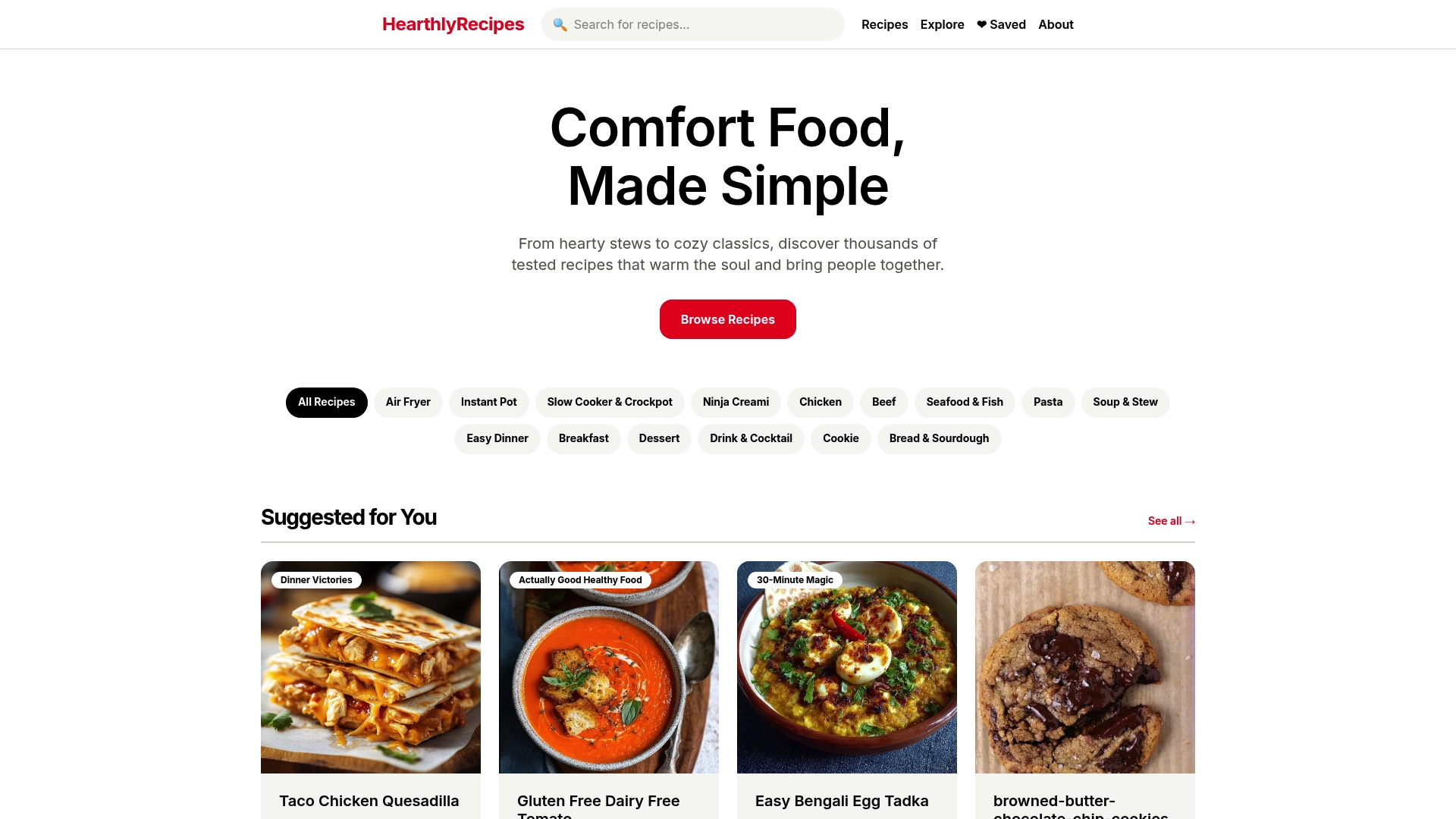
Start with our recipe collections and save the three or four dinners that your family finishes. That short list becomes the core of your weekly plan.
FAQ
How can I make dinner for a family on a very small budget?
Build the meal on rice, pasta, potatoes or beans, add whatever vegetable is cheapest, and use a small amount of meat for flavor. Soups and skillet suppers are the best formats. University of Missouri Extension lists two recipes serving 6 each at under a dollar per serving in its older estimates, so the principle works even if today’s prices are higher.
What are the cheapest ingredients to cook with?
Dried and canned beans, rice, pasta, oats, eggs, potatoes, cabbage, carrots, onions, frozen vegetables and chicken thighs or whole chickens are common choices. Prices vary by store and region, so compare unit prices at your own grocery store and note which items are on sale in the weekly flyer.
Do budget meals have to be unhealthy?
No. Aim for half the plate as non-starchy vegetables, a quarter as protein and a quarter as starch, as the VA’s Cost-Friendly Cooking guide suggests. The American Heart Association’s 10 Under 10 booklet also shows that family entrées can come in at under $2.50 per serving while remaining heart-healthy.
How do I keep leftovers from going to waste?
Keep a dated list of leftovers on the refrigerator, freeze meat in recipe-sized portions, and plan one night a week built around what needs using. Soups, fried rice, pot pies and casseroles accept almost any leftover.
Which budget dinners work best for a crowd?
Soups, slow cooker pasta, scalloped potatoes and rice casseroles scale up easily and are inexpensive per serving. Add a toppings bar so guests can customize their plates without raising your cost much.
Sources
- 10 Under 10: 10 Recipes for Under $10 with 10 Ingredients, American Heart Association
- Two meals for $10, University of Missouri Extension
- Cost-Friendly Cooking 2026, U.S. Department of Veterans Affairs
- Simple family budgeting steps