350°F for 3–4 Minutes: Reheat Pizza to Crisp Slices, Kitchen Tested
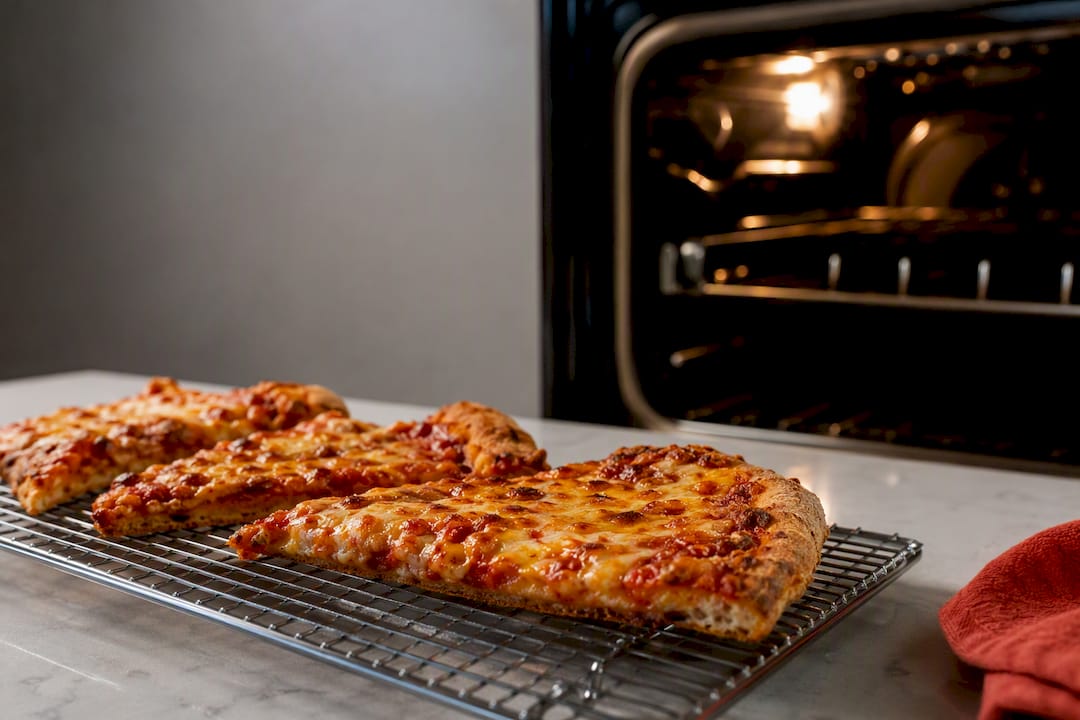
For one or two slices, skip the oven entirely: a nonstick skillet with a quick steam trick or an air fryer at 350°F beats it for crisp bottoms and melted cheese in under five minutes. For a whole pie or a stack of slices, a preheated oven or stone wins because it reheats evenly without babysitting each piece. The trade-off is simple: skillet and air fryer are faster and crispier per slice, the oven scales better. Tests comparing these methods against a microwave show the gap in texture is not subtle.
TL;DR:
- Reheating one or two slices quickly with a skillet or air fryer at 350°F produces the crispiest crust and melted cheese in under five minutes.
- The oven is best for reheating multiple slices, with preheating a hot surface at 425°F for five to seven minutes, ensuring even heat distribution.
- The water and steam trick in a skillet offers the fastest method for crisp bottoms and melty cheese, but water must not touch the crust to avoid sogginess.
- Using the microwave should be a last resort, only for speed, with a cup of water nearby and finishing in a skillet to restore crispness.
- The ideal method depends on the number of slices and patience, with each method suited to different batch sizes and desired texture.
Table of Contents
- Quick Guide: Oven, Skillet, Air Fryer, or Microwave?
- How Do You Reheat Pizza in the Oven?
- Does the Skillet-and-Steam Trick Really Work?
- What Are the Best Air Fryer Settings for Pizza?
- Is It Ever OK to Reheat Pizza in the Microwave?
- How Do I Pick the Right Reheating Method?
- Why Is My Reheated Pizza Soggy, Cold, or Burnt?
- What Makes Thorough Recipe Testing Different?
- A Quick Routine Worth Copying
- Want More Tested Recipes Like This?
- Sources
- FAQ
Quick Guide: Oven, Skillet, Air Fryer, or Microwave?
The right call depends mostly on how many slices you’re dealing with and how much patience you have for preheating.
- Oven: Preheat a sheet pan or stone at 425°F, reheat 5 to 7 minutes. Best for batches or a whole leftover pie.
- Skillet: Medium-low heat, 3 to 4 minutes, with a few drops of water and a lid to melt the top. Best for one or two slices, thin to medium crust.
- Air fryer: 350°F for 3 to 4 minutes in a single layer, check at the 3 minute mark. Drop to 325°F for thick or deep-dish slices.
- Microwave: Only when you’re truly out of time. Use short 20 to 30 second bursts at 50% power with a cup of water alongside the plate, then finish in a skillet if you can.
Each method solves a different problem. The oven handles volume, the skillet and air fryer handle speed and crunch, and the microwave handles emergencies.
How Do You Reheat Pizza in the Oven?
The oven is still the most reliable method for multiple slices, mostly because contact with a hot, dry surface is what actually crisps a crust back up. A cold pan under a cold slice just steams everything into mush.
- Preheat a sheet pan or pizza stone inside the oven for 10 to 12 minutes before the slices go in. The pan needs to be hot, not the oven air.
- Set the oven between 375°F and 450°F depending on style; 425°F is the sweet spot for most standard and thin crust pizzas.
- Pull the slices from the fridge and let them sit at room temperature for 3 to 5 minutes. Cold dough hitting a hot pan cooks unevenly.
- Place slices directly on the preheated surface, no parchment, no foil, and check at 5 to 7 minutes.
Deep-dish and stuffed crust need lower heat and more time so the center actually warms through. Neapolitan-style thin crust does better hot and fast, closer to 450°F for 4 to 6 minutes on an inverted cast-iron skillet, so the top finishes before the thin base dries out.
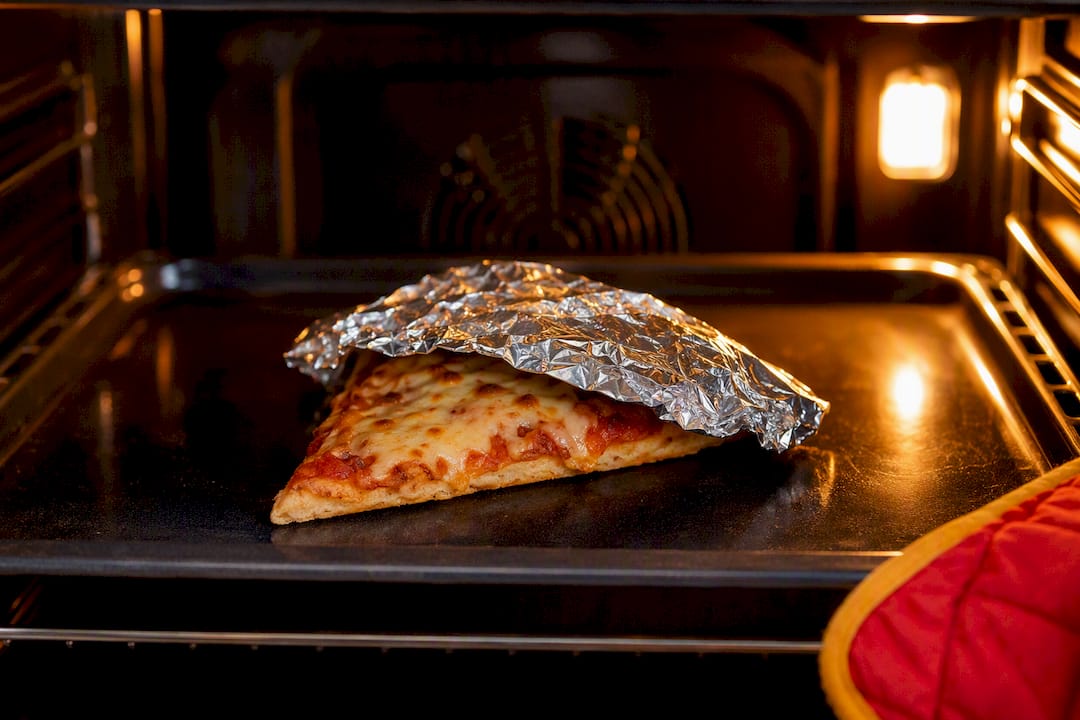
Pro Tip: If the cheese is browning faster than the crust is crisping, tent a piece of foil loosely over the top for the last two minutes instead of pulling the pan early.
Does the Skillet-and-Steam Trick Really Work?
Yes, and it’s the fastest route to a genuinely crisp bottom with melted, not rubbery, cheese on top. Food & Wine’s testing and America’s Test Kitchen both point to this combination of dry heat and controlled steam as one of the strongest methods when compared side by side.
- Heat a 10-inch nonstick or cast-iron skillet over medium heat with no oil yet.
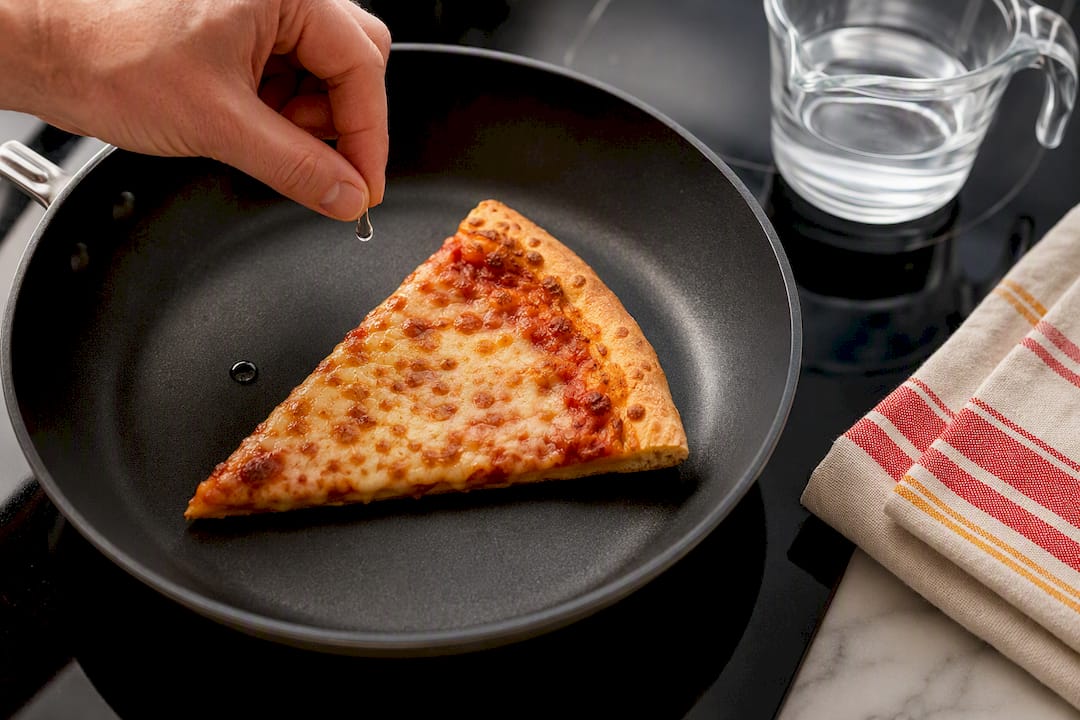
- Lay the slice in the pan and add about half a teaspoon of water to the rim of the pan, away from the crust, then cover with a lid for 2 to 3 minutes until the cheese melts.
- Uncover, add a small drizzle of oil, and bump the heat up for 30 to 60 seconds to crisp the bottom before serving.
The water hack works because targeted steam melts toppings without soaking the base: the vapor rises to warm the cheese while the crust stays in direct contact with dry, hot metal. The mistake most people make is letting water touch the crust itself, which causes sticking and a soggy edge instead of a crisp one.
Pro Tip: Keep the water drop small. A puddle in the pan turns your crisping method into a steaming method by accident.
What Are the Best Air Fryer Settings for Pizza?
Set the basket to 350°F for 3 to 4 minutes and check at the 3 minute mark. That temperature has become the air fryer community’s default because it warms the center of the slice before the edges scorch, which is the exact failure mode of running the basket too hot.
- Keep slices in a single layer with no overlap. Stacking or crowding traps steam between pieces and produces soggy spots instead of even crisping.
- Use a perforated parchment liner if you want to catch dripping grease without blocking airflow underneath the slice.
- Thin crust needs less time, closer to 2 to 3 minutes, since there’s less mass to heat through.
- Thick or deep-dish slices need a gentler approach: drop to 325°F and extend to 5 to 6 minutes so the middle catches up without burning the top.
The instinct to wrap a slice in foil for “easier cleanup” backfires here. Foil blocks the hot air circulation that makes an air fryer worth using in the first place, and you end up with a soft, steamed crust instead of the crisp one you were chasing. Overcrowding causes the same issue: give every slice room to breathe.
Is It Ever OK to Reheat Pizza in the Microwave?
Only when speed matters more than texture, and even then, plan a fix. Microwaves work by exciting the water molecules trapped in the dough and toppings, which is exactly why the crust turns rubbery or soggy instead of crisp. There’s no setting that avoids this entirely.
- If you must microwave, eat the slice immediately. It only gets softer as it sits.
- Set a microwave-safe cup of water next to the plate and heat in short 20 to 30 second bursts at 50% power, checking as you go.
- The best fix is a hybrid: microwave just long enough to take the chill off, then finish for a minute in a hot skillet or toaster oven to bring back some crunch.
- Skip the microwave altogether for very chewy crusts or slices with raw or undercooked toppings. Those are better off eaten cold or reheated with a method that actually cooks them through.
How Do I Pick the Right Reheating Method?
Match the method to your slice count and your patience level, not to whatever appliance happens to be closest.
- One or two slices, want speed and a crisp bottom: skillet or air fryer, both under 5 minutes.
- A whole pie or a big stack of slices: oven or stone, since it heats everything at once without individual attention.
- Using an air fryer: check your model’s basket capacity. Small baskets fit one slice comfortably; cramming in more defeats the single-layer rule.
- Weigh preheat time against active time. The oven takes longer to get ready but needs less hands-on attention; the skillet heats fast but you’re standing over it the whole time.
There’s no universal winner here. The method that saves you the most frustration on a Tuesday night is rarely the same one you’d use for four leftover slices after a party.
Why Is My Reheated Pizza Soggy, Cold, or Burnt?
Most reheating failures trace back to one of four specific mistakes, and each has a quick fix.
- Soggy bottom: You used indirect or trapped heat. Switch to dry contact heat like a hot skillet or preheated stone, skip the foil, and never reheat pizza in its delivery box.
- Cold center: Your heat was too aggressive on the outside before the middle caught up. Lower the temperature slightly and extend the time, or make sure your surface was fully preheated before the slice went on.
- Burnt top, raw bottom: The top is cooking faster than the base. Tent loosely with foil or drop the temperature and check a minute or two earlier than the recipe suggests.
- Rubbery texture from the microwave: This one has an easy save. Toss the slice in a skillet over medium-high heat for about a minute to re-crisp the bottom before eating.
What Makes Thorough Recipe Testing Different?
Hearthly Recipes runs reheating methods the same way it tests recipes: side by side, across air fryer, skillet, and oven, checking texture and timing rather than guessing at a single “best” answer.
- Air fryer results are checked against basket airflow and spacing, the same principles used in the site’s air fryer pizza bagels recipe.
- Oven timing follows the same preheated-surface logic used in dessert-style pizza recipes that rely on direct contact heat.
- Crust behavior under reheating traces back to how the dough itself was built in the first place, which affects how it holds up to a second round of heat.
A Quick Routine Worth Copying
On a weeknight, I skillet one slice with the water trick while the kettle’s still warm from tea, and it’s crisp on the bottom in under three minutes. For a group, I preheat a stone before we even sit down so every slice hits the oven the moment plates come out. Either way, let it rest 60 seconds before you bite. That’s the difference between molten cheese and third-degree regret.
— Susan Scortberg
Want More Tested Recipes Like This?
These reheating methods and recipes can be tested side by side, with real timing and real temperatures rather than guesswork, which offers an advantage over generic advice on the internet.

If leftover pizza got you thinking about what else is sitting in your fridge, the site’s full catalog covers everything from quick weeknight dinners to slow-cooked weekend projects. Browse the full recipe collection and search by cooking method, whether that’s air fryer, oven, or stovetop, so you always know exactly how a dish is meant to be made and reheated. Start with whatever’s closest to what’s already in your fridge tonight.
Sources
- How to Reheat Pizza in an Air Fryer (2026): Exact Temp and Time | Pizza Oven Review
- Reheat pizza water hack | Chowhound
- The Best Way to Reheat Pizza, According to Our Tests
- How to Reheat Pizza in the Oven: Tested Guide by Style | The Pizza Craft
FAQ
What is the best way to warm up leftover pizza?
For one or two slices, a skillet with a small steam step or an air fryer at 350°F gives the crispest results in under five minutes. For a whole pie, a preheated oven or stone at 425°F handles multiple slices more evenly.
How long do you reheat pizza in the oven at 350°F?
At 425°F, reheat 5 to 7 minutes on a preheated pan or stone for a crisper result. Lower temperatures require longer reheating time.
How do professional chefs reheat pizza?
Tested chef methods favor a skillet with a brief steam step to melt the cheese, followed by an uncovered finish to crisp the bottom, or a preheated stone in the oven for larger batches. Both rely on direct contact with hot, dry cooking surfaces rather than trapped, humid heat.
Is it better to reheat pizza in the oven or microwave?
The oven wins on texture almost every time, since microwaves excite water molecules in the dough and produce a soggy or rubbery crust. Use the microwave only when you’re truly pressed for time, and finish briefly in a skillet if you can.