8–9 Hours: Slow Cooker Pot Roast That Falls Apart for Home Cooks
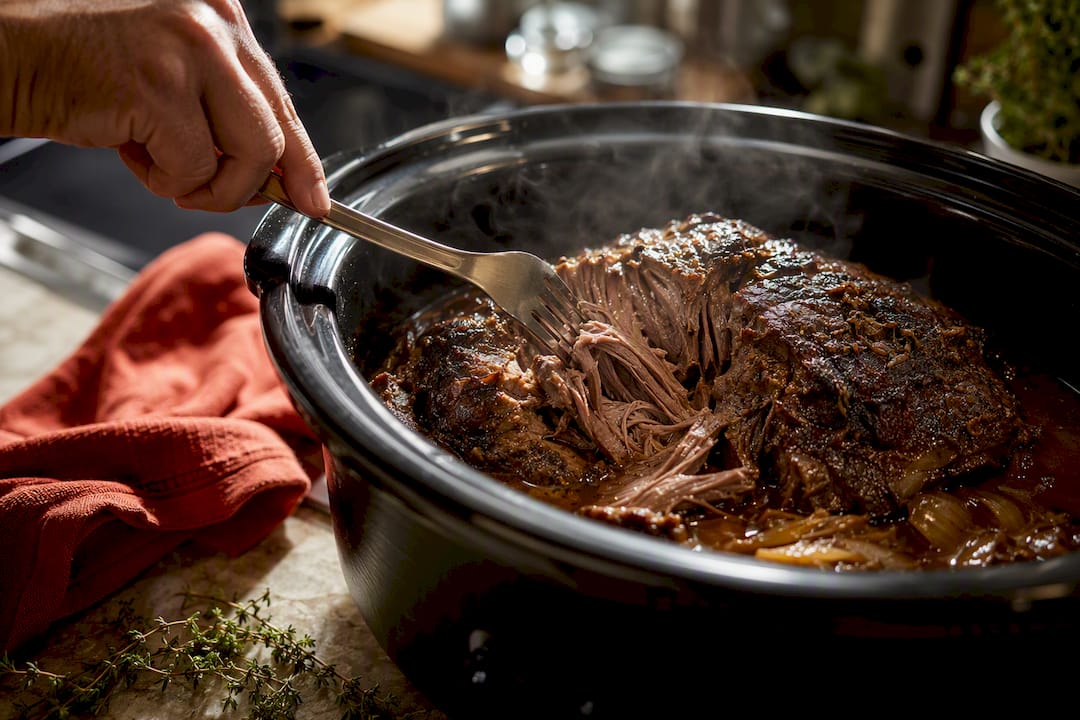
The best slow cooker pot roast starts with a well-marbled chuck roast, seared hard on all sides before it ever sees the crockpot, then cooked low-and-slow for 8 to 9 hours (or 4 to 5 on high) until a fork easily twists and the meat pulls apart. Thicken the leftover braising liquid with a quick cornstarch slurry, and you’ve got a dinner that tastes like it took all weekend.
TL;DR:
- Searing the roast to develop flavor and deglazing the pan with wine or broth are essential steps for a rich, restaurant-quality gravy.
- Keep vegetables in large chunks and add them later if cooking longer than eight hours to prevent mushiness and maintain texture.
- Use low heat for 8 to 9 hours to achieve maximum collagen breakdown and tender, shreddable meat, rather than rushing with high heat.
- Properly defat the braising liquid before thickening to avoid greasy-tasting gravy and enhance overall flavor.
- Expect variations in cooking time depending on your slow cooker model, and rely on the fork-twist test rather than timing alone to determine doneness.
Table of Contents
- What Ingredients Go Into a Slow Cooker Pot Roast?
- How Do You Sear and Load a Pot Roast for the Slow Cooker?
- How Long Does Pot Roast Take in a Slow Cooker?
- When Should You Add Vegetables to Avoid Mushy Results?
- How Do You Turn Braising Liquid Into Gravy?
- What Are the Best Substitutions for Pot Roast Ingredients?
- How Do You Store and Reheat Leftover Pot Roast?
- Why Hearthly Recipes’ Pot Roast Recipe Holds Up
- A Note on Why the Extra Ten Minutes Matter
- Find More Slow Cooker Dinners in the Hearthly Recipes Vault
- Sources
- FAQ
What Ingredients Go Into a Slow Cooker Pot Roast?
A great crockpot pot roast recipe doesn’t need a long ingredient list, just the right ones in the right amounts. Here’s what to gather for a roast that feeds a family of six with leftovers to spare.
For the roast:
- a boneless chuck roast sized suitably for a family meal, trimmed of excess surface fat (a little marbling is good, it bastes the meat as it cooks)
- a couple tablespoons of a high-smoke-point oil like avocado or vegetable oil
- 1 teaspoon each kosher salt and black pepper, plus more for the vegetables
For the braise:
- a couple cups of beef broth (low sodium if you’re watching salt)
- 1/2 cup dry red wine or an extra 1/2 cup broth if you’d rather skip alcohol
- a couple tablespoons of tomato paste
- some smashed garlic cloves
- 1 tablespoon Worcestershire sauce
- 2 to 3 sprigs fresh thyme and 1 bay leaf
For the vegetables:
- 1 lb baby carrots or large carrots cut into 2 inch chunks
- some baby potatoes or Yukon Golds cut into wedges
- 1 yellow onion, quartered
You’ll need a 6-quart slow cooker or similar size, which comfortably handles a roast of this size along with the vegetables without crowding, plus a heavy skillet for searing. Total prep time runs about 20 minutes, cook time is 8 to 9 hours on LOW, and the recipe serves 6. If you want a source for a consistently well-marbled chuck, a quality boneless chuck roast from a dedicated butcher tends to cook more evenly than a thin, uneven supermarket cut. Serve slices over mashed potatoes, egg noodles, or crusty bread to soak up the gravy.
How Do You Sear and Load a Pot Roast for the Slow Cooker?
Searing isn’t a cosmetic step you can skip when you’re in a hurry. It’s the difference between a pot roast that tastes like boiled beef and one that tastes like it simmered in a French bistro kitchen all day. Here’s the full sequence.
- Pat the roast dry with paper towels, then season generously with salt and pepper on all sides. Dry meat sears; wet meat steams.
- Heat the oil in a heavy skillet over medium-high until it shimmers.
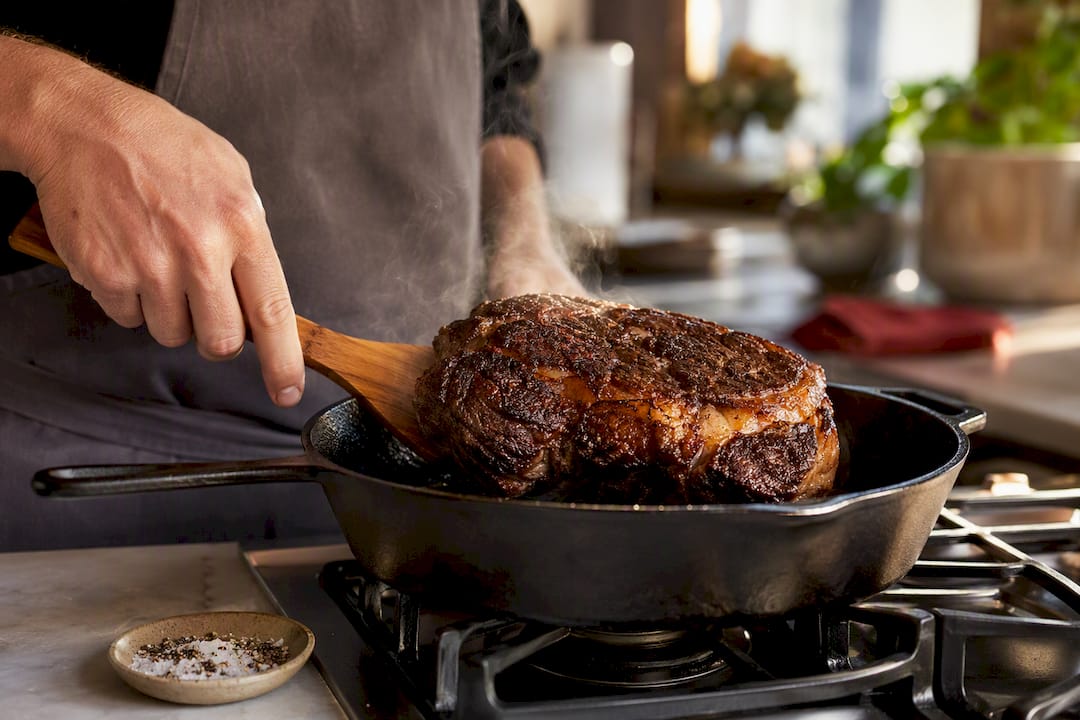
- Sear the roast for 3 to 4 minutes per side, including the ends, until you get a deep brown crust. Don’t move it around. Let it sit and develop color.
- Remove the roast to a plate and lower the heat slightly.
- Deglaze the skillet with the wine (or broth), scraping up every brown bit stuck to the bottom. That fond is concentrated flavor you’d otherwise pour down the drain.
- Whisk in the tomato paste, garlic, and Worcestershire, then pour in the remaining broth and bring it to a simmer for a minute.
- Arrange the onion in the bottom of the slow cooker as a rough rack, place the roast on top, and tuck the carrots and potatoes around the sides.
- Pour the hot braising liquid over everything, then drop in the thyme and bay leaf.
- Cook on LOW for 8 to 9 hours or HIGH for 4 to 5 hours, until the meat pulls apart with light pressure from a fork.
- Rest the roast for 10 minutes on a cutting board before slicing against the grain.
- Thicken the sauce if you want gravy instead of broth (details below).
Searing the roast and deglazing the pan capture that browned fond, and it’s one of the highest-leverage moves a home cook can make for a gravy that tastes restaurant-quality for just a few extra minutes of stovetop work.
Pro Tip: Don’t crowd the skillet. If your roast is wider than the pan, sear it in two batches or cut it in half before browning. A roast that’s steaming instead of browning defeats the whole point.
How Long Does Pot Roast Take in a Slow Cooker?
LOW and HIGH aren’t interchangeable shortcuts, they produce genuinely different textures. LOW for 8 to 9 hours gives collagen in the chuck time to slowly convert to gelatin, which is what makes the meat shred instead of chew. HIGH for 4 to 5 hours gets you there faster, but the texture is usually slightly less silky because the connective tissue breaks down more abruptly.
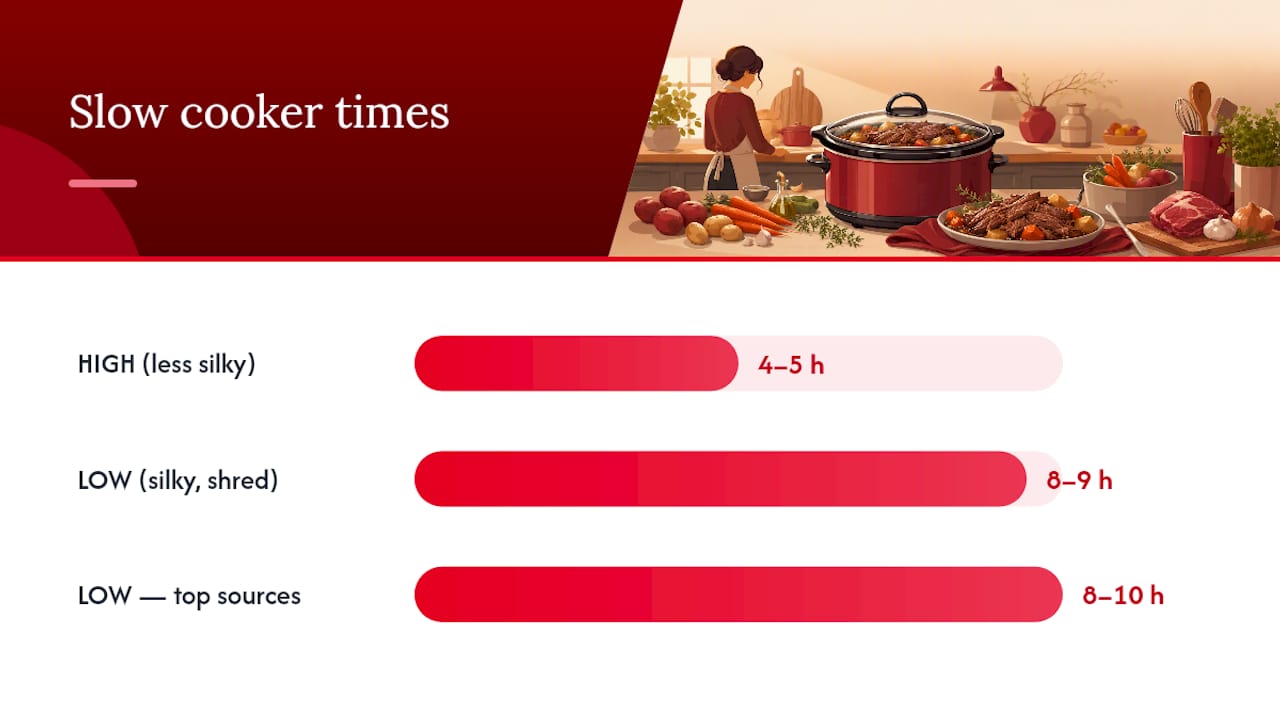
Top recipe sources generally agree on an 8 to 10 hour window on LOW for a fork-tender result, and if your roast isn’t there yet at the end of that window, the fix is patience, not heat. Add more time on low heat rather than increasing the temperature, which can toughen the exterior before the center catches up.
How to tell it’s done:
- A fork inserted into the thickest part twists and pulls apart easily, with almost no resistance.
- The meat has visibly shrunk and separated slightly along its natural grain lines.
- Juices run clear and the roast feels loose, not springy, when pressed.
If it’s not tender enough:
- Give it 1 to 2 more hours on LOW and check again; don’t switch to HIGH mid-cook.
- If the liquid has reduced too much, add a splash of warm broth so the roast doesn’t dry out while it finishes.
One thing worth knowing: slow cookers vary a lot in actual heat output, so two identical recipes in two different machines can finish at noticeably different times. Never start with a frozen roast, either. It spends too long in the temperature range where bacteria multiply before the slow cooker gets hot enough to be safe.
When Should You Add Vegetables to Avoid Mushy Results?
Carrots and potatoes have a bad reputation in slow cooker pot roast recipes because they so often turn to mush, and the fix is almost entirely about cut size and timing. Vegetables added at the start of an 8 hour cook can go soft and waterlogged, especially if they’re cut small. Cutting them into large chunks, 2 inch pieces for carrots and big wedges for potatoes, gives them enough mass to hold their shape for the full cook.
- Cut carrots and potatoes into large chunks to maintain texture, not small dice.
- If you plan to be away longer than 8 hours, add the vegetables around the 4 hour mark instead of at the start so they finish firmer.
- Keeping vegetables oversized also makes them easier to reheat later without turning to mush the second time around.
- For make-ahead prep, chop vegetables the night before and store them in water in the fridge to prevent browning, then drain well before adding.
How Do You Turn Braising Liquid Into Gravy?
The liquid left in the slow cooker after 8 hours is basically a finished stock, loaded with rendered fat, gelatin, and flavor. Getting it from watery to velvety takes one extra step most people skip: defatting.
Pour the liquid into a fat separator or a heatproof measuring cup and let it sit for a few minutes. The fat rises to the top and can be spooned or poured off before you thicken what’s left. Skip this and your gravy will taste greasy no matter how well you season it.
- Cornstarch slurry: make a cornstarch slurry by mixing cornstarch with cold water, then stir into the simmering liquid until it thickens, about 2 minutes. Fast, gluten-free, and forgiving.
- Butter and flour roux: make a roux by cooking butter and flour together before adding liquid, cook 1 minute, then slowly whisk in the braising liquid until smooth and glossy. Richer flavor, but not gluten-free.
- For deeper flavor without more reduction time, a spoonful of demi-glace concentrate stirred into the gravy adds a restaurant-style richness in seconds.
Pro Tip: If your gravy tastes flat even after thickening, it’s usually under-seasoned, not under-thickened. Add salt gradually and taste again before reaching for more cornstarch.
What Are the Best Substitutions for Pot Roast Ingredients?
Chuck roast is the standard for good reason: it has enough fat and connective tissue running through it to stay moist and shred apart after hours of cooking. Rump roast and brisket can work in a pinch, but rump tends to come out slightly drier since it has less internal fat, and brisket, while flavorful, has a different grain that some cooks find stringier when braised this way.
- Beef broth is the easiest liquid base and keeps things simple for weeknight cooking.
- Red wine adds welcome acidity that cuts through the richness of the beef fat.
- Demi-glace concentrate delivers depth fast if you don’t have homemade stock on hand.
- Bouillon paste is a solid fallback when your pantry is running low on broth.
- Fresh thyme, bay leaf, and a scatter of chopped parsley at the end brighten the dish without adding sodium, a useful swap for low-sodium diets alongside using unsalted broth and skipping added salt in the sear.
- This recipe is naturally gluten-free as written, as long as you thicken with cornstarch instead of a flour-based roux.
For a completely different flavor direction using the same technique, the apple cider braised pot roast swaps wine for cider and leans sweeter with a fall edge.
How Do You Store and Reheat Leftover Pot Roast?
Pot roast reheats beautifully, arguably better than most slow cooker meals, but only if you store meat and gravy properly by cooling to room temperature then refrigerating separately in airtight containers for several days
- Freeze portions in freezer-safe bags or containers for up to 3 months; thaw overnight in the fridge rather than at room temperature.
- Reheat gently on the stove with some added broth to keep meat moist stirred in, which keeps the meat from drying out.
- The oven works well for larger batches: cover tightly with foil and warm at 300°F until heated through.
- The microwave is fine for single servings; cover loosely and heat in short bursts, stirring the gravy between rounds.
Why Hearthly Recipes’ Pot Roast Recipe Holds Up
This pot roast draws on the same searing, deglazing, and low-and-slow method that is popular across many highly rated slow cooker dinners. If you want to riff on the base recipe, the braised chuck roast with mashed potatoes leans into a classic mashed-potato pairing, while the apple cider braised pot roast takes the same technique in a sweeter, fall-forward direction. Both started from the same core method covered here: brown the meat, build the braise, and trust the clock over the thermostat.
A Note on Why the Extra Ten Minutes Matter
Searing feels optional when you’re staring down an 8 hour cook and just want to get the roast in and walk away. It isn’t. That crust and that scraped-up fond are where most of the actual flavor in this dish comes from, not the broth, not the herbs. My real advice: trust the fork test over the clock on your slow cooker’s display. Every machine runs a little differently, and a roast that needs one more hour is nowhere near a failure. If you tweak the herbs or swap the liquid, come back and tell us what worked. Recipes get better with more cooks putting their hands on them.
— Susan Scortberg
Find More Slow Cooker Dinners in the Hearthly Recipes Vault
Once you’ve got this pot roast on repeat, there’s a whole world of hands-off dinners worth exploring. This site is built for exactly this kind of cooking: a tested recipe with clear timing beats a recipe blog post you have to scroll past three life stories to find.

The slow cooker and crockpot collection is filterable by cook time and main ingredient, so you can find your next hearty slow cooker dinner without starting from scratch. If you want the full range of tested and rated recipes, browse the full recipe vault and save your favorites to your account.
Sources
- Slow-Cooker Pot Roast — NYT Cooking
- Easy slow cooker pot roast recipe — The Kitchn
- Demi-glace concentrate review — Apartment Therapy
FAQ
How many hours does it take a pot roast to cook in a slow cooker?
Plan on 8 to 9 hours on LOW or 4 to 5 hours on HIGH for a 3 to 4 lb chuck roast, though your specific machine’s heat output can shift that window slightly.
What are common mistakes when making crockpot roast?
The biggest ones are skipping the sear, cutting vegetables too small so they turn mushy, and switching to HIGH heat mid-cook instead of just giving the roast more time on LOW.
What liquid is best for pot roast?
Beef broth is the easiest reliable base, red wine adds brightness and cuts richness, and demi-glace concentrate deepens the gravy fast if you’re short on time.
What is the best way to cook pot roast in a slow cooker?
Sear a chuck roast on all sides, deglaze the pan to capture the browned fond, then cook it on LOW for 8 to 9 hours with large-cut vegetables until it passes the fork-twist test.