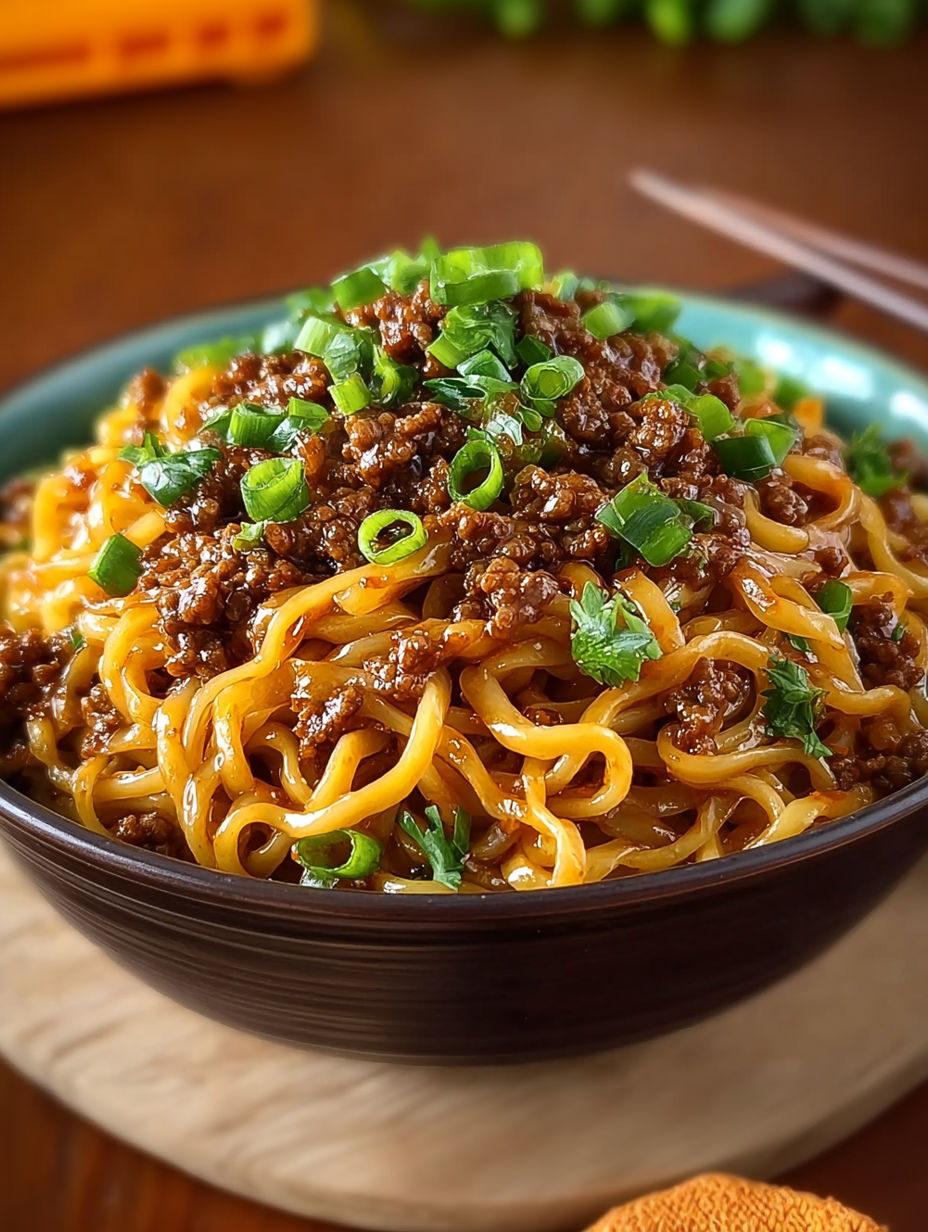
Mongolian Ground Beef Noodles
Home cooks adore Mongolian Ground Beef Noodles for its perfect balance of savory, sweet, and umami flavors wrapped in tender ground beef and chewy linguine. It's a weeknight superhero-quick to make, deeply satisfying, and endlessly customizable. Whether you're feeding a hungry family or whipping up a solo dinner in minutes, this dish delivers bold taste without the fuss. The sticky-sweet Mongolian-inspired sauce clings to every strand, making leftovers a rare treat.
What Makes This Recipe Special
- The sauce is a flavor powerhouse-using a blend of soy sauce, hoisin, brown sugar, and ginger creates a glossy, sticky glaze reminiscent of takeout Mongolian beef, but faster and cheaper.
- Ground beef cooks in under 10 minutes and absorbs the sauce beautifully, offering rich texture without the dryness of sliced meat.
- The cornstarch slurry is added *after* simmering the sauce, thickening it just before tossing with pasta for a perfect coat that clings and shines.
- You can skip draining the beef fat entirely-leaving a tablespoon or two adds depth and richness to the sauce without heaviness.
Ingredients
1 poundground beef
10 ouncesdried linguine pasta
5 clovesgarlic, minced
1/3 cuppacked brown sugar
1/4 cupbeef broth
1/3 cupsoy sauce
3 tablespoonshoisin sauce
1/2 teaspoonground ginger
1/2 teaspoonground black pepper
1 tablespooncornstarch
2 tablespoonscold water
4 greenonions, thinly sliced
Pinch red pepper flakes (optional)
Nutrition
600 caloriesCalories
Per serving · Values are estimates
Instructions
1
Bring a large pot of water to a rolling boil. Add linguine and cook according to package instructions until al dente. Drain well and set aside.
2
Heat a large skillet over medium-high heat. Add ground beef and cook, breaking it into small pieces, until no longer pink. Drain excess fat if necessary.
3
Add minced garlic to the browned beef and stir constantly for about one minute, until fragrant.
4
Stir in the soy sauce, beef broth, brown sugar, hoisin sauce, ground ginger, black pepper, and red pepper flakes if using. Mix thoroughly to combine.
5
In a small bowl, dissolve cornstarch in cold water. Pour the slurry into the skillet and stir. Bring the mixture to a gentle boil, allowing the sauce to thicken.
6
Add the drained linguine to the skillet and toss with the beef and sauce until evenly coated. Let the noodles sit in the sauce for 2 to 3 minutes to absorb flavor.
7
Remove from heat and top with sliced green onions. Serve immediately.
Essential Tips
Don't rinse pasta
After draining linguine, do not rinse it with water. The starch on the surface helps the sauce adhere better, creating that coveted glossy coating you see in restaurant dishes.
Brown sugar depth
Use dark brown sugar instead of light for deeper caramel notes. It enhances the hoisin's molasses undertones and rounds out the saltiness of the soy sauce beautifully.
Garlic timing matters
Add minced garlic to the hot beef immediately after browning-it should sizzle for about 60 seconds before the liquid goes in. This prevents raw garlic flavor and maximizes aroma.
Sauce consistency check
The sauce should coat the back of a spoon when thickened. If it's still too thin after the slurry, simmer an extra 30 seconds. Over-reducing can make it cloying, so err on the side of glossy.
Green onions last
Add sliced green onions *only* at the end. They stay vibrant and fresh, adding a clean crunch that contrasts the rich sauce and beef.
Smart Swaps & Variations
Spicy Garlic Lime
Add 1 tablespoon lime juice and 1 teaspoon sesame oil with the soy sauce. Top with cilantro instead of green onions and a pinch of chili crisp for extra heat.
Mushroom Umami Boost
Sauté 8 oz sliced shiitake mushrooms with the beef in step 2 for earthy depth. Remove mushrooms before adding sauce if you prefer texture.
Vegetarian Twist
Swap beef for 1 pound crumbled tempeh or extra-firm tofu pressed, cubed, and pan-seared until browned. Use mushroom broth instead of beef.
What to Serve With This
- Steamed bok choy with a drizzle of toasted sesame oil
- Crispy pan-fried dumplings (potstickers) with soy-vinegar dipping sauce
- Ice-cold Tsingtao beer or a chilled lychee spritzer
- Simple cucumber salad with rice vinegar, sugar, and red pepper flakes
Storage & Reheating
Storage
Cool completely before storing. Keeps in an airtight container in the fridge for up to 3 days. The sauce will thicken upon cooling, so add a splash of water when reheating.
Reheating
Gently warm in a skillet over medium-low heat with a splash of water or broth, stirring frequently to restore sauce consistency. Microwaving can make noodles gummy-avoid if possible.
Expert Chef Tips
- Toast your ground beef longer than you think-aim for deep brown crusts in spots, not just gray throughout. This builds fond in the pan, which dissolves into the sauce for deeper flavor.
- Use a microplane for the ginger if you have one-it releases more volatile oils and prevents fibrous bits. Fresh ginger works too, but grate it finely.
- Make a double batch of the sauce slurry and keep it pre-mixed in the fridge. Use it to quickly thicken stir-fries or noodle dishes in a pinch.
Equipment You’ll Need
- Large pot for boiling pasta
- Large skillet or wok (12-inch or larger)
- Small bowl for cornstarch slurry
- Tongs for tossing pasta
Nutritional Benefits
- Rich in iron and protein from the ground beef, providing about 30g per serving.
- Contains no added fiber, but adding mushrooms or bok choy boosts nutrients and volume without extra calories.
- High in sodium due to soy and hoisin-use low-sodium soy sauce to reduce by about 30% if watching salt intake.
- Provides complex carbohydrates from linguine for sustained energy, balancing the simple sugars in the sauce.
Reviews
No written reviews yet — be the first to cook this and share how it turned out!
Leave a Review
Frequently Asked Questions
Can I use a different type of pasta?
Yes! Swap linguine for spaghetti, udon, or even brown rice noodles. Cook time may vary slightly-aim for al dente texture. Avoid very thin pastas like angel hair, as they can overcook in the sauce.
Why is my sauce separating or oily?
This usually happens if the sauce was too hot when the slurry was added or if you used lean ground beef with little fat. Reduce heat to low when adding slurry and leave a bit of fat in the pan (about 1 tbsp).
Can I make this ahead?
You can fully cook the beef and sauce up to a day ahead, but wait to add the pasta until serving time. Cook pasta fresh and toss right before eating to prevent mushiness.
What's a good substitute for hoisin sauce?
Use a mix of 2 tbsp soy sauce + 1 tbsp molasses + 1 tsp peanut butter + pinch of five-spice powder for a close approximation. Store-bought hoisin is best, but this works in a pinch.
Is this gluten-free?
Not as written-soy sauce contains wheat. Use tamari for gluten-free soy sauce and check hoisin for gluten. For fully GF, use coconut aminos instead of soy sauce and ensure hoisin is certified GF.
My sauce is too sweet. How do I balance it?
Add 1 teaspoon rice vinegar or a splash of lime juice to cut the sweetness. Taste after each addition-you're aiming for a harmonious blend, not masking sweetness entirely.
Can I freeze this dish?
Yes, but the texture of the noodles will change when thawed. Freeze the beef and sauce (without pasta) in a freezer bag for up to 3 months. Thaw in the fridge and cook fresh pasta when ready to serve.
What ground beef fat percentage works best?
Use 80/20 for the best flavor and sauce absorption. Leaner beef can make the dish taste dry. If using leaner meat, add 1 tablespoon neutral oil like avocado when browning.
More Dinner Victories
🔒 From the Vault — 43,000+ premium recipes
Cook This Next