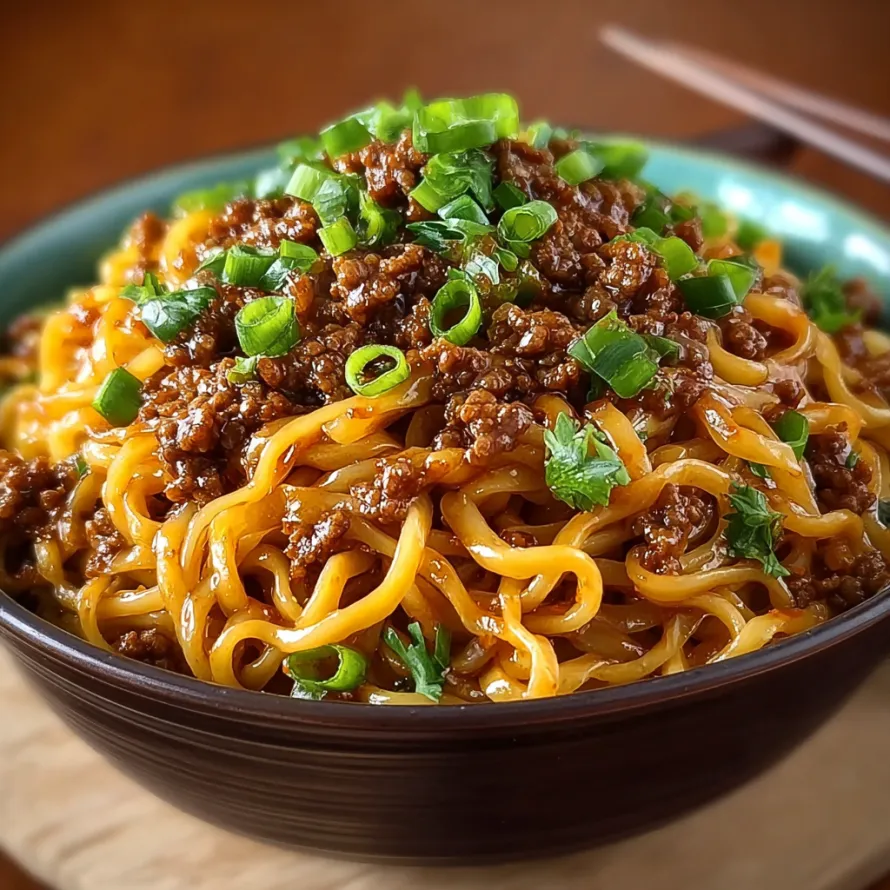
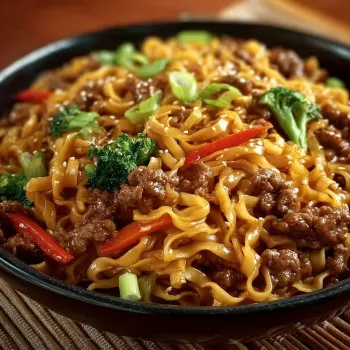
Mongolian Ground Beef Noodles
Home cooks adore this Mongolian Ground Beef Noodles for its perfect balance of sweet, salty, and umami flavors that come together in under 30 minutes. It's a weeknight superhero-quick to make, deeply satisfying, and endlessly customizable with pantry staples. The glossy soy-glazed beef clings beautifully to the noodles, making every bite irresistible, whether you're feeding a hungry family or whipping up dinner after a long day. Plus, the aroma of garlic and ginger sizzling in the skillet is pure comfort in itself.
What Makes This Recipe Special
- The sauce is a harmonious blend of low-sodium soy sauce and brown sugar, creating a sticky, caramelized glaze that coats the ground beef and noodles without overpowering them.
- Ground beef is used instead of traditional sliced beef, making this dish budget-friendly while still delivering rich, meaty flavor and a satisfying texture.
- The optional cornstarch step allows you to control the sauce consistency-thin and glossy for tossing or thicker for a spoonable dish.
- This recipe works with a variety of noodles (spaghetti, ramen, or lo mein), making it adaptable to whatever you have on hand.
Ingredients
450 gground beef
225 gnoodles (spaghetti, ramen, or lo mein)
1 tbspvegetable oil
3 clovesgarlic, minced
1 tspfresh grated ginger or 1/2 tsp ground ginger
1/2 cuplow-sodium soy sauce
1/3 cuppacked brown sugar
1/4 cupbeef broth or water
1 tbspcornstarch (optional, for thickening)
1/2 tspcrushed red pepper flakes (optional)
Chopped green onions (for garnish)
Sesame seeds (optional)
Nutrition
475 caloriesCalories
Per serving · Values are estimates
Instructions
1
Cook the noodles according to package instructions. Drain and set aside.
2
In a large skillet or wok, heat oil over medium-high heat. Add the ground beef and cook until browned. Drain excess fat if needed.
3
Stir in garlic and ginger. Cook for 1–2 minutes until fragrant.
4
In a small bowl, mix soy sauce, brown sugar, beef broth, and red pepper flakes (if using). Optional: If you want the sauce thicker, dissolve 1 tbsp cornstarch in 2 tbsp water and add it to the sauce.
5
Pour the sauce into the beef mixture. Simmer for 3–5 minutes until the sauce thickens slightly. Add cooked noodles and toss until evenly coated.
6
Top with chopped green onions and sesame seeds if desired. Serve hot and enjoy!
Essential Tips
Brown the beef well
Don't rush browning the ground beef-let it develop a deep, caramelized crust for maximum flavor. Use a nonstick or cast iron skillet to avoid sticking, and break the beef into small crumbles as it cooks for even texture.
Toast the spices
If using ground ginger, toast it in the skillet with the garlic for 30 seconds before adding the beef to bloom its flavors. This tiny step elevates the dish from good to restaurant-quality.
Sauce simmer time
Simmer the sauce for 3-5 minutes to meld the flavors, but don't over-reduce it or it will become too thick and sticky. The sauce should coat the back of a spoon but still have a glossy sheen.
Noodle tossing trick
Toss the cooked noodles with a teaspoon of sesame oil before mixing them with the sauce to prevent clumping and add a subtle nutty aroma.
Garnish last-minute
Add green onions and sesame seeds just before serving to preserve their fresh crunch and vibrant color. Sprinkling them on too early can make the dish look wilted.
Smart Swaps & Variations
Spicy Kick
Add 1-2 tbsp of chili crisp or sriracha to the sauce for a fiery depth, or swap crushed red pepper flakes for a teaspoon of gochujang for a Korean-inspired twist.
Vegetarian
Replace ground beef with crumbled tempeh or mushrooms (like shiitake or oyster) for a meaty texture, and use vegetable broth instead of beef broth.
Creamy Mongolian
Stir 2 tbsp of peanut butter or tahini into the sauce for a creamy, nutty finish, balancing the sweet and salty flavors.
Extra Umami
Add 1 tbsp of oyster sauce or hoisin sauce to the soy sauce mixture for a deeper, more complex flavor profile.
Noodle Swap
Use udon or rice noodles instead of wheat noodles for a lighter texture, or swap spaghetti for angel hair pasta to keep the dish elegant and quick.
What to Serve With This
- Steamed bok choy or baby bok choy sautéed with garlic and a splash of soy sauce for a simple, fresh side.
- Quick-pickled cucumbers (sliced cucumbers tossed with rice vinegar, sugar, and salt) to cut through the richness of the dish.
- A cold glass of Tsingtao beer or a warm cup of jasmine tea to balance the sweet and savory flavors.
- Egg rolls or spring rolls on the side for a satisfying crunch and extra indulgence.
Storage & Reheating
Storage
Store leftovers in an airtight container in the fridge for up to 3 days. The noodles may absorb the sauce slightly, so you might need to loosen them with a splash of water when reheating.
Reheating
Reheat in a skillet over medium heat with a splash of water or broth, stirring frequently to prevent drying out. Microwaving is fine but can make the noodles rubbery-cover with a damp paper towel to retain moisture.
Expert Chef Tips
- For a restaurant-style finish, finish the dish with a drizzle of toasted sesame oil instead of mixing it in. The aroma is incredible and adds a professional touch.
- If your sauce isn't thickening enough, mix the cornstarch with 1 tbsp of cold water to create a slurry, then stir it into the simmering sauce. This ensures even distribution without clumping.
- For a deeper beef flavor, use 80/20 ground beef (80% lean, 20% fat) instead of leaner cuts. The extra fat renders out, coating the noodles in rich, savory goodness.
Equipment You’ll Need
- Large nonstick skillet or wok for even cooking and easy tossing
- Chef's knife and cutting board for mincing garlic and ginger
- Small bowl for mixing the sauce ingredients
- Tongs or a wooden spoon for tossing the noodles
Nutritional Benefits
- This dish is high in protein (around 25g per serving) from the ground beef, making it a filling and muscle-friendly meal.
- The brown sugar adds quick-digesting carbs for energy, while the noodles provide complex carbs for sustained fuel-perfect for active lifestyles.
- Using low-sodium soy sauce helps control sodium intake, though the dish is still flavorful thanks to the umami-rich beef and garlic.
- The dish contains iron from the beef and ginger, which aids in nutrient absorption and supports immune function.
Reviews
No written reviews yet — be the first to cook this and share how it turned out!
Leave a Review
Frequently Asked Questions
Can I use a different protein like chicken or turkey?
Absolutely! Ground chicken or turkey works well, but cook it until fully done (165°F internal temp) and drain any excess fat to avoid a watery dish. The texture will be slightly leaner, so consider adding 1 tbsp of neutral oil to the skillet for crispiness.
What's the best way to thicken the sauce if I don't have cornstarch?
You can use arrowroot powder, potato starch, or even a slurry of 1 tbsp flour mixed with 2 tbsp cold water. Arrowroot is the closest substitute and works well under high heat.
Can I make this dish ahead of time?
Yes, but cook the noodles al dente (undercooked) by 1 minute, as they'll absorb the sauce further during storage. Reheat gently in a skillet with a splash of water to revive the texture.
How do I adjust the sweetness level?
Taste the sauce before adding it to the beef. If it's too sweet, add a splash of rice vinegar or lime juice to balance it. If it's too salty, dilute with a bit more beef broth.
Can I use regular soy sauce instead of low-sodium?
Yes, but reduce the amount to 1/3 cup and taste the sauce before adding it to the beef. Regular soy sauce is saltier, so you may need to adjust the brown sugar or broth to compensate.
Why are my noodles clumping together?
This usually happens if the noodles are overcooked or tossed too late. Cook them al dente, rinse with cold water if they're sticky, and toss immediately with the sauce while still warm.
What's the best noodle to use for this recipe?
Lo mein or ramen noodles are ideal because they're designed to absorb sauces well. Spaghetti works in a pinch, but avoid delicate noodles like angel hair unless you're serving the dish immediately.
How can I make this dish gluten-free?
Use tamari instead of soy sauce and swap wheat noodles for rice noodles or gluten-free spaghetti. Ensure all other ingredients, like broth, are certified gluten-free to avoid cross-contamination.
More Dinner Victories
🔒 From the Vault — 43,000+ premium recipes

Cook This Next