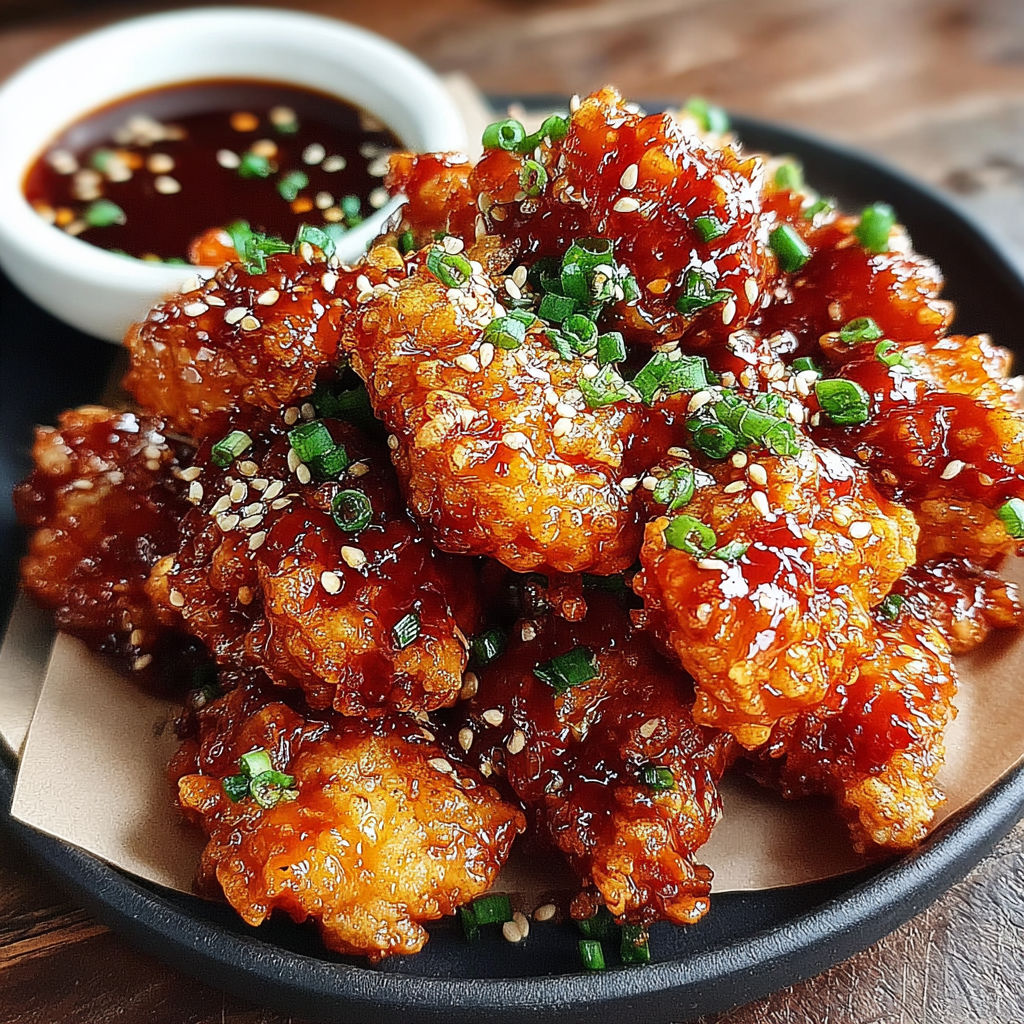
Sweet Spicy Korean Fried Chicken
There's something magical about the first crack of crispy Korean fried chicken-juicy chicken thighs cloaked in a glossy, sweet-spicy sauce that clings to every ridge and fold. Home cooks love it for weeknight wins when takeout just won't do, and it's a showstopper at gatherings where you want big flavor without the fuss. What makes it irresistible isn't just the crunch or the heat, but the balance: the tangy-sweet sauce caramelizes just enough to create a sticky, finger-licking coating that keeps people coming back for more. Whether you're feeding a hungry family or prepping for game day, this dish delivers satisfaction in every bite.
What Makes This Recipe Special
- Double-fry technique is baked in: a light dredge coats the chicken, then a hot oil bath ensures ultra-crisp edges while locking in moisture.
- The sauce bridges East and West-ketchup and honey join gochujang and soy sauce for a complex, layered sweetness with heat that builds, not blasts.
- Buttermilk marinade tenderizes the chicken and boosts browning, creating a golden crust that stays crunchy even after tossing in sauce.
- The sauce is reduced separately before coating, so every piece gets an even, thick glaze without sogginess.
Ingredients
2 poundsboneless, skinless chicken thighs or breasts, cut into bite-sized pieces
1 cupbuttermilk or 1 cup milk mixed with 1 tablespoon lemon juice
1 cupcornstarch
1/2 cupall-purpose flour
1 teaspoongarlic powder
1 teaspoononion powder
1/2 teaspoonblack pepper
1/2 teaspoonsalt
Vegetable oil, enough for frying (at least 2 inches depth in pan)
1/4 cupketchup
1/4 cuphoney
1/4 cuplow-sodium soy sauce
2 tablespoonsbrown sugar
1 tablespoonrice vinegar
1 tablespoonsesame oil
2 clovesgarlic, minced
1 tablespoongochujang (Korean chili paste, optional)
1/2 teaspoonground ginger
Nutrition
680 caloriesCalories
Per serving · Values are estimates
Instructions
1
Place chicken pieces in a large mixing bowl and pour buttermilk over them. Cover and refrigerate for at least 30 minutes, up to 4 hours, to ensure tenderness.
2
Combine cornstarch, all-purpose flour, garlic powder, onion powder, salt, and black pepper in a separate bowl. Mix thoroughly to create an even coating blend.
3
Pour enough vegetable oil into a large deep skillet or heavy-bottomed pot to reach a depth of approximately 2 inches. Heat oil over medium-high heat until the temperature reaches 350°F.
4
Remove chicken pieces from the marinade, allowing excess liquid to drip off. Dredge each piece in the flour-cornstarch mixture until evenly coated.
5
Working in batches, gently lower coated chicken pieces into hot oil. Fry for 5 to 7 minutes or until golden brown and crisp. Avoid overcrowding the pan to ensure even cooking.
6
Using a slotted spoon, transfer fried chicken to a plate lined with paper towels or a wire rack to drain excess oil.
7
In a small saucepan, combine ketchup, honey, soy sauce, brown sugar, rice vinegar, sesame oil, minced garlic, gochujang (if using), and ground ginger. Whisk together and simmer over medium heat for 2 to 3 minutes, allowing flavors to meld. Adjust heat as needed for desired spiciness.
8
Transfer the drained chicken to a large mixing bowl. Pour prepared sauce over the crispy chicken and toss gently until each piece is well coated.
Essential Tips
Pat chicken dry after marinating
After removing the chicken from the buttermilk marinade, pat each piece dry with paper towels. Excess moisture prevents the flour-starch mix from adhering properly, leading to patchy coating and less crunch.
Use a thermometer for oil temp
Heat the oil to 350°F (175°C) before frying. If it's too cool, the chicken absorbs oil and turns greasy; too hot and the outside burns before the inside cooks. Maintain temperature between batches with medium heat.
Fry in small batches only
Overcrowding the pot drops oil temperature and steams the chicken instead of frying it. Fry 4-5 pieces at a time, leaving room for oil to bubble freely-this ensures each piece crisps uniformly.
Sauce reduction tip
Simmer the sauce for 5-7 minutes until it thickens to a syrupy consistency. It should coat the back of a spoon and leave a visible trail. This prevents a watery sauce that would turn the chicken soggy when tossed.
Toss immediately after frying
Add the hot fried chicken to the warm sauce right away. The residual heat helps the sauce adhere and caramelize slightly on the surface, enhancing flavor and texture.
Smart Swaps & Variations
Milder Heat
Replace gochujang with 2 tablespoons of sriracha and reduce the red pepper flakes to ¼ teaspoon for a gentle sweet-spicy kick.
Gluten-Free
Swap soy sauce for gluten-free tamari and use cornstarch only (no all-purpose flour) for a fully gluten-free coating and thickener.
Extra Crunchy
Air Fryer Option
After tossing in sauce, air fry at 400°F (200°C) for 4-5 minutes to revive crispiness without deep-frying.
What to Serve With This
- Steamed jasmine rice, to soak up the leftover sauce and balance the heat.
- Quick-pickled cucumbers or radishes for a refreshing, tangy crunch.
- Korean corn cheese (corn mixed with mayo, cheese, and scallions) for a creamy side.
- Cold Korean barley tea (boricha) to cut through the richness and refresh the palate.
Storage & Reheating
Storage
Store cooled fried chicken and sauce separately in airtight containers in the fridge for up to 3 days. Reheat within this window for best quality.
Reheating
Reheat in a skillet over medium heat for 3-4 minutes, adding a splash of water to steam the chicken gently and restore crispness. Avoid microwaving-it turns the coating soft and rubbery.
Expert Chef Tips
- Use a blend of thigh and breast meat: thighs stay juicier, while breast pieces offer a lighter contrast and absorb sauce more evenly.
- Chill the sauce slightly before coating-it'll thicken further and cling better without sliding off the chicken.
- For extra gloss and depth, finish the sauce with a teaspoon of toasted sesame seeds and a drizzle of honey right before tossing the chicken.
Equipment You’ll Need
- Deep, heavy-bottomed pot or Dutch oven (at least 4-quart capacity)
- Candy/deep-fry thermometer
- Slotted spoon or spider strainer
- Large mixing bowls (for marinating and tossing)
- Tongs for handling hot chicken
Nutritional Benefits
- Provides 680 calories per serving, with 32g protein from lean chicken thighs and 28g carbohydrates mainly from honey and brown sugar.
- Contains 12g total fat, primarily from chicken and oil, with heart-healthy unsaturated fats when using vegetable oil.
- Provides 800mg sodium per serving, mostly from soy sauce-use low-sodium soy sauce and gochujang to reduce sodium content by 30%.
- Offers 2g fiber from cornstarch and trace minerals like iron and zinc from the chicken and sesame oil.
Reviews
No written reviews yet — be the first to cook this and share how it turned out!
Leave a Review
Frequently Asked Questions
Can I use chicken wings instead of thighs?
Absolutely! Wings fry faster (3-4 minutes per batch) and offer more surface area for sauce. Adjust oil temperature to 375°F (190°C) for optimal crispiness. Cut larger wings into drumettes and flats for even cooking.
Is gochujang essential? What can I substitute?
Gochujang adds depth and umami, but in a pinch, use 2 tablespoons of gochugaru (Korean chili flakes) mixed with 1 tablespoon of miso paste or 1 teaspoon of sriracha plus 1 tablespoon of tomato paste to mimic its sweet-heat profile.
Can I make the sauce ahead of time?
You can prep the sauce up to 2 days ahead and store it in the fridge. Reheat gently before tossing with fried chicken to restore its texture and flavor. Avoid boiling vigorously after storage to prevent separation.
Why is my chicken not crispy after sauce toss?
Most likely the chicken wasn't hot enough when sauced or the sauce was too thin. Ensure the chicken is still warm from frying and the sauce is reduced to a thick syrup before tossing. Serve immediately to preserve crunch.
Can I bake this instead of frying?
Yes, but expect less crunch. Toss chicken pieces in sauce, then bake at 425°F (220°C) for 18-20 minutes, flipping halfway. For extra crispiness, broil for 2-3 minutes at the end, watching closely.
Is there a way to reduce the oil smell after frying?
Add a few orange or lemon peels to the oil while heating-this helps neutralize odors. Also, use a splatter screen and open windows for ventilation. Clean the pot immediately after draining to prevent lingering smells.
What's the best way to reheat leftover chicken with sauce?
Reheat in a skillet over low heat with a splash of water or broth, covered, for 4-5 minutes, stirring gently. This revives the chicken while preventing the sauce from burning or separating.
Can I use panko instead of cornstarch-flour mix?
Panko works beautifully for extra crunch, especially in the air fryer. Use 1 cup panko mixed with 2 tablespoons cornstarch for better adhesion. Fry or air fry as directed, but reduce time to 3-4 minutes per batch.
More Dinner Victories
🔒 From the Vault — 43,000+ premium recipes
Cook This Next